Key takeaways
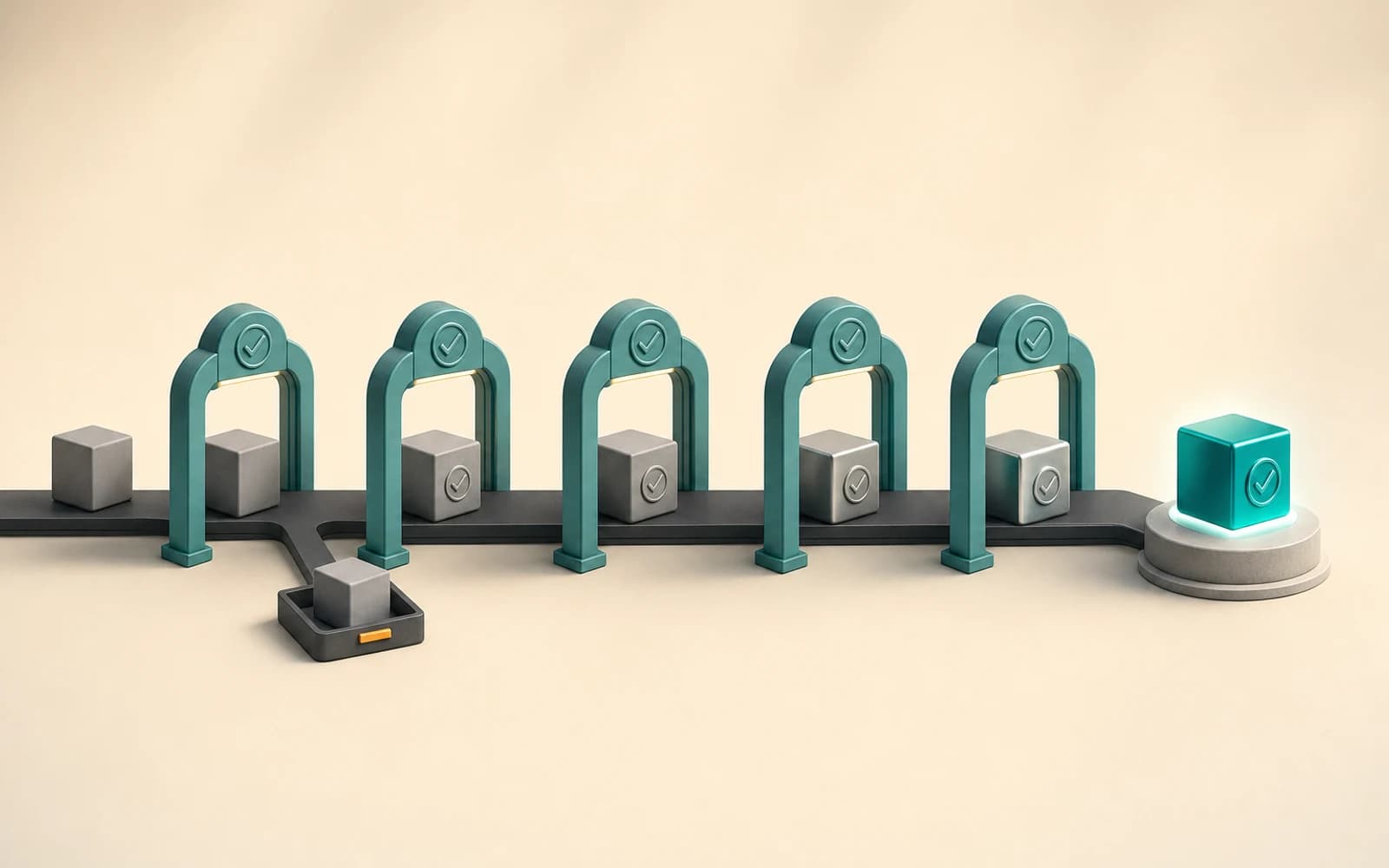
- Validate first: 15 to 20 customer interviews before writing anything, then stress-test every claim against real data before sharing.
- Pick the format that fits the reader: Lean canvas for the founder, Business Model Canvas for the team, traditional for the bank.
- Draft 7 sections in order: Market, customer, problem, solution, financials, marketing, executive summary.
- Time budget: 60 minutes for a lean plan, 8 to 15 hours for a traditional one.
A startup business plan is a research project before it is a writing project. When that order is right, the writing itself takes 60 to 90 minutes. Get the order wrong and the same draft eats two weeks of polish on a document that does not reflect a real market.
Founders have run more than 5,000 startup ideas through Preuve AI since launch, and the patterns from those scans shaped this guide. The single most common mistake: starting at a blank Word document instead of a customer conversation.

Will your idea survive the market?
Preuve AI runs 10 agents against live market data and links every claim to a source. Free analysis in 60 seconds.
Why most founders write a startup business plan the wrong way
Founders treat the business plan as the first deliverable. They open a template, fill in the executive summary, invent a five-year revenue projection, and call themselves prepared.
The U.S. Bureau of Labor Statistics reports that about 20% of new businesses fail within the first year, and 50% within five years. The plan was rarely the cause. The lack of validation behind the plan almost always was.
The 2026 CB Insights post-mortem of failed startups put poor product-market fit at the top of the list, behind 43% of failures. The pattern holds across stages: a polished plan does not compensate for a market that does not want the product. The plan is a translation layer for evidence. Without evidence, the document is creative writing.
The way I think about it: the business plan is a hypothesis test, not a sales document. If you cannot name a real customer, a real price, and a real channel for the first sale, the next thing you should be doing is not opening a template. It is calling people.
Step 1: Validate the problem before you write
Validation is not optional. Every section of a business plan that works traces back to evidence collected before the document existed.
The five questions every business plan secretly answers
Before opening a template, answer these in writing. If you cannot, the plan is not ready to start.
- Who specifically has this problem? Job title, industry, company size, geography. "Small business owners" is not specific. "Solo dental practice owners in U.S. cities of 50,000+ population" is specific.
- How are they solving it today? Name the tool, the workaround, the consultant, or the spreadsheet. If they are not solving it, the problem is probably not painful enough to fund a solution.
- What does the problem cost them today? In hours, dollars, customers lost, or revenue forgone. A problem without a cost is a curiosity, not a market.
- Will they pay to solve it? Not "would they". Will they. The only honest answer comes from a price quote and a "yes" or "no" in a real conversation.
- How do you reach them? A specific channel: a subreddit, a trade publication, a LinkedIn group, a conference, a referral source. "Online marketing" is not a channel.
If you cannot answer all five with specifics drawn from real conversations, the business plan you write next will be fiction. The plans I have read where the founder skipped this step share a tell: the language drifts to abstractions, the numbers are always round (it is $10M, never $7.4M), and the customer never has a face.
A 60-minute validation framework
Before you write a business plan, run this. It costs nothing and saves weeks.
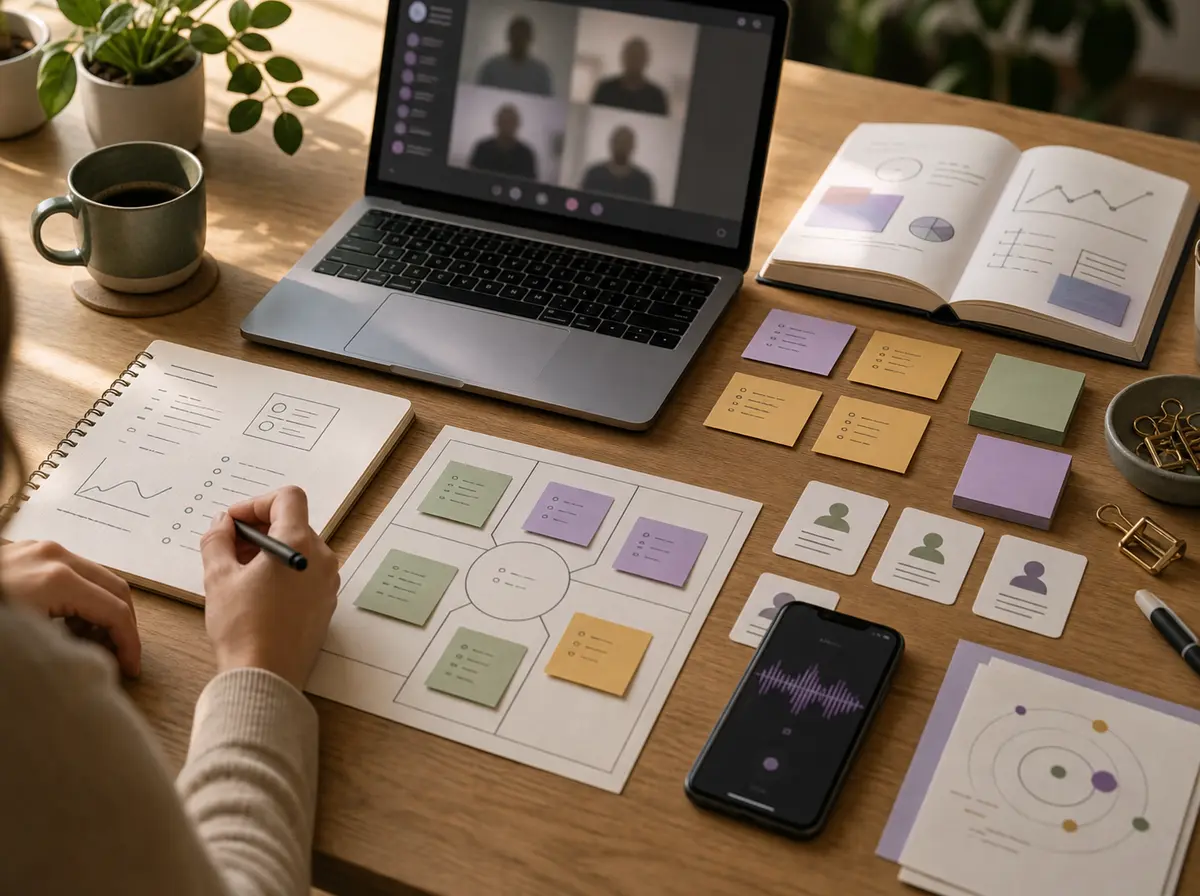
- 15 customer interviews, 20 minutes each. Open-ended questions, no pitching. Capture their exact words.
- 3 competitor purchases. Buy what your future customer buys today. Note what they do well and where the pain remains.
- 1 landing page test. Describe the solution, ask for an email, run $50 of traffic. Conversion rate is your first demand signal.
- 1 willingness-to-pay test. Quote a price to five interview subjects. Count the "yes" answers.
I built Preuve AI to compress the desk-research portion of this work into 90 seconds, but the customer conversations cannot be skipped. No tool replaces a 20-minute call with a real buyer. For the full process, see my guide to validating a startup idea.
Step 2: Pick the right business plan format
Three formats cover 95% of cases. Picking the right one is the second decision after validation, and getting it wrong wastes time. Start by asking who reads the document and what decision they need to make.
| Format | Length | Time to draft | Use when |
|---|---|---|---|
| Lean Canvas / Business Model Canvas | 1 page, 9 boxes | 60-90 min | Internal alignment, angel pitch, validation phase, iterating weekly. |
| Lean business plan | 5-10 pages | 3-5 hours | Pre-seed conversations, accelerator applications, first hires, board updates. |
| Traditional business plan | 15-30 pages | 8-15 hours | SBA-backed loan, federal or state grant, formal Series A, commercial lease. |
If you cannot name a specific person who will read 25 pages, do not write 25 pages. The longest plan is not the most credible plan. The plan most aligned with the reader's decision is.
When the canvas beats both
Alex Osterwalder's Business Model Canvas (Strategyzer, 2010) is nine boxes on one page: customer segments, value propositions, channels, customer relationships, revenue streams, key resources, key activities, key partners, cost structure. It is not a business plan. It is a thinking tool that produces the inputs for one. For the customer segments box, a buyer persona generator can draft structured profiles before your first interviews.
Run the canvas first. Fill it in pencil. Refill it after every five customer interviews. When the canvas stops changing week to week, you have enough signal to write the plan. Most founders should spend two to four weeks on the canvas before opening a longer template. For the value propositions box specifically, a value proposition generator can draft three testable angles in under a minute while you are still iterating the canvas.
Match the plan to your funding path
The format question has a second input: who is funding this. In the US the realistic early-stage channels each expect the plan structured differently, so decide the funding path before you decide the page count.
- SBA-backed loans (7(a), 504, microloans): up to $5M with a partial federal guarantee. They require the full traditional plan with formal three to five year projections and a use-of-funds breakdown. Strong fit for revenue-positive small businesses, weaker for pre-revenue software.
- Federal grants (SBIR, STTR) and state SBDC programs: non-dilutive R&D money. Phase I awards typically $50K to $300K, Phase II up to $2M. The agency expects a structured plan with technical milestones and clear public-benefit language.
- Equity crowdfunding (Republic, Wefunder, StartEngine): useful for rounds of $100K to $1M, but you need documentable traction before you launch.
- Angel networks and AngelList syndicates: checks of $25K to $100K. Angels want market evidence and founder-market fit over a long document - a lean plan plus a deck is enough.
- Accelerators (Y Combinator, Techstars): a small initial check and a large network. They care about customer-development speed, not plan length.
A plan written for an SBIR application is more formal and technical than one written for an angel, who wants your market evidence and synthesis first. Pick the format from the table above to match whichever channel is realistic for you.
Step 3: Draft the seven core sections (in the right order)
Every business plan that works contains these seven sections. The U.S. Small Business Administration's official traditional template uses the same structure with two optional additions (funding request and appendix).
Counter-intuition: do not write them in this order. Write them in the order shown in the "draft order" column. The executive summary is last because it summarizes what you wrote, not what you intend to write.
| Section | What it covers | Pages | Draft order |
|---|---|---|---|
| 1. Executive summary | One-paragraph compression of the whole plan. | 1-2 | Last (7th) |
| 2. Company description | Mission, legal structure, history, key team. | 1-2 | 5th |
| 3. Market analysis | TAM, SAM, SOM, customer segments, competitors. | 3-5 | 1st |
| 4. Organization & management | Org chart, founder bios, advisors, cap table. | 1-2 | 6th |
| 5. Product or service | What it is, how it works, IP, roadmap. | 2-4 | 2nd |
| 6. Marketing & sales | Positioning, channels, pricing, sales process. | 2-4 | 3rd |
| 7. Financial projections | P&L, cash flow, balance sheet, assumptions. | 3-5 | 4th |
Section 3 deep-dive: market analysis without guessing
The market analysis is the section that sinks the most plans. Founders cite a $400 billion industry and call it done. A reader notices in 30 seconds.
Three numbers, in this order, with sources:
- TAM (Total Addressable Market): the entire revenue opportunity if you captured 100% of the space. Source: government data (U.S. Census, Bureau of Economic Analysis), industry reports (IBISWorld, Gartner, Statista), or trade associations.
- SAM (Serviceable Addressable Market): the slice you could realistically reach once you account for geography and language constraints, plus the channels you can actually sell through today. Usually 5-20% of TAM.
- SOM (Serviceable Obtainable Market): what you can actually win in the first three years. Bottom-up calculation: customers reachable × conversion rate × average revenue per user.
I wrote a full guide on calculating TAM SAM SOM with real sources if you need the formulas. The shortcut: if your TAM is more than $50 billion and your SOM is more than $10 million in year one, your numbers are wrong.
Section 7 deep-dive: financial projections that hold up
The financial section needs four artifacts at minimum:
- Three-year profit and loss (revenue, cost of goods sold, gross margin, operating expenses, EBITDA).
- 18-month cash flow plan (monthly granularity for the first 18 months, then quarterly).
- Break-even analysis (units sold or revenue required to cover fixed costs).
- Assumption appendix (every number traces to a stated assumption).
Skip the five-year forecast. The further out you project, the more you signal to the reader that you are guessing. Investors mostly care about the next 18 months, lenders about the next 36, and nobody I have met takes year five seriously regardless of who built the model.
Anchor every assumption in a comparable. Pricing should reference at least two real competitor prices. Customer acquisition cost should reference a benchmark from a similar business model (the High Alpha and OpenView SaaS Benchmarks Report publishes fresh data every year). If a number cannot be benchmarked, label it as a hypothesis to test in the first 90 days.

Skip weeks of manual research
Get complete market research, sourced proof, competitor map, and pricing data for your idea instantly.
Step 4: Write your first draft in 60 minutes
Once validation is done and the format is picked, the first draft is fast. Here is the 60-minute first pass I run when writing a startup business plan from scratch.
- Minute 0-10: brain-dump the market analysis. Three numbers (TAM, SAM, SOM), three competitors, one customer quote. Bullet form. No prose yet.
- Minute 10-20: brain-dump the product section. One sentence on what it is. Three sentences on how it works. One sentence on what makes it defensible.
- Minute 20-30: brain-dump marketing and sales. One channel you have already tested. One pricing model with a real comparable. One sales process step.
- Minute 30-45: brain-dump financials. Year-one revenue (units × price), year-one costs (fixed + variable), break-even month. No five-year forecast yet.
- Minute 45-55: brain-dump company and team. Mission in one sentence. Founders' relevant background in three sentences. Open roles in a list.
- Minute 55-60: write the executive summary last. One paragraph that compresses every bullet above. If it does not flow, the underlying sections are weak. Fix them, not the summary.
Print the result and read it as if a stranger handed it to you. Three flags to watch for: vague nouns ("solutions", "synergies"), unsourced numbers, and adjectives doing the work that should belong to nouns. Strike them. What is left, even if it looks thin, is the actual skeleton of a real plan, and that is more than most founders have at this stage.
Free startup business plan templates worth using
Skip paid template marketplaces. The free ones from credible sources are better, and the credibility transfers when a lender or investor recognizes the format.
Preuve AI worksheet
The Lean Business Plan Worksheet I built from this guide
One-page Lean Canvas plus the 7-section worksheet with prompts and space to fill in. Print-ready PDF, drafts in 60 minutes.
Other free templates worth using:
- U.S. Small Business Administration: two free templates (traditional and lean startup) at sba.gov. The default for any plan submitted to a U.S. lender.
- SCORE: industry-specific templates (food service, retail, professional services, manufacturing) at score.org. Backed by SBA mentors.
- Strategyzer: the original Business Model Canvas in PDF and digital, free at strategyzer.com.
- Leanstack: Lean Canvas (Ash Maurya's startup-focused variant of BMC), free at leanstack.com.
For Google Docs versions, both SBA templates are publishable to Google Docs in two clicks. Use the SBA file directly. Do not pay $29 for a Notion template that is the same content with a different cover page.
Seven mistakes that sink first startup business plans
I have read hundreds of first plans. The same seven mistakes appear in roughly that order:
- Writing the executive summary first. You compress assumptions, not facts. Always last.
- Citing TAM only. $50 billion TAM with no SOM is a red flag. Lenders and investors look for the SOM first.
- Five-year revenue projections with no Q4 plan. If you cannot map the next 12 weeks in detail, year five is fiction.
- Using "we believe" or "we anticipate" instead of citing data. Replace every "we believe" with a number and a source. If you cannot, drop the claim.
- Listing 12 competitors, none of them real substitutes. Three real competitors beat 12 vague ones. Name the actual product the customer uses today.
- Generic customer descriptions. "Small business owners" is not a customer. "Independent dental practice owners in U.S. cities of 50,000+ with 1-3 employees" is.
- No pricing comparable. If your $99/month price is not anchored to two competitors' published prices, the financial projections are guesses.
The pattern: most first-plan mistakes come from filling in a template before doing the underlying research. The plan is downstream of the research, not a substitute for it.
When to stop planning and start selling
The business plan is a checkpoint, not a finish line. The moment to stop polishing the plan and start selling is the moment three conditions are true:
- You can describe the customer, the problem, and the price in one sentence each, without notes.
- You have at least three customer interviews on record where the buyer used the words "I would pay for that" with a specific dollar number attached.
- You have a 12-week plan to make the first sale, and you can name the channel.
If those three are true, the plan is already good enough. Close the doc and go sell. Whatever revision you do six months from now will be sharper because the first ten customers will have rewritten parts of it for you, often without realizing they did it.
The shortest path forward
Writing a startup business plan is a sequence, not a draft. The work goes in this order: validate first, then pick the format that matches whoever is going to read the document, then draft the seven sections in evidence order with the executive summary written last, then stress-test the financials against published benchmarks. The point at which it is "good enough" is when you can sell from it, not when it is perfect.
If you are at step zero (idea in head, no customer conversations yet), do not open a template. Start with the validation work. I built Preuve AI for that step: it compresses the desk-research portion (TAM, competitors, demand signals, market sources) into 90 seconds so you can spend the saved hours on customer interviews. The plan you write afterwards ends up faster to draft and noticeably more defensible, partly because it is shorter and partly because the evidence is already in front of you.
Two more guides if you want to keep going: how I validate startup ideas before any plan exists, and the customer discovery questions I use in every interview.
FAQ
What is the first step in writing a startup business plan?
Validate the problem before writing a single section. Talk to 15 to 20 potential customers, capture their exact words, and confirm they have the pain you think they have. The first page of any plan that works is built on those interviews. Founders who skip this step write fiction in business-plan format and waste two to four weeks doing it.
How long should it take to write a startup business plan?
A first draft of a lean business plan takes 60 to 90 minutes once validation is done. A traditional 20 to 30 page plan takes 8 to 15 hours of writing spread across one to two weeks. The bottleneck is never the writing. It is having the customer evidence, market data, and financial inputs ready before you sit down.
Should I use a lean business plan or a traditional one?
Use a lean business plan (one page, Lean Canvas or Business Model Canvas) for early validation, internal alignment, and any conversation with angel investors. Use a traditional 20 to 30 page plan only when an SBA loan, a federal or state grant, or a formal Series A round requires it. For 90% of founders starting in 2026, lean wins.
What sections does a startup business plan need?
Seven core sections: executive summary, company description, market analysis, organization and management, product or service description, marketing and sales strategy, and financial projections. The U.S. Small Business Administration adds two optional sections (funding request and appendix) for plans submitted to lenders or grant programs.
How long should a startup business plan be?
For an early-stage startup, 15 to 25 pages is plenty for a traditional plan, and a one-page lean canvas is enough before that. A serious investor will not read 60 pages before meeting you. Long plans are usually defensive, written by founders who have not validated the idea and use page count as proof of effort. Fewer pages take more thinking.
When do you actually need a startup business plan?
When something formal requires the document. Roughly four situations qualify: an SBA-backed loan, a federal or state grant program like SBIR, a formal Series A where an institutional VC wants the plan as due-diligence support, and a commercial lease. In every other case, a one-page lean canvas and twenty customer interviews tell you more than a 40-page plan.
Can I write a startup business plan without market data?
No. The market analysis section needs at least three numbers: total addressable market (TAM), serviceable addressable market (SAM), and a defensible serviceable obtainable market (SOM) for year one. Without these, the financial projections are guesses, and a reader spots that in the first 30 seconds.
Where can I find free startup business plan templates?
The U.S. Small Business Administration publishes two official templates (traditional and lean startup) for free at sba.gov. SCORE offers industry-specific templates for retail, food service, professional services, and manufacturing. For a Business Model Canvas, Preuve AI's free Business Model Canvas Generator drafts all nine blocks from a one-paragraph idea description; Strategyzer and Leanstack also publish free blank PDF versions. Skip paid template marketplaces - they add no signal a free template lacks.

Vincent
5 years in B2B growth, building Preuve AI in public. 82% of ideas it scores aren't ready, the point is finding out in 10 minutes, not 3 months.
Follow on X →
Building is expensive. Validation is free.
Run your idea through 10 AI agents before you write a line of code. Every claim source-linked.