
Key takeaways
- The best AI startup ideas for 2026 are not ChatGPT wrappers. The five lowest-saturation categories are AI compliance tooling (EU AI Act enforcement, August 2026), vertical SaaS for boring industries (HVAC, pest control, roofing), AI agent infrastructure, senior care tech, and fintech infrastructure. What they share is a moat that the model alone cannot provide, usually a regulated domain or a buyer a horizontal tool cannot reach.
- Five AI startup categories are oversaturated and should be skipped in 2026: AI writing assistants (100+ funded competitors), AI customer support chatbots, AI meeting summarizers, AI logo generators, and AI resume builders. Incumbents shipped these natively, collapsing standalone margins.
- Saturation is scored on a 3-band scale: Underserved means fewer than 5 funded competitors, Heating Up is 5 to 15, Oversaturated is 15+. Of the 50 ideas here, 24 are Underserved, 23 Heating Up, and 3 are Oversaturated to avoid.
- For solo founders, the two most buildable categories are vertical SaaS and creator micro-tools. Vertical SaaS for HVAC, pest control, and roofing can reach $10K MRR on a single niche with trade-association distribution and no sales team. Most ship a working MVP for $500 to $5,000.
- Every idea is ranked by buyer, forcing function, and saturation, Cross-referenced against YC W26 batch trends, regulatory deadlines, and public revenue signals. I kept gut-feel out of the scoring on purpose. You can scan any idea on this list through Preuve AI in about 60 seconds.
Most AI startup ideas for 2026 are the same red ocean: AI writing tools, chatbots, logo generators, resume builders. More than 70% of founders are building in markets already past saturation, repackaged with a fresh landing page each scan.
The best AI startup ideas for 2026 are not ChatGPT wrappers. The five lowest-saturation categories are AI compliance tooling (driven by EU AI Act enforcement in August 2026), vertical SaaS for boring industries like HVAC and roofing, AI agent infrastructure, senior care tech, and fintech infrastructure. Each one targets a buyer that a horizontal tool cannot serve on its own, because the moat is a regulation, a proprietary dataset, or deep domain specificity rather than the model. The categories to skip are AI writing assistants, support chatbots, meeting summarizers, logo generators, and resume builders, which incumbents already ship natively.
Below are 50 specific ideas rated by real market data instead of gut feeling, ranked by saturation across 11 categories with the buyer, the timing catalyst, and a competition score for each one. The catalysts are concrete: regulation deadlines, demographic shifts, and infrastructure gaps nobody is filling. If you want ideas matched to your skills first, use the free startup idea generator before you pick a category.

Will your idea survive the market?
Preuve AI runs 10 agents against live market data and links every claim to a source. Free analysis in 60 seconds.
AI Startup Opportunities 2026, Ranked by Saturation
The 11 categories below are ranked from least to most saturated. Underserved means fewer than 5 funded competitors, Heating Up is 5 to 15, and Oversaturated is 15 or more. Of the 50 ideas in this guide, 24 are Underserved, 23 are Heating Up, and 3 are Oversaturated to avoid. The same saturation check runs inside a full startup idea validation scan if you want the numbers on your own idea.
| Category | Saturation | Primary buyer | Timing catalyst |
|---|---|---|---|
| AI compliance and regtech | Underserved | SaaS, fintech, healthcare in the EU | EU AI Act enforcement, August 2026 |
| Vertical SaaS for boring industries | Underserved | HVAC, pest control, roofing firms | Labor costs up 30%, still on spreadsheets |
| Fintech infrastructure | Underserved | Marketplaces, banks, EU SMBs | EU e-invoicing mandate, end of 2026 |
| Agent infrastructure | Underserved | Enterprise AI teams | Multi-agent systems moving to production |
| Senior care tech | Heating Up | Medicare Advantage plans, adult children | 10,000 Americans turn 65 daily |
| Industrial AI and robotics | Heating Up | Manufacturers, 3PLs, utilities | YC W26 focus, clear ROI budgets |
| Creator economy micro-tools | Heating Up | Podcasters, streamers, newsletter writers | Big platforms ignore narrow niches |
| Sustainability and climate compliance | Heating Up | SMBs supplying ESG-reporting enterprises | SEC and EU CSRD disclosure rules |
| Developer tools (specific gaps) | Heating Up | Engineering teams, enterprises | Legacy migration, dependency sprawl |
| Vertical data and analytics | Heating Up | Restaurant groups, nonprofits, hospitals | Margin compression, post-iOS attribution |
| AI writing, chatbots, summarizers | Oversaturated | None left to capture | Shipped natively by incumbents |

AI Compliance and Regulatory Tech
Regulation is probably the strongest forcing function in early-stage startups. Once a government attaches a hard deadline and million-dollar fines to a behavior, buyers stop debating whether they need a solution and quietly start writing checks. The EU AI Act enforcement hits August 2026, and every company deploying AI in Europe will need compliance tooling, which most of them simply do not have yet.
1. EU AI Act Compliance Documentation Generator
Problem: Companies deploying AI in Europe need risk assessments, algorithmic impact statements, and audit trails. Most are doing this manually with lawyers at $500/hour.
Who pays: SaaS and fintech companies operating in the EU, plus any healthcare team handling EU resident data.
Why now: August 2026 enforcement deadline. Non-compliance means fines up to €15M or 3% of global turnover.
Underserved
2. FDA 510(k) Medical Device Documentation AI
Problem: Medical device companies spend $50K-$200K per FDA submission, mostly on documentation. The process takes 6-12 months and requires specialized regulatory consultants.
Who pays: Medtech startups and mid-size device manufacturers.
Why now: The FDA is using AI to review submissions. Companies that generate AI-readable documentation get faster approvals.
Underserved
3. Biometric Privacy Compliance Auditor
Problem: Any app using face or fingerprint authentication needs BIPA and CCPA compliance. Most do not know they are violating until the lawsuit arrives.
Who pays: App developers using biometric authentication. Enterprise security teams.
Why now: BIPA settlements now exceed $100M. Class action lawyers are actively scanning for violators.
Underserved
4. AI Model Explainability Certification
Problem: Banks and insurers using AI for decisions, along with HR platforms doing automated screening, need to prove their models are not biased. Generating SHAP/LIME reports at scale is a manual nightmare.
Who pays: Banks, insurance companies, HR platforms deploying AI-driven decisions.
Why now: The Fair Lending Act now explicitly covers AI models. Regulators are auditing.
Underserved
5. Synthetic Data Compliance Verification
Problem: Companies generating synthetic data for ML training need to prove no PII leaks through. Current auditing is manual and incomplete.
Who pays: Fintech and healthcare companies using synthetic data pipelines.
Why now: GDPR enforcement against synthetic data providers is increasing. Fines are real.
Underserved

Vertical SaaS for Boring Industries
The unsexy markets are where the actual money tends to be. HVAC, pest control, roofing, landscaping - these are $100B+ industries that still mostly run on spreadsheets and phone calls. Founders building here usually face less competition and a higher willingness to pay, with retention that sticks because the buyer cannot easily go back to chaos. Do the competitor analysis on any of these and the field is thin: a handful of dated tools, no modern default.
6. HVAC Contractor Scheduling and Quoting SaaS
Problem: HVAC companies handle dispatch, on-site quoting, and parts ordering across disconnected tools. 60% of jobs are emergency calls where speed determines margin.
Who pays: HVAC companies with 5-50 technicians.
Why now: Labor costs up 30%. Faster dispatch directly translates to higher revenue per truck.
Heating Up
7. Pest Control Route Optimization
Problem: Pest control companies waste 25%+ of technician time on inefficient routing. Chemical usage tracking is done on paper. Scheduling is a mess.
Who pays: Pest control companies with recurring service contracts.
Why now: Chemical usage regulations are tightening. Labor costs up 30%. Route optimization pays for itself in weeks.
Underserved
8. Roofing Project Management
Problem: Roofing contractors juggle drone inspections, material estimation, crew scheduling, and insurance claim filing across 4-5 separate tools. Or paper.
Who pays: Roofing contractors doing $1M-$20M annual revenue.
Why now: Commercial drone prices dropped 80%. Insurance claims are digitizing. One integrated tool replaces five.
Underserved
9. Landscaping Crew Management
Problem: Commercial landscaping runs on seasonal labor. GPS tracking, job costing, and workforce scheduling are done manually - leading to overbidding or underpricing every contract.
Who pays: Commercial landscaping companies with 10+ crews.
Why now: Tight labor market means efficiency is survival. Companies that optimize crew utilization win the bids.
Underserved
10. Auto Repair Shop Management
Problem: Independent auto shops handle parts ordering, labor tracking, customer communication, and warranty claims using outdated desktop software or paper tickets.
Who pays: Independent auto repair shops (growing segment as OEM dealers lose market share).
Why now: Independents are gaining share from dealerships. Modern tooling is the competitive edge they need.
Heating Up

Senior Care Tech
10,000 Americans turn 65 every single day. The healthcare system cannot scale fast enough to absorb that volume with human providers alone, yet most startups keep chasing Gen Z consumers. The senior care market is enormous, still growing, and technology has barely scratched it.
11. AI Fall Detection for Independent Seniors
Problem: Senior falls cost $50B/year in the US. Existing medical alert systems have a 60% false positive rate, leading to alert fatigue and abandonment.
Who pays: Seniors themselves ($9.99/mo), adult children, or Medicare Advantage plans.
Why now: Phone accelerometers + LLMs can distinguish real falls from "dropped my phone" scenarios. No wearable hardware needed.
Heating Up
12. Medication Adherence Tracking via Computer Vision
Problem: Medication errors cost $300B/year. Pill boxes do not work. Nurses confirming dosage is expensive. There is no reliable way to verify a senior took the right pill at the right time.
Who pays: Senior living facilities, health insurance companies.
Why now: Computer vision is accurate enough to identify pills. Smartphone cameras are good enough. The economics work at scale.
Underserved
13. Cognitive Decline Early Detection App
Problem: Dementia is only treatable when caught early. By the time families notice symptoms, significant decline has already occurred. No scalable screening exists outside clinical settings.
Who pays: Insurance companies, Medicare Advantage plans (early detection saves them millions).
Why now: Weekly cognitive mini-games can track decline over time. Early detection is the only meaningful lever for dementia outcomes.
Underserved
14. AI Companion for Isolated Seniors
Problem: Senior isolation is now classified as a public health crisis. Loneliness increases mortality risk by 26%. Existing solutions (phone check-ins, community programs) do not scale.
Who pays: Adult children, Medicare Advantage plans offering supplemental benefits.
Why now: Voice AI is natural enough for sustained conversation. Personalized agents trained on family memories create genuine connection.
Heating Up
15. Virtual Geriatric Consultation Platform
Problem: The US needs 40,000 geriatricians by 2030. Only 7,000 exist. Rural areas have almost zero access to specialized senior care.
Who pays: Rural clinics, Medicare Advantage plans, hospital systems.
Why now: Telehealth reimbursement is permanent post-COVID. EHR integration APIs are mature. The supply-demand gap is only widening.
Underserved
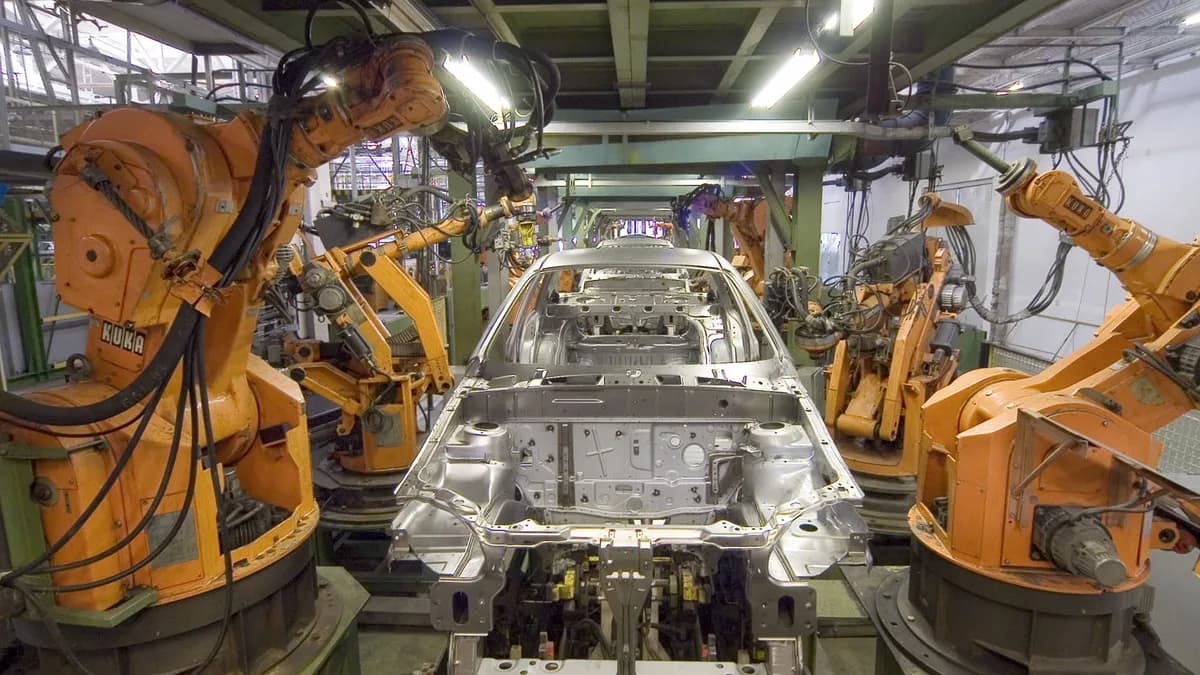
Industrial AI and Robotics
YC's W26 batch leaned hard into industrial AI, and the reason is not mysterious. These problems carry clear ROI for buyers who already have real budgets to spend. When I size these markets against public data, industrial AI lands near the top on TAM/SAM/SOM because the spend already exists, it is just badly tooled.
16. Warehouse Bin Assignment Optimizer
Problem: Fulfillment centers waste 20-30% of picker time because products are stored in suboptimal locations. Most use static rules, not dynamic optimization.
Who pays: 3PLs, logistics companies, e-commerce warehouses.
Why now: Warehouse labor costs up 30%. Computer vision + ML can optimize bin placement in real-time. Payback period is weeks, not months.
Heating Up
17. Predictive Maintenance for Industrial Pumps and Bearings
Problem: Unplanned downtime in manufacturing costs an average of $250K per hour. Pumps and bearings fail without warning. Maintenance is either too early (wasteful) or too late (catastrophic).
Who pays: Manufacturing plants, utilities, process industries.
Why now: Vibration and thermal sensors are cheap. ML models can predict failure 2-4 weeks out. The ROI is immediate and obvious.
Heating Up
18. Computer Vision QC for Pharmaceutical Manufacturing
Problem: Pharma manufacturers inspect vials and tablets manually or with basic rule-based vision systems. Defect rates on production lines are tracked inconsistently.
Who pays: Pharmaceutical manufacturers (compliance-driven, high willingness to pay).
Why now: FDA is pushing "real-time release testing" - continuous QC instead of batch sampling. AI vision makes this economically viable.
Underserved
19. Construction Crew Scheduling AI
Problem: General contractors managing multiple sites lose 25%+ of productive time to idle crews, equipment conflicts, and weather delays. Scheduling is done in spreadsheets.
Who pays: General contractors running 5+ concurrent projects.
Why now: Construction labor shortage is the worst in 20 years. Optimizing existing crews is cheaper than hiring crews that do not exist.
Heating Up

Creator Economy Micro-Tools
The generic "creator tools" market is dead. Canva, Notion, and the big platforms absorbed it. But specific micro-niches within the creator economy are wide open. The key: target a creator type so specific that big platforms will not build for them. This is where confirmation bias kills most founders - they see "creator economy" and think it is hot, but the winning move is going narrow.
20. Podcast Clip Generation and Thumbnail Creation
Problem: Podcasters need short social clips to grow their audience. Creating them manually takes 3-5 hours per episode. Most podcasters skip it entirely.
Who pays: Podcasters and podcast networks with 1,000+ listeners per episode.
Why now: Clip discovery drives 60% of new podcast listeners. AI can auto-extract the best moments and generate social-ready clips.
Heating Up
21. Twitch Analytics for Streamers
Problem: Twitch streamers have almost no data on what drives engagement. Which games, what times, what content formats - all guesswork. 9 million creators competing blind.
Who pays: Twitch streamers with 10K+ followers (serious about growth).
Why now: Streaming is mainstream but creator tools have not kept up. Data is the competitive edge in a crowded field.
Underserved
22. Newsletter Monetization Engine
Problem: Newsletter writers making $5K-$100K/mo have no tools for A/B testing paywall positions, optimizing paid conversion, or managing tiered subscriptions outside of Substack's take-it-or-leave-it model.
Who pays: Newsletter writers outgrowing Substack.
Why now: Substack growth is plateauing. Top writers want more control over monetization and fewer platform dependencies.
Heating Up
23. AI Course Creator from Existing Content
Problem: Experts with YouTube channels and blogs want to sell courses, but course creation costs $20K+ and takes months. The content already exists - it is trapped in the wrong format.
Who pays: Content creators and subject matter experts launching education products.
Why now: AI can restructure video transcripts and blog posts into structured lesson plans with quizzes and built-in progress tracking, in hours instead of months.
Heating Up

Developer Tools (Specific Gaps, Not AI Coding Assistants)
If your developer tool idea is "AI that writes code," stop. Cursor, Copilot, Windsurf, and Claude Code are spending billions on that problem. You cannot out-resource them. But there are specific gaps in the developer toolchain that big players are ignoring.
24. Legacy Code Refactoring Assistant
Problem: Enterprises sit on 15-year-old PHP and Java codebases that nobody wants to maintain. New developers refuse to work on them. Rewriting is too expensive. Migration is stuck.
Who pays: Enterprises with legacy systems they cannot hire developers to maintain.
Why now: Developer talent pool demands modern stacks. AI can now generate tests for legacy code before refactoring - the missing piece.
Heating Up
25. API Deprecation Manager
Problem: Engineering teams with 500+ dependencies have no way to track API deprecations, breaking changes, or removal timelines. They find out when things break in production.
Who pays: Engineering teams at companies with large dependency trees.
Why now: npm packages get removed weekly. API versioning is inconsistent. The blast radius of surprise deprecations is growing.
Underserved
26. Open Source License Compliance Scanner
Problem: Companies unknowingly include GPL/AGPL dependencies that require open-sourcing their proprietary code. The legal risk is real and growing.
Who pays: Companies with legal teams that care about IP protection.
Why now: Open source license enforcement is increasing. Several high-profile lawsuits in 2025 spooked legal departments.
Heating Up
27. Database Migration SaaS
Problem: Migrating from PostgreSQL to Aurora, Spanner, or CockroachDB requires weeks of manual work and carries production downtime risk. There is no reliable automated path.
Who pays: Enterprises going multi-cloud or escaping vendor lock-in.
Why now: Vendor lock-in fears are growing. Multi-cloud is now policy at most Fortune 500 companies. Zero-downtime migration is the hard part.
Underserved


Skip weeks of manual research
Get complete market research, sourced proof, competitor map, and pricing data for your idea instantly.
Fintech Infrastructure
Consumer fintech is a bloodbath these days. The infrastructure layer underneath, the actual plumbing that fintech products run on, still has massive gaps - especially in B2B payments and cross-border compliance, plus the entire settlement layer that nobody likes building.
28. E-Invoicing Format Converter
Problem: The EU is mandating e-invoicing by end of 2026. Over 10 million SMBs need to convert legacy invoice formats to UBL/Peppol standards. Most have never heard of either format.
Who pays: European SMBs and VAT consultants who serve them.
Why now: Hard regulatory deadline. 10M+ businesses affected. First movers own the market before the deadline hits.
Underserved
29. B2B Payment Fraud Detection
Problem: B2B payment fraud exceeds $50B/year and is growing 15% annually. Vendor takeover fraud - where attackers change bank details on legitimate invoices - is the biggest vector. Consumer fraud tools do not catch it.
Who pays: Banks, corporate treasury departments, large accounts payable teams.
Why now: Behavioral analysis of transaction patterns can flag vendor takeover in real-time. The fraud is growing faster than defenses.
Underserved
30. Micropayments Orchestration
Problem: Stripe charges 2.9% + $0.30 per transaction. On a $0.50 payment, that is a 63% fee. Micropayments are economically impossible with current rails. This blocks entire business models.
Who pays: Content platforms, gaming studios, API billing companies.
Why now: AI API usage is per-call. Pay-per-article is growing. Gaming microtransactions are everywhere. All need sub-dollar payments to work.
Heating Up
31. Settlement as a Service
Problem: Marketplace founders need to handle payment splits, escrow, chargebacks, and tax withholding. Settlement is the hardest part of embedded finance and nobody wants to build it from scratch.
Who pays: Marketplace founders, neobanks, embedded finance companies.
Why now: Marketplace model is the dominant startup pattern. Every marketplace needs settlement. Few want to build it.
Underserved
32. Cross-Border Payroll for Distributed Teams
Problem: Companies with employees in 50+ countries face different tax codes, deduction rules, and compliance requirements for each one. Existing solutions are expensive and clunky.
Who pays: Remote-first startups and mid-size companies with distributed teams.
Why now: Global remote work is normalized post-COVID. The compliance complexity scales with every new country a team hires in.
Heating Up

Sustainability and Climate Compliance
Sustainability was optional in 2023, but in 2026 it has effectively become mandated. SEC climate disclosure rules and the EU Corporate Sustainability Reporting Directive are now forcing companies to measure and report at scale, while supply chain ESG requirements are pushing the same expectations down to suppliers. The result is a compliance-driven market with clear buyers attached to real deadlines.
33. Carbon Accounting SaaS for SMBs
Problem: Large enterprises have carbon accounting teams. SMBs that supply those enterprises are now required to report Scope 1/2/3 emissions - but have zero tooling for it.
Who pays: SMBs whose enterprise customers require ESG data for their own reporting.
Why now: SEC rules and EU sustainability directives are forcing top-down compliance. Enterprise buyers are pushing the requirement to their suppliers.
Heating Up
34. Supply Chain Decarbonization Optimizer
Problem: Scope 3 emissions (supply chain) account for 70%+ of most companies' carbon footprint. Identifying which suppliers to replace and calculating the ROI of switching is a manual, data-heavy process.
Who pays: Manufacturers, retailers, and any company with complex supply chains.
Why now: Scope 3 emissions are a board-level risk. Companies need to show reduction plans, not just measurements.
Underserved
35. Building Energy Optimization
Problem: Commercial buildings waste 20% of energy costs on suboptimal HVAC and lighting schedules. Manual adjustments cannot respond to real-time occupancy or weather changes.
Who pays: Facility managers, commercial property owners, REITs.
Why now: IoT sensors are cheap. ML models reduce energy costs 15-25%. Payback period under 12 months. Regulations tightening.
Heating Up

Data and Analytics for Specific Verticals
"Analytics platform" is not really a startup idea on its own, whereas analytics for restaurant kitchens absolutely is. The narrower you go on the vertical, the more willing the buyer tends to be to pay real money, and the less you have to fight for share against horizontal incumbents. Run a broad framing and a narrow framing of the same idea through the same validation process and the narrow one almost always scores higher on buyer intent.
36. D2C Attribution AI
Problem: Apple's ATT update broke Facebook attribution for direct-to-consumer brands. They are flying blind on which channels drive revenue. TikTok, Instagram, email, SMS - no unified view.
Who pays: D2C brands doing $5M+ annual revenue.
Why now: The iOS tracking problem is not getting fixed. First-party data attribution is the only path forward. AI can model the gaps.
Heating Up
37. Restaurant Kitchen Operations Analytics
Problem: Restaurant groups have no visibility into prep times, food waste, or ticket times across locations. Managers rely on intuition. Margins are razor-thin and getting thinner.
Who pays: Restaurant groups with 5+ locations.
Why now: Labor costs up 18%. Margin compression is severe. Data-driven kitchen ops is the difference between profit and loss.
Underserved
38. Nonprofit Donor Intelligence
Problem: Large nonprofits cannot predict which donors will churn, upgrade, or lapse. Donor retention is down 45% since COVID. They are spending acquisition dollars on people who were going to give anyway.
Who pays: Nonprofits with $5M+ annual fundraising budgets.
Why now: Post-COVID donor behavior has changed permanently. Nonprofits that predict churn and personalize outreach retain 2-3x more donors.
Underserved
39. Supply Chain Risk Visualization
Problem: Procurement teams at Fortune 500 companies cannot really see their full supply chain exposure end to end. Supplier concentration data lives in one tool. Geopolitical exposure sits in a second tool. Climate vulnerability is usually tracked manually, often inside a disconnected spreadsheet that nobody fully owns.
Who pays: Fortune 500 procurement and risk departments.
Why now: Supply chain resilience is a board-level priority post-COVID. Every quarterly earnings call asks about it.
Heating Up
40. Healthcare Patient Financial Outcomes
Problem: Hospitals and dental offices cannot predict which patients will default on payments. They offer the same payment plans to everyone, losing money on both ends.
Who pays: Hospital systems, large dental practices, revenue cycle management companies.
Why now: Surprise billing crackdowns mean providers must offer payment plans. Predicting default risk makes those plans sustainable.
Underserved

Agent Infrastructure
Everyone is building AI agents, but almost nobody is building the infrastructure those agents need to run reliably in production. This is the picks-and-shovels play of 2026. Look at public funding from the last few quarters and the gap is clear: money keeps piling into the application layer, but the infrastructure those agents depend on in production is still mostly unbuilt. For the application-layer view of which vertical agent niches are still underserved vs crowded, I wrote a separate deep-dive on AI agent startup ideas.
41. Shared Memory Layer for Multi-Agent Systems
Problem: When multiple AI agents collaborate, each one starts with zero context. There is no shared memory store. Teams burn 40% of their compute budget re-establishing context across agents.
Who pays: Enterprise AI teams deploying multi-agent workflows.
Why now: Context windows are expensive. Shared memory reduces compute costs 40%. Multi-agent systems are moving from demos to production.
Underserved
42. Agent Observability Dashboard
Problem: When an AI agent makes a wrong decision in production, there is no way to trace why. No execution logs, no decision trees, no error playback. Debugging agents is like debugging a black box.
Who pays: Companies deploying autonomous agents in production (customer service, ops, coding).
Why now: Agents are causing real production incidents. The observability gap is becoming a liability.
Heating Up
43. Domain-Specific Agent Builder
Problem: General agent frameworks (LangChain, CrewAI) require heavy customization for each use case. A real estate agent, insurance agent, and support agent have completely different needs.
Who pays: Non-technical teams in specific verticals (real estate, insurance, customer support).
Why now: General frameworks are too fragile for production. Vertical-specific templates deploy 5x faster and break less.
Heating Up

Miscellaneous High-Potential Ideas
These do not fit neatly into any of the categories above, but the underlying data shows strong signals for each one - a buyer that already exists with money to spend, timing that actually makes sense for 2026, and a competitive field that is still surprisingly thin.
44. Real Estate Underwriting AI for Rental Investors
Problem: Landlords and property managers screen tenants using credit scores and gut feelings. Eviction filings are up 15%. Bad tenants cost $10K-$50K per incident.
Who pays: Landlords, property management companies, REITs.
Why now: Eviction data, income verification APIs, and credit data can be combined into a single risk score. The data infrastructure finally exists.
Heating Up
45. Legal Discovery AI for Intellectual Property
Problem: IP law firms spend hundreds of hours manually scanning patent portfolios for infringement risks. Patent litigation is up 40%. The volume of patents to review is overwhelming.
Who pays: IP law firms and corporate legal departments.
Why now: AI can now read and compare patents at scale. Patent litigation volume makes manual review impossible.
Heating Up
46. Insurance Claims AI with Medical Knowledge
Problem: Health insurance claims require reading medical records and cross-referencing policy language simultaneously. This takes adjusters hours per claim. Errors are expensive.
Who pays: Health insurance companies (massive budgets, clear ROI per claim processed).
Why now: Medical appeals are starting to use AI. Insurers who do not respond with AI of their own are at a disadvantage.
Heating Up
47. Export Control Compliance for AI Models
Problem: AI companies distributing model weights internationally need to comply with US and EU export restrictions. Tracking which models, which countries, and which restrictions apply is a manual compliance nightmare.
Who pays: AI companies distributing models internationally.
Why now: The US tightened AI export controls in March 2026. Violations carry criminal penalties. Compliance tooling does not exist yet.
Underserved
BONUS: What NOT to Build in 2026 (Oversaturated Categories)
I cannot stress this enough. These are the categories I built Preuve to flag early, before a founder burns three months on a market where the funded-competitor count is already in the dozens and the incumbent shipped the same feature for free last quarter. Unless you have a genuine unfair advantage, such as existing distribution, proprietary data, or a radically different approach, avoid these.
This is why 42% of startups fail - they build in markets where they cannot win.
48. AI Writing Assistants
Over 100 funded competitors. ChatGPT, Claude, Jasper, Copy.ai, Writesonic, and dozens more. Margins are collapsing as models commoditize. Google Docs and Notion have writing AI built in natively. There is no differentiation left.
Oversaturated
49. AI Customer Support Chatbots
Intercom, Zendesk, and Drift all shipped AI support features in 2024-2025. Freshdesk and HubSpot followed. The incumbents own the customer relationship, the chat widget, and the data. A standalone AI chatbot is fighting the platform owner with the platform owner's data.
Oversaturated
50. AI Meeting Summarizers
Otter, Read.ai, Fireflies, and Fathom captured this market early. Then Zoom built it natively, followed not long after by Google Meet, and Microsoft Teams shipped its own version in the same general window. Once every major video platform includes your feature for free, the standalone product is essentially out of runway.
Oversaturated
The pattern is clear: if a major platform can ship your product as a native feature inside a quarter, the standalone version is running out of air.
Startup Ideas by Niche: Quick Taxonomy
The 50 ideas above cluster into a handful of niches readers keep searching for by name. I mapped each niche to the numbered ideas that fit it, plus the pattern that makes the niche work in 2026.
AI Startup Ideas
Most AI ideas in 2026 lose because they compete with ChatGPT features. The ones that win pair AI with a regulated domain, proprietary data, or a specific buyer who cannot use a horizontal tool. Look at ideas 1-5 (AI compliance and regulatory tech) and 18 (computer vision QC for pharma): each one has a buyer with audit requirements a generic LLM cannot satisfy. Idea 46 (insurance claims AI) works because medical coding knowledge is a moat. If your AI idea has no moat beyond the model, skip it.
Subscription Business Ideas
Subscription works when the buyer has a recurring job to do. B2B tools with monthly operational value are the easiest path. Ideas 6-10 (vertical SaaS for HVAC, pest control, roofing, landscaping, auto repair) are classic subscription plays: the contractor uses the tool every day, churn is tied to going out of business. Ideas 20-23 (creator economy tools) also work as subscriptions because creators have ongoing content needs. Avoid consumer subscriptions unless you have a distribution advantage. CAC is brutal.
Marketplace Startup Ideas
Pure marketplaces are the hardest startup shape. Both sides need supply and demand from day one, and margins get squeezed. The marketplace-adjacent ideas that work in 2026 are hybrid plays: software-first with optional matchmaking. Idea 32 (cross-border payroll) has marketplace dynamics via contractor and client relationships. Idea 44 (real estate underwriting AI) could layer a deal-flow marketplace on top of its core tool. If you are set on a pure marketplace, validate chicken-and-egg solutions before writing code: do you have a distribution channel for supply? Then maybe.
Food and Restaurant Business Ideas
Food operations run on thin margins, which is why tech tools that save 1-2% of revenue have immediate ROI. Idea 37 (restaurant kitchen operations analytics) is the cleanest food-tech play on this list: the buyer (restaurant group) has the pain (waste and labor cost) and the budget. The related wedge most founders miss: non-restaurant food operators. Ghost kitchens, commissary bakeries, and food trucks all run commercial-grade operations without the tech stack restaurants have. If food excites you, build for those adjacent buyers first. The restaurant market is more saturated.
One-Person Startup Ideas (Solo Founder)
A one-person startup needs two properties: narrow enough that one person can own the roadmap, and distribution that does not require a sales team. Ideas 6-10 (vertical SaaS) and 20-23 (creator tools) hit both. Vertical SaaS often has a single-channel distribution (trade associations, industry subreddits, niche YouTube channels). Creator tools sell through the creators themselves once you earn a few. I also flag idea 24 (legacy code refactoring) and 25 (API deprecation manager) as solo-friendly: developer-first distribution, buyer self-serves. Avoid anything that needs enterprise sales, regulatory filings, or hardware.
Business Ideas for Teens and Students
Teens have three advantages most founders lose: low opportunity cost, native platform fluency (TikTok, Discord, Roblox), and time to iterate. The ideas on this list adjacent to that profile are 21 (Twitch analytics for streamers) and 22 (newsletter monetization engine). A teen who streams or creates has built-in access to the buyer group. For founders under 22, I also recommend looking at the Roblox ecosystem, school-adjacent tools (study tools, college application helpers), and Discord bot businesses. None are on this list because they are niches of niches, but they convert fast if you are already in the community.
Boring Business Ideas That Print Money
"Boring" is honestly the highest compliment a startup idea can get in 2026. It usually means low competition, a clear buyer who already pays for something inferior, and incumbents that move slowly enough that a small team can carve out real ground. Ideas 6-10 (vertical SaaS for HVAC, pest control, roofing, landscaping, auto repair), 28 (e-invoicing format converter), 33 (carbon accounting for SMBs), and 38 (nonprofit donor intelligence) all sit comfortably inside that boring profile. Nobody is going to retweet your HVAC scheduling SaaS, but these tend to start producing actual revenue by month three, which is more than most hot-category startups can say after month twelve.
How to Validate Any Idea on This List
Finding a promising idea is step one. Validating it is step two - and it is where most founders skip ahead to building. Do not do that. I ranked the validation tools that check against real sources separately, but here is the quick version:
- Check competitor density. Search for funded companies in the space. If there are 20+, the timing has passed. If there are 0, ask why - sometimes the market does not exist.
- Verify the buyer exists and already pays. Your ideal customer should be spending money on an inferior solution right now. Spreadsheets, consultants, manual processes. If they are not paying for anything, they will not pay for your tool either.
- Confirm the timing catalyst. Regulatory deadlines and demographic shifts are real catalysts, and so are sharp drops in the cost of an underlying technology that finally make a use case viable. "AI is hot right now" is not a catalyst.
- Size the market honestly. Use real TAM/SAM/SOM numbers - not "if we get 1% of a $100B market." Focus on the SOM: how many customers can you realistically reach in year one?
- Talk to 10 potential customers. Not friends and not other founders, but actual people who would pay if the product existed today. If roughly 7 out of 10 say "I would pay for that today," you probably have something worth building.
Or save yourself the usual 40 hours of desk research. I built Preuve AI to handle this idea validation in under a minute. It scans your own idea against 60+ live data sources using 10 parallel AI agents. What comes back is a 0-to-100 viability score, with competitor density, market size, and timing each called out separately so you can see where the weak spots actually are.
FAQ
What are the best AI startup ideas for 2026?
The best AI startup ideas for 2026 sit in five low-saturation categories: AI compliance tooling (EU AI Act enforcement lands August 2026), vertical SaaS for boring industries like HVAC, pest control, and roofing, AI agent infrastructure, senior care tech, and fintech infrastructure. In every case the moat is not the AI itself but the regulated domain, the proprietary data, or the specific buyer a general-purpose tool like ChatGPT cannot reach. Standalone categories such as AI writing tools and chatbots are oversaturated and should be skipped.
What are the trending AI startup opportunities in 2026?
The AI startup opportunities trending in 2026 are driven by forcing functions, not hype. The strongest are EU AI Act compliance documentation (August 2026 enforcement, fines up to €15M or 3% of global turnover), EU e-invoicing conversion (mandated end of 2026, 10M+ SMBs affected), AI agent infrastructure such as shared memory and observability, and senior care AI as 10,000 Americans turn 65 every day. These are the picks-and-shovels and regulation-driven plays where buyers already have budget.
What makes a good startup idea in 2026?
A good startup idea in 2026 needs a forcing function, which is a regulation, a deadline, or a market shift that pushes buyers from interest to urgency. It also needs a clear buyer who already pays for an inferior solution today, whether that is spreadsheets, consultants, or manual work, plus enough room to breathe, usually fewer than 10 funded competitors. The ideas that fail are almost always missing one of those, and most often it is the forcing function.
Which startup categories are oversaturated in 2026?
Five AI startup categories are oversaturated in 2026: AI writing assistants (100+ funded competitors), AI customer support chatbots, AI meeting summarizers, AI logo generators, and AI resume builders. Incumbent platforms shipped these features natively, collapsing margins for standalone tools. I use a simple test before building anything: if a platform like Notion or Zoom could ship your product as a native feature inside a single quarter, the standalone version probably will not have room to grow.
What is the best startup idea for a solo founder in 2026?
For a solo founder in 2026, vertical SaaS for boring industries (HVAC, pest control, roofing) and creator economy micro-tools are the most buildable ideas. They have a clear buyer, single-channel distribution through trade associations or the creators themselves, and can reach $10K MRR on one niche with no sales team. Most launch a working MVP for $500 to $5,000 using no-code or AI-assisted development.
How do I validate a startup idea from this list?
Validate any idea on this list with five checks: confirm competitor density (20+ funded means the timing has passed, 0 means ask why), verify the buyer already pays for an inferior solution, confirm the timing catalyst is real, size the market with TAM/SAM/SOM, and talk to 10 potential customers (aim for 7 of 10 saying they would pay today). You can run these checks manually in about 40 hours or scan the idea through Preuve AI in roughly 60 seconds, which checks 60+ live data sources via 10 parallel AI agents.
How much does it cost to launch one of these startup ideas?
Most ideas on this list launch an MVP for $500 to $5,000 using no-code tools or AI-assisted development. The exceptions are industrial AI, robotics, and fintech infrastructure, which typically need $50K to $200K for regulatory compliance and hardware integration. Vertical SaaS and creator micro-tools are the cheapest to start; medical-device and biometric-compliance ideas are the most expensive.

Vincent
5 years in B2B growth, building Preuve AI in public. 82% of ideas it scores aren't ready, the point is finding out in 10 minutes, not 3 months.
Follow on X →
Building is expensive. Validation is free.
Run your idea through 10 AI agents before you write a line of code. Every claim source-linked.