Key takeaways
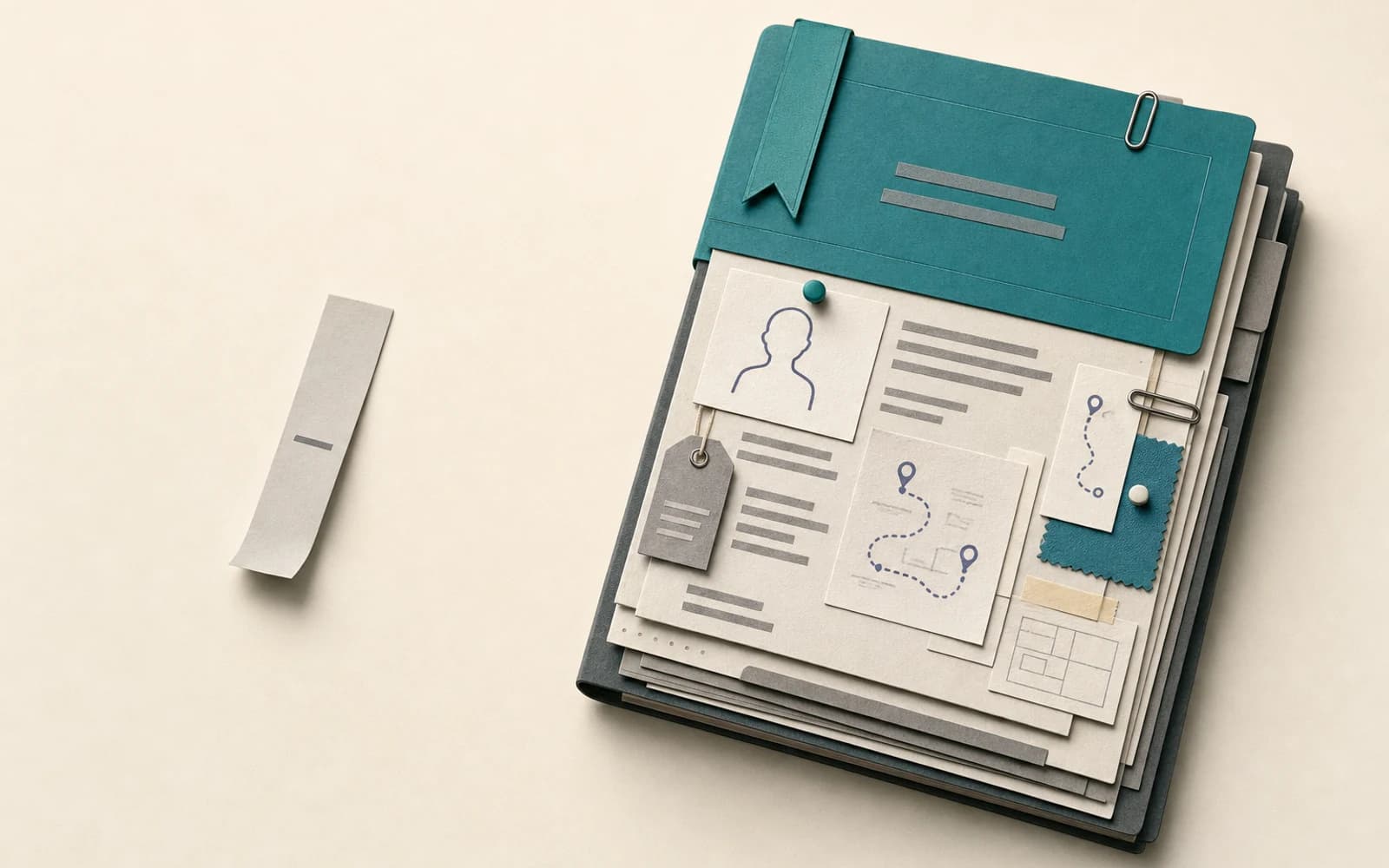
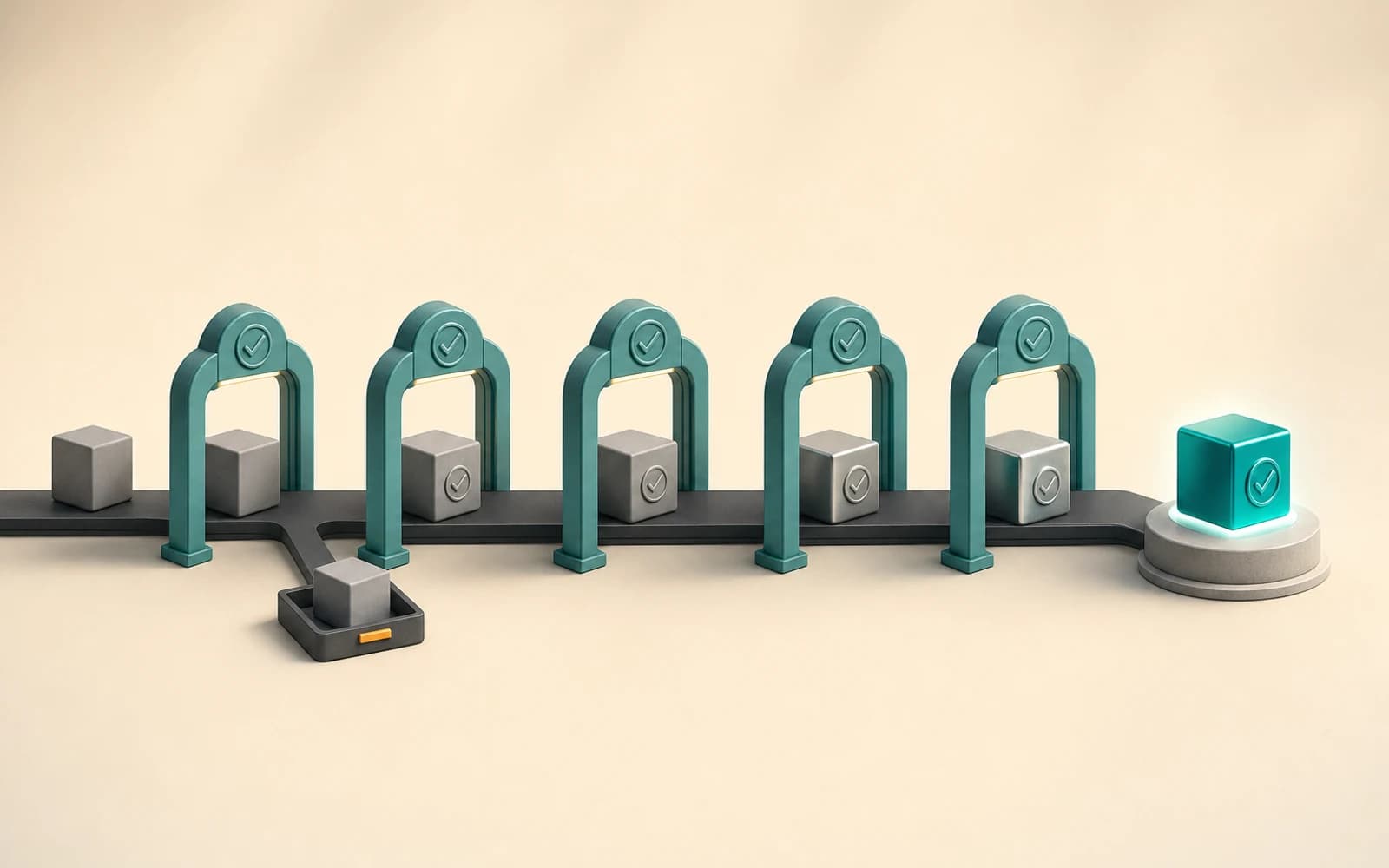
- A product launch checklist is the list of revenue-moving tasks, Run before, during, and after putting a product in front of paying buyers. This is the version for post-validation launches.
- Entry bar: It assumes buyer-action evidence already exists, not just a waitlist.
- The window: It focuses on the four-week launch window where most of the early revenue is actually decided.
- The goal: Paying customers, not claps, so every task on it has to move revenue.
Your product launch checklist decides whether launch week ends in paying customers or just claps. Most checklists on the internet are wishlists: create a Notion page, post on Product Hunt, declare yourself live. Paying customers require something more deliberate.
This is the checklist I use, with the validation step first, because the most expensive launch is one you ship into a market that does not exist. If you have not run a buyer-action validation yet, start with my startup idea validation guide, then come back here.

Will your idea survive the market?
Preuve AI runs 10 agents against live market data and links every claim to a source. Free analysis in 60 seconds.
What is a product launch checklist?
Product launch checklist (definition): An ordered list of tasks a founder runs through before, during, and after putting a product in front of paying buyers. The list covers validation evidence, positioning, pricing, channels, support readiness, and post-launch instrumentation, ordered so that no revenue-moving piece is missed in the chaos of launch week.
Buyer-action validation (definition): Evidence that a specific person in your target market took an irreversible action (paid money, signed an LOI, or clicked "buy" on a fake door landing page) before the product existed in full. A waitlist signup is not buyer-action validation.
Launch is a two-to-four week window, not a single day. Day-one traffic spikes look good in screenshots, but the real conversion data tends to land in week two, after the early adopters have hit something rough and either complained or converted.
Phase 1: Pre-launch (2 weeks out)
Two weeks before launch, lock the foundations. None of it is glamorous and all of it kills launches when it gets skipped.
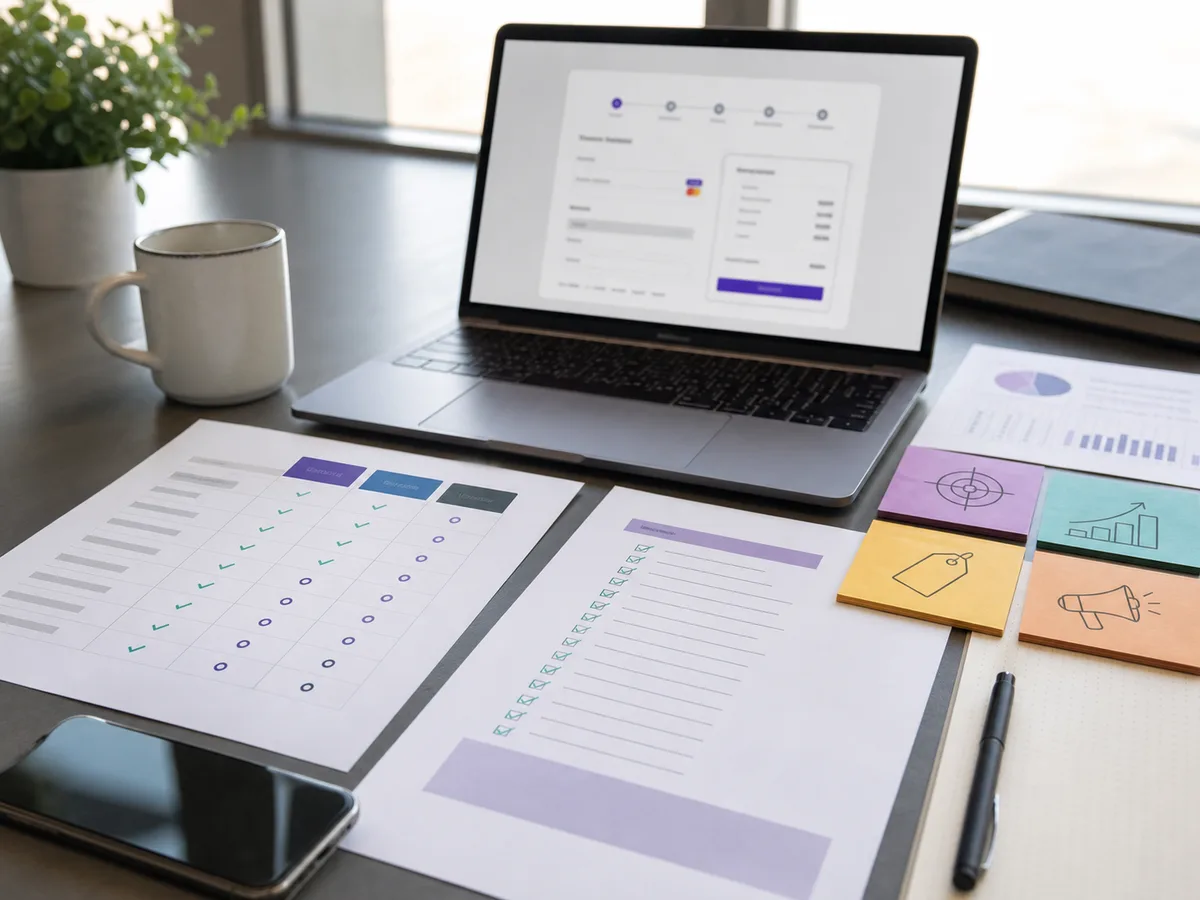
- 1Confirm buyer-action validation. A waitlist email is not validation. A signed LOI, a paid pre-order, or a fake door conversion of 5% or higher from your target ICP is what I look for before any launch energy goes in.
- 2Lock positioning against 3 to 5 competitors. Write the one-sentence reason a buyer would pick you over each named competitor. If you cannot do this without using the words "better", "faster", or "easier", the positioning is not done. The competitor analysis guide covers how I pull the data.
- 3Set the price, with reasoning. Pick a number you can defend against the competitor map. "Feels right" is not a defense. Document the logic somewhere you can find it later, because customers will ask, and so will you in three months when you consider raising it.
- 4Test the full payment flow in production. Real card, real charge, refund yourself. The most common launch-day bug I have seen is a checkout flow that worked in staging and quietly broke in production. Do this 10 days out, not the morning of.
- 5Pick one distribution channel. Not five. One, where your ICP actually hangs out and where you already have a small foothold. If you have to start from zero on a channel during launch week, it is the wrong channel for launch.
- 6Build a warm list of 50 to 200 names. Not an anonymous email list. Real people you can reach by name, who already engaged with the pre-launch fake door or commitment metric run. The launch email to this list usually out-converts every other channel by a wide margin, often several times the rate of the cold channels combined.
Phase 2: Launch week
By launch week, positioning and payment flow should already be done. If you find yourself rewriting either on launch day, that is a Phase 1 problem leaking forward, and the launch result will reflect it.

- 1Email the warm list first. Not the announcement tweet. Not the Product Hunt post. The 50 to 200 people who already pre-qualified themselves go first, and they get a short, personal-feeling email with a direct link to buy. This is where most of your launch revenue actually comes from.
- 2Post in the one channel you picked. Full post, not a teaser. Real screenshots, real price, real link. If you are launching on Product Hunt, the rules are: be present in the comments all day, answer every question with the same care as the first one, and do not ask friends to upvote in private. The hunters notice.
- 3Have support coverage. Either you or a teammate watches the inbox and the chat the entire first 48 hours. The first 20 paying buyers will hit at least one rough edge. A 10-minute reply window during launch is a moat that most launches do not bother to build.
- 4Instrument one success metric. Pick the north-star number for the first 30 days before launch day. Paid signups, MRR added, activated users, qualified demo bookings. Pick one and put it in a dashboard you check every morning during launch week. Tracking everything during launch is how you end up tracking nothing.

Skip weeks of manual research
Get complete market research, sourced proof, competitor map, and pricing data for your idea instantly.
Phase 3: Post-launch (weeks 2 to 4)
The most underrated phase. Most founders ship and move on after launch week. The compound returns of a launch usually sit in weeks two through four, when the buyers who actually paid are willing to talk to you and the data is settled enough to read.
- 1Talk to the first 10 paying buyers. Real calls, 15 to 20 minutes. Ask what made them buy and what they almost picked instead. Their exact phrases become your next round of positioning and ad copy. Skipping this is why most launches flatline in month two.
- 2Run a small paid amplification test. Now that you have launch-week conversion data, you know roughly what a qualified visitor costs to convert. A $200 to $500 test on the channel where your warm list lives is the cheapest way to learn if the launch demand is repeatable or one-off.
- 3Write the launch retrospective. One page, honest, with the numbers. What worked, what surprised you, what you would do differently. The next launch (and there will be one) gets 50% easier with this document in hand.
- 4Decide on a price test. If activation is high and churn signal is low, the price is probably below market. Run a single 20% price increase on new buyers in week three or four. Existing buyers stay grandfathered. The data will tell you whether you left money on the table at launch.
The four most common launch failures
| Failure | What it looks like | Where the fix sits |
|---|---|---|
| No validation | Big day-one traffic, near-zero conversion to paid | Phase 1 step 1, before launch |
| Broken checkout | Signups stall at the pricing page, support inbox lights up | Phase 1 step 4, real-card test in prod |
| Wrong audience | Lots of clicks from curious viewers, no qualified buyers | Phase 1 step 5, channel choice |
| Silent post-launch | Launch week looked good, growth flatlines by week three | Phase 3 step 1, talk to the first 10 buyers |
How this checklist changes for a SaaS vs a one-time product
The bones are the same. The Phase 1 validation rigor and the Phase 3 buyer interviews stay identical. What shifts is the launch-week distribution and the success metric.
For a SaaS launch, the success metric I track is usually paid activations in week one and retention through day 14. For a one-time digital product (template, course, ebook, paid report), the metric is gross sales in the launch window and the refund rate by day 30. Refunds tell you whether the offer matched the buyer expectation, which is the same question a SaaS day-14 retention number is trying to answer.
If you are still pre-launch and trying to figure out whether your idea is actually ready, run a free scan first. I built Preuve AI so a founder can pressure-test the market, competitors, and demand signal in 60 seconds before sinking weeks into Phase 1.
FAQ
What is a product launch checklist?
A product launch checklist is an ordered list of tasks a founder runs through before, during, and after putting a product in front of paying buyers. It covers validation evidence, positioning, pricing, channels, support readiness, and post-launch instrumentation, with the goal of making sure no revenue-moving piece is missed in the chaos of launch week.
What should I do before launching a SaaS product?
Before launching, confirm the validation evidence with a buyer-action signal (fake door, pre-sell, or commitment metric), lock the positioning and price against three to five competitors, set up payment and support tooling, prepare at least one distribution channel where your buyers actually hang out, and define one success metric for the first 30 days so you know whether launch worked.
How long should a startup launch take?
For a small founder team, the launch window is usually two to four weeks of focused work, not a single day. Day-one traffic spikes look good in screenshots but rarely move long-term revenue. The four-week version (warm list pre-launch, launch day, week-one community push, week-two paid amplification) gives the signal time to compound and gives you data on what to double down on.
What goes wrong on launch day?
The three most common failures are no support coverage when the first buyers hit a bug, broken payment or signup flows that were tested in dev but not in production, and a positioning message that drove curious traffic instead of qualified buyers. A 30-minute prelaunch dry run with a friendly user can catch most of these.
What is the most important post-launch task?
Talk to the first 10 paying buyers within 14 days, on a real call, and ask what made them buy. Their language becomes your next round of positioning, your next ad copy, and your next blog post. Skipping this step is the biggest reason post-launch growth stalls in the second month.
Cite this page
Last updated May 17, 2026
Forat, V. (2026, May 17). The Founder's Product Launch Checklist (Post-Validation). Preuve AI. https://preuve.ai/blog/product-launch-checklist
Forat, Vincent. “The Founder's Product Launch Checklist (Post-Validation).” Preuve AI, 17 May 2026, preuve.ai/blog/product-launch-checklist.
Forat, Vincent. “The Founder's Product Launch Checklist (Post-Validation).” Preuve AI. May 17, 2026. https://preuve.ai/blog/product-launch-checklist.
@misc{forat2026-product-launch-checklist,
  author = {Forat, Vincent},
  title = {{The Founder's Product Launch Checklist (Post-Validation)}},
  howpublished = {Preuve AI},
  year = {2026},
  month = may,
  url = {https://preuve.ai/blog/product-launch-checklist},
  note = {Last updated May 17, 2026}
}
Vincent
5 years in B2B growth, building Preuve AI in public. 82% of ideas it scores aren't ready, the point is finding out in 10 minutes, not 3 months.
Follow on X →
Building is expensive. Validation is free.
Run your idea through 10 AI agents before you write a line of code. Every claim source-linked.