Key takeaways
- AI can do consultant-grade market research, with one condition: The tool must pull from live data sources and link every claim to evidence a client can check. General chatbots like ChatGPT answer from model memory, which is where client deliverables break.
- AI measurably speeds up consulting work: In a Harvard Business School field study of 758 BCG consultants, those using AI completed 12% more tasks, 25% faster, with higher quality on tasks inside the frontier of AI capability.
- The failure mode is citations, not writing: ChatGPT research reads polished until a client checks one number. Purpose-built research engines scan live sources (Crunchbase, G2, Google Trends, SEC EDGAR) and exclude claims they cannot tie to a source.
- The economics favor tooling over hours: A traditional research study runs $15,000 to $50,000 over 4 to 12 weeks at published rates. A purpose-built scan tool costs about $20 per client-ready report, less than one billable hour.
- White-label closes the loop: Consultants can deliver the report under their own brand, following a Scan, Curate, Deliver workflow, instead of pasting chatbot output into a deck.
A consultant who bills $200 an hour and spends five hours on desk research for a client engagement has burned $1,000 of capacity before writing a single recommendation. Most of that research now happens in a ChatGPT tab, and most of it produces the same problem: a brief that reads polished until you check one number. If you advise founders or businesses for a living, you are already using AI for client research, whether or not it shows up in your process doc. What decides if that holds up is whether the tool survives a client asking "where does this figure come from?"

Will your idea survive the market?
Preuve AI runs 10 agents against live market data and links every claim to a source. Free analysis in 60 seconds.
Can consultants use ChatGPT for client market research?
Yes, and it genuinely helps, so I will not pretend otherwise. A Harvard Business School field experiment with 758 BCG consultants (Dell'Acqua et al.) found that consultants working with AI completed 12% more tasks, 25% faster, with higher quality on tasks within AI's capability frontier. AI is good at the research-shaped part of consulting. That part of the hype is earned.
But the same study has a second finding people quote less: on tasks outside the frontier, consultants using AI were 19 percentage points more likely to produce wrong answers, because the output sounded right. ChatGPT answers from whatever is in its training snapshot, which means it does not know your client's niche as of this morning and will happily fill the gap with something plausible-sounding, and plausible is exactly what you cannot afford in a deliverable with your name on the cover page.
Where it breaks on client work, specifically:
Citations you cannot verify.
Ask for market size and you get a confident number with no source, or a source that does not contain the number. You end up re-researching every claim, which was the work you were trying to save.
Stale data presented as current.
Competitor pricing, funding rounds, and demand trends move monthly. A model's training snapshot does not. The brief looks current because the prose is fresh, not the facts.
Non-repeatable output.
The same prompt gives a different answer next week. When a client pivots their positioning and you need to re-run the analysis, you are starting from zero, not iterating on a baseline.
I wrote a separate guide on using ChatGPT to validate a startup idea for founders doing it themselves. The consultant version of that problem is harsher: a founder wastes their own afternoon on a hallucinated market map, while you are risking a client relationship, which is a much worse trade.
How accurate is AI-powered market research?
Accuracy in market research has less to do with which model you use than with what the tool is allowed to say without a source attached. The same underlying models power a ChatGPT chat and a purpose-built research engine, and the engine wins anyway, because it is forced to go look before it writes: querying live databases, review platforms, and filings, then building the analysis from what it found.
This was the first design decision I made building Preuve AI, and the one I am most stubborn about: if a claim cannot be tied back to an auditable source, it stays out of the report. Key claims get cross-checked during the analysis window, and every number links to where it came from. Less because it looks rigorous, and more because I knew these reports would be read by people who check. Consultants are exactly those people, and so are their clients.
So when you evaluate any AI market research tool, ignore the model names and ask one question: can I click on this number? If the answer is no, you are looking at a chatbot with a report template on top.
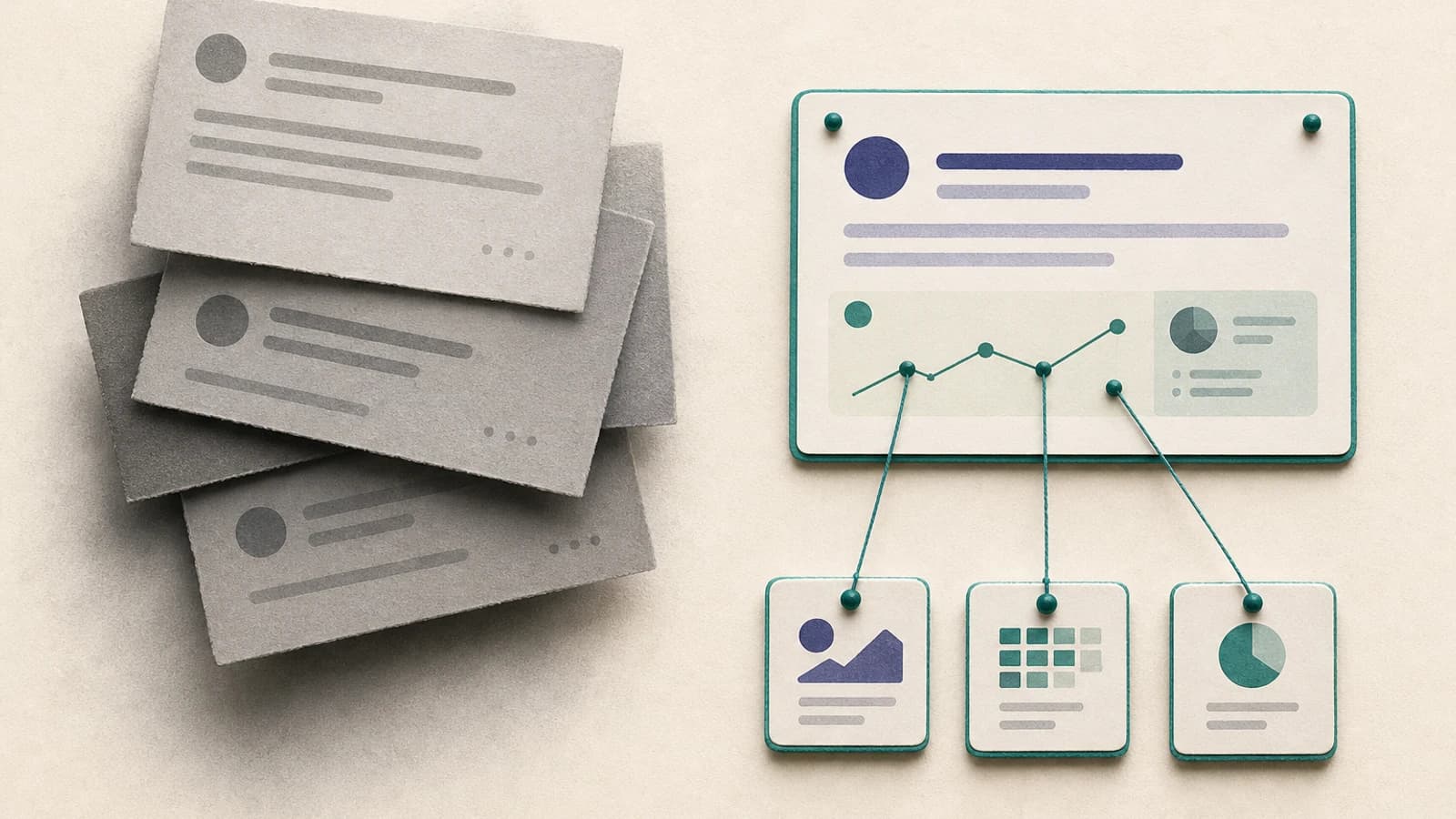
What the same client brief looks like: ChatGPT vs a purpose-built scan
Lothar is a startup consultant who advises founders on whether their ideas hold up. Before finding Preuve, he did what most consultants do now: manual research runs through Claude and ChatGPT for every client engagement. He told me afterwards that his manual research never attained this kind of quality. His public review says it better than I could:
"Like a radar in the fog. I kept hitting the build-first, validate-never problem. Now I get a full 360° scan of any idea in minutes, and use it to advise founders."
What actually caught my attention in his feedback was not the compliment, it was that he had quietly stopped doing the research himself and moved his hours into interpreting it for the client, which is the part clients pay for in the first place. Here is the concrete difference between the two ways of producing the same client brief:
| Client brief step | DIY ChatGPT research | Purpose-built scan |
|---|---|---|
| Competitor map | From training data; misses recent entrants, includes dead ones | Pulled live from Crunchbase, G2, pricing pages, with links |
| Market size | A confident number, source unverifiable | Sized from sourced signals; unverifiable claims excluded |
| Demand evidence | "There is growing interest in..." (no data) | Google Trends curves, community discussions, review volume |
| Time cost | 5-10 hours of prompting, checking, re-checking | Scan runs in about eight minutes; you spend time on judgment |
| Client pivots, round 2 | Start over with new prompts, different output | Re-run the scan, compare against the baseline |
| Deliverable | Text you paste into your own deck, unbranded | Client-ready report under your brand (white-label) |
Skip weeks of manual research
Get complete market research, sourced proof, competitor map, and pricing data for your idea instantly.
What data sources does AI market research use?
For a chatbot, honestly, it is whatever sat in the training data plus whatever a web search happens to surface mid-conversation. A purpose-built engine should be able to hand you a named list instead. For each report, Preuve AI runs 10 parallel AI agents across 60+ live data sources: competitor and funding signals from Crunchbase, product reviews from G2 and Capterra, demand curves from Google Trends, filings from SEC EDGAR, public pricing pages, and community discussions on Reddit, among others.
The list matters less than the principle: you should be able to ask any AI research vendor for their source list and get a straight answer. While writing this post I read the five top-ranking AI research tools for consultants, and the pattern was consistent: detailed pages about agent counts and benchmark scores, and not one named source list among them. An architecture diagram tells you how the tool thinks, which is interesting, but it is not the same thing as showing where a claim came from.
How much does AI market research cost compared to hiring it out?
Published rates put a traditional market research study at $15,000 to $50,000 with a 4 to 12 week turnaround. White-label research agencies compress that to 2 to 10 business days and bill consultants a multiple of their cost, which works when the engagement is large enough to absorb it. Below that, consultants default to DIY, which is "free" the way anything that consumes 5 to 10 unbilled hours is free.
| Option | Cost | Turnaround | Catch |
|---|---|---|---|
| Traditional research firm | $15,000-50,000+ | 4-12 weeks | Only viable on large engagements |
| White-label agency | Project-based, marked up | 2-10 business days | Margin goes to the agency, not you |
| DIY ChatGPT | $20/mo subscription | 5-10 hours per client | Unbilled hours + unverifiable claims |
| Purpose-built scan (Teams) | $99 once, then $59 a report (5 for $199) | ~8 minutes per scan | You still do the judgment (that is the job) |
The consultant math is short: $59 a report, or $39.80 each in a pack of 5, is less than one billable hour, replacing the 5 to 10 hours of desk research an engagement usually eats. The $99 that opens the workspace covers the first client project, and a quiet month costs nothing. If you bill $150 to $300 an hour, the tool pays for itself on the first client of the month, and everything after is recovered margin.
Can you deliver AI research under your own brand?
This is where the consultant use case splits from the founder one. A founder just needs the answer. A consultant needs it wrapped in a deliverable that carries their brand and their judgment, not a raw chatbot transcript. Pasting AI text into a deck technically gets you there, but the client is paying for evidence, and reformatted prose is not evidence.
The workflow I built for this on Preuve AI Teams has three steps. I call it Scan, Curate, Deliver:
Scan. Run the client's idea or market through the engine. 10 agents, 60+ live sources, about eight minutes. You get the competitor map, demand signals, market sizing, and risks, each claim linked.
Curate. This is your value-add: reorder sections, annotate findings with your read of the client's situation, cut what is not relevant to the engagement.
Deliver. Share it under your own brand: white-label report, client share controls, discreet mode, and a branded intake form you can put on your own site.
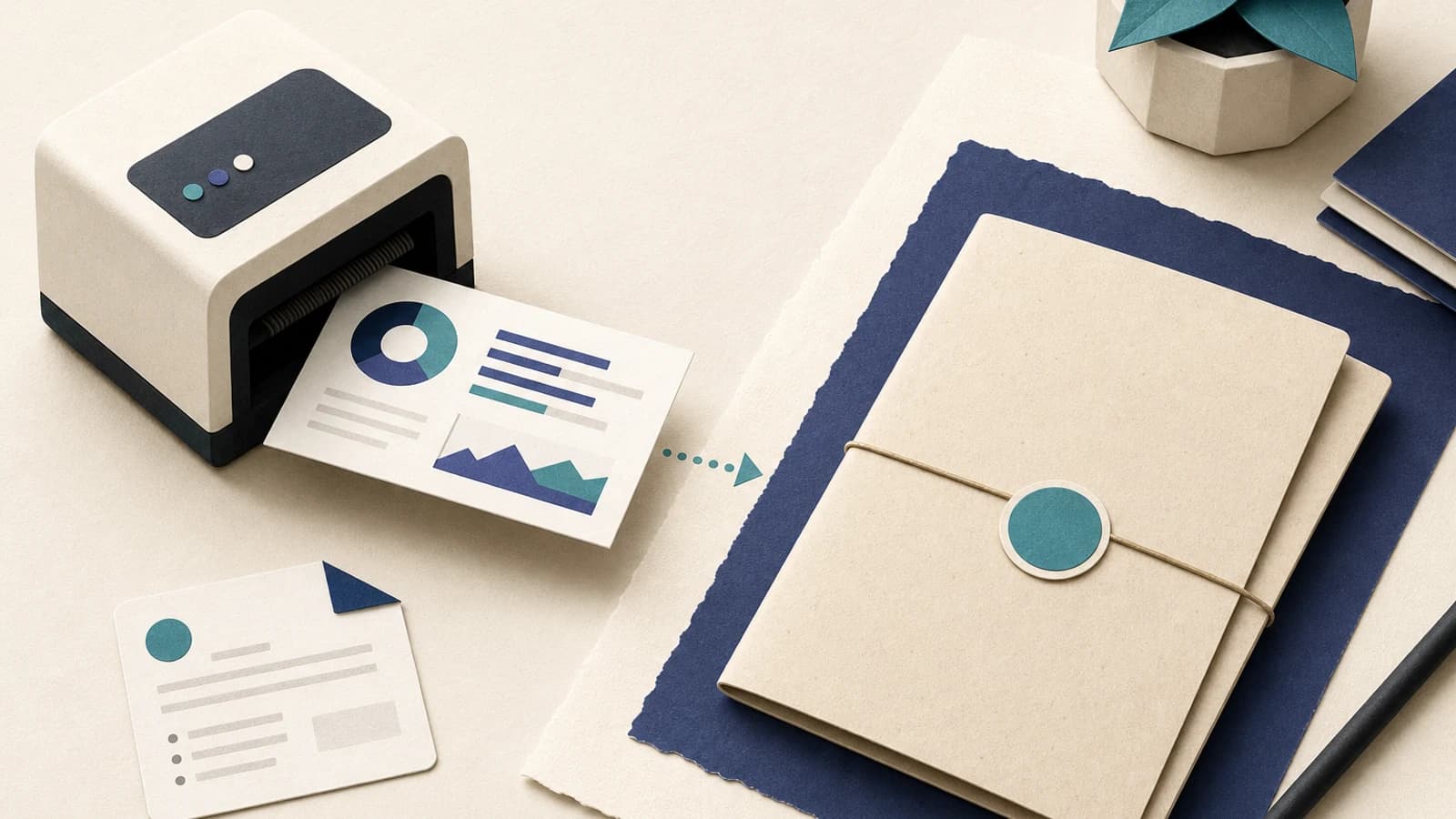
I covered the agency-scale version of this on the white-label validation widget page, and the process side in how to validate client ideas. The short version for an independent consultant: the report turns into something you sell, instead of an overhead line you eat on every engagement.
How I'd set this up as a consultant (the 15-minute version)
If I were running a consulting practice today, here is the whole setup: open a Consultant workspace ($99 once, first client project included), run your current client's idea as project one and compare the output against the research you already did by hand for that same client. That comparison is the entire evaluation. Either the scan surfaces things your manual research missed and links claims you could not source, or it does not and you stop there, with no subscription to cancel.
For consultants and advisors: Preuve AI Teams gives you client-ready, white-label validation reports from a 60+ live-source scan. $99 once opens a workspace, first client project included, then $59 a report, or packs of 2 for $89 and 5 for $199. Scan a client free →
One honest caveat to close on, because I would rather lose a signup than oversell: the scan replaces the desk research, not the judgment calls that earn your fee. It will not tell your client whether to fire their co-founder or how to price their pilot, that part stays on you. What it does is hand you the evidence in about a minute, so the billable hours go into the work they hired you for. Lothar called it a radar in the fog, and the image is right: a radar tells you what is out there, not how to fly the plane, and the flying is still your job.
FAQ
Is ChatGPT good enough for consulting market research?
For brainstorming and structuring, yes. For client deliverables, no. ChatGPT generates answers from model memory, so numbers can be stale or invented, and it cannot show where a claim came from. Client-facing research needs every figure traceable to a live source, which requires a purpose-built research engine rather than a general chatbot.
How much does AI market research cost for a consultant?
Purpose-built tools run far below traditional research. A traditional market research study costs $15,000 to $50,000 and takes 4 to 12 weeks at published rates. White-label research agencies deliver in 2 to 10 business days and typically bill a multiple of their cost. A scan-based tool like the Preuve AI Consultant workspace costs $99 once with the first client project included, then $59 per client-ready report, or $39.80 each in a pack of 5.
What data sources should AI market research pull from?
Live external sources, not model memory. A credible scan pulls competitor, demand, and market signals from sources like Crunchbase, G2, Capterra, Google Trends, SEC EDGAR, public pricing pages, and community discussions such as Reddit, and links each claim back to where it was found.
Can consultants white-label AI research reports?
Yes. Some validation tools, including Preuve AI Teams, let consultants deliver reports under their own brand with client share controls and a branded intake form, so the deliverable carries the consultant’s name rather than the tool’s.
Will AI replace consultants for market research?
No. AI replaces the desk-research hours, not the judgment. The Harvard/BCG study showed AI makes consultants faster on research-shaped tasks, but the interpretation, the recommendation, and the client relationship stay human. Consultants who use AI for evidence gathering keep more billable hours for the work clients actually pay them for.
Cite this page
Last updated September 29, 2026
Forat, V. (2026, September 29). AI Market Research for Consultants: Why ChatGPT Is Not Enough. Preuve AI. https://preuve.ai/blog/ai-market-research-for-consultants
Forat, Vincent. “AI Market Research for Consultants: Why ChatGPT Is Not Enough.” Preuve AI, 29 Sept. 2026, preuve.ai/blog/ai-market-research-for-consultants.
Forat, Vincent. “AI Market Research for Consultants: Why ChatGPT Is Not Enough.” Preuve AI. September 29, 2026. https://preuve.ai/blog/ai-market-research-for-consultants.
@misc{forat2026-ai-market-research-for-consultants,
  author = {Forat, Vincent},
  title = {{AI Market Research for Consultants: Why ChatGPT Is Not Enough}},
  howpublished = {Preuve AI},
  year = {2026},
  month = sep,
  url = {https://preuve.ai/blog/ai-market-research-for-consultants},
  note = {Last updated September 29, 2026}
}
Vincent
5 years in B2B growth, building Preuve AI in public. 82% of ideas it scores aren't ready, the point is finding out in 10 minutes, not 3 months.
Follow on X →
Building is expensive. Validation is free.
Run your idea through 10 AI agents before you write a line of code. Every claim source-linked.