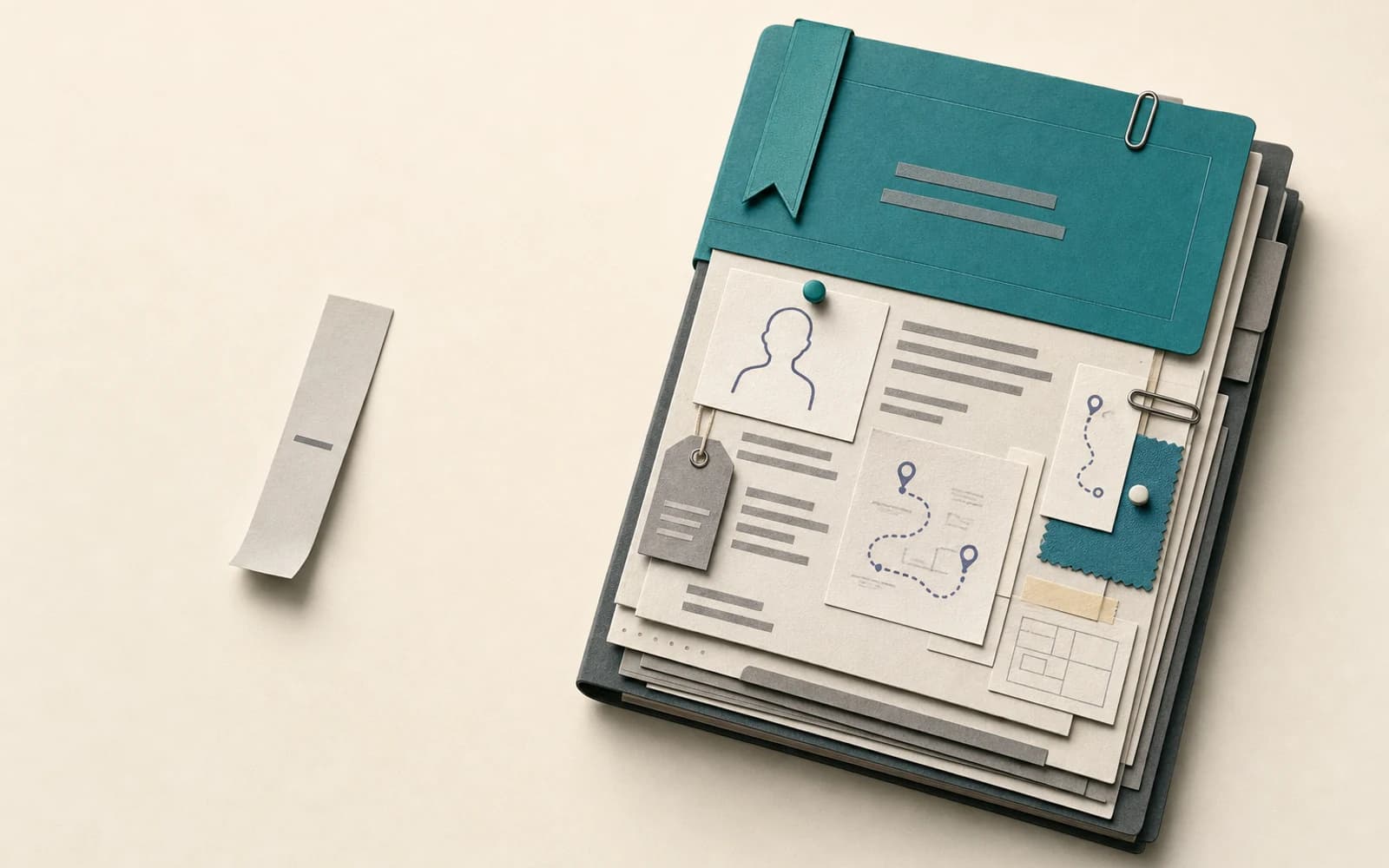
Key takeaways
- Grounded startup ideas pass three filters: One person can build and ship them, a sourced demand signal proves buyers already pay, and they require no VC funding or network effects to reach first revenue. The 9 ideas below all clear that bar.
- 22.1% of new US businesses close within year one, And essential-service verticals like pest control ($29.7B US market, IBISWorld 2026) and bookkeeping ($12.67B global market, Business Research Insights 2026) run failure rates below that average, not moonshot AI plays.
- Europe is forcing e-invoicing adoption in 2026: Belgium (January 2026), Poland (February 2026), and France (September 2026) mandates are creating a compliance gap that solo-built adapter tools can fill. The European e-invoicing market is $8.7B in 2026 (MarkWide Research).
- Every idea includes a demand source, a why-now catalyst, and a validate step You can run in under a week. No idea on this list requires a co-founder, a sales team, or a Series A to reach $5K MRR.
Every "startup ideas for 2026" list I read this year includes AI agents, autonomous vehicles, and defense tech. Those are billion-dollar bets, and fewer than 0.1% of startups reach that valuation (CB Insights). The other 99.9% need ideas that work at a different scale: something you can build alone, sell to a buyer who already pays for a workaround, and reach profitability without a pitch deck.
I built Preuve AI as a solo founder with no VC, no co-founder, and no network effects. That experience changed how I evaluate startup ideas. The grounded startup ideas share three traits: a single person can ship them, demand is proven (not projected), and the business model works from customer one. This post is the anti-moonshot list. Nine ideas, each with a sourced demand signal, a 2026 catalyst, and a validate step you can run this week.

Will your idea survive the market?
Preuve AI runs 10 agents against live market data and links every claim to a source. Free analysis in 60 seconds.
What makes a startup idea "grounded" vs just another list?
Most idea lists conflate "interesting" with "buildable." An AI agent framework is interesting; a scheduling app for pest control technicians actually ships. Ambition is not the variable here. Whether one person can build it and get paid is.
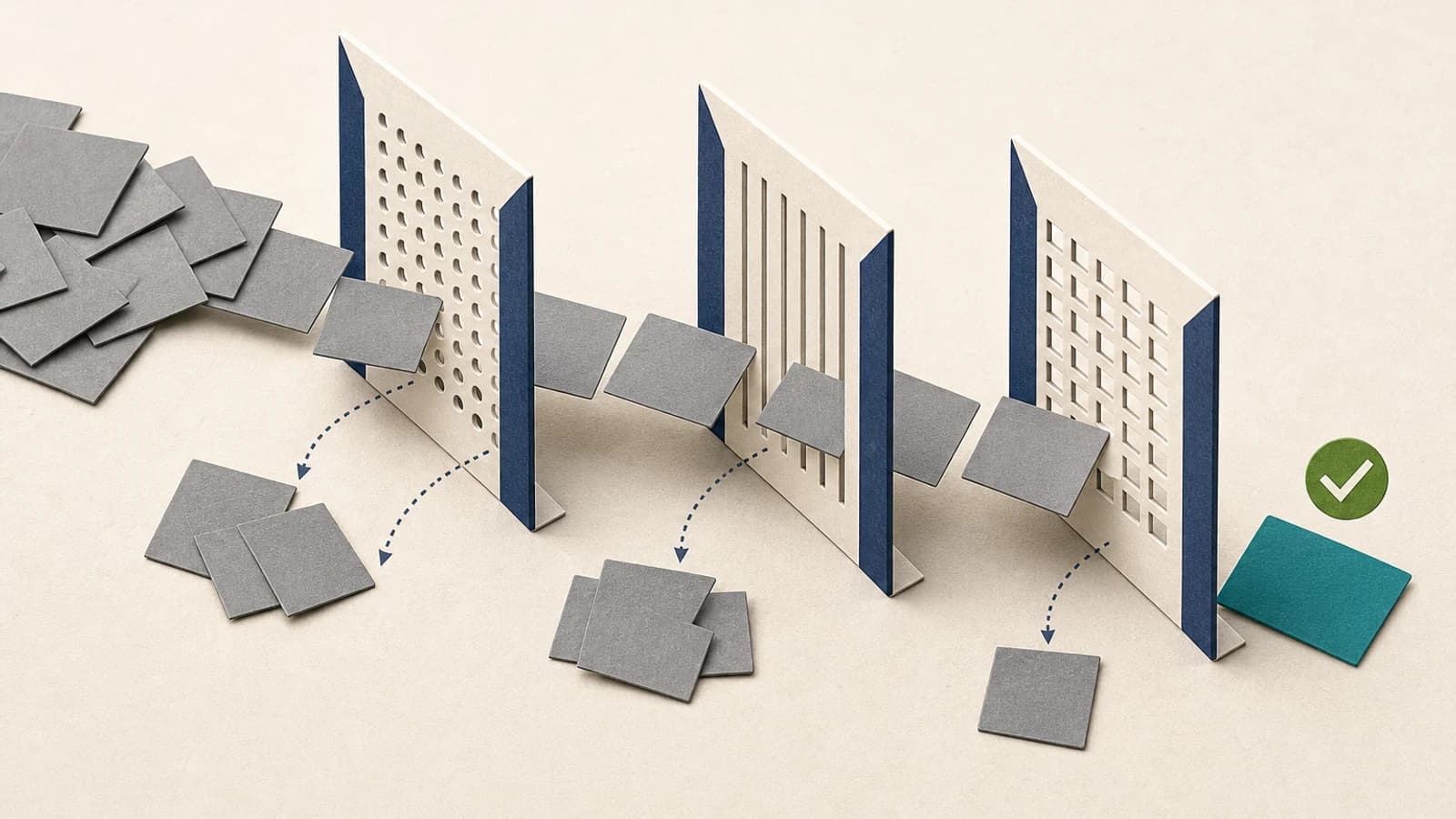
I use three filters. If an idea fails any one of them, it is not grounded. It might still be a good idea, but it is not one you should bet your next six months on without a team and a check.
Solo-buildable. One person can ship an MVP in 4 to 12 weeks using existing tools (AI coding assistants, Supabase, Vercel, Stripe). No deep-tech R&D, no regulatory approval, no hardware.
Demand-proven. Real buyers already pay for a workaround: a spreadsheet, a contractor, a worse tool. A sourced market-size number backs it up. No "projected TAM" from a pitch deck, just existing spending.
No network effects required. The product works for customer one. No marketplace chicken-and-egg, no social graph, no "we just need to reach critical mass." You sell a tool, the tool delivers value, the customer pays.
That is the filter I run everything through, and all nine ideas below cleared it. If you want the opposite end of the spectrum, I wrote a separate post on billion-dollar startup ideas with the sectors, TAMs, and failure odds that come with moonshot bets.
What are the most realistic startup ideas for solo founders in 2026?
Nine ideas, grouped by the industry they serve. Each one includes the unglamorous pain, a sourced demand signal, the 2026 catalyst that makes it timely, and a validate step. None of these will make you a billionaire. All of them can make you profitable.
1. Bookkeeping Automation for Micro-Businesses
The pain
A solo plumber or freelance designer spends 5 to 8 hours a month categorizing receipts and reconciling bank feeds in QuickBooks or a spreadsheet. They do not need a full-time bookkeeper. They need the categorization to happen automatically.
Demand signal
The global bookkeeping services market is $12.67B in 2026 (Business Research Insights), and roughly 7 in 10 US small businesses outsource bookkeeping (SCORE). A solo bookkeeper needs only 10 to 15 clients to earn six figures (the benchmark bookkeeping forums repeat), which means micro-businesses are already paying, just not to software.
2026 catalyst
AI transaction categorization is now good enough to automate the first pass (general LLMs top out near 73% accuracy in Digits' 2026 benchmark; specialized models do better), and the integration layer (Plaid, bank APIs) is commoditized. Both bottlenecks that kept this manual are dissolving in the same year.
Validate step
Find 10 freelancers or tradespeople on Reddit or local Facebook groups. Ask what they spend monthly on bookkeeping. If 3+ say "$200 to $500 a month for a human bookkeeper," you have a price ceiling and a pain point. Build a Plaid-connected categorizer, charge $29/month.
2. Pest Control Route and Schedule Software
The pain
Pest control technicians manage routes on paper or in Google Sheets. The owner dispatches by text message. When a customer cancels, rerouting takes 20 minutes of phone calls. The industry has 34,076 businesses in the US alone (IBISWorld, 2026), and most use generic field-service tools not built for pest-control workflows.
Demand signal
The US pest control industry is $29.7B in 2026 (IBISWorld). PestPac and Briostack exist, but both target mid-to-large operators. The long tail of 1-to-5 truck outfits has no affordable, simple option.
2026 catalyst
Automated job scheduling adoption increased 41% across service businesses (Verified Market Research), and mobile workforce management usage reached 63%. Small operators are now willing to adopt software. They were not three years ago.
Validate step
Call 10 pest control companies with fewer than 5 trucks. Ask how they schedule routes today. If the answer is "a whiteboard" or "Google Calendar," offer to build them a scheduling tool for $49/month and gauge reaction.
3. E-Invoicing Adapter for EU SMBs
The pain
Belgium mandated B2B e-invoicing via Peppol starting January 1, 2026. Poland is rolling out its KSeF system in February 2026. France starts in September 2026. Small businesses in these countries need to send and receive structured invoices in formats they have never heard of (UBL 2.1, Factur-X). Their current tool is a PDF and an email.
Demand signal
The European e-invoicing market is $8.7B in 2026 (MarkWide Research), growing at 18.4% CAGR. The EU's ViDA (VAT in the Digital Age) initiative, adopted March 2025, is the forcing function. This is not optional adoption. It is compliance.
2026 catalyst
Three country mandates hitting in the same calendar year. Enterprise ERP vendors (SAP, Oracle) will serve large companies. The gap is the 10-person accounting firm or the solo consultant who needs a "plug it into my existing invoicing flow" adapter, not a full ERP migration.
Validate step
Post in Belgian or French small-business forums (or LinkedIn groups) asking how they plan to comply. If the answer is "I have no idea" or "my accountant said to wait," there is your wedge. Build a Peppol-connected adapter that converts their existing PDF invoices.

4. Compliance Documentation Generator for Contractors
The pain
General contractors and HVAC installers fill out safety checklists, permit applications, and inspection reports by hand. A single missed form can delay a project by weeks and cost thousands in fines. The paperwork is repetitive, template-driven, and identical across jobs, which makes it a textbook automation target.
Demand signal
The compliance software market is growing at 12.67% CAGR (Mordor Intelligence), with the SMB segment climbing at 15.98% CAGR. An estimated 211,100 new skilled-trade workers are needed by 2033 (Wellows, citing BLS data), meaning more contractors entering the field with no existing compliance tooling preference.
2026 catalyst
AI document generation has matured to the point where a contractor can describe a job in plain language and get a pre-filled permit application. The template layer is the moat: each municipality has different forms, and a tool that covers the top 50 US metro areas has a durable advantage.
Validate step
Interview 5 general contractors. Ask them to show you the last permit application they filled out and how long it took. If the answer is "two hours and I hate it," charge $79/month for a tool that does it in 10 minutes.
5. Fractional CFO Matchmaking Platform
The pain
Companies doing $1M to $25M in revenue need CFO-level financial strategy but cannot justify a $200K+ full-time hire. They find fractional CFOs through referrals and LinkedIn, which is slow and opaque. The CFOs, meanwhile, routinely report losing around a third of their time to business development instead of client work.
Demand signal
The US fractional CFO market exceeds $3.2B in 2026 (Zabella), growing at 12.4% CAGR. Demand rose 103% year-over-year. The $10M-$25M revenue segment shows the highest adoption rate at 78%.
Why this is not a marketplace problem
You can start as a curated directory with 20 vetted fractional CFOs, charging them a monthly listing fee or a lead fee. A directory pays you from listing number one, no chicken-and-egg problem to solve first. Scale to a matching algorithm once you have volume.
Validate step
Find 10 fractional CFOs on LinkedIn. Ask how they get clients today and what percentage of their time is non-billable business development. If it is 25%+, offer to send them qualified leads for $200/month and see who signs up.
6. Property-Inspection Reporting Tool
The pain
Home inspectors, property managers, and insurance adjusters produce 10-to-30-page reports with photos and annotated checklists. Most use a combination of a clipboard, a phone camera, and Word. The report takes longer to compile than the inspection itself.
Demand signal
The property management software market is valued at $3.81B in 2026 (Grand View Research), and the cloud segment holds 61.2% share. But the reporting layer is still fragmented. Tools like Spectora and HomeGauge serve home inspectors specifically, while property managers and insurance adjusters use generic PDF builders.
2026 catalyst
Phone cameras now capture enough detail for AI to auto-annotate defects (cracked foundations, water damage, mold). A mobile-first reporting app that generates the full report from photos and voice notes in the field, not back at the office, saves inspectors 2 to 3 hours per job.
Validate step
Shadow a home inspector for one day. Count how many hours they spend writing the report versus doing the inspection. If report writing is 50%+ of total job time, the pain is real. Charge $49/month per inspector.
7. Niche Subscription-Box Fulfillment SaaS
The pain
A solo founder running a 200-subscriber snack box or hobby-kit box manages inventory in a spreadsheet, prints shipping labels one by one, and manually handles cancellations. Cratejoy exists but charges 1.25% of sales plus transaction fees, and its tooling is dated. ShipStation handles shipping but not the subscription logic. Nobody owns the full "manage a 50-to-500 subscriber box" workflow.
Demand signal
The subscription box market is $53.64B globally in 2026 (Business Research Insights), growing at 19.8% CAGR. Niche boxes (eco-friendly products, hobbyist kits, regional foods) are the fastest-growing segment because personalization drives retention.
2026 catalyst
Shopify's subscription app ecosystem is fragmented, and the fulfillment-side tooling for small-batch boxes (50 to 500 subscribers) is a dead zone between "do it yourself" and "hire a 3PL." A solo founder who builds the missing middle layer has a niche with sticky revenue.
Validate step
Search r/SubscriptionBoxes and Shopify Community forums for "fulfillment nightmare" or "Cratejoy alternative." Count the posts. If founders are publicly complaining about the workflow, build a waitlist landing page targeting that exact pain.
8. Trade-Skill Online Course Platform
The pain
A master electrician or experienced plumber wants to teach apprentices or career changers but has no way to package their knowledge. Udemy and Teachable serve broad audiences. Neither has trade-specific features like tool inventories, safety checklists, or hands-on-assignment workflows. The trades have a talent shortage of 211,100 workers by 2033 (BLS), and the training infrastructure has not caught up.
Demand signal
The global online course market is $347.65B in 2026 (Business Research Insights). But the trades slice is underserved. Skilled-trades training programs are growing, driven by labor shortages and infrastructure spending, and experienced tradespeople typically command $50 to $150/hour for in-person apprentice work.
2026 catalyst
Video-based course platforms are commoditized, but trade-specific features (tool checklists, safety-compliance modules, hands-on assignment verification with photo upload) are not. A vertical platform that speaks the language of plumbers, not "content creators," has distribution through trade associations and union training programs.
Validate step
Find 5 experienced tradespeople on LinkedIn or trade-association forums. Ask if they have ever been asked to train someone and how they delivered it. If the answer is "I showed them on the job, there is no course," offer to build their first course for free and charge the next 5 students $199.

9. Commercial Cleaning Bid and Dispatch Tool
The pain
A commercial cleaning company with 3 to 10 crews bids on contracts by guessing square footage and labor hours, dispatches crews via group text, and tracks completion with a phone call at 11 PM. The industry is enormous, projected to reach $619.98B globally by 2030 (IdeaFloat, citing Allied Market Research), with profit margins of 30% to 50% for solo operators. But the bidding and dispatch workflow is stuck in 2015.
Demand signal
The janitorial services market is $288.76B globally in 2024 (Grand View Research). Small-to-mid cleaning companies (3 to 10 crews) are the underserved segment: too big for a whiteboard, too small for enterprise field-service software like ServiceTitan.
2026 catalyst
GPS-based dispatch and AI-powered bid estimation (square footage from floor plans, labor-hour prediction from historical data) are now buildable with off-the-shelf APIs. A focused tool that handles bid-to-dispatch-to-completion for cleaning companies can ship in 8 to 12 weeks.
Validate step
Attend a local BSCAI (Building Service Contractors Association International) event or search their forums. Ask 5 cleaning company owners how they estimate bids. If the answer involves a calculator and a gut feeling, you have a product.
Which boring industries still need software in 2026?
The pattern across these nine ideas is consistent. The industries with the highest software gaps in 2026 share three traits:
- Essential services with recurring revenue (pest control, cleaning, bookkeeping). Customers stick around even during recessions because the service is not optional.
- Regulatory forcing functions (e-invoicing mandates, compliance documentation, safety reporting). The buyer adopts software because a government deadline leaves them no alternative.
- Fragmented operator bases (34,076 pest control businesses, tens of thousands of cleaning companies, hundreds of thousands of contractors). No single player dominates, so there is no incumbent to unseat. You are just fixing a messy workflow.
I covered more of these gaps in my posts on micro SaaS ideas for 2026 and SaaS startup ideas for 2026. The micro SaaS post focuses on one-feature bets. The SaaS post covers vertical plays that need slightly more scope. This post sits between them: ideas that are bigger than a single feature but smaller than a funded vertical play.

Skip weeks of manual research
Get complete market research, sourced proof, competitor map, and pricing data for your idea instantly.
Can you build a profitable startup without VC funding?
22.1% of new US businesses close within their first year (LendingTree, 2025 data). After five years, 48.6% are gone. Those numbers sound brutal, but they include every category: restaurants, retail, speculative tech plays. The failure rate for essential-service businesses (the kind on this list) is meaningfully lower. Agriculture, forestry, and related services have the lowest first-year failure rate at 14.3%.
Of the 5.2 million new business applications filed in the US in 2024, fewer than 0.05% secured venture capital. The vast majority of profitable businesses are bootstrapped. I built Preuve AI the same way: no outside funding, no co-founder, revenue from month one. The constraint was never capital. It was picking a problem where people already pay for a worse solution.
The economics of bootstrapping in 2026 are better than they have ever been. AI coding assistants cut development time. Supabase and Vercel handle infrastructure for $0 to $25/month at launch scale. Stripe makes billing trivial. I used to worry about the tech stack when I started building Preuve. Now the only question that actually matters is whether anyone pays.
How do you validate a grounded startup idea before building?
Every idea on this list includes a validate step. But here is the general framework I use, and that I built into Preuve AI when I designed the scan pipeline:
Find 5 to 10 people who already pay for a workaround. Not "would you use this?" but "what do you pay today to solve this problem?" If the answer is $0, the pain is not real enough.
Run a demand scan against live data. Check competitor density on G2 and Capterra, search volume trends, and Reddit/forum complaint frequency. Preuve scans 60+ live data sources to do this in about 60 seconds, but you can approximate it manually in a few hours.
Pre-sell before you build. Put up a landing page with a price. Drive traffic from the community where your buyers hang out (a trade-association forum, a subreddit, a LinkedIn group). If nobody signs up or puts down a deposit, the idea is not validated, no matter how logical it sounds.
I wrote more detailed validation playbooks in the startup ideas for 2026 hub post and the how to validate a startup idea guide. The validation step is the part most idea lists skip entirely, which is exactly why most ideas from lists never become businesses.
What startup ideas should you avoid in 2026?
A grounded list is incomplete without a "do not touch" section. Three categories fail this test. The ideas themselves can be good, but a solo founder cannot win the game they are playing:
Network-effect-dependent ideas.
Marketplaces, social platforms, and two-sided networks need both supply and demand to function. Customer one gets no value. A solo founder cannot bootstrap both sides. If your pitch includes "once we reach critical mass," it is not grounded.
Features a foundation-model vendor will ship natively.
AI writing assistants, meeting summarizers, and logo generators. OpenAI, Google, and Anthropic are absorbing these into their core products. If your moat is "we use GPT-4 to do X," you do not have a moat. I wrote about this pattern in the billion-dollar ideas post: even at the billion-dollar scale, AI wrappers are the category most likely to collapse.
Ideas that require regulatory approval to launch.
Fintech products needing banking licenses, healthtech requiring FDA clearance, or insurance products needing state-by-state approval. These are legitimate businesses, but the timeline from idea to first dollar is 12 to 24 months, not 12 weeks. A solo founder runs out of runway and motivation before the approval comes through.
The ideas that work best for solo founders are the ones where you can charge customer one in week 8, not year 2.
The difference between a list and a business
I have read dozens of startup-idea lists this year. Most of them give you a name, a one-paragraph description, and a market-size number pulled from a pitch deck. That is not enough to decide whether to spend six months of your life on something.
The nine ideas above are grounded because each one answers three questions most lists skip: who already pays for a workaround (not "who might pay"), what changed in 2026 that makes this timely (not "the market is growing"), and how you test demand before writing a single line of code.
If any of these ideas resonate, the next step is not to start building. It is to validate. Run your idea through a demand scan against real market data. Talk to 5 potential buyers. Pre-sell before you build. "Grounded" stops being a compliment and starts being a business the day someone actually pays for it.
FAQ
What makes a startup idea "grounded" versus just realistic?
A grounded idea passes three specific tests: a solo founder can build and ship it without a team, a sourced demand signal proves real buyers already pay for a worse version or workaround, and the business model does not depend on VC funding or network effects to generate first revenue. "Realistic" is a vibe. "Grounded" is a filter with evidence.
Can you really build a profitable startup without VC funding in 2026?
Yes. The majority of profitable small businesses in the US are bootstrapped. Of the 5.2 million new business applications filed in the US in 2024 (US Census Bureau), fewer than 0.05% secured venture capital (Wellows, 2026). Micro-SaaS products routinely reach $5K to $30K MRR with a single founder using AI coding assistants, Supabase, Vercel, and Stripe. The constraint is not capital, it is picking a niche where buyers already spend.
How do you validate a grounded startup idea before building?
Three steps. First, find 5 to 10 people who already pay for a workaround (a spreadsheet, a contractor, a worse tool) and confirm the pain in a 15-minute call. Second, run a demand scan against live market data to check competitor density and search volume. Third, pre-sell: put up a landing page with a price and measure signups. If nobody pays or signs up, the idea is not grounded, it is a guess.
What startup ideas should solo founders avoid in 2026?
Avoid anything that requires network effects to function (marketplaces, social platforms), anything competing with a foundation-model vendor shipping it as a default feature (AI writing assistants, meeting summarizers, logo generators), and any idea where the phrase "we just need to get to scale" appears in the pitch. Those are billion-dollar bets, not grounded ones.
Are boring businesses really more profitable than tech startups?
On average, yes. The US pest control industry ($29.7B, IBISWorld 2026) has 34,076 businesses, most of them profitable. Commercial cleaning runs at 30% to 50% profit margins for solo operators. Meanwhile, AI tools are the most oversaturated SaaS category, with a median MRR of $7 across 1,213 startups (BigIdeasDB, 2026). Boring industries have fewer competitors and stickier revenue.
Cite this page
Last updated July 7, 2026
Forat, V. (2026, July 7). Grounded Startup Ideas for 2026: 9 You Can Build Alone. Preuve AI. https://preuve.ai/blog/grounded-startup-ideas-2026
Forat, Vincent. “Grounded Startup Ideas for 2026: 9 You Can Build Alone.” Preuve AI, 7 July 2026, preuve.ai/blog/grounded-startup-ideas-2026.
Forat, Vincent. “Grounded Startup Ideas for 2026: 9 You Can Build Alone.” Preuve AI. July 7, 2026. https://preuve.ai/blog/grounded-startup-ideas-2026.
@misc{forat2026-grounded-startup-ideas-2026,
  author = {Forat, Vincent},
  title = {{Grounded Startup Ideas for 2026: 9 You Can Build Alone}},
  howpublished = {Preuve AI},
  year = {2026},
  month = jul,
  url = {https://preuve.ai/blog/grounded-startup-ideas-2026},
  note = {Last updated July 7, 2026}
}
Vincent
5 years in B2B growth, building Preuve AI in public. 82% of ideas it scores aren't ready, the point is finding out in 10 minutes, not 3 months.
Follow on X →
Building is expensive. Validation is free.
Run your idea through 10 AI agents before you write a line of code. Every claim source-linked.