Key takeaways
- Stage matters more than features: Pre-launch founders need competitor discovery (Preuve AI, Competely at $0-$99/mo), growth-stage teams need SEO intelligence (Semrush at $139.95/mo, Ahrefs at $29/mo+), and enterprise needs dedicated CI platforms (Crayon, Klue at $15,000-$30,000+/yr).
- Adobe completed its $1.9B acquisition of Semrush in April 2026, Consolidating SEO and competitive intelligence under one roof. Semrush pricing has not changed yet, but bundle plans ("Semrush One") now start at $199/mo.
- The cheapest useful paid tool is SpyFu at $39/mo, But it only covers paid search. For broader competitor mapping before you build, AI-powered scanners fill the gap that SEO tools leave.
- Free tools cover about 80% of basic monitoring: Google Alerts, Crunchbase free tier, and SimilarWeb limited access catch the basics. Structured analysis is where paid tools earn their cost.
Every "best competitor analysis tools" list I read while building Preuve AI assumed one thing: you already know who your competitors are. Pre-launch founders usually do not. That gap between discovery and monitoring is where most lists lose you, and it is where this one starts.
Growth-stage teams tracking SEO keyword gaps need Semrush. Pre-launch founders still figuring out who the competitors even are need a completely different kind of tool. I cover both here, organized by the stage you are at today, with pricing I checked in July 2026.

Will your idea survive the market?
Preuve AI runs 10 agents against live market data and links every claim to a source. Free analysis in 60 seconds.
What should you look for in a competitor analysis tool?
A competitor analysis tool is software that collects, structures, and monitors data about the companies competing in your market. Before comparing features, pin down what job you are hiring the tool to do. Competitor analysis means different things at different stages, and paying for the wrong tier is the most common waste I see founders make.
Competitor discovery. You do not know who your competitors are yet. You need a tool that takes your idea as input and returns a list of players, not one that requires you to name competitors before it does anything.
Competitive intelligence. You know your competitors. You need ongoing data on their traffic, keywords, pricing changes, and feature launches. This is the job SEO tools and CI platforms do well.
Sales enablement. Your sales team loses deals to specific competitors. You need battlecards, win-loss analysis, and real-time alerts when a competitor changes messaging. This is enterprise CI territory.
Most lists jump straight to job #2 or #3. If you are pre-launch, start at job #1. I wrote a full guide on how to approach competitor analysis as a startup if you want the strategy before the tools.
Which competitor analysis tools work best before you launch?
Pre-launch is where most tool lists fail you. The standard recommendations (Semrush, Ahrefs, Similarweb) all assume you already know who to track. If you are still validating an idea, you need something that finds competitors you have never heard of, since Semrush and Ahrefs only track names you already give them.
Preuve AI (disclosure: I built this one)
 Preuve AI (disclosure: I built this one)
I built Preuve AI to solve the problem I kept hitting: you describe your startup idea, and the scan maps up to 15 competitors with their pricing, funding rounds, user counts, and weak spots. It does this as part of a full viability scan across 60+ live data sources using 10 parallel AI agents in about ten minutes.
Preuve AI at a glance
- Price: Free Reality Check scan. Founder tier: $59 (one-time, not a subscription).
- Best for: Pre-launch founders who need competitor discovery + viability scoring in one step.
- What it covers: Up to 15 competitors mapped with pricing, funding, and positioning gaps, plus market sizing, demand signals, and a 0-to-100 viability score. Every claim links to its source.
- Honest limitation: This is a pre-build validation tool, not ongoing monitoring. It maps the competitive landscape at the moment you scan. It does not track competitor changes over time the way Semrush or Crayon does.
Judge it accordingly. I am listing it here because it solves a real gap in the pre-launch stage, but I am obviously biased. The free scan takes under a minute if you want to see the competitor section yourself.
Competely
 Competely
Competely takes a different approach: you enter your product and your known competitors, and it generates a structured report covering 100+ data points across eight dimensions (pricing, features, marketing, audience, sentiment, SWOT, and more).
Competely at a glance
- Price: $39-$99/mo. No free trial (AI costs per analysis). Every plan includes ongoing monitoring with re-analysis every 2-4 weeks.
- Best for: Founders who already know their competitors and want a structured, exportable comparison.
- Honest limitation: You need to name your competitors first. It compares known players, but does not discover unknown ones the way a full market scan does.

What are the best competitor analysis tools for growth-stage startups?
Once you have launched and know your competitors, the job shifts from discovery to intelligence. These tools assume you can name who to track and they reward you with depth that pre-launch tools cannot match.
Semrush (now part of Adobe)
 Semrush (now part of Adobe)
Adobe closed its $1.9B acquisition of Semrush in April 2026. That makes Semrush the default all-in-one SEO and competitive intelligence platform for anyone already inside the Adobe ecosystem. For competitor analysis, the core value is reverse-engineering a competitor's organic keywords, paid ads, backlink profile, and traffic trends in one dashboard.
Semrush at a glance
- Price: Pro at $139.95/mo ($117.33/mo annual). Guru at $249.95/mo. Business at $499.95/mo. New "Semrush One" bundles (SEO + AI Visibility) start at $199/mo.
- Best for: Growth-stage startups running content marketing or paid search who need keyword gap analysis and traffic benchmarking.
- Honest limitation: Overkill and overpriced for pre-launch. The Pro plan tracks 500 keywords across 5 projects, which is more infrastructure than a founder validating an idea needs. It also tells you nothing about competitor funding, team size, or product strategy.
Ahrefs
 Ahrefs
Ahrefs has the deepest backlink index of any tool here and is the go-to for content-led competitor research. Want to know which pages actually drive traffic for a competitor? Site Explorer answers that, plus keyword rankings and backlink sources. Worth noting: Ahrefs is still bootstrapped and independent, which means it is not tied to any larger platform roadmap the way Semrush now is post-Adobe.
Ahrefs at a glance
- Price: Starter at $29/mo (limited). Lite at $129/mo. Standard at $249/mo. Advanced at $449/mo. Free Webmaster Tools tier for sites you own.
- Best for: Startups building SEO-driven growth who need backlink analysis and content gap identification.
- Honest limitation: Like Semrush, Ahrefs is an SEO tool, not a business intelligence tool. It tells you about a competitor's search strategy, not their business model, pricing, or funding.
Similarweb
 Similarweb
Similarweb sits between SEO tools and business intelligence. It estimates competitor website traffic, audience demographics, traffic sources, and engagement metrics. If you need to know how much traffic a competitor gets and where it comes from, Similarweb is the standard source.
Similarweb at a glance
- Price: Competitive Intelligence plan from $125/mo (annual) or $199/mo (monthly). Higher tiers at $399/mo and $649/mo add SEO, AEO, and Ads intelligence. Enterprise contracts run $75,000-$200,000+/yr based on Vendr data.
- Best for: Startups benchmarking traffic against competitors or pitching investors with market-share estimates.
- Honest limitation: Traffic estimates are directional, not precise. Similarweb itself warns that numbers for low-traffic sites (under ~50,000 monthly visits) can be unreliable. If your competitors are small, early-stage startups, the data may not exist yet.
SpyFu
 SpyFu
SpyFuSpyFu does one thing and does it cheaply: paid search competitor analysis. You type in a competitor's domain and see every keyword they have ever bought on Google Ads, their estimated spend, and the ad copy they ran. At $39/mo for the Basic plan, it is the cheapest paid entry point in the traditional CI market.
SpyFu at a glance
- Price: Basic at $39/mo. Pro+AI at $79/mo. Team at $249/mo. Annual billing saves roughly 25%. 30-day money-back guarantee instead of a free trial.
- Best for: Startups running Google Ads who want to reverse-engineer competitor PPC strategy without paying Semrush prices.
- Honest limitation: Narrow scope. SpyFu covers paid search and some organic keywords, but it does not do backlink analysis, content research, social monitoring, or business intelligence. It is a PPC spy tool, not a full competitor analysis platform.
Crunchbase
 Crunchbase
Crunchbase is the standard source for funding rounds, acquisitions, and company data on startups and tech companies. When investors ask about your competitive landscape, they expect the funding numbers to come from here.
Crunchbase at a glance
- Price: Free tier with limited data. Starter at $49/user/mo (annual). Pro at $49/user/mo (annual) with advanced search and CRM push. Enterprise: custom pricing.
- Best for: Founders preparing pitch deck research and investors running competitive due diligence.
- Honest limitation: Crunchbase tracks funding and company metadata, not product strategy. It tells you a competitor raised $15M in Series A, not what features they are building or how they price their product.
How do enterprise CI platforms compare to startup-friendly tools?
Enterprise competitive intelligence platforms solve a different problem. They assume you have a sales team losing deals to known competitors and need battlecards, real-time alerts, and win-loss analysis. They cost accordingly.
Crayon
 Crayon
Crayon automates competitive intelligence collection and turns it into sales battlecards. It tracks competitor website changes, messaging shifts, product updates, and pricing moves, then synthesizes them into digestible briefs for your sales team.
Crayon at a glance
- Price: Sales-led pricing only. Based on Vendr purchase data, contracts typically range from $25,000 to $100,000+/yr depending on team size and competitors tracked. Expect a 7-8 week implementation.
- Best for: B2B SaaS companies with a sales team actively losing deals to identified competitors.
- Honest limitation: No self-serve option, no free tier, no published pricing. The total cost of ownership runs 20-30% above the quoted license once you add implementation and the internal headcount to run the program. Not built for pre-revenue startups.
Klue
 Klue
KlueKlue competes directly with Crayon in the enterprise CI space. Its edge is win-loss analysis: it integrates with your CRM to track which competitors you win and lose against, then feeds that data back into battlecards. Klue holds a 4.7/5 rating on G2 from 400+ reviews, the highest in the competitive intelligence category.
Klue at a glance
- Price: Sales-led, no published pricing. Based on Vendr data and Parano.ai estimates, entry-level deployments start around $15,000-$20,000/yr. Mid-sized teams (15-50 users) see annual contracts in the low six figures.
- Best for: B2B companies with an established sales process and enough deal volume for meaningful win-loss data.
- Honest limitation: Same as Crayon. No self-serve, no published pricing, and it assumes you have the deal volume to feed win-loss analysis. A pre-launch startup does not have deals to analyze.
The stage gap matters here. Crayon and Klue are for deals you are already losing to competitors you can name. Preuve AI and Competely are for the step before that, when you have not found those competitors yet. Buying an enterprise CI platform before you have a sales team is like buying CRM seats before you have customers.
Skip weeks of manual research
Get complete market research, sourced proof, competitor map, and pricing data for your idea instantly.
Can AI tools replace manual competitor research?
I built a competitor-mapping engine, so I have a clear view of what AI does well and where it falls short in this space.
AI is genuinely good at the tedious parts: scanning pricing pages across dozens of competitors, aggregating review sentiment from G2 and Capterra, pulling funding data from public databases, and spotting feature gaps across product pages. I used to spend a full afternoon pulling this kind of data by hand. An agent finishes before I finish my coffee.
Where AI falls short is the strategic layer. An AI tool can tell you a competitor raised $10M in Series A and prices at $49/mo. Whether that means your market is validated or that you are about to face a well-funded incumbent is a judgment call the tool will not make for you. That interpretation stays with the founder, and honestly it should.
The practical split I have landed on after building Preuve AI: let AI gather and structure the data (it saves 10-20 hours of manual research per idea), then make the strategic calls yourself. The post I wrote on how to find every competitor in your market covers the strategy side if you need it.

What does competitor analysis software actually cost in 2026?
I verified every price below from each tool's pricing page or from purchase data on Vendr in July 2026. Pricing pages change frequently, so check the source links if you are reading this later.
| Tool | Starting price | Free tier? | Primary use case |
|---|---|---|---|
| Google Alerts | Free | Yes (fully free) | Basic mention monitoring |
| Preuve AI | $0 / $59 one-time | Yes (free scan) | Pre-launch competitor discovery + viability |
| Ahrefs Starter | $29/mo | Free Webmaster Tools | Backlink + SEO competitor analysis |
| SpyFu | $39/mo | No (30-day refund) | PPC competitor analysis |
| Competely | $39/mo | No | AI competitor reports (100+ data points) |
| Crunchbase | $49/user/mo | Limited free tier | Funding + company data |
| Similarweb | $125/mo (annual) | 7-day trial | Traffic estimates + audience data |
| Semrush Pro | $139.95/mo | 14-day trial | All-in-one SEO + competitive intel |
| Klue | ~$15,000/yr (est.) | No | Win-loss analysis + battlecards |
| Crayon | ~$25,000/yr (est.) | No | Sales enablement CI platform |
 Google Alerts
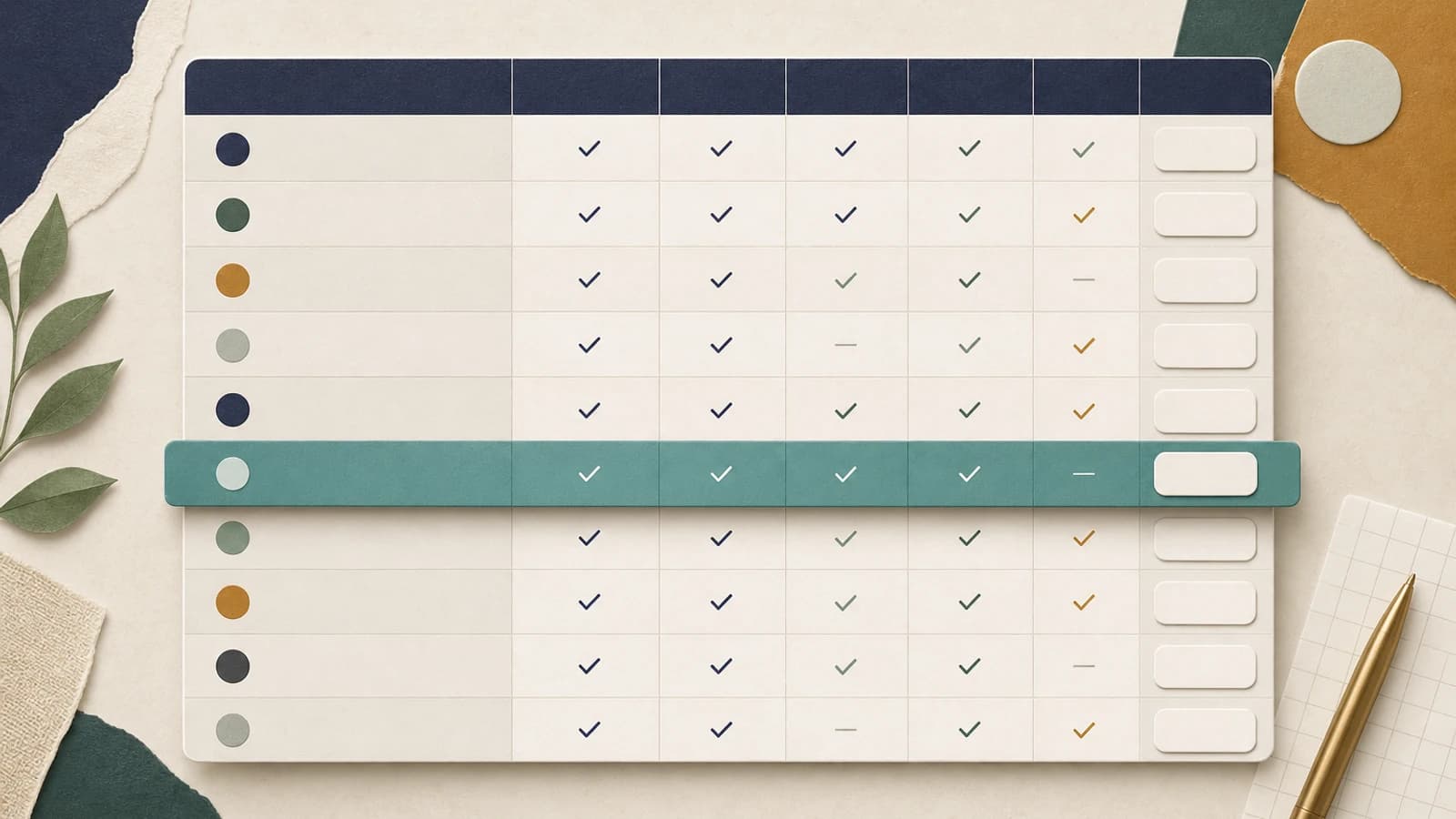
The pricing table tells a clear story. Under $100/mo you are buying one slice of competitor analysis: SEO from Ahrefs Starter, PPC from SpyFu, AI-structured reports from Competely, or pre-build discovery from Preuve AI. Cross $125/mo and you get a multi-dimensional platform like Semrush or Similarweb that covers several of those slices at once. Cross $15,000/yr and you are not buying software anymore, you are buying a sales-led contract with an implementation team and a dedicated analyst to run it.
For a pre-launch founder, the math is straightforward. You have no traffic yet and no keywords worth tracking. Start with a free scan or a $39/mo tool. Upgrade to SEO intelligence once you have something live to compete with.
Which free competitor analysis tools are worth using?
Free tools cover the basics. They will not give you the structured, exportable analysis that paid tools provide, but they catch roughly 80% of the competitive signals that matter at the earliest stages.
Google Alerts (free)
Set alerts for competitor names and key industry terms. You get an email whenever Google indexes a new mention. It costs nothing and takes two minutes to set up. The limitation is obvious: you get raw notifications with no analysis or structure behind them. Set it up and move on.
Crunchbase free tier
Basic company profiles, funding rounds, and key people. Enough to answer "who funded my competitor and how much did they raise" without paying. The paid tiers unlock advanced search, alerts, and CRM integrations.
Similarweb free / 7-day trial
Limited traffic estimates and top traffic sources for any website. Useful for a quick sanity check on competitor scale. The free tier caps historical data and result depth, but it is enough to see whether a competitor gets 1,000 or 1,000,000 monthly visits.
Ahrefs Webmaster Tools (free)
Free backlink and site audit data for websites you own. It does not let you analyze competitors (that requires a paid plan), but it tells you how your own site stacks up on the SEO fundamentals once you launch.
Preuve AI free scan
The free Reality Check scan includes competitor discovery as part of a full viability assessment. It maps competitors with pricing and positioning data. The Founder tier at $59 unlocks the full 15-competitor map with funding rounds and weak spots.
The honest tradeoff with free tools: you trade money for time. Manually stitching together Google Alerts, Crunchbase free, and Similarweb free takes 10-20 hours to produce what a purpose-built tool generates in under two minutes. If your time is worth more than $39/mo, a paid tool pays for itself on the first use. If you want to go deep on market research tools beyond competitor analysis, I tested 17 of them with real pricing in a separate comparison.
How to pick the right tool for your stage
After testing these tools and building one myself, here is my honest framework:
Pre-launch (idea stage). Run a free Preuve AI scan or try Competely at $39/mo. You need competitor discovery, not monitoring. Find out who you are up against before you write code.
Post-launch (growth stage). Add Ahrefs Starter ($29/mo) or Semrush Pro ($139.95/mo) for SEO intelligence. Add Crunchbase if you are fundraising and need competitor funding data for your market slide.
Scale stage (sales team competing for deals). Evaluate Crayon or Klue when your sales team consistently loses to specific competitors and you need battlecards. This is a $15,000+/yr commitment, so make sure you have the deal volume to justify it.
The mistake I keep seeing: founders at stage 1 buying stage 2 tools, then wondering why a $140/mo SEO platform told them nothing useful about a market they have not entered yet. If you are pre-launch, start with a free scan. The SEO tools will still be there when you actually need them.
FAQ
What is the best competitor analysis tool for startups in 2026?
It depends on your stage. Before launch, Preuve AI (free scan, $59 Founder tier) maps up to 15 competitors with pricing, funding, and weak spots as part of a full viability scan across 60+ live sources. For growth-stage SEO intelligence, Semrush ($139.95/mo) or Ahrefs ($29/mo Starter) cover keyword gaps and traffic estimates. Enterprise sales teams use Crayon or Klue ($15,000-$30,000+/yr) for battlecards and win-loss analysis. The best tool is the one that matches where you are right now.
Are there free competitor analysis tools that actually work?
Yes. Google Alerts monitors competitor mentions for free. Crunchbase free tier shows basic funding and company data. SimilarWeb offers limited traffic estimates without a paid plan. Preuve AI includes a free Reality Check scan that maps competitors alongside market sizing and demand signals. The tradeoff is always depth: free tools catch surface-level changes, but structured analysis of pricing, positioning, and feature gaps requires a paid tool or significant manual time.
How much do competitor analysis tools cost for startups?
Costs range from $0 to over $30,000 per year. Free options include Google Alerts and Crunchbase free tier. Budget tools run $29-$99/mo (SpyFu, Competely), and Preuve AI is $59 one-time for a Founder Report. Mid-range SEO intelligence costs $125-$500/mo (Semrush, Ahrefs, Similarweb). Enterprise CI platforms like Crayon and Klue start at $15,000-$30,000/yr with sales-led pricing. Most pre-launch founders spend under $100/mo on competitor research.
Can AI replace manual competitor analysis?
AI tools handle data collection and monitoring well: scanning pricing pages, tracking funding rounds, aggregating review sentiment, and mapping feature gaps. They cut research time from days to minutes. What AI cannot replace is strategic interpretation. Knowing that a competitor raised $10M is data. Deciding whether that makes your market more or less attractive is judgment. Use AI to gather, a human to decide.
What competitor data do investors want to see?
Investors want a competitive landscape slide showing 3-5 direct competitors with their funding, pricing, and your specific advantage over each. They also want proof you understand indirect competitors and adjacent threats. The data points that matter most: competitor pricing (from their website), funding rounds (Crunchbase), customer complaints (G2, Reddit), and the gap your product fills that others miss.
Cite this page
Last updated August 4, 2026
Forat, V. (2026, August 4). Best Competitor Analysis Tools for Startups (2026): 10 Tested by Stage. Preuve AI. https://preuve.ai/blog/best-competitor-analysis-tools-startups-2026
Forat, Vincent. “Best Competitor Analysis Tools for Startups (2026): 10 Tested by Stage.” Preuve AI, 4 Aug. 2026, preuve.ai/blog/best-competitor-analysis-tools-startups-2026.
Forat, Vincent. “Best Competitor Analysis Tools for Startups (2026): 10 Tested by Stage.” Preuve AI. August 4, 2026. https://preuve.ai/blog/best-competitor-analysis-tools-startups-2026.
@misc{forat2026-best-competitor-analysis-tools-startups-2026,
  author = {Forat, Vincent},
  title = {{Best Competitor Analysis Tools for Startups (2026): 10 Tested by Stage}},
  howpublished = {Preuve AI},
  year = {2026},
  month = aug,
  url = {https://preuve.ai/blog/best-competitor-analysis-tools-startups-2026},
  note = {Last updated August 4, 2026}
}
Vincent
5 years in B2B growth, building Preuve AI in public. 82% of ideas it scores aren't ready, the point is finding out in 10 minutes, not 3 months.
Follow on X →
Building is expensive. Validation is free.
Run your idea through 10 AI agents before you write a line of code. Every claim source-linked.