Key takeaways
- Market research costs $0 to $50,000+ per project: Traditional firms charge $15,000 to $50,000 for a custom study over 4 to 12 weeks, while AI-powered research tools deliver automated reports for $0 to $59 in minutes.
- Methodology is the biggest price driver: A single in-person focus group session runs $7,000 to $12,000, online surveys cost $15 to $50 per response for general audiences, and in-depth interviews cost $200 to $500 each fully loaded.
- An in-house analyst costs more than the salary line: The median US market research analyst earns approximately $77,000 per year, but fully loaded cost with benefits, tools, and overhead reaches $150,000 to $175,000 annually.
- Sticker price understates the true cost: A $15,000 study that takes 8 weeks burns two months of runway. Total research cost includes time-to-insight, iteration cycles, and the opportunity cost of waiting to build.
I got my first market research quote in 2023: $35,000 for a six-week competitive analysis. Fourteen pages of proposal. Not one line explaining what I was paying for.
Market research costs $0 to $50,000+ per project depending on method and provider. If you are pricing this out for one idea, the numbers look chaotic, but they map to five clean tiers. Every figure below links to its source.
Market research cost is the total expense of collecting and interpreting data about a target market, including methodology fees, participant incentives, analyst time, tool subscriptions, and the time cost of waiting for results.

Will your idea survive the market?
Preuve AI runs 10 agents against live market data and links every claim to a source. Free analysis in 60 seconds.
How much does market research cost on average?
There is no useful average. These five pricing tiers have almost nothing in common, and averaging them would hide the real decision. A $59 AI report and a $300,000 Nielsen contract are both labeled "market research." Here is each tier with real published costs:
Traditional research firm. $15,000 to $50,000+ per project, delivered in 4 to 12 weeks. Boutique firms start around $5,000; mid-market firms run $40,000 to $100,000. Enterprise panels (Nielsen, Kantar) bill $50,000 to $750,000+ annually. Iteration means a new scope and a new invoice.
Freelance researcher or boutique consultant. $5,000 to $25,000 per project, 2 to 6 weeks. Senior specialists charge $150 to $300 per hour. More flexible on scope than firms, but you manage the project yourself.
In-house market research analyst. $77,000 median salary, $150,000 to $175,000 fully loaded once you add benefits, tool subscriptions, and the overhead you never quite budget for. Makes sense only if you run five or more research projects per year.
DIY with paid tools. $0 to $300 per month for tools like SurveyMonkey, Google Trends, and Statista. Add 10 to 40 hours of your own time per project. Total out-of-pocket stays under $2,500, but the time cost is real.
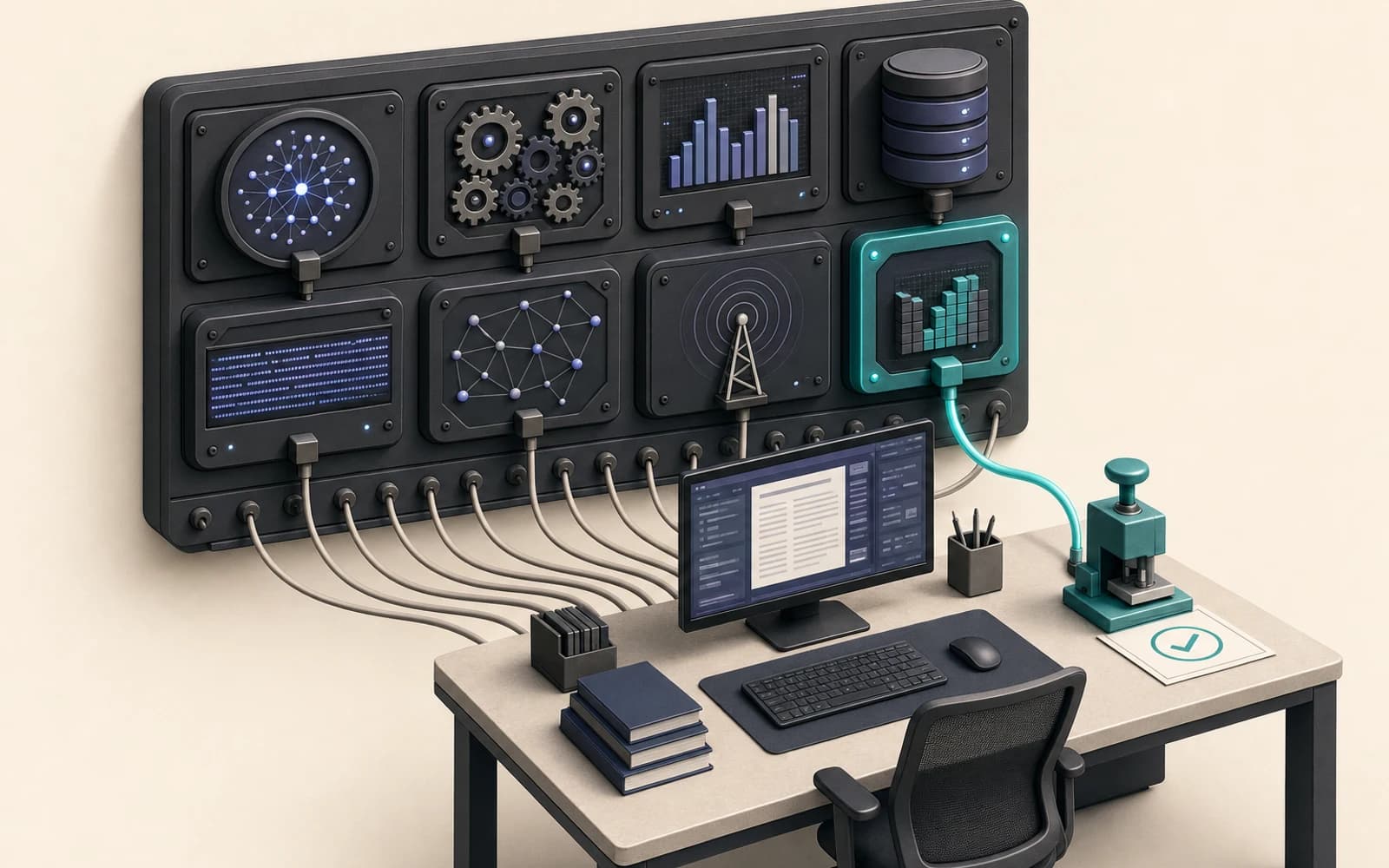
AI-powered research tools. $0 to $59 per report, delivered in minutes. These tools scan live data sources covering competitor analysis, demand signals, market sizing, and risk flags. Re-running costs nothing extra.
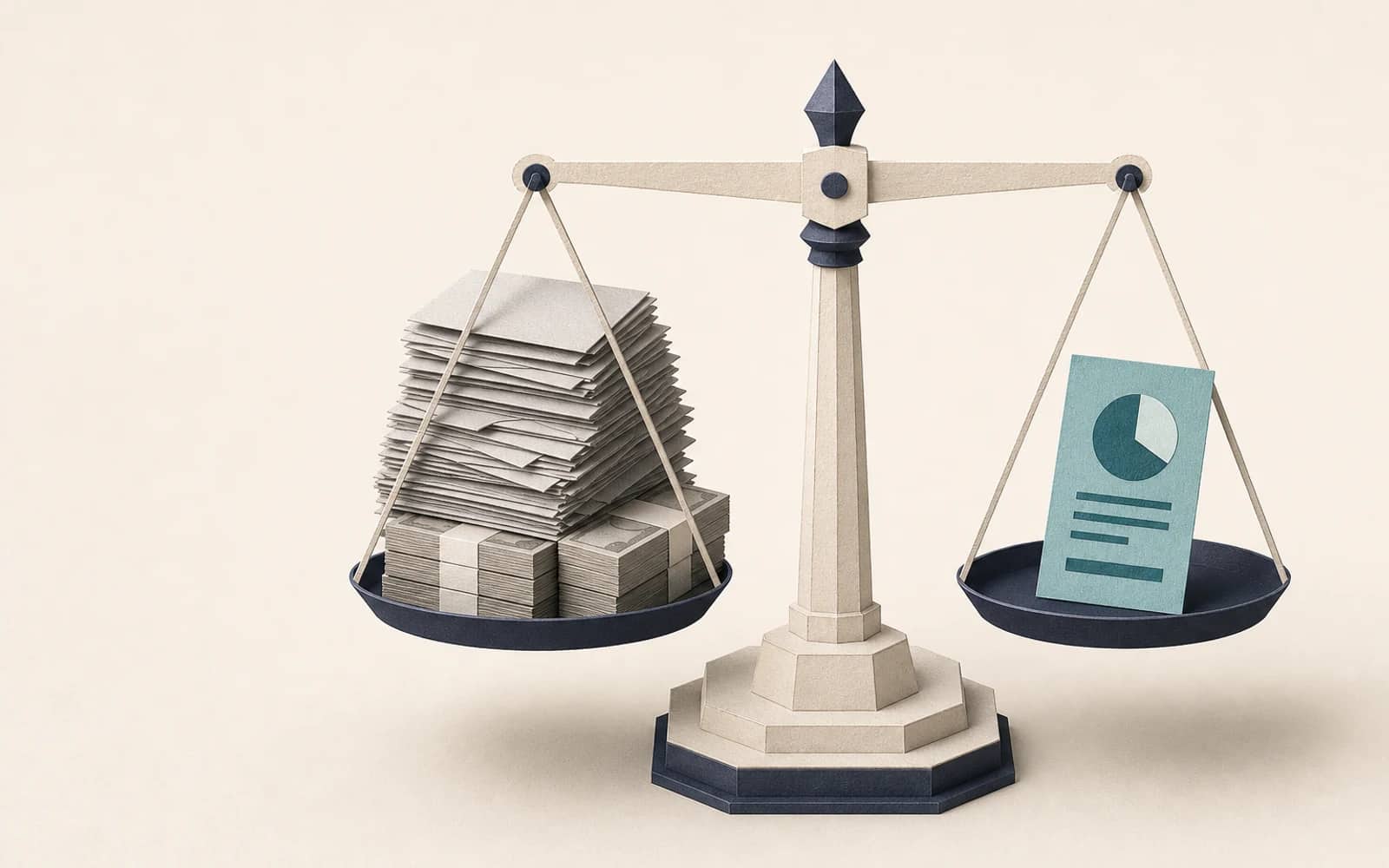
Those are sticker prices. But sticker price is not the true cost of research. A $15,000 study that takes eight weeks burns two months of runway while you wait for answers. If the first round misses your question, round two starts from scratch with a new scope and a new invoice. I call this the true cost gap: the difference between what you pay the vendor and what the project actually costs your business once you add the weeks spent waiting, the re-scope if round one was off target, and the runway you burned before you could start building.

What factors affect market research pricing?
Four variables explain most of the price variation across every tier:
- Methodology. Quantitative surveys cost less per data point than qualitative methods. At the per-response rates below, a 500-person online survey works out to $7,500 to $25,000 total. Three focus group sessions covering roughly 24 participants cost $10,000 to $25,000 for comparable demographic coverage.
- Audience specificity. General-population respondents cost $15 to $50 per survey response. Niche B2B audiences (CTOs at mid-market SaaS companies, for example) run $30 to $80 per response. Expert-network calls through firms like GLG cost $1,000 to $2,500 per 45-minute session.
- Timeline. Standard firm-led projects take 4 to 12 weeks. Accelerated timelines cost more. AI-powered tools collapse the timeline to minutes.
- Geography. US research costs five to eight times more than equivalent studies in India or Southeast Asia, where focus group sessions run $1,200 to $3,500 compared to $7,000 to $12,000 in the US.
If you are a founder researching one idea, methodology matters more than any other variable. A poorly scoped $20,000 survey tells you less than a $59 AI report pulling from live competitive data. For a deeper walkthrough of the process itself, I wrote a step-by-step market research guide for startups.
How much does a market research firm or agency charge?
Firm pricing splits into three tiers with enormous gaps between them:
Boutique firms and solo consultants
$5,000 to $40,000 per project, per Elevated Signal's outsourcing benchmarks. Typical scope: competitive landscape analysis, customer interviews (10 to 20), or a focused survey with 200 to 500 respondents. Delivery in 2 to 6 weeks. You get a PDF report and a presentation deck. Most early-stage founders who hire a firm land in this range.
Mid-market research agencies
$40,000 to $100,000 per project. Larger samples, mixed-method designs (quantitative survey combined with qualitative interviews), dedicated project teams. Elevated Signal puts the fully loaded analyst cost at $150,000 to $175,000 per year, which is the breakeven where hiring in-house starts competing with outsourcing. Fewer than four or five projects per year? Outsourcing wins on cost.
Enterprise research panels
Nielsen contracts run $50,000 to $750,000+ annually per Vendr's procurement data. Qualtrics ranges from $5,000 to $100,000 per year depending on seat count and features. Gartner and Forrester subscriptions cost $14,000 to $148,000 annually. These are built for companies with dedicated research departments, not founders validating one idea.
If you are weighing the firm route against doing research yourself, I am writing a full comparison of market research agencies versus AI tools that breaks down when each option makes sense.

Skip weeks of manual research
Get complete market research, sourced proof, competitor map, and pricing data for your idea instantly.
How much does a focus group or survey cost?
A single in-person focus group costs $7,000 to $12,000 per session, while online survey responses run $15 to $50 each for general audiences. The gap between these two primary methods catches most first-time buyers off guard.
Focus groups
A single in-person focus group session in the US costs $7,000 to $12,000. That covers three line items: facility rental at $1,000 to $3,000, a moderator at $1,500 to $5,000, and participant incentives at $100 to $250 per person for general audiences ($300 to $1,000+ for B2B professionals). Most studies run two to three sessions, putting the total study cost at $10,000 to $25,000.
Online focus groups cut costs by 25 to 40 percent by removing the facility. International sessions in India or Southeast Asia run $1,200 to $3,500 per session.
Online surveys
Survey costs depend on who you are asking. General-population respondents cost $15 to $50 per response. Niche B2B audiences cost $30 to $80 per response. At those rates, a 500-respondent general-population survey works out to $7,500 to $25,000 all-in (panel fees, design, analysis). Budget providers like Pollfish offer $0.95 to $6.50 per response, but quality drops at that price.
In-depth interviews
One-on-one interviews cost $200 to $500 per interview fully loaded (recruiting, moderator, transcription, incentive). European B2B interviews average around 750 euros per interview. A typical study of 15 to 30 interviews runs $8,000 to $25,000.
How much does it cost to hire a market research analyst?
A full-time market research analyst costs $150,000 to $175,000 per year once you add benefits plus tool subscriptions on top of the base salary. That number is the one that matters, but most job postings only show the salary. The US median market research analyst salary is approximately $77,000 per year. Entry-level analysts start around $42,000 to $62,000. Senior analysts typically earn $69,000 to $116,000.
The salary, though, is not what you actually pay. Fully loaded cost for one market research analyst runs $150,000 to $175,000 per year once you add benefits, tool subscriptions ($2,000 to $17,000 per year for platforms like Statista), and overhead. Elevated Signal's analysis puts the breakeven at four to five outsourced projects per year at a $25,000 average. Below that threshold, outsourcing individual projects costs less.
For most founders and small teams, hiring a full-time analyst to research one idea is the wrong unit of investment. You do not need a person on payroll for a question that has a finite answer.
Can you do market research for under $100?
Two years ago, this would have sounded naive. Today, the under-$100 tier covers more ground than a $10,000 study did in 2020.
The free layer includes Google Trends (demand signals over time), competitor website analysis (pricing pages, feature lists, positioning), Reddit and community forums (unfiltered customer complaints), and free tiers on data platforms. I wrote a separate rundown of 17 market research tools with real pricing covering the full list.
AI-powered research tools fill the gap between free desk research and a five-figure firm engagement. I built Preuve AI to scan 60+ live data sources covering competitor analysis, demand signals, market sizing, and risk flags. The free scan delivers a basic analysis in under a minute. The $59 Founder report adds 19 sections and three pivot recommendations. That puts it at roughly 0.1 percent of what a traditional firm charges for similar coverage.

If you advise clients for a living, the math shifts further. Preuve AI's Consultant workspace costs $99 once with the first client project included, then $59 a report, or packs of 2 for $89 and 5 for $199 ($39.80 each). That puts client-ready market research at less than one billable hour for most consultants.
At these prices, skipping research probably costs more than doing it, and that math was not true five years ago. If you are evaluating what it takes to get an idea all the way to market, beyond the research phase alone, I am putting together a complete guide to startup validation costs covering every stage from research through prototype testing.
If you have never run market research at all, I also wrote a beginner-friendly guide for first-time founders that walks through the process from scratch.
FAQ
How much should a startup budget for market research?
For a single project, most early-stage startups spend between $0 and $5,000. Free AI tools and desk research cover initial market sizing and competitor analysis. If the initial screen shows promise, a focused survey study ($5,000 to $15,000) or a $59 advanced AI research report can fill the remaining gaps. Five-figure research budgets make more sense after product-market fit, not before it.
Is cheap market research reliable?
Price alone does not determine quality. A $50,000 focus group study can produce misleading results if the sample is biased or the questions lead participants. A free or low-cost AI scan that pulls from live data sources and cites every claim can be more useful than an expensive study built on stale panel data. Reliability depends on methodology and source quality, not the invoice.
What is the cheapest way to do market research?
Free options include Google Trends for demand signals, competitor website analysis, Reddit and community forums for customer pain points, and free-tier AI research tools that scan multiple live data sources automatically. The cheapest comprehensive option is an AI-powered market scan, which covers competitor analysis, demand signals, and market sizing for $0 to $59 per report.
How long does market research take?
Timeline depends on method. AI-powered scans deliver results in minutes. DIY desk research takes one to two weeks. Online surveys take two to four weeks including design, fielding, and analysis. Focus groups need four to eight weeks for recruitment, sessions, and reporting. Traditional full-service firm studies take 4 to 12 weeks from briefing to final deliverable.
Do I need a market research firm, or can I do it myself?
Most founders and small businesses can handle initial market research using free tools and affordable AI-powered research platforms. Consider hiring a firm when you need primary research with specific hard-to-reach demographics, regulatory compliance documentation, or when the decision at stake justifies the $15,000 to $50,000 investment.
Cite this page
Last updated September 29, 2026
Forat, V. (2026, September 29). How Much Does Market Research Cost? Preuve AI. https://preuve.ai/blog/how-much-does-market-research-cost
Forat, Vincent. “How Much Does Market Research Cost?” Preuve AI, 29 Sept. 2026, preuve.ai/blog/how-much-does-market-research-cost.
Forat, Vincent. “How Much Does Market Research Cost?” Preuve AI. September 29, 2026. https://preuve.ai/blog/how-much-does-market-research-cost.
@misc{forat2026-how-much-does-market-research-cost,
  author = {Forat, Vincent},
  title = {{How Much Does Market Research Cost?}},
  howpublished = {Preuve AI},
  year = {2026},
  month = sep,
  url = {https://preuve.ai/blog/how-much-does-market-research-cost},
  note = {Last updated September 29, 2026}
}
Vincent
5 years in B2B growth, building Preuve AI in public. 82% of ideas it scores aren't ready, the point is finding out in 10 minutes, not 3 months.
Follow on X →
Building is expensive. Validation is free.
Run your idea through 10 AI agents before you write a line of code. Every claim source-linked.