
The short answer
founder-skill is worth installing if you use Claude and want a free launch team you can edit: eleven MIT-licensed skills by Jake Schincariol that run from a board review to a computed business plan (I sell Preuve AI, a paid tool with a competing Buyer Panel). Its consumer panel is the best part, as long as you read it for why simulated buyers pass, not for the buy rate, which its own README calls an upper bound. Before you sign a lease or start a build, run the cheap real-world test its launch skill puts first.
Key takeaways
- founder-skill is a free eleven-role launch team inside Claude, and its consumer panel is the standout. The MIT-licensed skills run from a board review and pricing to a CFO and a dated launch plan. Each skill writes into a shared founder/ folder, and the plan’s verdict is computed in code.
- The simulated buyers only know the objections in the customer file. Each buyer card carries one doubt drawn at random from the 4 to 8 objections the founder lists, so a doubt missing from that list is never planted in a buyer’s head.
- The useful output is why buyers pass, not how many buy. The project’s own notes call the panel good at surfacing objections, segments and wording, and bad at predicting real conversion.
- An open bug report lists four problems, and three hold in the code at v1.0. A plan with no costs can read Profitable, an offer re-test reuses earlier answers, and "12,50" reads as 1250. The code behind each sits in a handful of lines of a two-week-old first release.
- The project’s launch skill starts with a cheap real-world test. A waitlist, a pre-sale or a price on a landing page comes before the big costs are signed, so real buyers confirm what the simulated ones said.
In the first 15 days since it was released, this new project founder-skill has already 1,372 stars on GitHub! I can give you one reason you should use it: it tells you in its README to use the output of the panel (the buy rate of 100 simulated buyers of your product) as an upper bound of what it should be, and to read the panel to understand why your product is not purchased. So, even if you do nothing else, just read the output of the panel, it is worth it. Because if you read the number of buyers who would buy your product and consider it as an upper bound of what it should be in reality, it is worth it!
This review of founder-skill is biased: I’m the creator of Preuve AI, a startup idea validation tool, and Preuve has a paid Buyer Panel that competes with founder-skill’s panel. I wrote this review from reading the README and the code as of October 22, 2026, commit fd9385b. There’s also an open bug report, and I’ve checked it against the code: 3 of its 4 problems hold.

Will your idea survive the market?
Preuve AI runs 10 agents against live market data and links every claim to a source. Free analysis in 60 seconds.
What is founder-skill, and what do the eleven skills do?
Basically, it is a pack of 11 skills for Claude (a skill is a set of instructions for Claude to help it perform a specific task), created by Jake Schincariol and published on Oct 7, 2026 in a single commit, as version 1.0 under the MIT license. As stated in the README, "Free, MIT, no signup, no API key, nothing to connect." Each skill writes to the founder/ folder in the project and reads the outputs of the other skills if any (the plan compiles them all). You can run them all or just one skill.
This is described pretty nicely in the README, and here is the flow in my words:
| Skill | Role | What it produces |
|---|---|---|
| /founder-board | Board of directors | Three reviewers, each applying one published framework, score the idea 1 to 10, name what would kill it and vote fund, fund if, or pass |
| /founder-competitors | Competitor scout | Direct and indirect competitors and substitutes, their prices and what their customers complain about, every fact linked |
| /founder-consumer | Consumer panel | 100 simulated buyers (20 on a quick run) who buy or pass, and why |
| /founder-pricing | Pricing | A price range from the panel’s four price answers per buyer (or a real survey file), set against competitors and margin |
| /founder-offer | Offer | Bonuses, a guarantee, urgency and a name that answer the panel’s objections, then a quick re-test on the panel |
| /founder-cfo | CFO | Money left per sale, margin, break-even per day, year 1 month by month, cash needed, payback |
| /founder-marketing | Marketing | Positioning, channels, a dated 30-day launch campaign, ten hooks, the most you can pay per customer |
| /founder-brand | Brand | Name candidates with the trademark, domain and handle checks to run, a voice, a brief for the look |
| /founder-ops | Operations | Suppliers, staffing, day-one routines, tools, permits to check, a risk register |
| /founder-launch | Launch | A cheap real-world test first, then a dated countdown, a run sheet, the first 30 days |
| /founder-plan | Business plan | One plan with a verdict computed in code: Profitable, Not yet or Incomplete |
Source: founder-skill README at commit fd9385b, read October 22, 2026. The roles and outputs are the author’s description, in my words.
The board draws from $100M Offers by Alex Hormozi, Zero to One by Peter Thiel and Blake Masters, and Steve Jobs by Walter Isaacson. To be precise, "The board applies published frameworks." It does not speak as the authors or claim affiliation (also from the README).
You can use these skills by copy-pasting the link of the repo in Claude and asking it to "install skill", as a plugin for Claude Code or by copying the folders in your ~/.claude/skills/ folder.
The skills come with 4 Python scripts that help with the skills. You need to have Python 3.8+ to run them, but you don’t need to install anything. As stated in the README, "None touch the network," so these scripts never send your files anywhere. Of course, the files are sent to Claude as it reads them, but that’s a different story. If you don’t use Claude Code, you can still copy-paste the content of a SKILL.md file in a chat with Claude. But you won’t be able to use the helpers/scripts.
How does the founder-skill consumer panel work?
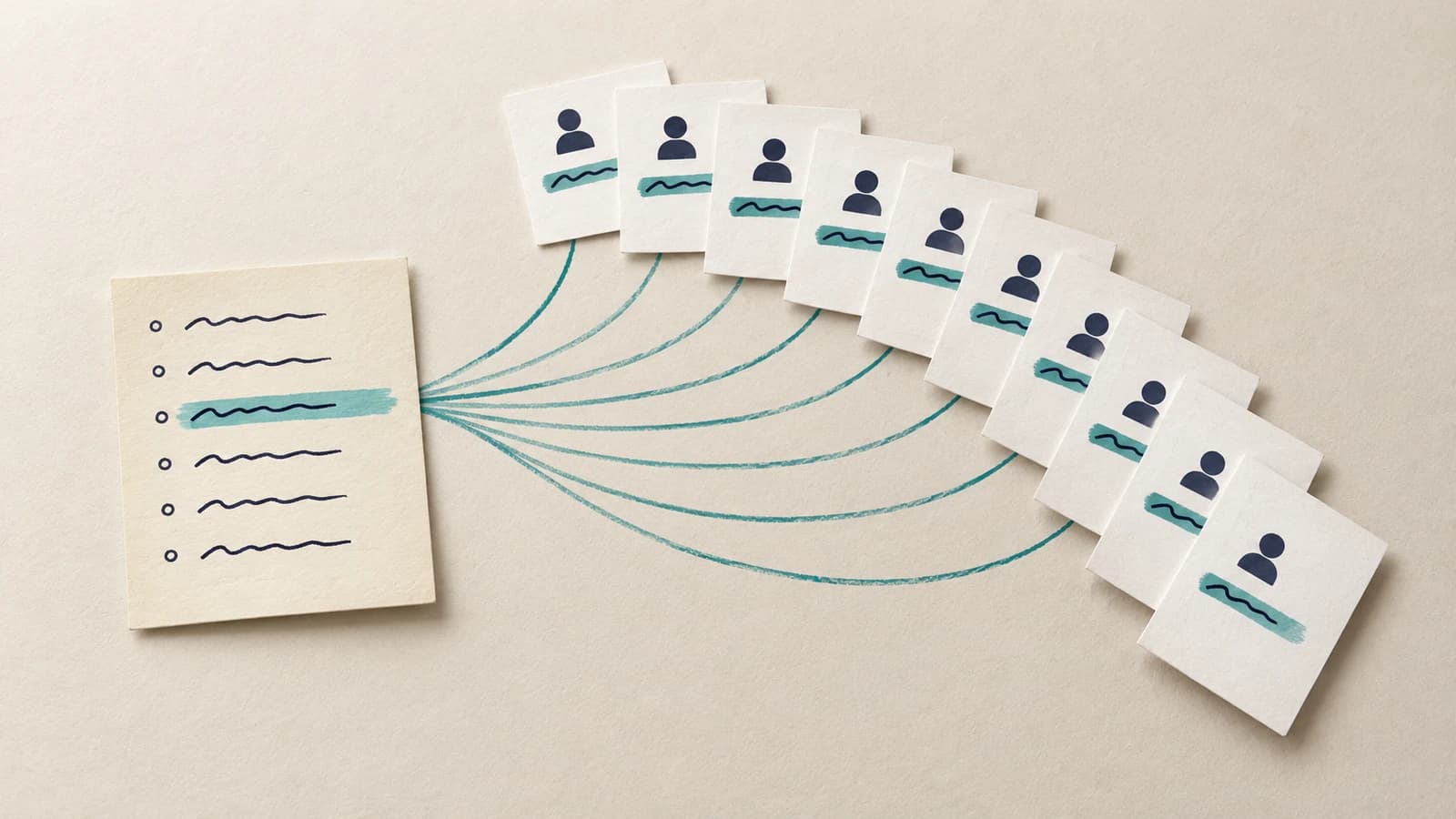
Let’s look at one of the skills, the consumer panel. It asks you to describe your customers, simulates 100 buyers, and asks them if they will buy your product. It uses code to count the answers. Basically, it is done in 4 steps. I summarize here what is in the SKILL.md file of the skill and what is done in the panel.py script.
You describe your customer. When used with Claude, it will write it in the file founder/customer.json. You describe the business, the customer (who is the ideal buyer), the customer segments (2-4 segments with their share of the customer base and their income range), their buying behaviour (4-8 behaviours), and your assumptions about the doubts they have (4-8 doubts). Claude will help you write that file based on the information you have and, if you ran the competitor scout skill previously, the complaints about the competitors. It will show you the content of the file so that you can correct it if needed. This is important as "a wrong customer makes the whole panel wrong."
The cards are dealt: 100 cards are created with the name of the buyer, age, segment, income, buying behaviour, habit, and a random objection from the list of objections you provided. It uses a starting number to create the random numbers, so you can re-deal the same cards if needed. Although, the answers may still be different if you run the skill again.
Claude is called for each of the buyers, by groups of 10 buyers. It provides them with a brief in which it states that "a polite yes is worse than a clear no." Each of the buyers answers if they will buy, how many times they will buy in the first month, a reason code (from a list of 9 reason codes like price, habit, need, trust, etc.), a reason in their own words, and what would change their mind. They also answer 4 questions about the price.
The answers are counted. Claude doesn’t count them, it uses code to count them. If a buyer didn’t answer after 2 tries, it is not included and counted as missing. The code will give you the buy rate, the buy rate by segment, by behaviour, by income, the main reasons why the buyers don’t buy (with a quote from a buyer for each reason), and what would make them buy.
The pricing skill works out a price range from the answers to the four price questions. The four questions are from the Van Westendorp price survey technique, created by Dutch economist Peter van Westendorp in 1976, and ask at what price the product would be too cheap to be good, a bargain, getting expensive, and too expensive to buy. The skill uses code to calculate an acceptable price range from these answers. (It can also read in a file from a real Van Westendorp survey if you’ve done one).
Cost: it’ll cost something to run the whole thing, so the skill asks Claude to warn you that running the full panel means 100 separate helper calls, and recommends running the quick 20-person run first, for a first look. If you’re using the default permission mode in Claude Code, you’ll be asked to approve each file as it’s answered, so it recommends running in accept-edits mode instead.
Can simulated buyers tell you if people will buy?
No you can’t, but the best part of its panel is that it tells you this before anyone else does. The fine print for the skill says: “The consumer panel is simulated buyers, not customers.” LLMs tend to be agreeable, it adds, so treat the buy rate as an upper bound and confirm the big calls with real people.
And the consumer skill, under “Honest limits”, says it’s good at surfacing objections, segments and wording, and “bad at predicting real conversion.” The README also says “Panel answers are research; never use them as testimonials.”
The research on using AI for research to simulate users outside of founder-skill points to the same conclusion. In a 2024 study by Nielsen Norman Group, they compared AI generated users to 3 real user interview studies done by the company. The study found that some of the AI generated users claimed to have completed every online course they started in contrast to many real users in the study. They also found that the AI users gave feedback that was “often favorable and vague.” More recently (October 2026), the same company published a study where they compared AI generated users to a set of real users who had answered a survey. They used 120 AI generated users and asked them the same survey question as the real users. The study found that the AI users gave the same overall conclusion as the 604 real users, but there were fewer unique answers.
On the other hand, there’s some compelling evidence that using AI to simulate buyers can be a reliable survey tool if done right. In a 2025 study by Maier et al., they propose a method for asking an LLM the intent to buy a product. They test the results on 57 surveys of personal care products. Each survey had a number of human responses, with a total of 9,300. The results were then compared to the human survey results and found that the LLMs had 90% of the survey-on-survey reliability of the humans. It’s worth noting that they were comparing it to the survey reliability of humans and not what products they actually bought.
The weak spot: the buyers only know what you wrote
It’s worth pointing out some of the flaws with how the objections are simulated. Firstly, the objections are based off of the list of customer objections that you provide. If you’re using founder-skill to simulate buyers, the list of customer objections come from the list of 4-8 objections you put in your customer file. If you read the brief each buyer gets, you’ll see that those objections are the “first thing that comes to mind” to the buyer and that it tells the buyers not to make up facts about your pitch. As a result, if there’s a doubt that the buyer has that’s not in the list you provided, it is never dealt, though it’s worth noting that the buyer can phrase their main doubt in its own words.
Also, if you read compile.py, you’ll see that once a panel has run, a business plan is only considered Profitable if a certain percentage of buyers buy (currently 25%, but you can change this). As the README notes, the buy rate is an upper bound.

Skip weeks of manual research
Get complete market research, sourced proof, competitor map, and pricing data for your idea instantly.
How should you read a simulated buyer panel?
Use a simulated buyer panel to mostly get the pass reasons, and use the number who buy as an upper bound. The README of founder-skill also says the buy rate is an upper bound. Each buyer has a reason code, reason, main doubt and what would change their mind. Use this to your advantage:
- Make sure the doubts you’re using are real. If you used the competitor skill on your competitors, you should use the doubts that their customers have. You can also use real conversations with potential buyers. Here’s a list of Mom Test questions to help you get started.
- Look for segments or income levels where one pass reason clusters. If you notice that a certain segment or income level keeps giving the same pass reason, that’s a segment you shouldn’t target first. If you only use 20 buyers for your first run, ask one question: is there a segment or income level that has a majority of the doubts about price? Keep in mind that each of 20 buyers can change the buy rate by 5 points, so you should take the results with a grain of salt.
- Use the answers for what would change the buyers’ minds to run real tests with real buyers. These are just guesses, so you should test them with real buyers. You can test different offers, such as the price you’ll launch with.
Here is an example of how this is useful and not useful, using the example provided in the repo (a matcha bar). The matcha bar is a matcha cafe located on King St W in Toronto and sells iced matcha lattes for $6.50/cup. Here are the numbers the README reports from the CFO skill for this example (you can find them in the repo):
| Signal | Number | Source |
|---|---|---|
| Price per iced matcha latte | $6.50 a cup ($4.95 opening week) | Repo example pitch (pitch.example.md) |
| Money left per cup after its own costs | $4.76 | README, CFO step |
| Break-even | 186 cups a day | README, CFO step |
| Planned volume and margin | 383 cups a day, 38% margin | README, CFO step |
| Startup spend and payback | $25,280, earned back in month 8 | README, CFO step |
| Cash needed before it pays for itself | $34,092 | README, CFO step |
Source: founder-skill README at commit fd9385b, "How to use it" section, and the repo’s example files, read October 22, 2026. Figures in dollars, as the README reports them; the script was read, not run.
They want to sell 383 cups per day, which is double their break even point of 186 cups per day. Using a simulated buyer panel, you can get a sense of what doubts buyers have about buying a $6.50 drink on King St W and what price they think is a steal. However, you won’t know how many people will actually buy the drink. That’s something you’ll have to find out by putting a real price in front of real buyers. In other words, that’s what decides if the $34,092 ever comes back.
Is founder-skill reliable? What issue #1 found
Not fully in its current state (v1.0), but you can work around the 3 known bugs. On Oct 14th 2026, a user on GitHub opened an issue (#1) auditing the reliability of the repo at a specific commit (fd9385b). They found 4 issues, and the issue is still open (Oct 22nd) with no reply. I reviewed the code at the specified commit and found that 3 of the issues are valid and one is half-valid.
| What the issue reports | What the code shows | Holds? |
|---|---|---|
| A plan with missing costs reads Profitable | Price and daily volume are required, but a missing cost list counts as zero (unit_economics.py), so the verdict can pass. The README says "a missing field is an error, never a guess." | Yes |
| The offer re-test reuses old answers | The offer skill re-runs a quick panel with the same seed. Setting up the panel again does not clear the old answers, and buyers who already answered get no new brief (panel.py), so "after" repeats "before" unless you empty the folder. | Yes |
| Decimal commas break prices | The price reader strips every comma (van_westendorp.py), so "12,50" reads as 1250. | Yes |
| The quick run actually runs 100 buyers | The script has a buyer-count setting (default 100) and no quick flag; Claude is meant to translate it to 20. Passed straight to the script, the flag stops it with an error, so 100 runs only if the flag is dropped. | Half |
Source: founder-skill issue #1 and the repo code at commit fd9385b, both read October 22, 2026. "Holds" means the code reads that way; I did not execute it.
There’s currently a few things to keep in mind (until the author fixes them; each problem is only a few lines of code, and the entire release is a single commit and only 2 weeks old): Make sure your numbers file lists every cost, even if it’s 0. If you want to test a different offer on the same panel, delete everything in the panel’s answers folder. If your keyboard uses commas for decimals, use a dot when entering prices. If you’re curious about how this works, the repo has tests for each tool, and one of them pins that it skips buyers who already answered (so it only re-runs buyers that don’t have answers yet).
founder-skill vs Preuve’s Buyer Panel: which one fits?
Use founder-skill if you want to do it for free in Claude and don’t mind doing the work yourself. Use Preuve’s Buyer Panel if you want to have the work done for you (researching who your buyer segments are, what their doubts are, etc.).
Preuve’s Buyer Panel is part of Preuve’s paid Founder Report. It’s a panel of 50 simulated buyers who tell you why they wouldn’t buy. It’s based on your ideal customer segments, which Preuve’s research writes after scanning 60+ live data sources. Each segment comes with doubts, which also come from that research, not only from your list.
Each buyer tells you if they would buy or not, why, in their own words, what would change their mind, and answers 4 questions about pricing. The code then counts the answers and works out the price range (the code does all the math, not the AI: the AI only writes the answers, which the code counts). Still, it’s important to keep in mind that these are just simulated buyers, and the buy count is an upper bound: even if all of them say they would buy, it doesn’t prove there is demand.
| founder-skill panel | Preuve Buyer Panel | |
|---|---|---|
| Buyers per run | 100 by default, 20 on a quick run | 50 |
| Who writes the segments and doubts | Claude drafts them with you, from your notes and the competitor scout’s complaints | The report’s research, segment by segment |
| Where it runs | Your own Claude, files on your disk | Inside Preuve, no setup |
| Price | Free, MIT | First run included in the $59 Founder Report; a rerun costs 20 credits |
| What it is not | A forecast: the buy rate is an upper bound | Proof of demand: the buy count is an upper bound |
Source: founder-skill README and panel code at commit fd9385b, and Preuve AI’s Buyer Panel as live, both read October 22, 2026. Both panels are simulated buyers, not customers.
Pick founder-skill when
- You already use Claude and want to do it for free, storing the files in your own project folder
- You want to use the other 10 roles included in founder-skill (CFO, brand, ops, a dated launch plan)
- You want to be able to modify the input or code yourself (it’s MIT licensed)
- You have notes from talking to real customers and can write a good list of objections yourself
Pick Preuve’s Buyer Panel when
- You want the buyer segments and doubts to be based on a full market scan, instead of just your notes and a list of competitors
- You want a full market and competitor scan alongside the Buyer Panel
- You don’t want to set up Claude Code to run 100 calls
In terms of fairness, I have to admit founder-skill is better on scope and cost. It’s free and it does more things than what I sell (11 different roles for your startup). If you want to compare it with other tools for startup validation, I’ve been building a list of comparisons.

Is founder-skill worth it before you spend money?
If you’re using Claude, definitely. It’s a really cool kit with 11 different roles for your startup for free. And, it’s honest about its limitations, telling you to test your idea cheaply using the first step of its launch skill:
The first step of the launch skill is: test before you spend. Pick the cheapest test you can think of that fits with your idea, and test it before spending big. It can be a waitlist, a pre-sale, a landing page with a price… whatever it is, make sure you test it before committing to your startup. In the README’s café example, the startup spend alone is $25,280.
Finally, if you want to scan your competitors before writing your customer file (which is partly what I built Preuve for), you can scan 60+ live data sources in less than a minute to find out who your competitors are for free with Preuve’s Reality Check. Their reviews are a great starting point for your list of objections, regardless of what tool you use to simulate a buyer panel. Scan your idea for free here.
Methodology and sources
| Source | What we used | Size or date | Limitation |
|---|---|---|---|
| founder-skill README, commit fd9385b | What the eleven skills do, run order, install options, the four Python tools, the fine print on simulated buyers, the Moss Matcha worked example | One README at v1.0, read October 22, 2026 | The author’s own description; the example numbers are the README’s, not a run of mine |
| founder-skill consumer panel: SKILL.md and panel.py | How cards are dealt (objection draw on line 109), the brief each buyer reads (lines 161 to 190), the answer format, waves of 10, the 100 and 20 buyer runs, the "Honest limits" section | Code at commit fd9385b, read October 22, 2026 | Read, not executed; behaviour inferred from the code |
| founder-skill compile.py, unit_economics.py and van_westendorp.py | The plan verdict and its 25% default buy-rate bar, missing cost lists counting as zero, the decimal-comma parsing | Code at commit fd9385b, read October 22, 2026 | Read, not executed |
| founder-skill tests/test_panel.py | The test that keeps buyers who already answered from getting a new brief | Code at commit fd9385b, read October 22, 2026 | Read, not executed |
| founder-skill launch skill (SKILL.md) | The "test before you spend" first step | Code at commit fd9385b, read October 22, 2026 | A plan template; the test is yours to run |
| GitHub API, Jakeschincariol/founder-skill | Stars, forks, creation date, single commit, license | 1,372 stars and 177 forks on October 22, 2026; created October 7, 2026 | Stars count attention, not active users |
| GitHub issue #1, "Reliability issues found in an audit of fd9385b (verdict, re-test, decimal parsing, --quick)" | The four reported problems, each checked against the code | Opened October 14, 2026, open with no reply on October 22, 2026 | One outside audit; I checked it by reading the code, not by running it |
| Nielsen Norman Group, "Synthetic Users: If, When, and How to Use AI-Generated Research" | Synthetic users compared with three real interview studies: favorable, vague feedback and idealized behaviour | Article of June 21, 2024 | Qualitative interview comparison, written before current models |
| Maier et al., "LLMs Reproduce Human Purchase Intent via Semantic Similarity Elicitation of Likert Ratings" (arXiv 2510.08338) | The strongest case for simulated consumers: 90% of human test-retest reliability on stated purchase intent | 57 personal care product surveys, 9,300 human responses; v3 dated October 27, 2025 | Matches what people said in surveys, not what they bought; one product category |
| Nielsen Norman Group, "Synthetic Users vs. Human Respondents: Same Conclusion, Less Variation" | One open survey question put to 120 synthetic respondents and 604 people: same overall conclusion, far fewer distinct answers | Article of October 16, 2026; synthetic answers generated in February 2026 | One question about job titles, not a buying decision |
| Wikipedia, "Van Westendorp’s Price Sensitivity Meter" | Origin of the four-question pricing method (1976, Peter van Westendorp) | Article read October 22, 2026 | Encyclopedia summary |
| Preuve AI Buyer Panel code | How many buyers Preuve’s Buyer Panel deals and where its segments come from | Read October 22, 2026 | My own product; I have a stake in how it compares |
FAQ
Is founder-skill free?
Yes, in money. founder-skill is MIT licensed, and its README says it needs no signup, no API key and nothing to connect. It runs inside your own Claude, and its four Python scripts use only the standard library and never touch the network. The usage comes from your own Claude plan: a default consumer panel is 100 separate Claude helper calls, so the skill suggests a 20-buyer quick run for a first look.
How do I install founder-skill?
Three ways, per the README. Paste the repo link (github.com/Jakeschincariol/founder-skill) into Claude and say "install skill". Or, in Claude Code, run /plugin marketplace add Jakeschincariol/founder-skill and then /plugin install founder-skill@founder-skill, after which the skills show up as /founder-skill:founder-board and so on. Or copy the skill folders into ~/.claude/skills/. Without Claude Code you can paste a single SKILL.md into a chat; you lose the sub-agents and the Python tools, but the method still works.
Is founder-skill safe to install?
It is open to inspection, which is the main safety check. The eleven skills are plain-text instructions you can read before installing, and the four Python scripts use only the standard library; the README says none of them touch the network. Claude still reads your project files as it works, and in Claude Code’s default permission mode each buyer answer file asks for your approval. The code is MIT licensed, with no warranty.
Can a simulated buyer panel prove people will buy?
No. founder-skill’s README says language models lean agreeable, so the buy rate is an upper bound, and its consumer skill calls the panel bad at predicting real conversion. In a 2024 comparison with real interviews, Nielsen Norman Group called synthetic users’ feedback "often favorable and vague." Use a panel to find objections and wording, then confirm with a waitlist, a pre-sale or a landing page with a price.
Is founder-skill the same as founder-skills?
No. founder-skill (singular) is Jake Schincariol’s eleven-skill launch pack at github.com/Jakeschincariol/founder-skill, created October 7, 2026. founder-skills (plural) is a different MIT project, "Claude skills for founders", at github.com/ognjengt/founder-skills, created February 2, 2026, with 572 GitHub stars on October 22, 2026.
Is the founder-skill plan verdict reliable?
Not fully, at v1.0. The verdict is computed by compile.py: Profitable, Not yet (with the failing numbers) or Incomplete (no numbers file yet). At commit fd9385b, a numbers file with a price and a daily volume but no cost lists can still read Profitable, because missing cost lists count as zero. An open GitHub issue (#1) reports it, and the code reads that way. List every cost, even a zero one, and treat the 25% simulated buy-rate check as a ceiling, not proof.
Cite this page
Last updated October 22, 2026
Forat, V. (2026, October 22). Founder Skill Review (2026): Read Why They Pass. Preuve AI. https://preuve.ai/blog/founder-skill-review
Forat, Vincent. “Founder Skill Review (2026): Read Why They Pass.” Preuve AI, 22 Oct. 2026, preuve.ai/blog/founder-skill-review.
Forat, Vincent. “Founder Skill Review (2026): Read Why They Pass.” Preuve AI. October 22, 2026. https://preuve.ai/blog/founder-skill-review.
@misc{forat2026-founder-skill-review,
  author = {Forat, Vincent},
  title = {{Founder Skill Review (2026): Read Why They Pass}},
  howpublished = {Preuve AI},
  year = {2026},
  month = oct,
  url = {https://preuve.ai/blog/founder-skill-review},
  note = {Last updated October 22, 2026}
}
Vincent
5 years in B2B growth, building Preuve AI in public. 82% of ideas it scores aren't ready, the point is finding out in 10 minutes, not 3 months.
Follow on X →
Building is expensive. Validation is free.
Run your idea through 10 AI agents before you write a line of code. Every claim source-linked.