Key takeaways
- The best 2026 SaaS ideas are vertical, not horizontal: Software built for one industry with its workflow and compliance baked in, sold to a buyer already paying a person or a worse tool. Construction bid-estimation, freight brokerage automation, veterinary practice software, mental-health billing.
- A buildable idea needs a dated 2026 catalyst And a buyer who already pays for a worse version.
- The moat is the workflow, not the model. If a foundation-model vendor ships it as a default, there is no business.
- Idea lists do not make money. Validating demand before you build is what does.
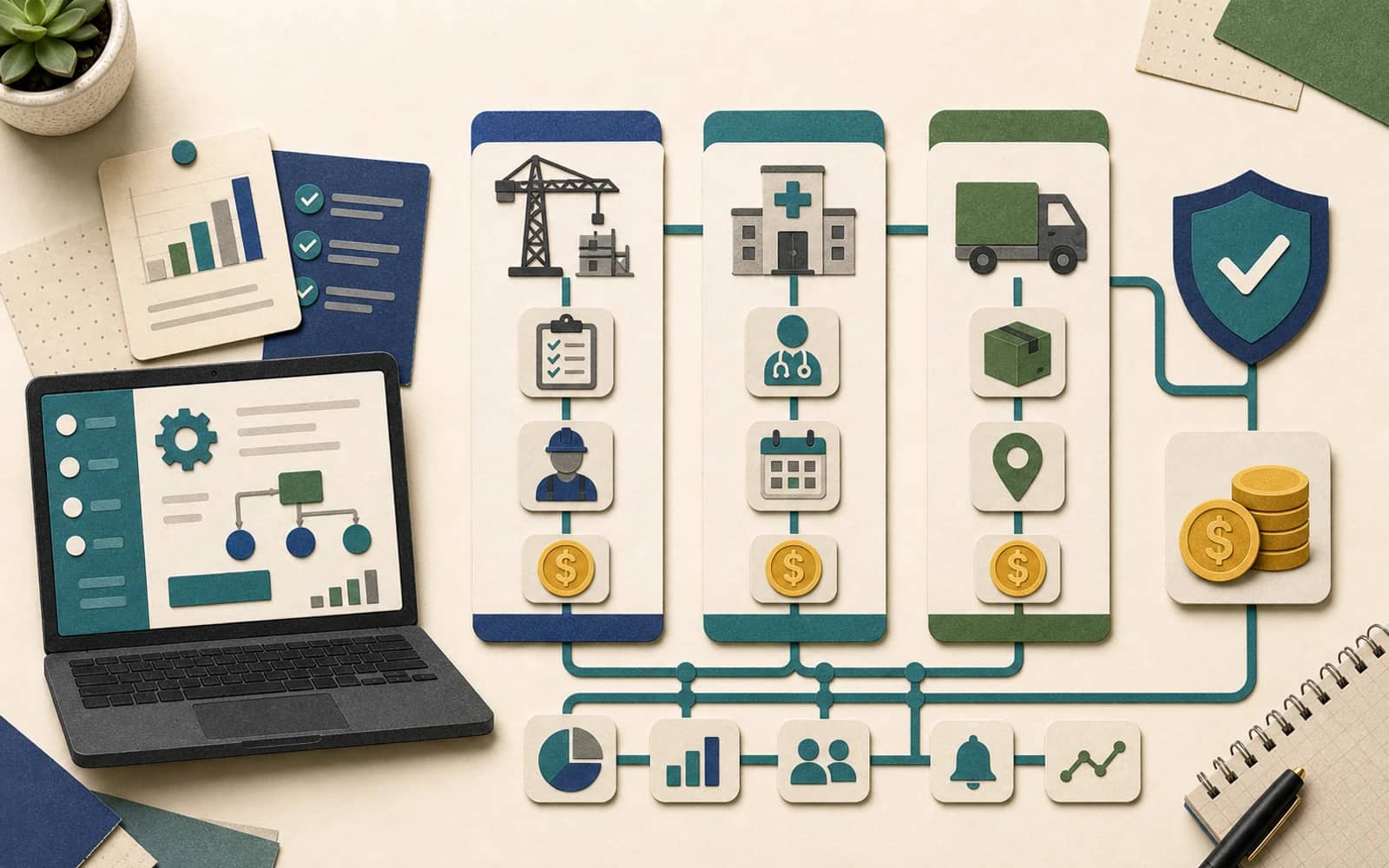
The SaaS startup ideas for 2026 that survive are vertical, built for one industry's workflow and aimed at a buyer who already pays a person or a clunky tool to do the job. Across the 9,000+ startup ideas scored by Preuve, the horizontal wrappers keep getting absorbed by the next model release. Below are 13 that pass, each with what it is, why 2026 opened it, who already pays, and how I would validate it before you write a line of code.

Will your idea survive the market?
Preuve AI runs 10 agents against live market data and links every claim to a source. Free analysis in 60 seconds.
How Do I Pick a SaaS Idea Worth Building?
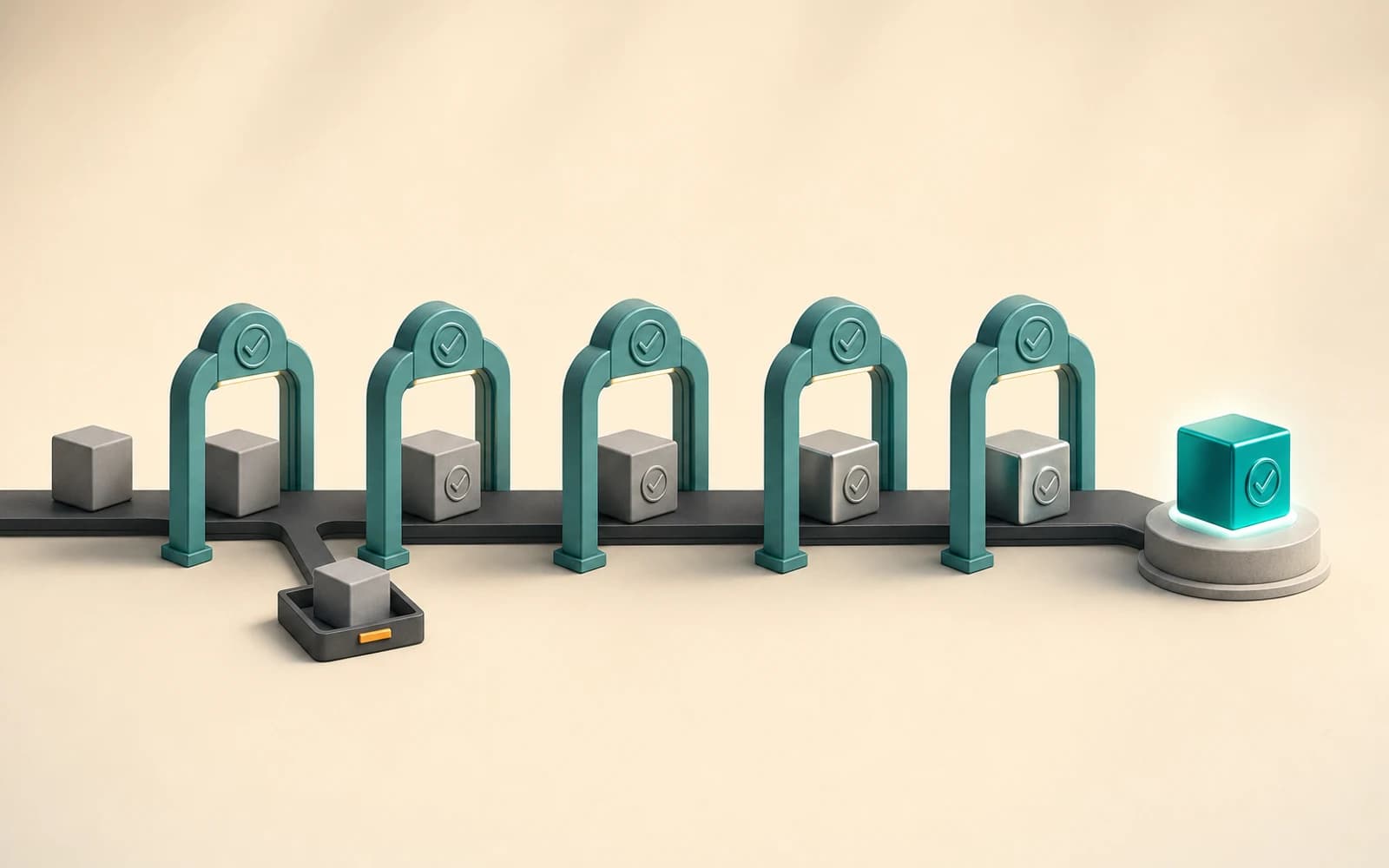
A good SaaS startup idea in 2026 is a vertical one: software built for a single industry's workflow, aimed at a buyer who already pays a person or a worse tool to do the job, and defended by at least two moats: usually some mix of proprietary data, workflow embeddedness, regulatory complexity, or distribution. Every idea below clears the same three checks before it earns a spot.
- Name the 2026 catalyst. Something specific changed this year: a regulation deadline, a sharp drop in model cost, or payment and identity rails that became drop-in. "AI is better" is not a catalyst.
- Find the paying buyer. Someone must already spend money on the problem, even on spreadsheets or a tool they hate. CB Insights found that 42 percent of failed startups died from no market need, and Preuve's 2026 benchmark of 6,000+ analyzed ideas agrees: 36.9 percent are too vague to evaluate, 25.7 percent have no go-to-market plan, and only 17.5 percent score high enough to launch.
- Stress-test the moat. You need at least two of proprietary workflow data, workflow embeddedness, regulatory complexity, or distribution lock-in. A feature alone is gone in ninety days. Full method in how to validate a startup idea.

Vertical AI SaaS for Trades and Logistics
This is where I would point a first-time founder in 2026. These industries still run on spreadsheets and phone calls and emailed PDFs, the buyers have real budgets, and the incumbents tend to move slowly. Each idea takes a manual, high-hours workflow and lets AI do the worst part of it.
1. Construction Bid-Estimation SaaS
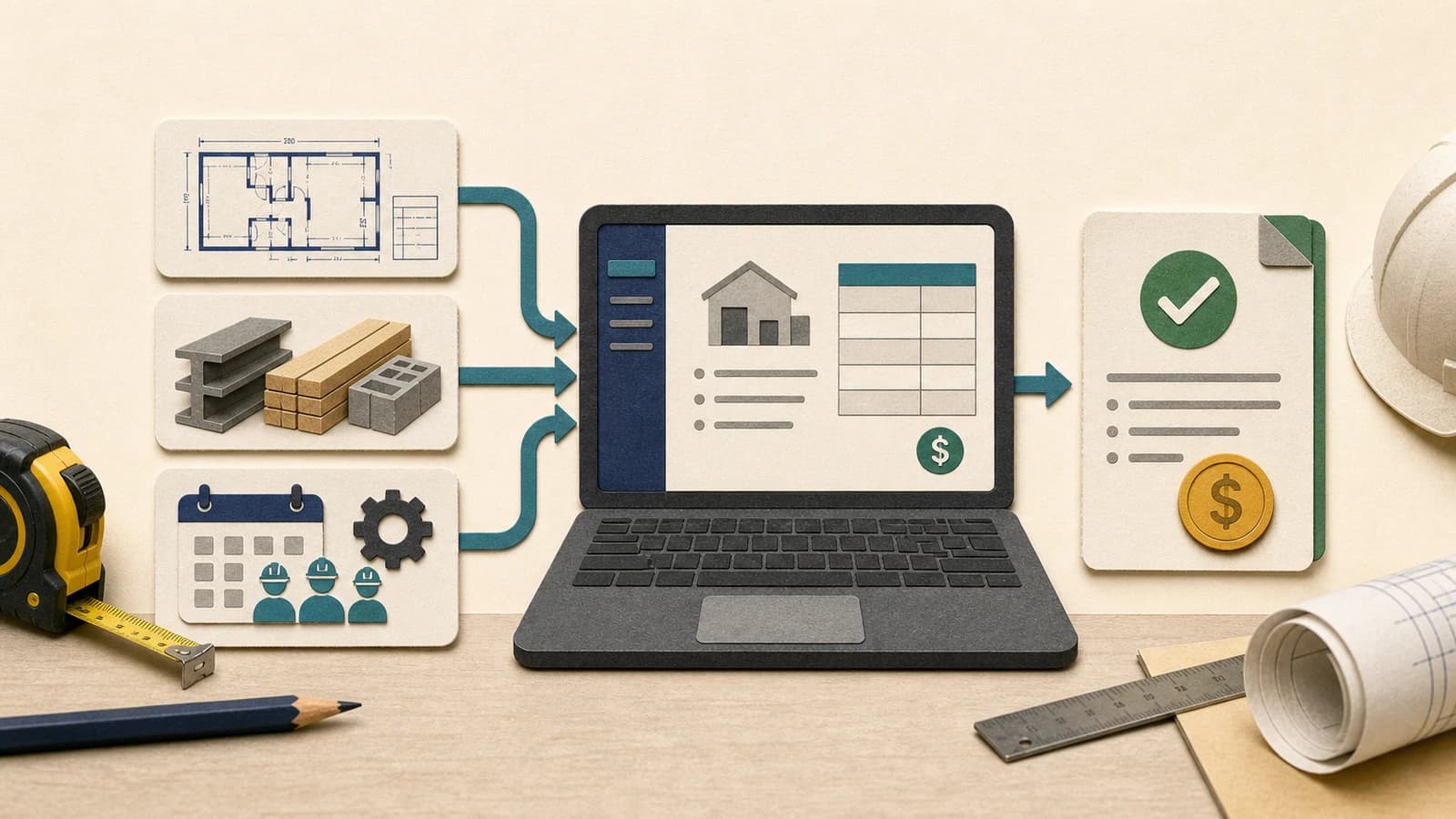
What it is: Software that reads architectural drawings, does automated quantity takeoff, prices labor and materials with regional rates, and produces a commercial bid in a fraction of the usual time.
Why 2026 opened it: Vision and document models can now parse a plan set accurately enough to assist an estimator. Estimators spend 40 to 80 hours preparing a single commercial bid by hand, and that hour count is the value you attack.
Who already pays: Contractors already buy estimating software, a roughly 4 billion dollar segment, and willingly pay for anything that saves estimator time on a bid worth hundreds of thousands.
How to validate it now: Pick one trade (electrical, concrete, roofing) and offer the takeoff as a paid service you run by hand with AI behind the scenes. Charge per bid. If contractors pay for the output, the SaaS is worth building.
2. Freight Brokerage Automation SaaS
What it is: A platform that automates rate quoting, carrier matching, document generation (BOLs, shipping docs) and compliance checks for small and mid-size freight brokers.
Why 2026 opened it: A single shipment involves 15 to 30 document touches that models now handle. FreightTech vendors chase large enterprise transportation systems, leaving the 80 percent of the market that is small brokers on spreadsheets and email.
Who already pays: The US freight brokerage market is roughly 230 billion dollars. Brokers already pay for tooling and lose deals to slow manual quoting, so speed converts directly to revenue.
How to validate it now: Find five small brokerages, shadow their quoting process, and automate just the rate quote first. A transaction fee per booked load aligns your price with the value, which is the pricing model that survives in this category.
3. Restaurant Equipment Maintenance SaaS
What it is: A maintenance platform for commercial kitchens that schedules preventive service, predicts equipment failures, manages vendors and produces the documentation health inspectors require.
Why 2026 opened it: Equipment failures cause revenue loss and food-safety risk, yet maintenance is tracked on paper or not at all. Restaurant tech has poured into POS and the customer-facing stack (ordering, delivery) while ignoring the back of house almost entirely.
Who already pays: There are more than a million commercial kitchens in the US. Operators already pay for emergency repairs, the most expensive possible way to handle a failure.
How to validate it now: Sell a simple maintenance-log service to ten independent restaurants in one city at 150 to 400 dollars a month. If they renew after seeing one prevented failure, the platform has a wedge.
Healthcare and Regulated-Vertical SaaS
Regulation is a moat, not a barrier. The compliance rules that make these verticals annoying are exactly what foundation models cannot ship horizontally, which is why software here keeps higher retention and pricing power than anything generic.
4. Veterinary Practice Management SaaS
What it is: Practice software for veterinary clinics with AI SOAP notes from voice during exams, animal-specific drug-interaction checks, client communication drafting and insurance claim pre-authorization.
Why 2026 opened it: Human-healthcare AI takes all the funding while veterinary medicine gets left with antiquated tools, even though it runs on its own drug databases and anatomy and a billing-code set that has nothing to do with human care. Voice-to-structured-note is now cheap enough to build for one species set.
Who already pays: The veterinary software market is about 2.1 billion dollars and growing 9 percent a year, across more than 30,000 US practices that already pay for clunky systems.
How to validate it now: Build the AI SOAP-note feature only, sell it to five clinics at 200 to 500 dollars a month as an add-on to their existing system, and expand into the full record once they rely on it.
5. Dental Lab and Practice Communication SaaS
What it is: A platform that standardizes the messy handoff between dentists and dental labs: digital prescription interpretation, shade matching from photos, case planning from 3D scans, and automated status communication.
Why 2026 opened it: Dentists and labs still communicate through handwritten prescriptions and phone calls, and miscommunication drives an industry-wide remake rate of 5 to 8 percent. Dental software focuses on practice management and patient-facing tools, leaving the dentist-to-lab workflow as a gap.
Who already pays: The US dental lab market is roughly 8.5 billion dollars, and every remake is lost revenue both sides feel, so the budget to prevent it is real.
How to validate it now: Partner with one lab, digitize its incoming prescriptions, and measure the drop in remakes. Charge the lab 300 to 700 dollars a month and the connected practices a smaller fee once the remake reduction is proven.
6. Mental-Health Practice Billing SaaS
What it is: Billing and insurance software trained on mental-health rules specifically: claim coding, eligibility checks, denials handling and superbills for solo and small therapy practices.
Why 2026 opened it: Healthcare revenue-cycle tools serve medical and dental well, but no product is trained on mental-health billing rules, and that rule set is the moat. Models can now learn a narrow, well-defined rulebook reliably.
Who already pays: Mental health is a 300 billion dollar-plus US market with almost no billing automation built for it. Therapists already lose income to denied and unsubmitted claims.
How to validate it now: Offer billing as a done-for-you service to ten solo therapists and take a percentage of claims recovered. When they will not go back to doing it themselves, productize. I cover this build-by-hand pattern in my AI agent startup ideas guide.
7. Med Spa Compound-Workflow SaaS
What it is: One platform for aesthetics clinics that combines booking, payments, treatment-specific consent forms, before-and-after photo storage, package-balance tracking and AI follow-up messaging.
Why 2026 opened it: The 2026 winners are compound workflows: three or four interconnected jobs solved on one platform for one industry. The scheduling and messaging components are now drop-in, and so is the payment layer underneath them, which is what lets a small team ship the whole bundle.
Who already pays: Med spas already pay for booking and payment tools, and proven players like Mindbody and GlossGenius show the willingness to pay 200 to 800 dollars a month per location. Embedded payments are the second revenue layer.
How to validate it now: Pick one treatment category and one city. Run ten clinics on a stitched-together version (a booking link, a consent PDF, a payment link) before building. If ten adopt the manual bundle, the product has a market.

Skip weeks of manual research
Get complete market research, sourced proof, competitor map, and pricing data for your idea instantly.
Back-Office and Compliance SaaS
These attack paperwork nobody wants to do but everybody must. The buyer is an administrator with a deadline, the work is high-volume and rule-bound, and a regulation usually supplies the forcing function.
8. HOA and Property Compliance SaaS
What it is: Software for HOA and property managers that detects covenant violations from photos, generates state-compliant notices, manages hearings and fines, and drafts board meeting minutes.
Why 2026 opened it: Violation tracking and fine management are still manual, governed by state-specific legal requirements that differ from one jurisdiction to the next. HOA software exists but is antiquated, and AI-native tools that understand the legal compliance layer are almost nonexistent.
Who already pays: There are about 370,000 HOAs in the US managing more than 100 billion dollars in assets. Vantaca built a billion-dollar outcome in this "sneaky big" niche, which proves both the budget and the ceiling.
How to validate it now: Start with one management company and automate the single most-dreaded task, compliant violation notices. Charge per unit managed, 2 to 5 dollars, once the time savings are clear.
9. Nonprofit Grant-Writing and Compliance SaaS
What it is: A platform that matches nonprofits to grant opportunities, drafts proposals in funder-specific formats, generates budget narratives and automates compliance reporting.
Why 2026 opened it: Nonprofits spend 20 to 40 percent of administrative time on grant writing and reporting, and small ones often lack a dedicated grant writer. Grant-tracking software exists, but AI writing and compliance tools built for nonprofit requirements are rare.
Who already pays: There are roughly 1.5 million US nonprofits competing for more than 450 billion dollars in annual grants, so the return on a won grant dwarfs the subscription.
How to validate it now: Write grants as a paid service for five small nonprofits and tie part of your fee to grants won. The win rate tells you whether the AI-assisted product is worth building, at 100 to 300 dollars a month or a success fee.
10. Compliance Automation SaaS for SMBs
What it is: A tool that automates a specific compliance framework (SOC 2, GDPR, or AI-governance documentation for the EU AI Act) for small companies that cannot afford a Vanta-scale platform or a compliance hire.
Why 2026 opened it: EU AI Act enforcement begins in June 2026, creating a hard deadline that turns interest into urgency. The incumbents (Vanta, Drata) sell upmarket, leaving the smallest companies underserved.
Who already pays: Any company that needs a certification to close enterprise deals already pays auditors and consultants. The regulation supplies a buyer who cannot opt out.
How to validate it now: Pick one framework and one company size. Offer a fixed-price readiness assessment first. If buyers pay for the assessment, the ongoing monitoring SaaS has a clear path. I rank more of these in my startup ideas for 2026 roundup.
Micro-SaaS a Solo Founder Can Run
Micro-SaaS is growing roughly 30 percent a year, and nearly half of profitable software businesses are run by teams of three or fewer. These three are narrow enough for one person to own the roadmap and sell without a sales team, which is the whole point.
11. Churn-Prediction Micro-SaaS for SaaS Founders
What it is: A tool that connects to Stripe and product analytics, spots the usage patterns that predict churn 14 to 30 days out, and sends the founder a ranked list of at-risk accounts with a suggested intervention.
Why 2026 opened it: Models can read messy event streams and explain them in plain language cheaply. Reporting is the single most-complained-about category among software buyers, and churn is the number every SaaS founder watches.
Who already pays: SMB SaaS companies under one million in ARR churn about 5.8 percent of customers a month, which compounds to roughly half their base a year. Anyone bleeding that much revenue pays to stop it.
How to validate it now: Run the analysis manually for ten founders in your own network from a read-only Stripe connection. If your at-risk list catches real churners, the product is validated, and your buyers are other founders you can already reach.
12. Vertical Analytics and Reporting SaaS
What it is: A reporting tool for one industry that turns raw operational data into the specific reports that industry needs, answered in natural language instead of a blank dashboard.
Why 2026 opened it: General BI tools are too broad to understand domain context. A model grounded in one industry's metrics and vocabulary produces reports a generic dashboard cannot, and reporting carries a market-gap score above 9 in complaint databases.
Who already pays: Every operator already pays someone to build reports they hate building. Pick a vertical where the reports are standardized (clinics, agencies, e-commerce sellers) and the buyer is obvious.
How to validate it now: Offer one signature report as a paid weekly deliverable for five businesses in the niche. Automate only the report people already pay you to produce.
13. E-Invoicing and Document-Format Micro-SaaS
What it is: A converter that turns invoices and business documents between the formats a specific jurisdiction or platform mandates, with validation and error-checking built in.
Why 2026 opened it: Mandatory e-invoicing formats are spreading across regions on fixed timelines, and each mandate creates thousands of businesses that must convert or be fined. It is a boring, repeatable, deadline-driven problem, the best kind for micro-SaaS.
Who already pays: Accountants and finance teams already pay for compliance tooling. A converter that just works against a named mandate sells itself because the alternative is a penalty.
How to validate it now: Build the converter for one mandate and one source format. Post it where affected businesses ask for help, and count how many pay for a single conversion. Developer-first, self-serve distribution means no sales team.
Why 2026 Killed Horizontal SaaS and Opened Vertical SaaS
Vertical SaaS is software built for one industry, with that industry's workflows and compliance rules and data model baked in from day one. Horizontal SaaS (a general CRM, a notes app, a project tracker) serves every industry at once. In 2026 the vertical kind is the only durable bet for a new founder, and here is why.
Two forces flipped at once. First, the cost of adding intelligence to software collapsed. Model API prices fell sharply, so a feature that needed a six-person team in 2022 is now a weekend of assembly. Second, that same collapse is what dooms horizontal tools: if any industry can use your product, OpenAI, Anthropic or Google can ship it as a default and your wrapper churns to zero. The scarce thing is no longer the ability to build, it is owning a workflow the model makers cannot ship for everyone.
The market data is one-sided. The vertical SaaS market is valued near 143 billion dollars in 2026 and growing 16 to 22 percent a year, roughly double horizontal SaaS, while the vertical AI segment specifically is projected to grow from 7.84 billion dollars in 2025 to 52.62 billion by 2030, a 46 percent compound annual rate (MarketsandMarkets). Vertical SaaS also commands about 56 percent higher revenue multiples than horizontal peers and holds net revenue retention above 120 percent, because industry lock-in is hard to copy.
Menlo Ventures framed the deeper shift in April 2026.
"Traditional vertical SaaS assisted and recorded, but didn't do."
AI changes the target. Software historically competed for IT budgets, typically 3 to 5 percent of a company's revenue. Vertical AI competes for labor budgets, which run 60 to 70 percent. That is an order-of-magnitude jump in the money you can go after, and it is why the unsexy verticals are suddenly the prize.
The single sharpest filter for any 2026 SaaS idea comes from builder Ayush Chaturvedi, and I have not found a better one-line test.
"Imagine the next major release notes from OpenAI, Anthropic, or Google. Could your product be a paragraph in those notes? If yes, you are building a candle in a world that just discovered electricity. Kill the idea and move on."
Every idea on this list passes that test, because each one is wired into an industry the model makers cannot serve directly.
A Validate-Before-You-Build Checklist for Any SaaS Idea
Whichever idea pulls at you, run it through this before you open a code editor, or run it through my free AI idea validation first. Every line is something you can do in a week without building the software.
- Name the 2026 catalyst. One sentence on what got cheaper, possible or mandatory this year. A regulation deadline counts. "AI is better" does not.
- Apply the six-month test. Could OpenAI, Anthropic or Google ship your idea as a default in their next release? If yes, it is a wrapper. Embed it in a vertical workflow they cannot reach.
- Find the existing budget. Identify exactly what your buyer pays today, even for a person or a tool they hate. No current spend is a red flag, not a green field.
- Deliver it by hand first. Provide the outcome manually, with AI behind the scenes, for the first few customers. If they pay for the manual version, the SaaS is safe to build. Run a fake-door test to count demand before that.
- Design for retention and the payments layer. SMB SaaS lives or dies on churn, so build onboarding and, where the workflow touches money, embedded payments from day one.
One more thing the data keeps proving: vertical SaaS that processes its customers' cash flow stops competing for IT budget and starts earning financial-services revenue. Stripe's 2026 data shows embedded payments add about 4,200 dollars in incremental ARR per customer and cut annual churn 11 percent, and Toast generated roughly 5 billion dollars in fintech revenue against 936 million in software in fiscal 2025. If your idea touches money, design the payments wedge in early.
If you want a faster read on any idea on this list, that is the exact problem I built Preuve AI to solve. Describe the SaaS on my SaaS idea validator, and it pulls real market signals and competitor data, plus whatever demand evidence it can find, into a viability score in about ninety seconds, with every claim linked to a source. It will not build the product for you, but it will tell you which of these is worth your next three months. You can also compare this list with my app startup ideas for 2026, or pressure-test your shortlist with the best startup validation tools.
FAQ
What are the best SaaS startup ideas for 2026?
The strongest SaaS startup ideas for 2026 are vertical: software built for one industry with its workflow and compliance baked in. The clearest opportunities are construction bid-estimation, freight brokerage automation, veterinary and dental-lab practice software, mental-health billing, and compliance automation for small businesses. The common thread is a buyer who already pays a person or a clunky tool to do the work, plus a 2026 catalyst (cheap AI, embedded payment rails, or a regulation deadline) that finally made the product buildable by a small team.
What is the best SaaS idea for a solo founder?
The best SaaS idea for a solo founder in 2026 is a micro-SaaS aimed at a single, reachable niche: a churn-prediction tool that plugs into Stripe for other SaaS founders, a vertical analytics tool for one industry, or an e-invoicing format converter for a regulated market. Micro-SaaS is growing roughly 30 percent a year, and a solo founder can reach 5,000 to 30,000 dollars in monthly recurring revenue with 70 percent-plus margins because the niche is too small for venture-backed teams to bother with.
How do I validate a SaaS idea before building it?
Validate a SaaS idea before building by proving a buyer pays, without the software. Find ten people in the target vertical and ask what they pay today to solve the problem, even on spreadsheets or a tool they hate. Run a fake-door landing page and count pre-pays. Then deliver the outcome by hand, with AI behind the scenes, for the first three customers. If they keep paying for the manual version, the SaaS is safe to build. If nobody pays for a worse version now, a polished one will not change that.
Are SaaS startups still worth starting in 2026?
SaaS startups are worth starting in 2026, but only vertical ones. Horizontal tools that any industry could use are being absorbed by foundation-model vendors, and roughly 92 percent of SaaS companies never reach one million dollars in annual recurring revenue. A vertical SaaS that owns one industry workflow is the opposite bet: the vertical SaaS market is valued near 143 billion dollars in 2026 and growing 16 to 22 percent a year, with higher pricing power, stickier customers and lower competition than horizontal software.
What makes a SaaS startup fail?
SaaS startups fail mostly from no market need and from churn. CB Insights found that 42 percent of failed startups died because there was no real demand for what they built, and SMB SaaS companies under one million in ARR churn around 5.8 percent of customers every month, which compounds to roughly half their base each year. The fix is the same in both cases: validate that a specific buyer urgently needs the product and will pay before you build, then design for retention from day one.
Cite this page
Last updated July 30, 2026
Forat, V. (2026, July 30). 13 SaaS Startup Ideas for 2026 (Not Another AI Wrapper). Preuve AI. https://preuve.ai/blog/saas-startup-ideas-2026
Forat, Vincent. “13 SaaS Startup Ideas for 2026 (Not Another AI Wrapper).” Preuve AI, 30 July 2026, preuve.ai/blog/saas-startup-ideas-2026.
Forat, Vincent. “13 SaaS Startup Ideas for 2026 (Not Another AI Wrapper).” Preuve AI. July 30, 2026. https://preuve.ai/blog/saas-startup-ideas-2026.
@misc{forat2026-saas-startup-ideas-2026,
  author = {Forat, Vincent},
  title = {{13 SaaS Startup Ideas for 2026 (Not Another AI Wrapper)}},
  howpublished = {Preuve AI},
  year = {2026},
  month = jul,
  url = {https://preuve.ai/blog/saas-startup-ideas-2026},
  note = {Last updated July 30, 2026}
}
Vincent
5 years in B2B growth, building Preuve AI in public. 82% of ideas it scores aren't ready, the point is finding out in 10 minutes, not 3 months.
Follow on X →
Building is expensive. Validation is free.
Run your idea through 10 AI agents before you write a line of code. Every claim source-linked.