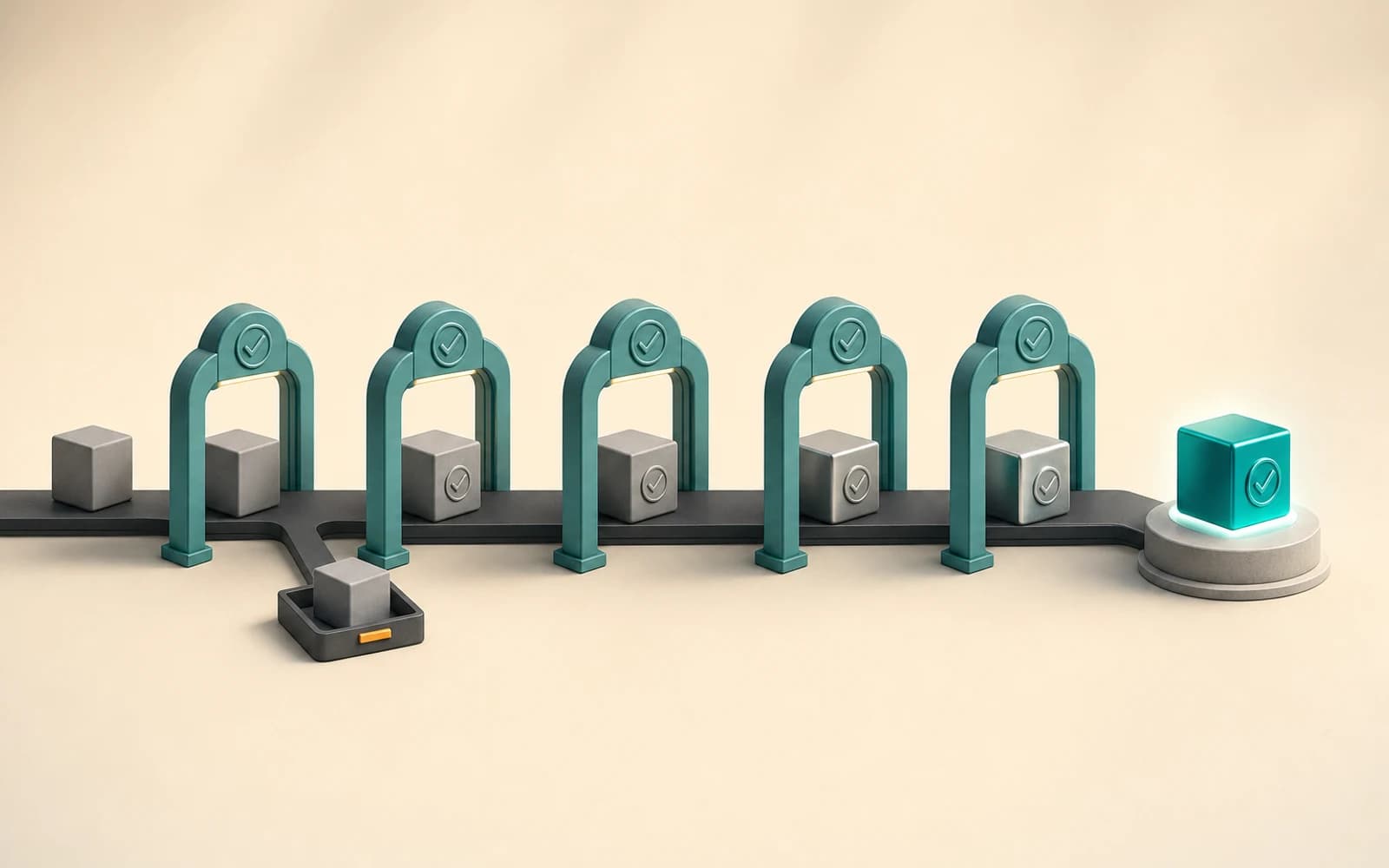
Key takeaways
- The most profitable startup ideas in 2026 cluster around AI automation (60-85% margins), vertical SaaS (31% median ARR growth), cybersecurity ($306B market), and online education ($222B projected revenue). But profitability depends less on picking the right category and more on validating that real demand exists for your specific version of the idea.
- Every idea on this list is ranked by three sourced signals: Market size from industry reports (Research and Markets, Statista, Grand View Research), profit margin data from operator surveys, and year-over-year growth rate. Generic lists skip ranking entirely.
- High margins alone do not make a startup profitable. 21.5% of new businesses fail in their first year (Bureau of Labor Statistics), and the leading cause is building something nobody will pay for. Each idea below includes a concrete validation step.
- Service-based startups (agencies, managed services) offer the fastest path to profit: 50-85% gross margins, revenue in weeks instead of months, and near-zero startup cost. SaaS margins are higher at scale (77% gross) but require 12-18 months of unpaid building first.
I counted 14 "profitable startup ideas" lists published in the last 90 days. Not one of them tells you which ideas have actual buyers right now, and none include a way to check before you build. That gap is why 21.5% of new businesses fail in year one (Bureau of Labor Statistics). Most built something nobody wanted to pay for.
This list is different. I ranked 12 profitable startup ideas for 2026 by three sourced signals: market size, growth rate, and operator-reported profit margin. Each idea comes with three things: where the margin actually comes from, evidence that buyers exist today, and one concrete step to test demand before you commit money. If you have read the generic lists and want the one with numbers behind it, keep reading.

Will your idea survive the market?
Preuve AI runs 10 agents against live market data and links every claim to a source. Free analysis in 60 seconds.
What startup ideas are actually profitable right now?
"Profitable" is doing a lot of work in most listicles. A $300B market does not help you if you cannot capture $10K of it. So I filtered for ideas that meet all three criteria: the market is large enough to support a solo founder or small team, the margins are documented above 40%, and the growth rate is positive year-over-year. Here are the 12 that passed, ranked by a composite of those three signals.
1. AI Automation Agency
Demand signal
The AI automation market hit $169B in 2026 (Orbilontech). Businesses pay $2,000-$10,000 per month for workflow automation that replaces $60K-$200K in annual labor cost.
Profit mechanism: you configure AI workflows using platforms like Make or n8n and connect them to the client's existing tools. Most of the work is prompt engineering and integration, not code. Clients pay a setup fee ($3K-$15K) plus a monthly retainer ($2K-$10K). Operator-reported margins run 60-85% because your cost is API fees ($200-$1,000/month per client), not headcount (Ciela AI, 2026).
Validate step: pick one industry vertical (dental offices, real estate agencies, e-commerce brands). Build one workflow for free for a local business. If they use it daily for two weeks, you have a sellable service. If they stop after day three, the pain was not real.
2. Vertical SaaS for Trades and Services
Demand signal
The vertical SaaS market reached $143B in 2026, growing at 16.3% CAGR (Business Research Insights). Vertical SaaS companies grew revenue 31% vs 28% for horizontal peers (SaaS Mag).
Profit mechanism: build a SaaS tool that solves one workflow for one industry. HVAC scheduling, pest-control route optimization, roofing estimate generation. These businesses pay $100-$500/month per seat. SaaS gross margins average 77% across the industry (Salesfully, 2026), and vertical products retain better because switching means losing industry-specific data.
Validate step: interview 10 owners in the trade. Ask what software they use today and what they hate about it. If 7 out of 10 name the same pain, you have a product. If every answer is different, the market is fragmented in a way that makes building hard.
3. Cybersecurity-as-a-Service for SMBs
Demand signal
The global cybersecurity market reaches $306B in 2026 at 11.8% CAGR (Research and Markets). SMBs represent the fastest-growing segment because regulatory compliance now applies to companies that never had a security budget.
Profit mechanism: package security monitoring and vulnerability scanning into a managed service, with compliance reporting as the upsell. SMBs pay $500-$3,000/month. Your tooling cost is platform licenses (CrowdStrike Falcon Go, SentinelOne) at $5-$15/endpoint. I have seen operators report 50-70% gross margins at 20+ clients. The moat is trust and compliance paperwork, not technology.
Validate step: call 10 local businesses with 20-100 employees (law firms, medical practices, accounting firms). Ask if they have a cybersecurity policy document. If most say no, they need you. If they already have an MSSP, you are late to the market in that geography.
4. Online Course Platform in a Regulated Niche
Demand signal
Online education projected at $222B revenue in 2026 (Statista). The highest-margin niches are regulated professions (continuing education for CPAs, nurses, real estate agents) where learners must complete credits to keep their license.
Profit mechanism: create or license courses that satisfy mandatory continuing-education requirements. Learners pay $50-$500 per course because they have no choice. Once created, course margins run 85-95% because delivery cost is hosting. The barrier to entry is getting accredited by the relevant licensing board, which keeps competition thin.
Validate step: pick one profession. Search "[profession] continuing education online" and count the results. Fewer than 5 modern platforms means the niche is open. Then confirm the licensing board accepts online credits.
5. Climate Compliance Software
Demand signal
The broader climate tech market hit $32B in 2025 and is projected to reach $98B by 2030 at 24.9% CAGR (The Business Research Company). Carbon footprint monitoring software alone grows at 28.7% CAGR.
Profit mechanism: build software that maps a company's operations to regulatory requirements (EU CSRD, SEC climate disclosure, California SB 253). Clients pay $1,000-$10,000/month because the alternative is hiring a sustainability consultant at $200-$400/hour. SaaS margins apply (70-85% gross). The regulatory tailwind is the moat: every new rule creates a new feature requirement that locked-in clients will pay for.
Validate step: email 20 mid-market CFOs or sustainability officers. Ask how they currently track emissions data. If the answer is spreadsheets, you have a product. If they already use Watershed or Persefoni, target a smaller company tier those tools do not serve.
6. GLP-1 Companion Products (DTC)
Demand signal
The GLP-1 companion supplement market was valued at $2B in 2025, projected to reach $5.5B by 2034 at 12% CAGR (InsightAce Analytic). The broader GLP-1 receptor agonist market reaches $82B in 2026.
Profit mechanism: sell nutritional products, meal plans, or fitness programs designed specifically for people on Ozempic, Wegovy, or Mounjaro. These users face specific challenges (muscle loss and nutrient depletion are the big two) that generic supplements do not address. DTC margins on supplements run 60-75% after manufacturing and fulfillment. The category has massive demand and almost no dedicated tools yet.
Validate step: search Reddit and Facebook groups for "Ozempic side effects" or "GLP-1 nutrition." Count the number of posts asking for product recommendations. If you find 100+ unanswered questions in the last 30 days, the demand is real. Then run a pre-order landing page before manufacturing anything.
How do you know if a startup idea is profitable before you build?
I built Preuve because I kept watching founders skip this step. They find a "profitable idea" on a list like this one, spend 3-6 months building, then discover the market wanted something adjacent to what they built. Not the thing itself.
Here is how I filter a popular category from an actual business worth building:
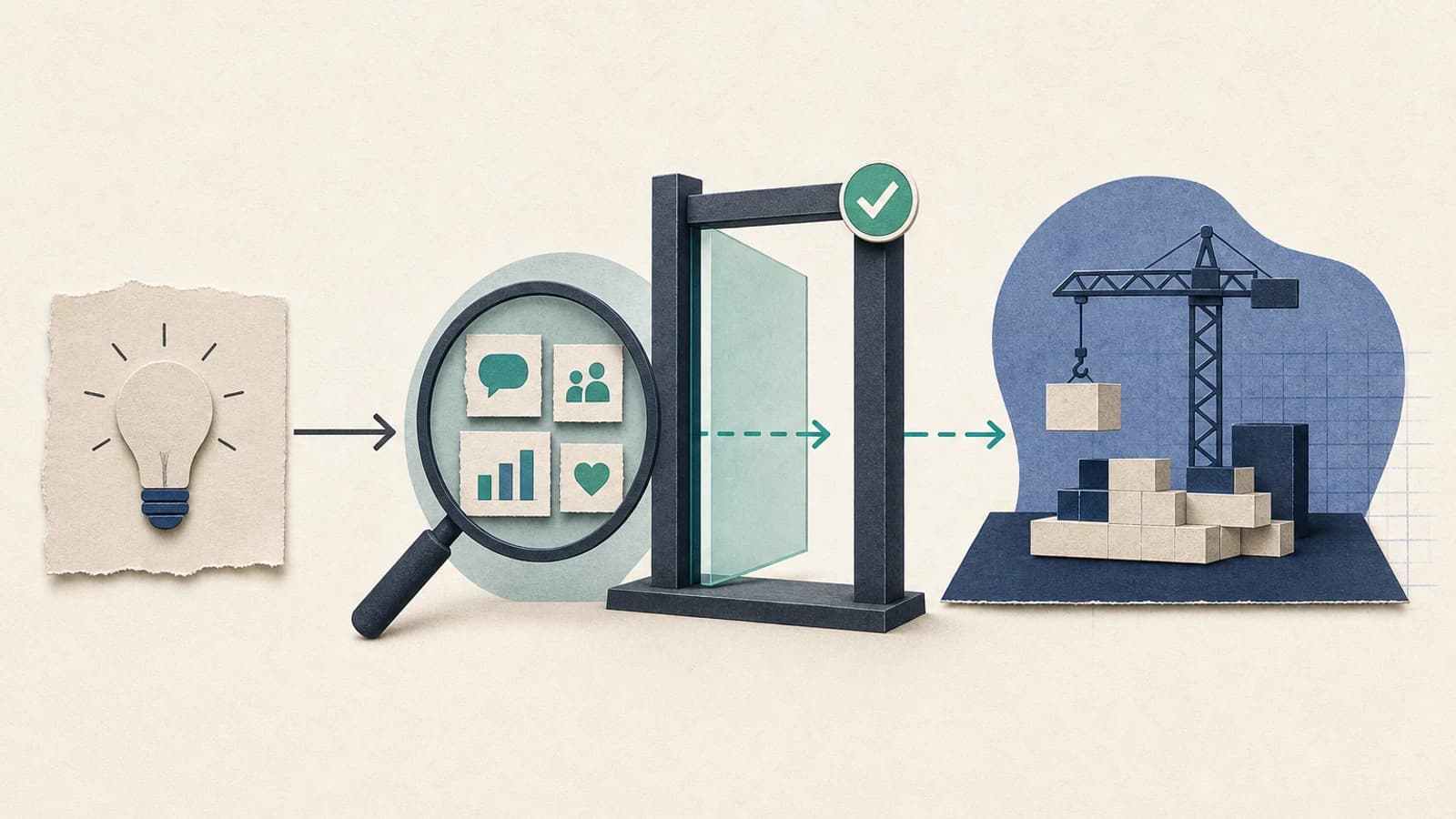
Someone is already paying for a worse version. Spreadsheets, manual processes, consultants charging by the hour. If potential buyers spend $0 on the problem today, they will spend $0 on your solution tomorrow.
The market is growing, not just large. A $10B market shrinking 5% per year is worse than a $500M market growing 25%. Every idea in this list has a positive CAGR from a named research firm.
Ten potential buyers tell you what they currently spend. Not what they would pay (people lie upward), but what they spend right now. If the answer is zero across 10 conversations, the problem is not painful enough to monetize.
I wrote a longer walkthrough of these checks in my guide to startup validation tools. The short version: validate the demand for YOUR specific version of the idea, not the category. You can run a free viability scan to cross-check demand signals across 60+ data sources in about 60 seconds.
What is the most profitable business to start with little money?
A few ideas on this list can generate revenue before you spend $500. I sorted them by how fast you can see actual money, not theoretical market size.
7. Home Services Marketplace (Trust-First)
Demand signal
The global home services market reaches $464B in 2026 at 9.2% CAGR (Research and Markets). The US market alone is $842B. Online on-demand home services hit $4.7B (Persistence Market Research).
Profit mechanism: connect vetted service providers (cleaners, handymen, plumbers) with homeowners in a single metro area. Charge a 15-20% commission per job. The key word is "trust-first": background checks, verified reviews, and guaranteed pricing are what Craigslist and Facebook Marketplace do not offer. Thumbtack and Angi proved the model. You win by going hyperlocal where they have thin coverage.
Validate step: pick one service category (house cleaning, lawn care) in one ZIP code. Recruit 5 providers and 20 customers via Nextdoor or local Facebook groups. If you can fill 10 jobs in 30 days without paid ads, the demand is there.
8. Niche Bookkeeping and Tax Automation
Demand signal
Bookkeeping and tax services run 30-55% net margins (Fundwell, 2026). Over 5.1 million new business applications were filed through November 2025 (US Census Bureau), each one needing bookkeeping.
Profit mechanism: specialize in one type of client (e-commerce sellers, freelancers, food trucks). Use QuickBooks Online ($30/month) or Wave (free) as your back end. Charge $300-$2,000/month per client. At 15 clients paying $500/month, you clear $7,500/month with 60%+ margins because your only cost is software subscriptions and your time. AI tools (Keeper, Booke.ai) now automate 70% of the categorization work.
Validate step: post in one niche community (Etsy sellers, Shopify store owners, food-truck operators) offering free bookkeeping for three months. If more than 5 people respond within a week, the pain is real and you have your first beta cohort.
9. AI-Powered Content Operations Agency
Demand signal
Digital marketing agencies hit 50-75% gross margins and 20-40% net margins (Fundwell). Most small businesses keep raising their content and social budgets into 2026, and AI cuts production cost enough that the margin lands with whoever owns the workflow.
Profit mechanism: deliver content (blog posts, social media, email sequences) using AI tools for production and humans for strategy and quality control. Charge $2,000-$8,000/month per client. Your cost per client drops to $400-$1,200 because AI handles the first draft and you handle the thinking. Reported gross margins of 65-75% on content services (ALM Corp, 2026).
Validate step: pick 5 local businesses with weak online presence. Offer one month of content (8 blog posts + 20 social posts) at cost. Track which businesses see measurable traffic growth. If 3 of 5 do, pitch them a paid retainer.

Skip weeks of manual research
Get complete market research, sourced proof, competitor map, and pricing data for your idea instantly.
What kind of online business is most profitable?
The tradeoff that matters most here is not margin, it is how long before you see the first dollar. Here is how the top categories sort out on that axis.
10. Managed IT for Small Medical Practices
Demand signal
Healthcare IT spending grows at 15.8% CAGR through 2030 (Grand View Research). HIPAA compliance forces every medical practice to have managed IT, but practices under 50 employees rarely have in-house IT staff.
Profit mechanism: provide HIPAA-compliant IT management (email security, backup, endpoint protection, compliance documentation) to dental offices, therapy practices, and small clinics. Charge $150-$300 per user per month. At 10 practices averaging 15 users each, that is $22,500-$45,000/month in recurring revenue. Margins run 50-65% after tooling costs. The compliance requirement makes churn extremely low because switching IT providers triggers a HIPAA risk assessment.
Validate step: call 10 medical practices in your area. Ask who manages their IT. If the answer is "my nephew" or "nobody, really," you have a customer. If they name an established MSSP, move to the next geography.
11. Micro-SaaS for Creator Workflow Gaps
Demand signal
The creator economy now spans tens of millions of creators worldwide, and creator-focused SaaS is a subset of the much larger global SaaS market. I wrote about specific opportunities in my micro-SaaS ideas breakdown.
Profit mechanism: find a workflow gap that existing tools (Notion, Canva, Later) do not cover. Sponsorship invoice tracking, cross-platform analytics, or brand-deal CRM. Charge $15-$50/month. SaaS margins (77% gross) apply. The median profitable micro-SaaS runs about $4.2K MRR at 64-76% margins. Small ceiling, but one person can build and operate it.
Validate step: spend a week in creator communities (YouTube subreddits, TikTok creator Discord servers). Search for complaints. If 50+ people describe the same broken workflow, build a landing page and collect email signups before writing code.
12. Productized Consulting (Flat-Rate Advisory)
Demand signal
Solo proprietors in professional services average a 41% profit margin (IRS data via Fundwell). The shift toward flat-rate, scoped engagements is growing as buyers reject hourly billing. Consulting is a $300B+ industry in the US alone.
Profit mechanism: take a skill you already have (SEO, financial modeling, HR compliance, data engineering) and package it as a fixed-scope, flat-rate service. "SEO audit + 90-day action plan for $2,500" instead of "SEO consulting at $200/hour." Margins run 40-60% net because overhead is nearly zero. The fixed price removes the buyer's fear of runaway costs, which is the #1 objection to traditional consulting.
Validate step: list your service on a marketplace (Clarity.fm, GrowthMentor, or your own landing page) at your target price. If you get 3 paying clients in 30 days without paid ads, the demand is real. If you need heavy discounting to close, your positioning or niche is wrong.
Which startup sectors have the highest profit margins in 2026?
Every idea above includes a margin range, but here is the ranking in one place. I pulled these from operator surveys and industry reports, not estimates.
| Sector | Gross Margin | Net Margin | Source |
|---|---|---|---|
| Online courses (regulated) | 85-95% | 70-85% | Skillsdigest, 2026 |
| SaaS (vertical) | 77% | 20-35% | Salesfully, 2026 |
| AI automation agency | 60-85% | 50-75% | Ciela AI, 2026 |
| Digital marketing agency | 50-75% | 20-40% | Fundwell, 2026 |
| Productized consulting | 80-90% | 40-60% | IRS sole-proprietor data |
| Cybersecurity MSSP | 50-70% | 25-40% | Industry reports |
| Bookkeeping / tax | 60-75% | 30-55% | Fundwell, 2026 |
The table reflects something I keep running into: software and AI-leveraged services sit at the top, while anything with physical delivery trades margin for ticket size and local lock-in. Which model fits depends on what you can actually sell next month and how much cash you have to survive the ramp. A 90% gross margin means nothing if you run out of money 8 months before the first paying customer.
How much money do you need to start a profitable startup?
The honest answer depends entirely on which model you pick. Here is the cost picture mapped to the ideas in this list.

Under $500 (service-first models)
AI automation agency, bookkeeping service, productized consulting, content operations agency. You sell the service before building anything. Revenue in weeks.
$500-$5,000 (platform + service hybrid)
Home services marketplace, managed IT for medical practices, cybersecurity-as-a-service. You need tooling licenses and possibly a business license. Revenue in 1-3 months.
$5,000-$50,000 (product-first models)
Vertical SaaS, climate compliance software, online course platform, micro-SaaS, GLP-1 companion products. You need development time (or money for a developer) and possibly regulatory approval. Revenue in 3-18 months.
What I tell bootstrapped founders who ask: run the service manually first. Charge for it. The automation story only makes sense once you know what you are actually automating. I wrote about this approach in the context of broader startup ideas for 2026. Twelve months of building and then discovering nobody wanted it is a real pattern, not a hypothetical.
If you have picked an idea from this list and want to check whether the demand signal holds for your specific version of it, you can run a free viability scan that cross-checks competition density, market signals, and demand indicators across 60+ data sources.
FAQ
What startup ideas are actually profitable in 2026?
The most consistently profitable startup categories in 2026 are AI automation agencies (60-85% margins on $2K-$10K monthly retainers), vertical SaaS for underserved industries like trades and healthcare (77% gross margins, 31% median ARR growth), cybersecurity services for SMBs ($306B market growing at 11.8% CAGR), and online education in regulated niches ($222B projected revenue). Service-based models reach profitability fastest because they generate revenue before the product is fully built.
How do you know if a startup idea is profitable before you build?
Check three signals before writing code. First, confirm someone is already paying for a worse version of what you plan to build. Spreadsheets, consultants, and manual workarounds are buying signals. Second, verify the market is growing, not just large. A $10B market shrinking 5% per year is worse than a $500M market growing 25%. Third, talk to 10 potential buyers and ask what they currently spend on the problem. If the number is zero, the problem is not painful enough to monetize. You can also run a free viability scan to cross-check demand signals across 60+ data sources.
What is the most profitable business to start with little money?
Three categories consistently reach profitability with under $500 in startup costs: AI automation agencies (buy API access to AI tools, resell configured workflows at 60-85% margins), productized consulting (package your expertise into a fixed-scope, flat-rate service), and niche bookkeeping (QuickBooks Online costs $30/month, clients pay $300-$2,000/month). All three generate revenue within weeks because you sell the service before building any software.
What kind of online business is most profitable?
Online businesses with the highest profit margins are SaaS products (70-90% gross margins at scale), online courses in regulated or credentialed fields (85-95% margins after creation), and AI-powered service agencies (60-85% margins). The tradeoff: SaaS takes 12-18 months to reach first revenue, courses require domain authority to sell, and agencies generate cash immediately but scale linearly with your time until you systematize delivery.
Which startup sectors have the highest profit margins in 2026?
By gross margin: SaaS products average 77% (Salesfully, 2026), AI automation agencies report 60-85% (Ciela AI), online education runs 85-95% after course creation, and digital marketing agencies hit 50-75% gross. By net margin: productized consulting leads at 40-60% because overhead is near zero, followed by bookkeeping and tax services at 30-55%. The highest-margin sectors are not always the easiest to enter, so match the margin profile to your skills and timeline.
Cite this page
Last updated June 30, 2026
Forat, V. (2026, June 30). Profitable Startup Ideas for 2026, Ranked by Real Demand. Preuve AI. https://preuve.ai/blog/profitable-startup-ideas-2026
Forat, Vincent. “Profitable Startup Ideas for 2026, Ranked by Real Demand.” Preuve AI, 30 June 2026, preuve.ai/blog/profitable-startup-ideas-2026.
Forat, Vincent. “Profitable Startup Ideas for 2026, Ranked by Real Demand.” Preuve AI. June 30, 2026. https://preuve.ai/blog/profitable-startup-ideas-2026.
@misc{forat2026-profitable-startup-ideas-2026,
  author = {Forat, Vincent},
  title = {{Profitable Startup Ideas for 2026, Ranked by Real Demand}},
  howpublished = {Preuve AI},
  year = {2026},
  month = jun,
  url = {https://preuve.ai/blog/profitable-startup-ideas-2026},
  note = {Last updated June 30, 2026}
}
Vincent
5 years in B2B growth, building Preuve AI in public. 82% of ideas it scores aren't ready, the point is finding out in 10 minutes, not 3 months.
Follow on X →
Building is expensive. Validation is free.
Run your idea through 10 AI agents before you write a line of code. Every claim source-linked.