The short answer
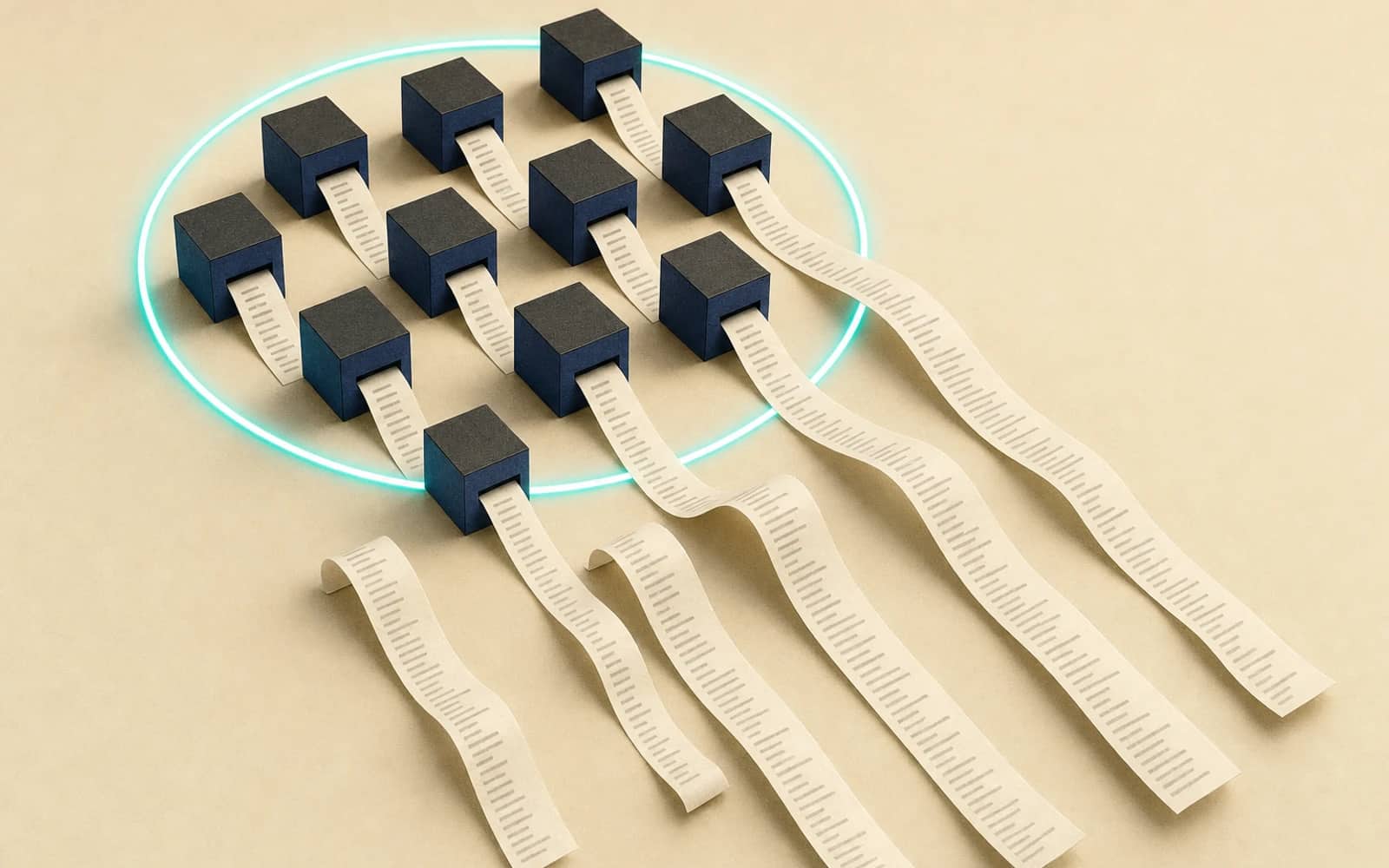
Herdr is a free, open-source (Apache 2.0) tool that keeps many coding agents running in the background, shows which one is blocked, working or done, and lets you reattach from any machine. It is worth installing once you run more agents than you can track by hand; stay on tmux if your setup already works, and pick Conductor or Superset if you want a separate copy of the code per task and a review screen in one window. It does not lower any agent bill or tell you whether anyone wants what the agents build.
Key takeaways
- Herdr earns its place at four or more agents. It tracks which agent is blocked, working or done, and keeps every agent alive when the terminal window closes. One Hacker News user running more than ten agents calls it the best view yet of which agents need attention.
- The tool is free; the herd is not. The runtime is Apache 2.0 with no pricing page. Agents bill through their provider’s plan, and agents of one provider share its allowance: Claude Max from $100 a month, ChatGPT Pro from $100 a month. Herdr, Inc. raised a $6M seed and has not announced a paid product.
- A server restart is not a detach. Herdr’s own docs say detaching keeps every process running, but after a server restart the saved layout returns but running processes do not. Running shells, dev servers and tests are gone; agent chats resume only for agents with native session restore.
- tmux still wins if your setup already works. Herdr’s extras are agent status, mouse-first defaults and easier remote attach; one r/tmux commenter says tmux can add agent status monitoring “with relative ease.” Conductor and Superset bundle a review screen, which Herdr leaves to other tools.
- More agents multiply output, not demand. None of these tools checks whether anyone will pay for the product, and the example herd costs $2,400 a year in plan fees whether or not anyone buys.
One r/tmux commenter was manually running 12-15 coding agents at a time, and tried Herdr to get over 20 PRs per day (pull requests, finished units of code changes). Their review? "Total loss of control." If you're building a product with coding agents like Claude Code or OpenAI's coding agent, do you scale faster to paying customers by running more agents at once? That is the question behind this Herdr review.
If you want more agents running, Herdr might help. It keeps your herd of agents running, and tells you when one of them needs you. It doesn't help you pay for all those agents though, which will be $200/month at least if you go with the cheapest of Claude's Max plans + ChatGPT Pro 100, as of October 2026. It also doesn't help you figure out if anyone wants your product in the first place.
Why do I have an opinion on product-market fit? Because I build Preuve AI, which sells startup-idea validation, so the demand half of that question is my whole business and this review is biased. So you know my method, I built this review from reading Herdr's own pages and looking at other users' accounts (linked below), not from running it myself.

Will your idea survive the market?
Preuve AI runs 10 agents against live market data and links every claim to a source. Free analysis in 60 seconds.
What is Herdr, and what is it good for?
Herdr is an open-source terminal tool written in Rust, created by Can Celik. His GitHub repo (created March 27, 2026) says it best: "the runtime your coding agents live on." The server runs in the background and manages real terminal windows (called panes). You can disconnect from Herdr (close the screen, or disconnect an SSH connection to a remote server) and your agents will continue running. That's according to Herdr's compare page.
What's special about Herdr, as described in users' accounts (e.g. on Hacker News and in blog write-ups), is that Herdr manages your attention. Herdr calls your project a workspace. In a workspace, you have tabs, and in a tab, panes. Herdr knows when you've launched an agent in a pane (it knows about Claude Code, OpenAI's coding agent, GitHub's Copilot CLI, Cursor Agent CLI, OpenCode, and more than a dozen others; Gemini CLI and Cline are "less tested" in the Herdr agents documentation, and any other agent still runs as a plain terminal). It knows when the agent is blocked, working, done, or idle. And agents can drive Herdr themselves: they can open panes, prompt another agent in a pane, and wait for that agent to be blocked.
On that Hacker News post, a developer who ran "over 10 agents at the same time" for multi-hour periods explained why they left plain tmux:
"I would occasionally lose an agent or forget about it until much later only to realize it's been sitting idle waiting for me to approve something for a few days." (Hacker News, read October 4, 2026)
Then Josh Finnie explained in August 2026 why he switched from tmux and Zellij: he used to lose "ten or fifteen minutes at a stretch" to an agent blocked on a question he never saw.
Herdr's repo has gone from 25K stars in August to 42,152 on October 4th, 2026. It's a one-person team (so far) according to their YC page, but they're hiring.
| Signal | Number | Source |
|---|---|---|
| GitHub stars | 42,152 (October 4, 2026) | GitHub, herdrdev/herdr |
| Stars and downloads at YC entry | 25k stars, 340k downloads (August 6, 2026) | Can Celik, Herdr blog |
| Community plugins | 500+ one month after the marketplace opened | Can Celik, Herdr blog, August 6, 2026 |
| Latest stable version | v0.9.3 (September 29, 2026) | GitHub releases |
| Seed funding | $6M, led by Bessemer (September 8, 2026) | Herdr blog |
| Team size listed | 1, now hiring | Y Combinator company page, read October 4, 2026 |
Source: GitHub repository and releases (read October 4, 2026), Herdr blog posts of August 6 and September 8, 2026, Y Combinator company page (read October 4, 2026). Stars count GitHub bookmarks, downloads are the founder's own count, and the two rows come from different dates.

How much does Herdr cost?
Right now, nothing. Herdr's runtime is open-source under the Apache 2.0 license. They don't have a pricing page as of October 4, 2026. When Can Celik announced Herdr's acceptance into YC's Fall 2026 batch in an August 6, 2026 post, he wrote: "The runtime, what you use right now, stays free." He says he "recently switched it from AGPL to Apache," a more permissive license.
Herdr is a venture-backed company. On September 8, 2026, Herdr, Inc. announced their $6 million seed, led by Bessemer Venture Partners, and also including YC, e2vc, and angels including Tobi Lütke of Shopify. Can Celik says he wants to "build on top of the open Herdr runtime," and that the machines you run agents on (your laptop, a server you're renting, a sandboxed machine, etc.) "should be connected," he wrote in his August post. But they haven't announced a paid product (or price) yet, and the code they've released so far is under the Apache 2.0 license.
The agents will cost you, but that's because they use up your allowance with their provider, not because Herdr uses anything. I go into the cost per task for each AI coding model in my AI coding models statistics.
| What you pay for | Price per month | Source |
|---|---|---|
| Herdr runtime | $0 (Apache 2.0) | GitHub, Herdr blog |
| Claude Pro (includes Claude Code) | $20 billed monthly | claude.com/pricing |
| Claude Max (5x or 20x Pro usage) | From $100 | claude.com/pricing |
| ChatGPT Pro 100 / Pro 200 / Pro 500 (include OpenAI's coding agent) | $100 / $200 / $500 | OpenAI Help Center |
Source: Claude pricing and OpenAI's Pro tiers page, both read October 4, 2026. List prices in USD per month before tax. Each plan caps usage, so a busy herd can hit its limit before the month ends.
How is Herdr different from tmux, Zellij, cmux and Conductor?
Herdr adds to tools like tmux by knowing which of your panes have agents, and whether those agents are blocked, working, done, or idle. tmux has long been a standard for keeping terminals running even after you disconnect. Herdr says "tmux sees panes" and that it "knows which terminals are agents, what state each one is in, and how to wait on them." But to give you a non-vendor opinion, here's what a tmux user says on that Hacker News post about what Herdr adds: Herdr lets you click everything with a mouse, it has nice pop-up menus for doing things, it has a nice status display for showing what your agents are up to, it has opinionated defaults, it has an easier way to attach to remote machines, it's prettier. "Otherwise it seems exactly like tmux."
The apps I'm comparing Herdr to most directly are the Mac app for cmux and Conductor/Superset/Emdash. Herdr is different from these apps: Conductor, Superset and Emdash are desktop apps that create a separate copy of your code, branch and review screen for each task. Herdr has no review screen in its core (its CLI can create a Git worktree), but its compare page says it "pairs with" a tool that does, and there's also herdr-reviewr, a community plugin that adds a review pane to the UI.
| Tool | What it is | When you close the window | Price |
|---|---|---|---|
| Herdr | Runtime inside your existing terminal; agent status built in; macOS, Linux, Windows | Agents keep running in the server | Free, Apache 2.0 |
| tmux | Terminal multiplexer; agent status only through your own scripts | Sessions keep running; detach and reattach | Free, ISC license |
| Zellij | Terminal workspace with friendlier defaults | Detach keeps it running; after a quit or crash it rebuilds the layout and offers to re-run each command | Free, MIT license |
| cmux | macOS app built on Ghostty, with vertical tabs and a notification panel; a separate cmux TUI multiplexer runs on macOS, Linux and Windows | The Mac app restores layout and supported agent sessions on relaunch, not live processes; the cmux TUI keeps a headless server running after you detach | Free, GPL |
| Conductor | Mac app; one worktree, branch, diff and pull request per task | Local sessions end; cloud workspaces keep going | Free locally; Pro $50/month for cloud |
| Superset | Desktop app for parallel agents in worktrees; macOS first, Linux experimental, no Windows yet | Its docs say terminal sessions survive app restarts, with running processes continuing | Free for 1 user; Pro $20/user/month |
| Emdash | Open-source desktop app for parallel agents; macOS, Windows, Linux; 25+ agents | It says it saves terminal state so agents resume on reopening; with tmux on a remote project, sessions survive restarts and dropped connections | Free, open source |
Source: each tool's own pages, plus Herdr's compare page for what happens when an app closes, read October 4, 2026: Herdr compare, Herdr Windows support, Zellij session resurrection, cmux docs, cmux homepage, Conductor pricing, Superset pricing, Emdash, Superset terminal docs, What is Emdash; licenses from the tmux and Zellij license files. Prices in USD before tax. The Superset and Emdash close-the-window cells come from those vendors' own pages; Herdr's compare page says agents stop with an app, which their documentation does not support.
cmux is the closest head-to-head competitor. A developer wrote up two months on each (r/commandline). They switched from cmux to Herdr in early June 2026 because cmux's remote support did not fit their workflow, but cmux then added a background service for keeping ssh terminals alive on June 1st. SSH agent forwarding support was also added to cmux on June 4th. The developer ultimately decided to stick with Herdr, but the post is still a useful comparison between the two. Herdr has the advantage of making agent status more central to the interface and of working with any terminal, but cmux has the advantage of a nice Mac app (requires macOS 14+). cmux also has a TUI, which its TUI docs describe as a Rust multiplexer for macOS, Linux and Windows with detach and remote sessions.

Skip weeks of manual research
Get complete market research, sourced proof, competitor map, and pricing data for your idea instantly.
Is Herdr safe to use?
Herdr is open source under the Apache 2.0 license. It's still fairly young software that you're putting in between you and your agents, so I want to call out a few things to be aware of: It's still pre-1.0 software. Its latest stable release is v0.9.3, which came out on September 29, 2026. There were 11 releases in September alone, most of which were preview builds. One of the users who posted on Hacker News mentioned that Herdr "quickly ships fixes," but the flipside of this is that what works for you in October may not work in November.
If you kill Herdr and restart it, make sure you read this page on session state in Herdr. TL;DR: processes will keep running if you just detach a session, but if you restart the Herdr server, running processes will not be preserved, only the layout. The conversations with your agents will pick up where you left off only if you're using an agent that supports native session restore. dev servers, test runners, shells, etc. will not keep running. One of the users on r/tmux said you should kill and restart your tool on purpose and "TEST IT," before your setup "becomes too expensive to recreate manually."
Herdr also talks to its own servers: it checks herdr.dev for updated agent-detection rules and applies them automatically, per its agents documentation; setting update.manifest_check = false turns that off. Pane screen history is off by default because terminal output "can include secrets, tokens, prompts, and command output."
Plugins. From the Herdr marketplace page: it "is not a reviewed catalog." So make sure to read the code of any plugins you install before installing them. One of the comments on the Hacker News post was that tmux is "mature, battle-tested software, whereas probably no human has ever read the majority of the code in this project." That's just an opinion, but it's worth thinking about.
What do users say Herdr gets wrong?
The original post in the r/tmux thread has a pretty detailed list of complaints "Herdr, cmux, tmux... are they really that helpful?". The OP was using Windows with WSL, and their first set of complaints were about rendering and performance being "not as smooth as in a standalone terminal." They mentioned random issues with rendering, scrolling, hotkeys and losing autosuggestions in their shell. They did admit that some of these issues might be because they were on Windows, and people who commented said they didn't have these issues with tmux. WSL isn't a great environment to test out a TUI app, so I wouldn't hold these rendering complaints against Herdr yet.
Their second set of complaints were about how many sessions a person realistically needs. To quote:
"I found it hard to manage more than 2-3 sessions in parallel - too much context switching which increase cognitive load." (r/tmux, read October 4, 2026)
The ceiling people hit first is their own attention, not the terminal's. A commenter who builds a mobile app for tmux puts their limit at 2-3 agents, "kind-of my max capacity." Another commenter said they have managed "30+ sessions" at once, with orchestrator sessions helping them manage the rest. The user who mentioned using 12-15 agents was chaining other tools on top of Herdr, but said they had since gone back to manually pushing code because "Just because it's possible doesn't mean it should be done." That same commenter calls 12-15 simultaneous sessions and 20 good PRs a day "good enough."

Who should use Herdr, and who should skip it?
One of the competing tools, Superset, has a guide on how to use parallel agents, and it says that somewhere around 4-5 sessions "you start losing track" of what's going on. Based on the comments above, I'd say somewhere around 4 agents is where it becomes worth installing a tool like Herdr vs. just using tabs in your terminal.
Herdr fits if you
- Run many agents simultaneously (4+), on long tasks (hours long), where you want to keep track of what's blocked and where
- Hop back and forth between laptop and servers, and want to be able to easily re-attach to herds over ssh
- Spawn and wait on herds, from scripts
- Never use or configure tmux, and want nice defaults and easy mouse usage
Skip Herdr if you
- Use and like tmux. You can add agent status later, as one r/tmux commenter says.
- Want one window to do different tasks on your code, like review, make a PR, etc. You should check out Conductor, Superset, Emdash, etc. (see the table above)
- Are on Mac and want a nice app, with notifications, etc. Use cmux.
- Run one or two agents: Herdr solves a problem you do not have yet
Why check the market before you run ten agents?
Can Celik built Herdr after realizing, in his words, "I am the bottleneck." But while parallelizing agentic coding can make you more productive, there's another bottleneck for founders: demand. Parallel agents multiply output, not demand, and no tool in the table above will talk to a customer for you.
Nothing in the table above tells you whether the product will find buyers. I wrote up what happens when a product ships and nobody buys in why do startups fail?
Worked example: a month of the herd
So imagine you're a solo founder vibecoding with Claude Code (on the cheapest Max plan) and OpenAI's coding agent (on ChatGPT Pro 100), herded with Herdr. If you get as fast as the r/tmux user quoted above (who ran 12-15 sessions), what does a month or a year of that cost, and how many PRs will you have made?
| Line | Number | Where it comes from |
|---|---|---|
| Claude Max + ChatGPT Pro 100 | $200 per month | $100 + $100 list prices, October 4, 2026 |
| Herdr | $0 | Apache 2.0, no pricing page |
| Plan fees over a year | $2,400 | $200 x 12 months |
| Pull requests at 20 a day, over 30 days | 600 per month | r/tmux commenter's "good enough" pace x 30 |
| Customers produced by either line | 0 by default | None of the tools in this review checks demand |
Source: Claude pricing and OpenAI's Pro tiers page (read October 4, 2026), Herdr's GitHub license, the r/tmux thread linked above. Prices in USD before tax, assuming no usage above the plan. The 600 is an illustration that holds one person's daily pace for a month, not a measured output.
In the Preuve benchmark study (3rd edition, July 2026, 6,000+ analyses), 17.5% of assessment records scored 70 or more. Among analyses with a risk label, the most common top risk is an idea that is not developed enough (36.9%), followed by not having defined end customers and how to reach them (25.7%).
So, before you start building a new thing with your herd, try what I call the fan-out test:
Who pays? Who exactly would buy this, and how much would you charge them?
What do they use today? What would they stop using (or what would they start doing) to use your product? (i.e. name a competitor)
What has someone said yes to? What signal do you have that they would buy your product, like a reply, a waitlist signup or a pre-order? (If you don't have one yet, this is what you should work on first)
For the third question, there's no tool that can do it for you, you have to talk to buyers yourself. Here's a quick guide on how to validate a business idea, and here's a checklist on what to do before vibecoding.
For the first two questions, it takes a few minutes. You can also quickly check demand, market and competitors using Preuve, which does it automatically by querying 60+ data sources online. A free Reality Check takes under a minute, a full report about ten minutes. Given that the above herd would cost $2,400 a year, it might be worth it to check before starting.

Methodology and sources
| Source | What we used | Size or date | Limitation |
|---|---|---|---|
| Herdr, "Compare Herdr vs tmux, Zellij, cmux, Warp & agent managers" | Herdr’s own framing of runtime vs multiplexers vs apps, the capability matrix | Page read October 4, 2026 | Vendor page, written to position Herdr against rivals |
| Herdr docs: Session state and restore | What survives a detach vs a server restart, pane history off by default | Page read October 4, 2026 | Describes intended behavior, not failure rates |
| Herdr docs: Agents | Supported agents, automatic manifest updates | Page read October 4, 2026 | Vendor documentation; changes with each release |
| Herdr docs: Marketplace | Unreviewed plugin listings | Page read October 4, 2026 | Vendor documentation; changes with each release |
| Herdr docs: Windows support | Windows status | Page read October 4, 2026 | Vendor documentation; changes with each release |
| Can Celik, "Herdr is joining Y Combinator. The runtime stays open." | Free runtime pledge, AGPL to Apache switch, 25k stars and 340k downloads, plans | Post of August 6, 2026 | Founder’s own figures, not audited |
| Can Celik, "Herdr raised a $6M seed. We’re hiring." | Seed size, lead investor, co-investors | Post of September 8, 2026 | Announcement only; no paid product or price disclosed |
| Y Combinator company page, herdr | Batch (Fall 2026), team size, company description | Page read October 4, 2026 | Team size may lag hiring |
| GitHub, herdrdev/herdr repository | Stars, license, creation date | Read October 4, 2026 | Stars measure attention, not daily use |
| GitHub, herdrdev/herdr releases | Latest stable release, September 2026 release count | Read October 4, 2026 | Preview builds are counted as releases |
| Herdr docs: CLI reference | The herdr worktree create command | Page read October 4, 2026 | Vendor documentation; changes with each release |
| Hacker News, "Herdr: One terminal to rule them all" | User reports on agent tracking, tmux comparisons, code-quality criticism | 404 points, thread of July 2026, read October 4, 2026 | Self-selected developers; enthusiasts and critics both over-represented |
| r/tmux, "Herdr, cmux, tmux... are they really that helpful?" | Rendering complaints, the 2-3 session limit, the 12-15 agent account, tmux counterpoints | Thread read October 4, 2026 | The original poster runs Windows with WSL; a handful of accounts, unverified |
| r/commandline, "herdr vs cmux, after two months on each" | Why one user moved from cmux to Herdr and stayed after cmux added remote support | Post read October 4, 2026 | One user’s workflow |
| Josh Finnie, "I Gave Up tmux and Zellij for Herdr" | Time lost to idle agents, background update checks, plugin caveats | Post of August 6, 2026 | Written three days after switching |
| tmux license file | tmux license | File read October 4, 2026 | License text only |
| Zellij license file | Zellij license | File read October 4, 2026 | License text only |
| cmux docs, getting started | cmux platform and restore behavior | Page read October 4, 2026 | Vendor documentation |
| cmux homepage | cmux license and macOS app | Page read October 4, 2026 | Vendor page |
| cmux TUI docs | cmux TUI platforms and headless sessions | Page read October 4, 2026 | Vendor documentation |
| Zellij session resurrection docs | Zellij resurrection behavior | Page read October 4, 2026 | Vendor documentation |
| Conductor pricing | Prices and platforms | Page read October 4, 2026 | Vendor page; prices change |
| Superset pricing | Prices and platforms | Pages read October 4, 2026 | Vendor pages; prices change |
| Superset parallel-agents guide | Where sessions get hard to track | Page read October 4, 2026 | Written by a vendor that sells a competing app |
| Emdash homepage | Platforms and price | Page read October 4, 2026 | Vendor page |
| Superset docs, "Terminal" | Session persistence after the app restarts | Page read October 4, 2026 | Vendor documentation |
| Emdash, "What is Emdash" | Saved terminal state and remote tmux sessions | Page read October 4, 2026 | Vendor blog post |
| Anthropic, Claude pricing | Monthly plan prices for Claude Code | Page read October 4, 2026 | List prices in USD before tax; usage allowances vary by plan |
| OpenAI, "About ChatGPT Pro tiers" | Monthly plan prices for OpenAI’s coding agent | Page read October 4, 2026 | List prices in USD before tax; usage allowances vary by plan |
| GitHub, persiyanov/herdr-reviewr | Name disambiguation in the FAQ | Read October 4, 2026 | Descriptions only |
| Preuve benchmark study (3rd edition) | Share of records scoring 70 or more and the two most common top risks among labelled analyses | 6,000+ analyses, July 2026 | Ideas from founders who chose to scan, not a random sample of startups |
FAQ
Is Herdr free?
Yes. The Herdr runtime is open source under the Apache 2.0 license and has no pricing page as of October 4, 2026. Founder Can Celik wrote on August 6, 2026 that "the runtime, what you use right now, stays free." Herdr, Inc. raised a $6M seed on September 8, 2026 and plans features on top of the runtime, such as connecting several machines, without a published price. Your real cost is the plans your coding agents run on, for example Claude Max from $100 a month or ChatGPT Pro from $100 a month, with agents of one provider sharing that plan’s allowance.
Is Herdr safe to use?
It is open source, so you can read the code, but it is young: version 0.9.3 on September 29, 2026, with 11 releases that September. Herdr checks herdr.dev for agent-detection rule updates and applies them automatically unless you set update.manifest_check = false. Its plugin marketplace "is not a reviewed catalog", so read a plugin before installing it. Pane screen history is off by default because terminal output can contain secrets.
Do I need Herdr if I already use tmux?
Not necessarily. Herdr keeps the tmux basics (real terminals, detach, SSH) and adds agent status (blocked, working, done, idle), notifications, mouse-first menus and easier remote attach. One r/tmux commenter says tmux can add agent status monitoring “with relative ease,” and another runs more than 30 tmux sessions with orchestrator sessions managing the rest. Herdr helps most if you never configured tmux or you lose track of agents waiting for approval.
How do you exit Herdr without stopping your agents?
Detach with ctrl+b then q. The Herdr server and every agent keep running, and typing herdr reattaches to the same session. To stop everything, run herdr server stop. After a server stop or restart, the layout comes back but running processes do not, per Herdr’s session-state documentation.
Does Herdr work on Windows?
Yes. As of October 4, 2026, Herdr’s documentation says native Windows support is generally available through a PowerShell installer, using ConPTY instead of the Unix terminal model. Some capabilities differ from Linux and macOS, and plugins are still marked preview on Windows.
Is Herdr the same as herdr-reviewr, CodeHerder or other "herder" tools?
No. Herdr is the open-source runtime at herdr.dev, maintained at github.com/herdrdev/herdr (older links point to ogulcancelik/herdr). herdr-reviewr is a separate community plugin by another developer that shows an agent’s code changes in a pane and sends your line comments back to the agent. CodeHerder, Herd and other "herder" tools are unrelated products, and a few GitHub repositories reuse the herdr name for copies or different projects.
Cite this page
Last updated October 12, 2026
Forat, V. (2026, October 12). Herdr Review (2026): Free Tool, Costly Herd. Preuve AI. https://preuve.ai/blog/herdr-review
Forat, Vincent. “Herdr Review (2026): Free Tool, Costly Herd.” Preuve AI, 12 Oct. 2026, preuve.ai/blog/herdr-review.
Forat, Vincent. “Herdr Review (2026): Free Tool, Costly Herd.” Preuve AI. October 12, 2026. https://preuve.ai/blog/herdr-review.
@misc{forat2026-herdr-review,
  author = {Forat, Vincent},
  title = {{Herdr Review (2026): Free Tool, Costly Herd}},
  howpublished = {Preuve AI},
  year = {2026},
  month = oct,
  url = {https://preuve.ai/blog/herdr-review},
  note = {Last updated October 12, 2026}
}
Vincent
5 years in B2B growth, building Preuve AI in public. 82% of ideas it scores aren't ready, the point is finding out in 10 minutes, not 3 months.
Follow on X →
Building is expensive. Validation is free.
Run your idea through 10 AI agents before you write a line of code. Every claim source-linked.