Key takeaways
- The best 2026 app ideas are old, proven categories AI and cheap APIs finally made solo-buildable: An AI personal finance coach, an AI notetaker for one profession, a booking-plus-payments app for solo service pros, a tool-rental marketplace. Each attaches to a problem someone already pays to solve.
- A buildable idea needs a dated cost shift And a buyer who already pays for a worse version.
- Idea lists do not make money on their own. Validating demand before you build is the part that does.
- The number one killer of apps is no market need, Not bad design.
The best app startup ideas for 2026 are not new inventions. Across the 9,000+ startup ideas scored by Preuve, the apps that get built and kept are familiar jobs that got cheap enough to build well this year, aimed at a buyer already paying for something worse. Below are 13 that pass, each with what it is, why 2026 opened it, who already pays, and how I would validate it before you write a line of code.

Will your idea survive the market?
Preuve AI runs 10 agents against live market data and links every claim to a source. Free analysis in 60 seconds.
How Do I Pick an App Idea Worth Building?
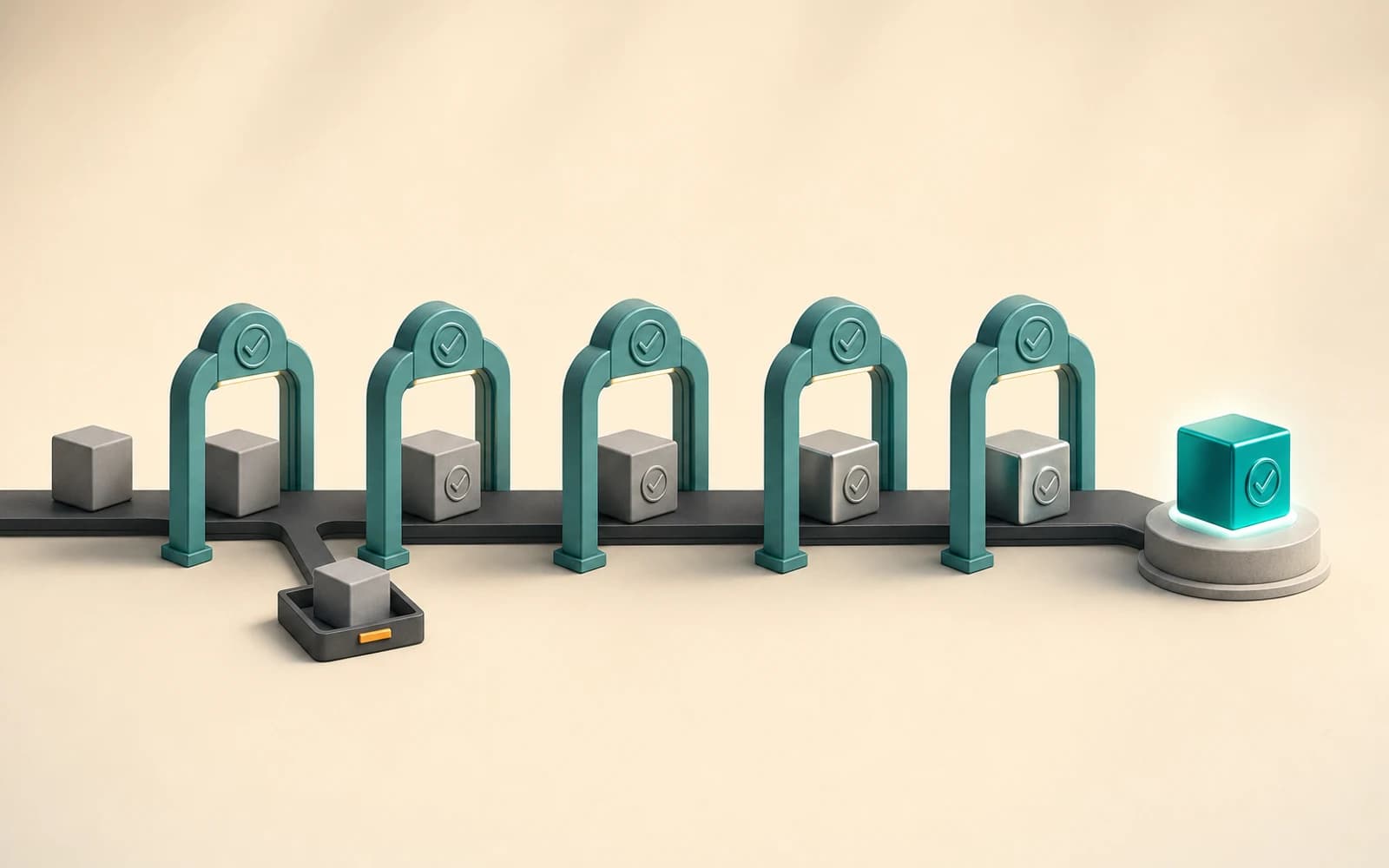
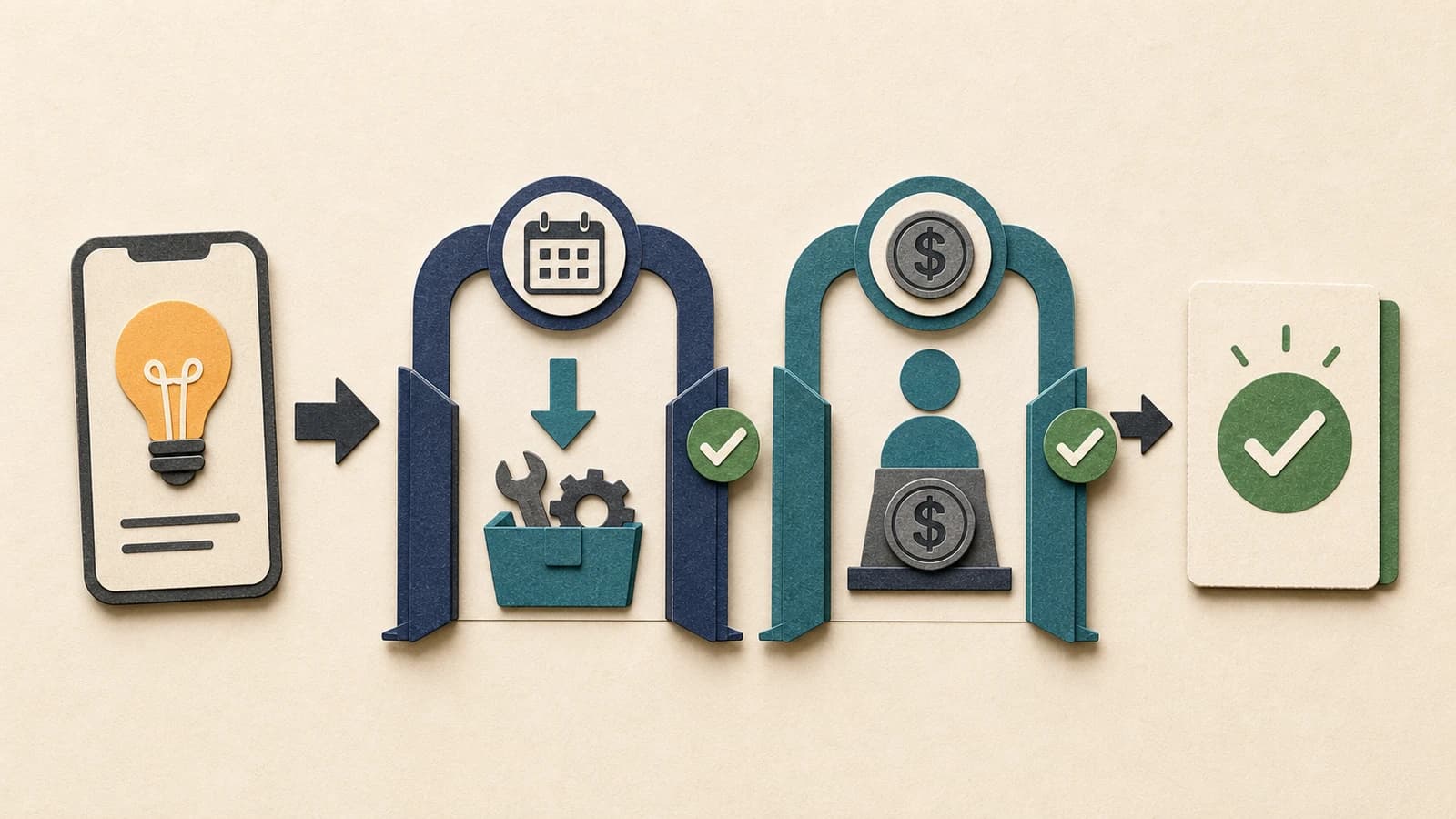
A good app startup idea in 2026 passes two tests at once: a specific 2026 shift made it newly cheap to build, and a buyer already pays to solve the problem today. Every idea below clears both before it earns a spot.
- Name the 2026 shift. What got cheaper or possible this year that was not last year? "AI is better" is not a shift. "A speech model now transcribes a job-site walkthrough on-device for free" is. If nothing changed, someone already built it.
- Find the paying buyer. Someone must already spend money on the problem, even on a clunky tool or a manual workaround. CB Insights found that 42 percent of failed startups died from no market need, and Preuve's 2026 benchmark of 6,000+ analyzed ideas agrees: 36.9 percent are too vague to evaluate, 25.7 percent have no go-to-market plan, and only 17.5 percent score high enough to launch. Full method in how to validate a startup idea.
AI-Native Consumer Apps
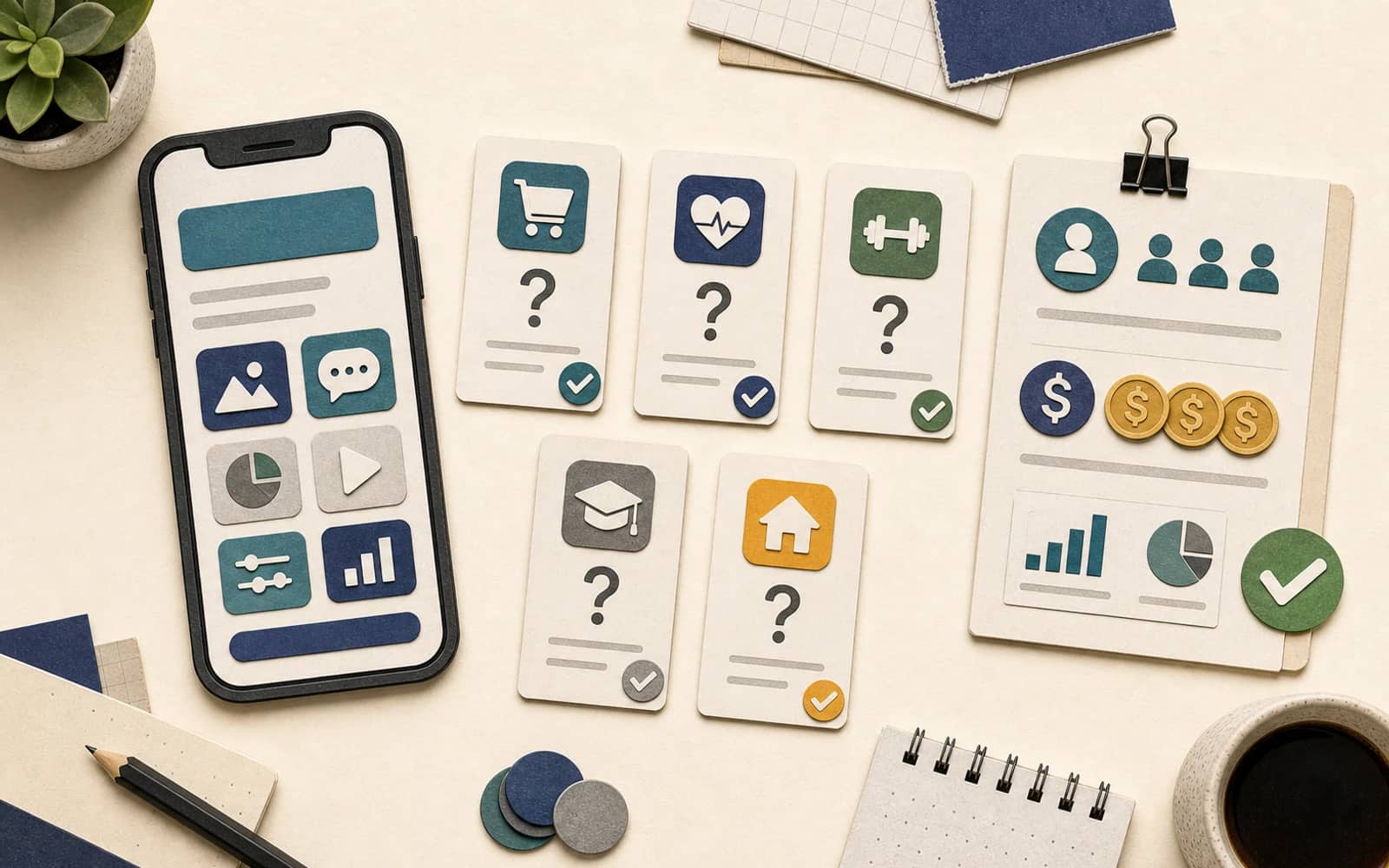
These are everyday consumer jobs that were too expensive to do well before cheap AI. The risk with all three is the same: consumer apps need an audience and a reason to pay, so validate the willingness to pay before the build, not after.
1. AI Personal Finance Coach
What it is: An app that reads your transactions and acts like a coach, not a dashboard. It tells you what to do this week in plain language, not just where the money went.
Why 2026 opened it: Bank-connection APIs are commodity, and language models now turn raw transaction data into specific, human advice for pennies. The old budgeting apps stopped at charts because reasoning over the data used to be hard, and that is the part that stopped being hard this year.
Who already pays: People already pay for budgeting apps and human financial coaches. The buyer exists; the product just got smarter.
How to validate it now: Pick one anxious segment (new parents, freelancers with lumpy income) and sell the coaching as a paid newsletter or manual service first. If they pay you to read their spending and tell them what to do, the app is worth building, and if they will not pay for that, no amount of polished UI is going to fix it.
2. AI Nutrition and Meal Planner from a Photo
What it is: Snap a photo of your meal or your fridge, get a calorie estimate, a macro breakdown and the next three meals planned around what you have.
Why 2026 opened it: Vision models can now read a plate of food accurately enough to be useful, which kills the single most hated step in every nutrition app: manual logging. That friction is why most diet apps get deleted in week two.
Who already pays: The diet and fitness app market is huge and subscription-driven. People already pay monthly to track food badly.
How to validate it now: The category is crowded, so pick a wedge: a medical diet (renal, diabetic), a specific sport, or a cuisine the big apps read poorly. Validate by counting how many people in that niche pre-pay for a waitlist that promises photo logging for their exact food.
3. Conversational AI Language Tutor
What it is: A patient speaking partner you can talk to out loud, that corrects you in real time and never gets bored. The point is real conversation rather than another deck of flashcards.
Why 2026 opened it: Low-latency voice models made real spoken conversation possible at consumer price points. The thing learners actually want, a tutor who talks back, used to cost twenty dollars an hour and now costs cents.
Who already pays: Language learners already pay for apps and human tutors, often both at once. The willingness to spend is proven across the category.
How to validate it now: Generalist language apps are a bloodbath against incumbents with huge budgets. Win on a narrow pair or use case: medical Spanish for nurses, business Japanese, interview English for a specific industry. Sell to that group directly before you touch the App Store.
Vertical B2B and SaaS App Ideas
This is where I would point a first-time founder in 2026. B2B buyers have budgets, the problems are concrete, and a narrow vertical app faces far less competition than anything consumer. The pattern is the same each time: take a horizontal AI capability and aim it at one trade. If the app is really a SaaS, you can validate the SaaS idea against live market data before you build.
4. AI Notetaker Built for One Profession
What it is: A meeting and visit recorder that does not just transcribe, it produces the document that one profession actually needs: a SOAP note for a therapist, a site report for a contractor, a discovery summary for a sales rep.
Why 2026 opened it: Transcription plus structured reasoning is cheap, so the value moved from "capture the words" to "produce the paperwork." Generic notetakers leave that last mile to the user, whereas a vertical one finishes it for them.
Who already pays: Professionals who bill by the hour hate paperwork and already pay for tools that save admin time. That is a budget you can reach.
How to validate it now: Shadow five people in one profession and watch the document they dread writing, then build for that one document only. Charge from day one, because a free pilot tells you nothing about whether the paperwork pain is worth money.
5. AI Customer-Support Agent for Small Businesses
What it is: A support agent that learns one small business from its own docs, past tickets and website, then answers customers over chat and email in the owner's voice.
Why 2026 opened it: Models can now be grounded in a single business's real content cheaply, so the answers are accurate instead of generic. Enterprise versions of this already exist; the corner-shop version mostly does not, because nobody bothered to make it easy.
Who already pays: Small businesses already pay for helpdesk software and, often, a part-time person to answer messages. You are replacing a line item, not inventing one.
How to validate it now: Hand-build the agent for three local businesses yourself, no product, just you wiring it up. If they keep paying after a month, the demand is real and you know exactly what to automate. I expand on this build-it-by-hand pattern in my AI agent startup ideas guide.
6. Document and Contract Review for Solo Professionals
What it is: An app that flags risky clauses and missing terms, and catches the odd number that does not belong, in the contracts a solo lawyer or small agency or landlord sees every week.
Why 2026 opened it: Long-context models read a full contract and reason about it reliably enough to assist a human reviewer rather than replace one. The legal-AI giants chase big firms, which leaves solo practitioners and small businesses with nothing built for them.
Who already pays: Anyone who pays a lawyer by the hour to review routine documents is a buyer for a tool that does the first pass.
How to validate it now: Pick one document type in one niche (commercial leases, freelance contracts, NDAs). Offer the review as a paid service you run manually with AI behind the scenes. The app is worth building only once people pay for the output.
7. Field-Service App for the Trades
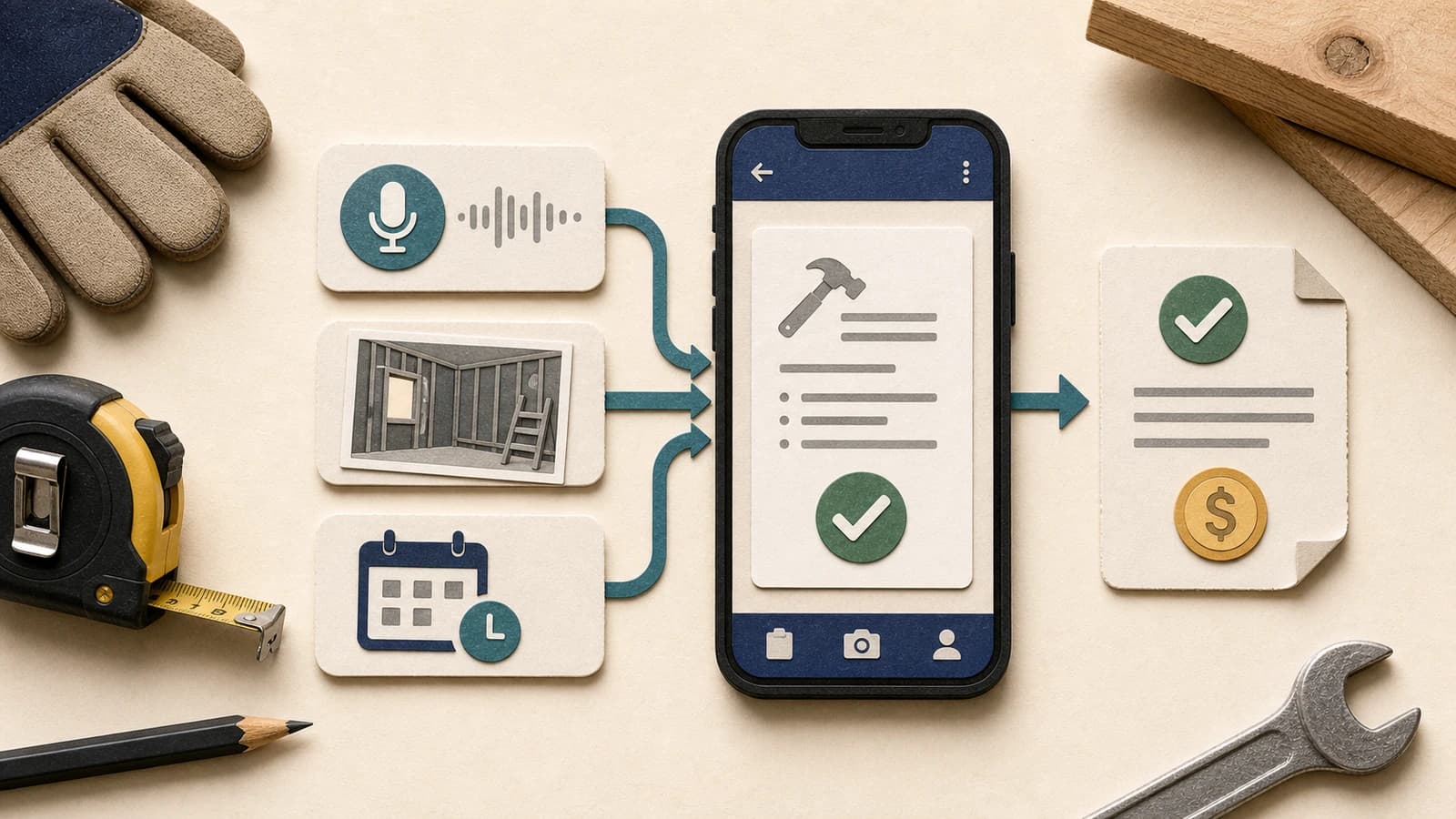
What it is: A phone-first app for a specific trade (electricians, landscapers, mobile mechanics) that handles quotes and scheduling, plus photos and invoicing in the field, all in the language of that trade.
Why 2026 opened it: Voice input and AI can now turn a spoken job description and a few photos into a clean quote on the spot. The generic field-service tools are bloated and widely hated, so a trade-specific app that does five things well tends to win on simplicity alone.
Who already pays: Tradespeople already pay monthly for clunky field-service software they complain about constantly. The budget is there and the incumbents are vulnerable.
How to validate it now: Go to where one trade gathers online, read what they hate about their current app, and pre-sell a simpler one for that trade only. Counting how many will put a card down beats any survey.
Local and Marketplace App Ideas
Marketplaces are hard because of the chicken-and-egg problem, but two-thousand-dollar build costs used to make them impossible to test cheaply. Now you can fake the supply side by hand and learn whether demand exists before you build anything real.
8. Booking and Payments for Solo Service Pros
What it is: A dead-simple app that handles booking and payment, with reminders to cut no-shows, for a specific kind of solo pro: a tutor, a dog groomer, a music teacher, a personal trainer.
Why 2026 opened it: Payment and scheduling components are now drop-in, so a niche booking app is a weekend of assembly, not a quarter of engineering. The broad tools (Calendly, Square) win nobody's heart in a specific trade.
Who already pays: Solo pros lose money to no-shows and already pay for scheduling and payment tools. Reducing no-shows is a number they feel.
How to validate it now: Pick one profession and one city. Get ten of them using a stitched-together version (a form, a calendar, a payment link) before you build the app. If ten will not adopt a manual version, ten thousand will not adopt the polished one.
9. Hyperlocal Community Marketplace
What it is: An app where neighbors can buy and sell, and also lend and recommend, scoped to one community (a campus, say, or a large building or an expat group) rather than a whole city.
Why 2026 opened it: Trust and moderation, the things that usually sink open marketplaces, are now manageable with AI, and plenty of people are tired of the big platforms anyway. The opening here is to be smaller and more trusted, which is a different bet than trying to be bigger.
Who already pays: Monetization is the risk here, so be honest about it. The realistic buyer is a local business paying for placement, or members paying a small fee for a curated, spam-free space.
How to validate it now: Run the community in a free chat group first. Only build the app once the group is active and someone, a local shop or the members, shows they will pay to keep it good.
10. Tool and Equipment Rental Marketplace
What it is: A peer-to-peer app for renting expensive gear that sits idle: power tools, camera kit, camping equipment, party supplies.
Why 2026 opened it: Identity verification and deposits are now plug-in components, and so are insurance-style protections that used to need a whole partnership to arrange. The thing that made peer rental scary, trust between strangers over a $900 item, finally has off-the-shelf rails.
Who already pays: People already rent these items from stores at high prices. The demand is proven; the app moves it peer-to-peer.
How to validate it now: Pick one category and one area. List your own and a few friends' items in a simple group, broker the first ten rentals by hand, and see if both sides come back. The repeat rate is the whole signal.
Skip weeks of manual research
Get complete market research, sourced proof, competitor map, and pricing data for your idea instantly.
Health, Habit and Creator App Ideas
These last three trade on attention and trust. They work when they serve a group the big apps ignore, and they fail when they try to be a general wellness app competing with billion-dollar incumbents.
11. Chronic-Condition Tracking App
What it is: A tracking and insight app built for one chronic condition (migraine, IBS, endometriosis, a specific autoimmune disease) that helps the patient spot triggers and bring real data to their doctor.
Why 2026 opened it: AI can find patterns across the messy symptom and food logs people keep, and the sleep data their phones already collect, in ways a human cannot eyeball. Generic health apps are too broad to do this, whereas a single-condition app can be genuinely useful.
Who already pays: Patients with a poorly managed chronic condition spend heavily on relief and are deeply motivated. Some of these markets also have patient-advocacy and pharma budgets behind them.
How to validate it now: Find the online community for that condition (they all have one) and learn what they already track by hand in spreadsheets. Build the spreadsheet they wish they had, then make it an app once they rely on it.
12. AI Sleep and Recovery Coach
What it is: An app that pulls from a wearable and gives one specific, personalized action each day to sleep and recover better, instead of yet another dashboard of scores.
Why 2026 opened it: Wearables expose their data, and AI can turn that stream into plain-language coaching. The hardware companies are good at sensors but weak at telling you what to actually do with the numbers, and that gap is where the product lives.
Who already pays: Wearable owners already spent hundreds on the device and many pay for the subscription. They have shown they will pay to improve sleep.
How to validate it now: Offer the coaching as a paid manual service to a small group of wearable owners: they share data, you send a daily action. Automate only the advice people already pay you to give.
13. Creator Membership and Micro-Community App
What it is: A white-label app a single creator or coach can run their paid community from, including the content and the events, without renting space on a platform that owns the audience.
Why 2026 opened it: The building blocks (payments, content, chat, push) are cheap to assemble, and creators are increasingly burned by platform fees and reach throttling. They want to own the relationship.
Who already pays: Creators already pay for community and course platforms every month. You are competing for an existing budget, not creating a new one.
How to validate it now: Find one creator with a paying audience and build their app first as a paid project. If one creator pays and renews, you have a product and a case study at the same time.
Why 2026 Is a Strange Year for App Ideas
Two things flipped at once. First, the cost of building an app collapsed. On-device AI, model APIs that cost cents per call, no-code builders and white-label auth and payments mean a solo founder can ship in weeks what took a funded team a year in 2019. Second, that same collapse flooded the stores, so polish alone no longer wins. The scarce thing now is not the ability to build but the proof that someone actually wants the thing you are building.
I am not the only one watching the bottleneck move. Anish Acharya, a general partner at Andreessen Horowitz, put it plainly in his start-of-year notes on AI apps.
"As coding agents are able to work with increasing accuracy and longer time horizons, the hard problem moves from how do I build it to what do I build."
He adds that the models are still weak at the second half: left to invent their own ideas, they come back "bland, derivative, and generally lack the spark." That judgment is the founder's job in 2026, because once the build is close to free, the real work becomes deciding what to build and proving that a buyer wants it.
That changes which ideas are good. When building was expensive, broad consumer apps made sense because you needed millions of users to justify the cost. Now that building is cheap, the advantage tends to flip to narrow apps for buyers who already pay, whether that is one profession, one underserved condition, or one local market the big players ignore. Small and paid usually beats big and free here.
Paul Graham said the real version of this years ago, and it has aged into the most useful sentence about app ideas I know.
"The way to get startup ideas is not to try to think of startup ideas. It's to look for problems, preferably problems you have yourself."
So read these as a set of problems to go solve rather than products to go build, since in practice the product is the easy half.
Where to Find Free Public Data Sources for App Ideas
Every idea above started as a signal in data anyone can read for free. You do not need a paid dataset to find an app idea. You need to know where founders already leave a trail: what people pay for, what they complain about, and where a market is growing. Here are the free public data sources I mine most, and the signal each one gives you.
- Government open-data portals. Data.gov and its national equivalents publish free datasets on health, housing, transport and climate. A dataset nobody has turned into a usable app yet is a wedge: the data is public, the packaging is not.
- US Census Bureau business data. The Census Bureau's Business Formation Statistics show where new businesses appear. 5.2 million new business applications were filed in the US in 2024, and each new business is a buyer for a tool built for its trade.
- Freelancer marketplaces. Fiverr, Upwork and Contra are public databases of the tasks people already pay other people to do. A category with hundreds of near-identical gigs is a strong signal that the work can become an app.
- App-store reviews. The App Store and Google Play surface one-star reviews from paying users of the incumbents. A complaint that repeats across reviews is a feature gap, and sometimes a whole product.
- Google Trends and search data. Google Trends shows which problems people search for more each month. A rising query with weak existing tools points at demand nobody serves well yet.
- Community forums. Reddit and Discord threads for one profession read like free customer discovery. A complaint that recurs in different threads is a problem worth an app.
Public data proves a problem exists. It does not prove people will pay to fix it. Cross every signal with the two-part test above, and read my guide to finding startup ideas for the full sourcing method. Then run the checklist below before you build.
A Validate-Before-You-Build Checklist for Any App Idea
Whichever idea pulls at you, run it through this before you open a code editor. Every line is something you can do in a week without building the app.
- Name the 2026 shift. Write one sentence on what got cheaper or possible this year. If you cannot, the app was already buildable and probably built.
- Find the existing budget. Identify exactly what your buyer pays today to solve this, even badly. No current spend is a red flag, not a green field.
- Interview ten real users. Not friends. People with the problem. Ask what they use now and what it costs them in money or time.
- Run a fake-door test. A landing page describing the app, with a join or pre-pay button. Count the clicks. I cover this in my fake-door test guide.
- Deliver it by hand first. Provide the outcome manually for the first few customers. If they pay for the manual version, the app is safe to build.
If you want a faster read on any idea on this list, that is the exact problem I built Preuve AI to solve. Describe the app on my idea validation page, and it pulls real market signals, competitors and demand evidence into a viability score in about ninety seconds, with every claim linked to a source. It will not build the app for you, but it will tell you which of these is worth your next three months. You can also browse more in my startup ideas for 2026 roundup, or pressure-test your shortlist with the best startup validation tools.
FAQ
What are the best app startup ideas for 2026?
The strongest app startup ideas for 2026 are AI-native versions of jobs people already pay for: an AI personal finance coach, an AI notetaker built for one profession, an AI customer-support agent for small businesses, and booking-plus-payments apps for solo service pros. The common thread is that on-device AI, cheap model APIs and ready-made payment rails dropped the build cost low enough for a solo founder, while the buyer and the budget already existed.
Are app ideas still worth pursuing in 2026?
App ideas are worth pursuing in 2026 when the idea attaches to a problem someone already pays to solve, not a feature you find clever. The app market is crowded, so a generic consumer app with no audience and no budget behind it is a hard bet. A narrow app aimed at one profession or one underserved condition, where the user already spends money on a worse tool, is a much better one.
How do I validate an app idea before building it?
Validate an app idea before building by proving demand without the app. Run a fake-door landing page that describes the app and counts how many people click to join or pre-pay. Interview ten people who have the problem and ask what they pay for today. Search for the exact problem on Reddit and in app-store reviews of clunky incumbents. If nobody pays for a worse version now, the polished version will not change that.
Do I need to know how to code to launch an app startup?
You no longer need to code to launch an app startup in 2026. No-code builders, AI coding assistants and white-label payment and auth components let a non-technical founder ship a working app to test demand. Coding still matters at scale, but the first version exists to prove people want it, and that version can be assembled rather than engineered from scratch.
What makes an app idea fail?
App ideas fail mostly for one reason: no market need. CB Insights found that 42 percent of failed startups died because there was no real demand for what they built. For apps the trap is specific: a founder builds a feature they would enjoy, ships it to an audience they do not have, and discovers nobody was paying to solve that problem in the first place. Validate the buyer before the build.
What are the best free public data sources for app ideas?
The best free public data sources for app ideas are the ones that show what people already pay for or complain about. Government open-data portals like Data.gov publish free datasets on health, housing and transport that few apps have packaged well yet. The US Census Bureau shows where new businesses and spending are growing. Freelancer marketplaces like Fiverr and Upwork are public databases of the tasks people pay others to do. App-store one-star reviews and Google Trends fill in the rest, with unmet demand straight from paying users. Public data proves a problem exists, so still confirm that buyers will pay before you build.
Cite this page
Last updated September 14, 2026
Forat, V. (2026, September 14). 13 App Startup Ideas for 2026 (Validated, Not Hyped). Preuve AI. https://preuve.ai/blog/app-startup-ideas-2026
Forat, Vincent. “13 App Startup Ideas for 2026 (Validated, Not Hyped).” Preuve AI, 14 Sept. 2026, preuve.ai/blog/app-startup-ideas-2026.
Forat, Vincent. “13 App Startup Ideas for 2026 (Validated, Not Hyped).” Preuve AI. September 14, 2026. https://preuve.ai/blog/app-startup-ideas-2026.
@misc{forat2026-app-startup-ideas-2026,
  author = {Forat, Vincent},
  title = {{13 App Startup Ideas for 2026 (Validated, Not Hyped)}},
  howpublished = {Preuve AI},
  year = {2026},
  month = sep,
  url = {https://preuve.ai/blog/app-startup-ideas-2026},
  note = {Last updated September 14, 2026}
}
Vincent
5 years in B2B growth, building Preuve AI in public. 82% of ideas it scores aren't ready, the point is finding out in 10 minutes, not 3 months.
Follow on X →
Building is expensive. Validation is free.
Run your idea through 10 AI agents before you write a line of code. Every claim source-linked.