
Key takeaways
- Best business idea validators, 2026: Preuve AI (source-linked viability reports, 60+ live data sources, $59), DimeADozen (long-form sourced documents, $9 Starter, $129 full report), ValidatorAI (free score and 21 single-shot tools), VenturusAI (strategy frameworks), IdeaProof (all-in-one workspace, one-time credit packs from €19.99), WorthBuild ($5 reports with lead lists), and Trend Seeker (Reddit demand signals, $9.99/month).
- Most validators score from AI training data. Only two tools on this list pull live market evidence and link claims to verifiable sources you can click through and check.
- Competitor listicles invent accuracy percentages. One ranks itself at "89% accuracy", backed by a 12-month survival stat from a product that only launched on Product Hunt in January 2026. If you cannot audit how a score was calculated, you cannot trust it.
- Roughly 20% of U.S. businesses fail in year one. A business idea validator catches the problems a spreadsheet misses, but only if its evidence is real.
Roughly 20% of new U.S. businesses close within the first year and about half are gone by year five, according to Bureau of Labor Statistics data. Laziness was rarely the problem. The idea had a flaw nobody checked for before the money went out the door. I built Preuve AI to be that check, and testing every business idea validator on the market is how I landed on the one question that actually separates useful tools from noise: can you verify what it tells you?
This is not the same list as my startup validation tools roundup. That post covers software products and SaaS founders. This one is for you if your idea is a cleaning company, a Shopify store, a food truck, a coaching practice, whatever is not a tech product. The examples differ and so do the priorities, but I hold both lists to the same bar: if I cannot check the source myself, I do not put it in front of you.

Will your idea survive the market?
Preuve AI runs 10 agents against live market data and links every claim to a source. Free analysis in 60 seconds.
Business Idea Validators Compared (2026)
Here are all seven tools before the detailed reviews below. Row order is my ranking, not alphabetical. "Live data" means the tool pulls real-time signals when you run a scan. "Source-linked" means each claim links to something you can open and check.
| Tool | Best for | Method | Live data | Source-linked | Pricing |
|---|---|---|---|---|---|
| 1. Preuve AI | Verifiable go/no-go verdict | Full viability | Yes (60+ sources) | Yes | Free / $59 |
| 2. DimeADozen | Presentable long document | AI + sourced data | Yes (web search) | Yes | Free / $9+ |
| 3. ValidatorAI | Free score + quick tools | AI opinion | No | No | Free |
| 4. VenturusAI | Strategy frameworks | AI opinion | No | No | Free / ~$10/mo |
| 5. IdeaProof | All-in-one workspace | Multi-AI toolkit | Partial | No | 40 free credits / one-time packs from €19.99 |
| 6. WorthBuild | Cheap check + lead list | Demand evidence | Yes (Reddit, HN, X) | No | $5/report |
| 7. Trend Seeker | Demand timing | Demand evidence | Yes (50K+ posts) | No | Free / $9.99/mo |
 1. Preuve AI
 2. DimeADozen
 3. ValidatorAI
 4. VenturusAI
 5. IdeaProof
What Is a Business Idea Validator?
A business idea validator is a tool that checks your business concept against live market data, competitor pricing, demand signals, and regulatory risks, then tells you whether the idea is viable before you invest money building it.
You describe what you want to build or sell. The tool checks it against data: who else is doing it, how many people want it, what they pay today, and what could kill it. The output is usually a report or a score that tells you whether the idea holds up or needs serious changes before you go further.
The SBA Office of Advocacy counts about 34.8 million small businesses in the U.S. in its 2024 profile, and the Census Bureau logged about over 5 million new business applications in 2024 alone. Most of those founders never ran a formal check on whether the idea worked before they filed the paperwork. That is a lot of money committed on gut feel. A validator compresses what used to take weeks of market research into minutes: catch the fatal flaw before you sign the lease, order the inventory, or bring on your first employee.
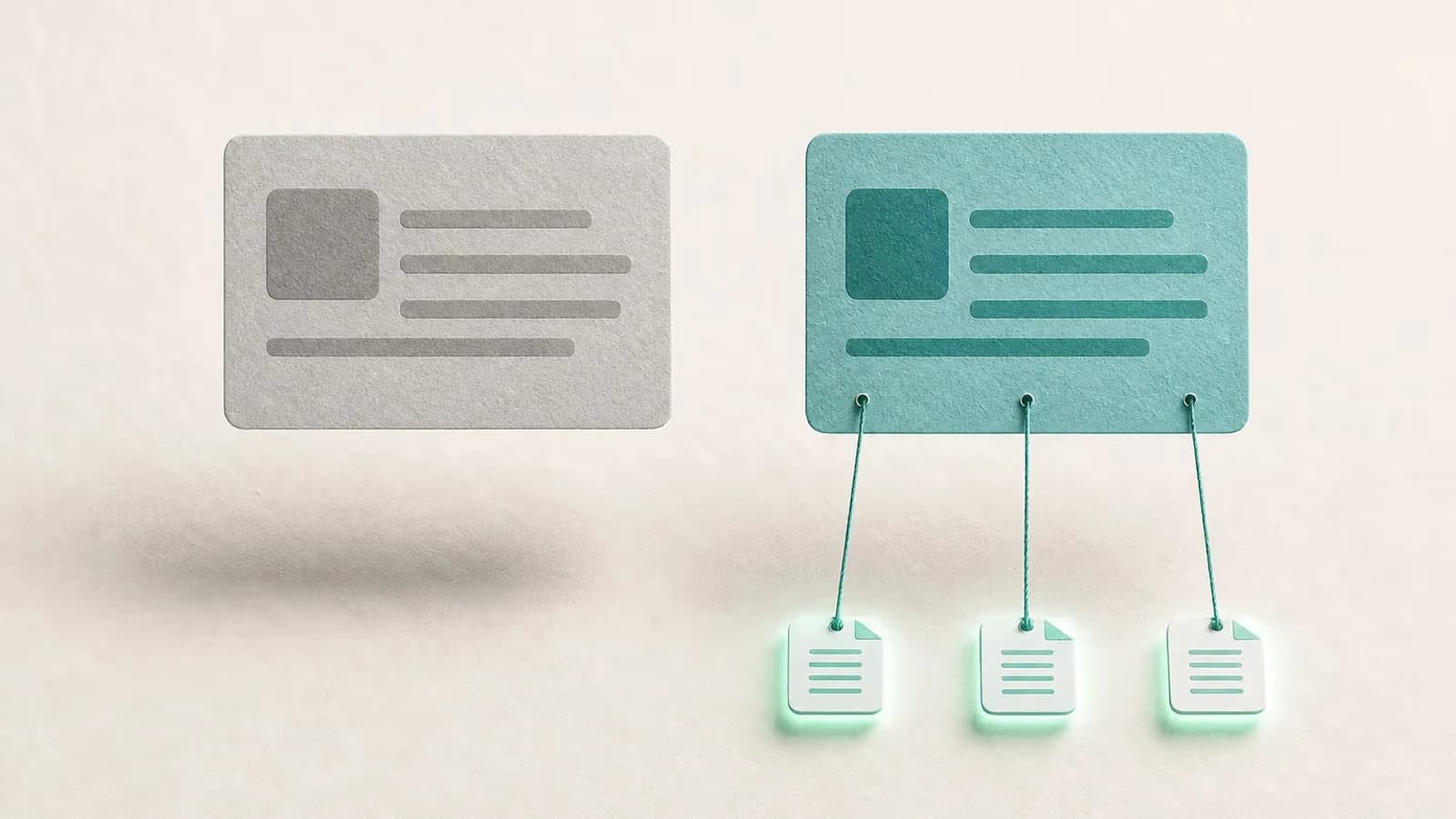
Here is the catch, though: most validators run on AI opinion, not live evidence. They feed your idea into a language model, and the model writes a plausible-sounding analysis from its training data. It will name competitors that do not exist. It will cite market sizes it invented. And it will rate your idea highly because that keeps you coming back. If the tool does not show you where a claim came from, you have no way to check it. I have read post-mortems of founders who spent $10,000 chasing a market that was already saturated because a report told them the coast was clear and they had no link to click to see whether that was true.
How Do I Validate a Business Idea Online?
Before you pick a tool, know the four things a real validator checks. Skip one and you are deciding on half the evidence.
Demand. Are real people looking for this? A cleaning business in a college town has different demand than one in a retirement community. The validator should show you actual search volume, community discussions, or complaint threads, not a model's guess about what people want.
Competition. Who already does this, what do they charge, and where are they weak? If the validator says "you will face competition" without naming the competitors and their pricing, it has told you nothing actionable.
Market size. Is the market large enough to support a business at the price point you need? A food truck concept with passionate fans in a town of 3,000 people is a hobby, not a business. The validator should size the opportunity with real numbers, not a vague "large addressable market."
Blind spots. What have you not thought of? Regulatory requirements, seasonal demand swings, a dominant incumbent you missed. This is the hardest check to do on your own. By definition, you do not know what you do not know, and that is exactly where the expensive surprises hide.
I wrote a full walkthrough of the process in my guide to validating a business idea. The tools below automate parts of that process. Some automate all four checks. Some handle one well and skip the rest. Knowing which does what keeps you from paying for a demand check when you needed a viability verdict.
Skip weeks of manual research
Get complete market research, sourced proof, competitor map, and pricing data for your idea instantly.
The 7 Best Business Idea Validators in 2026
I tested each tool on the same idea: a mobile pet grooming service targeting apartment complexes in mid-sized cities. Not a SaaS product, not an app, just a real-world service business the kind of person reading this post might actually start. The full round of testing took about four hours across all seven tools. One ranking criterion: can you verify what the tool tells you?
Disclosure: Preuve AI is my product. I built it, so treat my ranking with the skepticism you would apply to any founder reviewing their own tool. I tested every validator here the same way, and most have free tiers, so you can check my claims yourself.
1. Preuve AI
What it does: Runs 10 AI agents across 60+ live data sources (Reddit, Google Trends, LinkedIn, market research databases, regulatory filings, community forums) and returns a 0-to-100 viability score where every claim links to the source it came from. The report names real competitors with pricing, sizes the market, surfaces demand signals, and flags your blind spots. For a pet grooming service, it pulled local competitor pricing from Google Maps reviews, demand threads from pet-owner subreddits, and apartment complex pet policies from property management sites.
Best for: Anyone who needs a verdict they can defend, whether that means convincing a spouse, a business partner, or their own cautious side. If you want to see the receipts, not a confidence score, this is the one.
Preuve AI pros:
- Every claim links to the source it came from, so you can check the homework
- Names real competitors with pricing, sizes the market, surfaces demand signals and flags blind spots
- Free Reality Check in under a minute
Preuve AI cons:
- Pay-per-idea, not a subscription. Report packs soften it
- The free check is a filter. The 19 sections and the 3 pivot directions are in the $59 report
Pricing: Free Reality Check (viability score, market overview, competitor previews, under a minute). Founder Report: $59 one-time (19 sections, up to 15 named competitors, 3 pivot directions). Report packs: 2 for $89, 5 for $199.
Why it ranks first: It is the only validator on this list where you can click a claim and land on the page it came from. For a food truck idea, it would pull permitting requirements from your city's actual business licensing page. For a Shopify store, it would surface competitor pricing from live product listings. That source-first approach is the one design call I will not budge on. I do not think a report is worth $59 if you cannot check its homework yourself.
2. DimeADozen
What it does: Generates 100+ page business reports covering competitor analysis, market sizing, and pivot suggestions, cited throughout with data from public filings and named competitor sets. The output is a polished document you could hand to a business partner or an advisor. Its own FAQ says it does not write bank or SBA business plans.
Best for: Founders who need a presentable, shareable document rather than a dashboard. If someone else needs to read your validation (a co-founder, an advisor, an investor), DimeADozen's format is built for that.
DimeADozen pros:
- 100+ page reports with sourced data from public filings and named competitor sets
- A polished document you can hand to a partner or an advisor
DimeADozen cons:
- $129 for the full report, and no build verdict: the call stays with you
- The price-to-depth ratio suits one high-stakes check, not testing three versions of an idea
Pricing: Free idea score (4 scores out of 10, no account). A 7-section Starter at $9, the full report at $129, three full reports at $179.
3. ValidatorAI
What it does: A free idea score plus a toolbox. You fill in a short form (idea, customer, problem) and get a 0-100 score with feedback, then 21 single-shot tools cover the next steps: market size, value proposition, landing page copy, a pivot assistant, and a 7-day validation plan.
Best for: First-time founders who want to shape a raw idea into something concrete. If you are thinking about starting a candle business but you have not figured out who your buyer is yet, ValidatorAI helps you structure the question. It is a brainstorming partner, not a verdict machine.
ValidatorAI pros:
- Free with a Google sign-in, and no price listed
- 21 single-shot tools, from market sizing to a pivot assistant
- Generates launch assets such as landing page copy and a name
ValidatorAI cons:
- AI opinion: each tool answers once from what you type, with no live research shown. It can name competitors that do not exist and cite market sizes it cannot source
- Leans encouraging, which gets dangerous on a real go/no-go call. I would not base a $5,000 inventory purchase on it alone
Pricing: Free. The score and all 21 tools need only a Google sign-in, and no paid plan is listed. See my Preuve AI vs ValidatorAI comparison.

4. VenturusAI
What it does: Runs your idea through classic business frameworks (SWOT, PESTEL, Porter's Five Forces), identifies a target audience, and suggests marketing strategy. An AI consultant answers follow-up questions.
Best for: Founders who think in frameworks. If you want a SWOT analysis for your e-commerce store or a Porter's Five Forces breakdown for a consulting practice, VenturusAI delivers that structure in one pass. Useful if you are preparing for a business plan or a pitch to a partner.
VenturusAI pros:
- SWOT, PESTEL and Porter's Five Forces in one pass
- An AI consultant answers follow-up questions
- Useful structure for a business plan or a partner pitch
VenturusAI cons:
- Frameworks filled with AI opinion, not live data. The tidy boxes give a false sense of rigor
- For my pet grooming test, it listed competitors that did not operate in the market I specified
- Free reports are public by default
Pricing: Free tier (limited idea length, reports are public by default). Paid tiers from about $10/month. See the full Preuve AI vs VenturusAI comparison.
5. IdeaProof
What it does: An AI startup toolkit that bundles idea validation with business plans and branding assets. IdeaProof runs your idea through multiple AI models (its homepage names Claude, ChatGPT, Gemini and Grok) and returns a combined score. It also generates naming ideas and launch copy in the same workspace.
Best for: Founders who want one tool for the whole early-stage workflow without switching between five different apps. Validate an idea, then keep going into naming and launch copy in the same place.
IdeaProof pros:
- One workspace for validation, naming and launch copy
- Runs multiple AI models (its homepage names Claude, ChatGPT, Gemini and Grok) and returns a combined score
- Publishes a research-methodology page describing a weighted rubric of 50+ criteria
- 40 free credits on signup, one validation
IdeaProof cons:
- Claims "89% accuracy" from a 12-month survival rate for high-scoring ideas, but does not say which cohort was tracked, how survival was checked, or how many ideas it covers. Until it does, treat the 89% as a marketing number
- The validation step does not link most claims to verifiable sources
- Breadth across naming and branding means each piece is shallower than a focused tool
- As of August 2026, no independent reviews on Trustpilot, G2 or Capterra
Pricing: 40 free credits on signup (one validation). Paid credit packs are one-time, not a subscription: €19.99 for 150 credits, €49.99 for 1,400, €99.99 for 4,500, VAT included. See my Preuve AI vs IdeaProof comparison.
6. WorthBuild
What it does: Pay-per-report business idea validation with built-in lead discovery. Along with the validation report, WorthBuild surfaces people discussing your problem on Reddit, Hacker News, and X, giving you a starter list of potential customers to talk to.
Best for: Bootstrapped founders who want the cheapest possible check plus a head start on customer conversations. If you are considering a handyman service and want to find people complaining about the lack of one in your area, WorthBuild does that.
WorthBuild pros:
- Surfaces people discussing your problem on Reddit, Hacker News and X, a starter list of customers to talk to
- One of the cheapest paid checks on this list
- One free validation per month, no card required
WorthBuild cons:
- Does not link individual claims to verifiable sources
- Lighter competitor mapping and market sizing than a full viability tool
- A quick check, not a deep audit
Pricing: $5 per report, or $20 for 5 reports. One free validation per month, no card required.
7. Trend Seeker
What it does: Tests your idea against demand by checking it against 50,000+ Reddit posts and trend data. Returns an evidence score and shows whether interest in your idea is rising or fading over time.
Best for: Timing questions. If you are wondering whether demand for meal prep delivery is growing or shrinking in 2026, Trend Seeker shows the direction with real data. Useful as a first check before committing to deeper validation.
Trend Seeker pros:
- Checks your idea against 50,000+ Reddit posts and trend data
- Shows whether interest is rising or fading over time, with an evidence score
- Free tier for demand checks
Trend Seeker cons:
- Demand only: no market sizing, no competitor map, no go/no-go verdict
- Reddit-weighted data skews toward consumer and indie topics, weaker for B2B services
- A rising demand signal in a saturated market is still a warning, not a green light
Pricing: Free tier for demand checks. $9.99/month for unlimited checks.

How Much Does Business Idea Validation Cost?
Business idea validation costs between $0 and $129 per report in 2026, with most founders spending $59 or less for a single go-or-no-go decision. Prices land in three bands this year: free, $5 to $59, and $129 and up. Which one makes sense depends on how sure you need to be before you spend real money.
Free tier ($0)
ValidatorAI (free quick scores with a Google sign-in), Preuve AI Reality Check (viability score + market overview + competitor previews, under a minute), VenturusAI (frameworks, public reports), WorthBuild (1 report/month), Trend Seeker (demand checks). Free tiers work best as a first filter: run your idea through two or three, see what survives, then pay for depth on the winner.
Mid-range ($5 to $59 per report)
WorthBuild ($5/report with lead list), Preuve AI Founder Report ($59, full 19-section analysis, 3 pivot iterations included). This is where most founders should land for a real go/no-go decision on a single idea. At $59, a Preuve AI report costs less than an hour with a business consultant and covers more ground.
Premium ($129+)
DimeADozen ($129 per report, $179 for 3). Worth it if you need a polished document to show someone else: a co-founder, an advisor, an investor. Expensive for iterative testing. If you plan to check three variations of the same idea, a tool with built-in iterations (like Preuve AI's 3 included pivots per report) saves money.
For context, a traditional market research report from a consulting firm costs $5,000 to $50,000 and takes weeks. I wrote about that gap in my breakdown of market research costs. Even DimeADozen's $129 report barely registers next to a $5,000 consulting engagement, and you get it back the same day instead of waiting six weeks.
Which Business Idea Validator Should You Use?
Match the tool to what you are actually deciding right now, not the one with the flashiest landing page.
If you have a raw idea to shape, start with ValidatorAI (free score and quick tools) or VenturusAI (free, framework-based). These tools help you structure an idea that is still in your head. They are not verdict machines, but they are good thinking partners. A coaching practice concept you cannot articulate clearly is not ready for validation. Shape it first.
If you need to check demand, Trend Seeker ($9.99/month) or WorthBuild ($5/report) will tell you whether people are looking for what you want to sell. WorthBuild adds a lead list of potential customers from Reddit and X. Good for answering "does anyone want this?" before you spend money answering "can I build a business around it?"
If you need a go/no-go verdict with evidence, that is where Preuve AI sits. It takes the demand signal, the competitive landscape, the market size, and the blind spots and assembles them into a single score where every claim is source-linked. For a Shopify store, an e-commerce brand, a local cleaning service, or a food truck, you get the same depth of analysis that used to require a consultant. The free Reality Check catches obvious fatal flaws. The $59 Founder Report gives you the full picture plus a fix playbook and 3 pivot iterations to test different angles.
If you need a document for someone else, DimeADozen ($129) produces the most polished, shareable report. Worth it for a co-founder or advisor read. It is not a bank business plan: its own FAQ says so. Expensive for personal use.
The stacking play that costs under $65: Start with the free Reality Check to catch fatal flaws. If the idea holds up, spend $5 on WorthBuild for a lead list, then $59 on the Founder Report if you want the full verdict. That is $64 total, and you walk away with sourced evidence and a few real people to call. Most founders pay more than that for a single hour with a consultant and get less actionable output.
Building a software startup instead? My startup validation tools roundup covers the SaaS-specific field. If budget is the deciding factor, my free idea validation tools roundup compares every free tier in detail. Want the process instead of the tool list? My step-by-step validation guide covers what to check and in what order. And before any of that, it is worth skimming the 2026 failure statistics to see why so many ideas die before launch. For the bigger picture on how source-linked validation works, the idea validation page walks through the whole approach.
FAQ
What is the best business idea validator in 2026?
For evidence you can verify, Preuve AI ranks first. It scans 60+ live data sources per idea and links every claim in the report to the source it came from, so you can click through and check it. ValidatorAI is the best free option for a quick gut check. DimeADozen produces the most thorough document if you need something to share with a partner or advisor. The best pick depends on whether you need proof, speed, or a presentable report.
How do I validate a business idea online?
Start with a free scan on a tool that pulls live market data, not just AI opinion. Check whether real competitors exist for your idea, whether people are searching for it, and whether the market is large enough to support a business. A good validator will name specific competitors with pricing, surface demand signals from real communities, and flag the problems you have not thought of. Then verify the claims that would change your decision.
How much does business idea validation cost?
Pricing ranges from free to $129 per report. ValidatorAI's score and tools are free with a Google sign-in. WorthBuild charges $5 per report. Preuve AI is $59 for a full viability report with live sources. DimeADozen starts at $9 for a 7-section Starter and charges $129 for its long-form full report. Monthly subscriptions like Trend Seeker run $9.99. For a single go-or-no-go decision, a one-time report is usually the better fit than a subscription.
Can I validate a business idea for free?
Yes. ValidatorAI gives free quick scores with a Google sign-in. Preuve AI offers a free Reality Check scan that returns a viability score, market overview, and competitor previews in under a minute. VenturusAI has a free tier with strategy frameworks. Free tiers are best used as a first filter: run two or three, then pay for depth on the idea that survives.
What is the difference between a business idea validator and a startup validation tool?
The tools overlap, but the framing differs. Startup validation tools tend to target software founders building SaaS or apps, with jargon like TAM, pivot, and product-market fit. Business idea validators serve a broader audience: someone considering a cleaning company, food truck, Shopify store, or coaching practice. The underlying analysis is similar, but business-focused tools should ground examples in real-world service and product businesses, not just tech.
Cite this page
Last updated October 9, 2026
Forat, V. (2026, October 9). Best Business Idea Validators: 7 Tested, One Question. Preuve AI. https://preuve.ai/blog/best-business-idea-validators-2026
Forat, Vincent. “Best Business Idea Validators: 7 Tested, One Question.” Preuve AI, 9 Oct. 2026, preuve.ai/blog/best-business-idea-validators-2026.
Forat, Vincent. “Best Business Idea Validators: 7 Tested, One Question.” Preuve AI. October 9, 2026. https://preuve.ai/blog/best-business-idea-validators-2026.
@misc{forat2026-best-business-idea-validators-2026,
  author = {Forat, Vincent},
  title = {{Best Business Idea Validators: 7 Tested, One Question}},
  howpublished = {Preuve AI},
  year = {2026},
  month = oct,
  url = {https://preuve.ai/blog/best-business-idea-validators-2026},
  note = {Last updated October 9, 2026}
}
Vincent
5 years in B2B growth, building Preuve AI in public. 82% of ideas it scores aren't ready, the point is finding out in 10 minutes, not 3 months.
Follow on X →
Building is expensive. Validation is free.
Run your idea through 10 AI agents before you write a line of code. Every claim source-linked.