
Key takeaways
- 42% of startups fail because there was no market need (CB Insights), and most of that is catchable in a pre-build screen that takes minutes, not weeks.
- Screen for 5 things before you greenlight a client build: A real paying market, direct and indirect competitors, public complaints, honest TAM/SAM/SOM, and the blind spots the founder cannot see.
- Gut instinct and a ChatGPT prompt both inflate the score. On live-data validation only 17.5% of ideas score 70 or above; opinion-based tools green-light almost everything because they have no live data to say no.
- Use the score as a conversation anchor, not a verdict. A 45 out of 100 means three or four fixable things, which turns a rejection into a paid working session.
- Lead with source-linked evidence, not opinions. Live funding data, competitor pricing, and public complaints end the arguments that opinions start.
A client comes to you fired up about their new startup idea. They want to move fast. They want you to help them build it. And somewhere in the back of your mind, a quiet alarm goes off.
You have been here before. The idea sounds plausible. Maybe even exciting. But you have also watched enough launches go sideways to know that "sounds good" and "actually viable" are very different things. The problem is, you do not have three weeks to run a full market study before your next call.
This is the exact situation that quietly burns time and credibility for agencies, consultants, accelerators, and incubators every week. The clients who come to you already believe in their idea. Your job is not to cheerlead. Your job is to be the professional who keeps them from wasting six months building something the market does not want.
According to CB Insights, 42% of startups fail because there was no market need. That number has not meaningfully shifted in years. The mistake keeps happening because too many people skip the screening step, or rush through it on gut instinct alone.
So what does a fast, credible screening process actually look like?

Will your idea survive the market?
Preuve AI runs 10 agents against live market data and links every claim to a source. Free analysis in 60 seconds.
Why isn't gut instinct (or a ChatGPT prompt) enough?
The most common screening method I see is still informal: a mentor reviews the pitch, someone Google searches the space for ten minutes, and a few questions get asked on a discovery call. Sometimes that is followed by a quick ChatGPT analysis.
The problem with both approaches is that they are opinion-based. Neither surfaces live competitive funding data, real community demand signals, or current pricing benchmarks across the market. A generative AI model asked to evaluate a startup idea will almost always give you a high score, because it has no incentive to say no, and no live data to contradict the founder's framing.
Preuve AI's benchmark analysis of 6,000+ startup ideas shows the gap starkly. Opinion-based AI validators green-light almost everything. A live-data approach, by contrast, finds only 17.5% of ideas scoring 70 or above. The difference is the data underneath the score.
When you are advising a client, you need something they cannot easily dismiss. Source-linked evidence. Real competitor names with funding and pricing. Demand signals with citations. That is what separates a professional recommendation from a hunch.
The 5 things a proper screening must surface
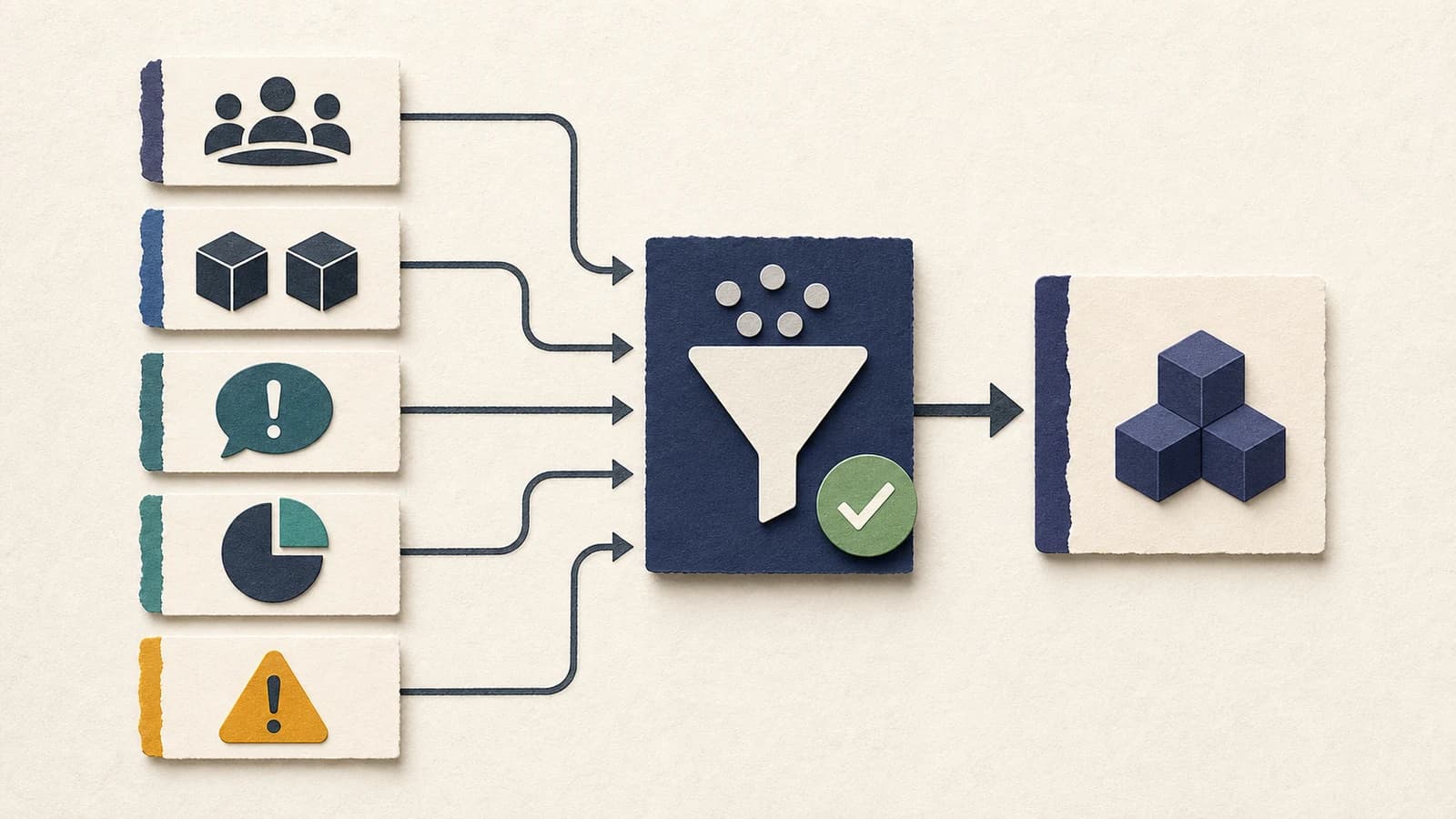
Before recommending that any client build, here is what the screening should answer:
1. Is there an existing market? If no one is currently paying for a solution to this problem, that is a signal worth examining carefully. No competition often means no demand, not a blue ocean.
2. Who are the real competitors, including indirect ones? Most founders only check for direct competitors. The more dangerous threat is the incumbent tool, manual workflow, or adjacent product already doing the job "well enough."
3. Are real people complaining about this problem publicly? Community signals from Reddit threads, product reviews on G2 or Capterra, and niche forums are some of the best early demand proxies available. If you cannot find unprompted complaints, the problem may not be painful enough to pay to solve.
4. What does the market size actually look like? A grounded TAM/SAM/SOM tells a very different story than back-of-napkin math or aspirational figures. An underfunded niche and a $10B market both look exciting on a pitch deck.
5. What are the blind spots? Every idea has risks the founder has not seen yet: regulatory hurdles, distribution challenges, pricing mismatches with the target segment, or a dominant competitor who already tried and failed in this exact space.
Manually answering all five takes days. A tool that automates it can take the initial read down to under 60 seconds.
Skip weeks of manual research
Get complete market research, sourced proof, competitor map, and pricing data for your idea instantly.
What does the screening workflow look like in practice?
For agencies and consultants juggling multiple client projects, the screening step has to be fast enough to run before the first serious conversation, not after a project is already scoped. Here is a workflow that works:
Step 1: Run a quick scan before the discovery call. Ask the client to describe their idea in one or two sentences, then run it through a live-data validation tool before you get on the phone. You show up already knowing the competitive landscape, the demand signals, and the biggest red flags.
Step 2: Use the score as a conversation anchor, not a verdict. A viability score of 45 out of 100 does not mean the idea is dead. It means three or four specific things need to be addressed before building makes sense. That framing turns a potential rejection into a productive working session, which is exactly the kind of value a good advisor provides.
Step 3: Present source-linked findings, not opinions. When you tell a client their target market is already saturated, the conversation goes much better when you can point to live Crunchbase funding data, active competitor pricing pages, and Reddit threads showing their target customers already using alternatives. Evidence changes the conversation. Opinions start arguments.
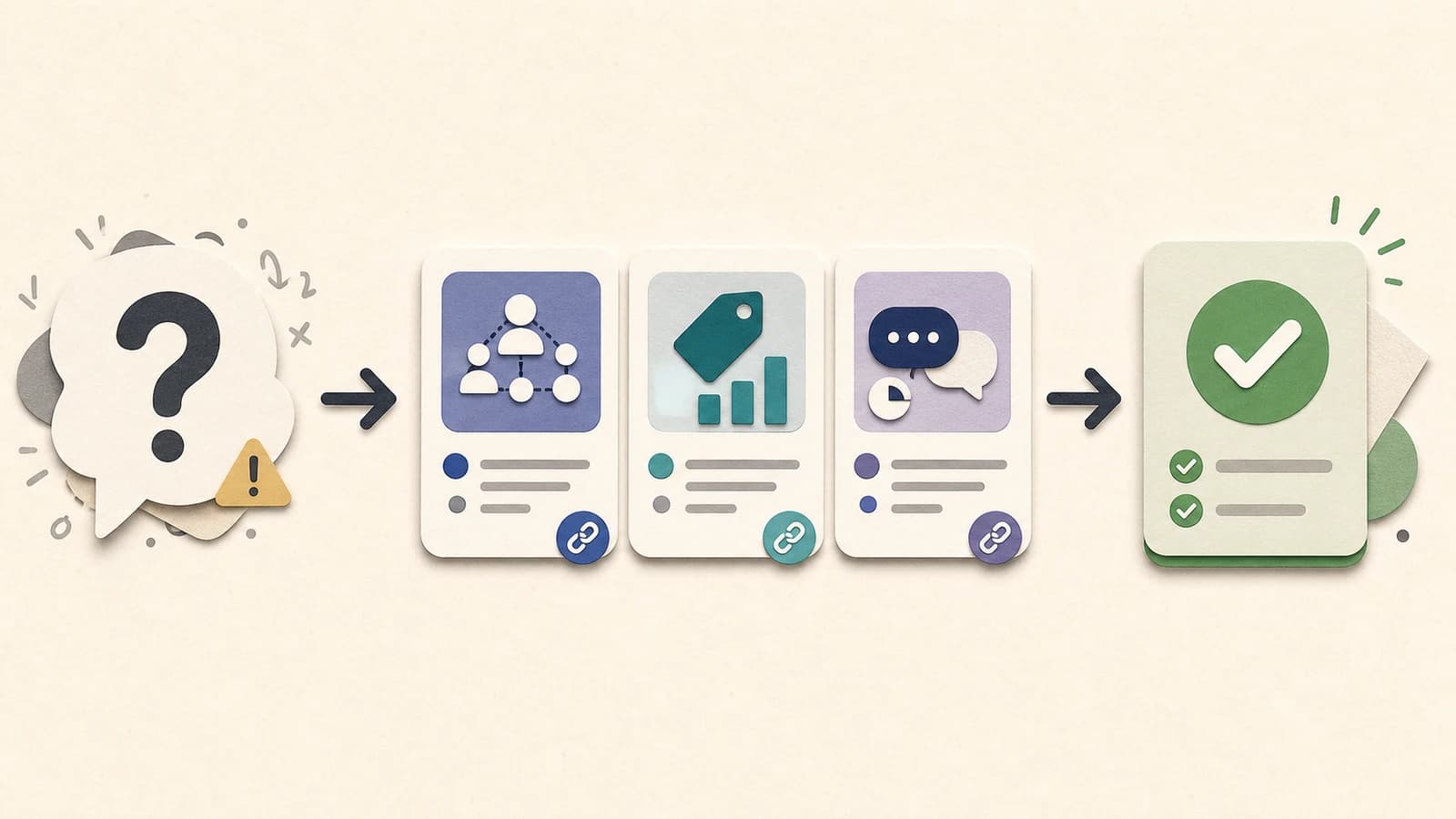
Step 4: Use pivot recommendations to move forward constructively. The best screening tools do not just identify problems, they suggest adjacent directions with better fundamentals. Giving a client three concrete pivot angles alongside the risk assessment is the difference between a screening that kills momentum and one that redirects it.
For teams running this at scale, Preuve AI for Teams is built for agencies, accelerators, and incubators, with a white-label widget you can embed into intake forms so every inbound idea gets a first-pass report before a human even looks at it.
The tools worth knowing about
A few options have emerged for pre-build screening. The difference that matters for a client deliverable is whether the output is backed by live, source-linked data or just generated text:
| Tool | Live external data | Source-linked output | Competitor + funding data | Format and price |
|---|---|---|---|---|
| Preuve AI | 60+ live sources (Crunchbase, Reddit, Product Hunt, G2, Capterra) | Yes, every key claim links to a public source | Up to 15 competitors with pricing and funding | Founder Report, 5 to 6 min, $29 |
| ValidatorAI | No, conversational AI assessment | No | No live competitor data | Chat-based gut-check |
| DimeADozen | No, AI-generated analysis | No | Limited, not pulled from live sources | Structured report, per-credit |
Preuve AI scans 60+ live data sources, including Crunchbase, Google Trends, Reddit, Product Hunt, G2, and Capterra, and runs 10 specialized AI agents in parallel to produce a viability score, up to 15 competitors with pricing and funding data, market sizing, blind-spot detection, and AI-generated pivot recommendations. The full Founder Report takes 5 to 6 minutes and costs $29. Every key claim links back to a public source, which makes the output defensible when you are presenting findings to a client. According to Preuve AI's benchmark data from 6,000+ scans, more than 80% of ideas have gaps founders have not spotted, which is exactly what the screening is supposed to catch.
ValidatorAI takes a conversational, chat-based approach to idea assessment. It is useful for a quick gut-check but does not produce source-linked reports or live competitor data, which makes it harder to share as a professional deliverable.
DimeADozen produces structured reports at a per-credit price, but the analysis is AI-generated rather than pulled from live external sources, which limits its credibility for a formal client deliverable.
For accelerators specifically, deal flow scoring handles application screening at volume, automatically generating a standardized first-pass report for every inbound idea so the team can triage quickly before spending time on interviews.
The conversation you want to have
The goal of screening is not to say no. It is to give clients something more valuable than enthusiasm: an honest picture of what they are walking into.
A founder who learns before building that their category has three well-funded competitors, none of whom have cracked the SMB segment, is in a much better position than one who discovers it six months into development. Your job as the advisor is to surface that picture early.
When you can show a client a competitive intelligence map with real funding data, community demand signals with source links, and three pivot directions that fix the weakest points in their idea, that is a professional deliverable. It justifies your role in the process and protects your reputation when the project hits reality.
The screening step used to be slow, expensive, or both. It does not have to be anymore. Running a full first-pass validation before your next client call takes eight minutes, not five days, and it might be the most valuable eight minutes in your workflow.
If you work through multiple client ideas regularly, validating client ideas for agencies and consultants is a workflow worth building into your standard intake process. The clients who get the honest screening early make better decisions. And you become the advisor they trust with the next one.
FAQ
How do you screen a client startup idea before recommending they build?
Answer five questions first: is there a paying market, who are the real competitors (including indirect ones), are people complaining about the problem publicly, what does the market size actually look like, and what are the blind spots. Run a live-data scan before the discovery call so you arrive already knowing the landscape and the red flags.
Why is a ChatGPT analysis not enough to validate a client idea?
A generative model has no live competitive funding data, no current pricing benchmarks, and no incentive to say no, so it almost always returns a high score that confirms the founder. Screening needs source-linked evidence the client cannot easily dismiss: real competitor names with funding and pricing, and demand signals with citations.
How long does a pre-build screening take?
A quick first-pass scan returns an initial read in about 60 seconds. A full source-linked Founder Report takes 5 to 6 minutes. Doing the same research by hand (competitors, pricing, market size, demand signals) takes days.
What should a screening report include to be client-ready?
Source-linked competitors with funding and pricing, demand signals with citations, a grounded TAM/SAM/SOM, the blind spots the founder has not seen, and a few concrete pivot directions. Evidence you can click through to is what makes the report a professional deliverable rather than an opinion.
How do agencies screen client ideas at scale?
Embed a white-label validation widget into the intake form so every inbound idea gets a first-pass report before a human looks at it. That lets a team triage deal flow quickly and spend interview time only on the ideas worth it.

Vincent
5 years in B2B growth, building Preuve AI in public. 82% of ideas it scores aren't ready, the point is finding out in 10 minutes, not 3 months.
Follow on X →
Building is expensive. Validation is free.
Run your idea through 10 AI agents before you write a line of code. Every claim source-linked.