Key takeaways
- The creator economy crossed $314 billion in 2026, But 68 to 70 percent of creator income still depends on brand deals, and platform algorithm changes remain the top barrier to growth (CreatorIQ, 2026).
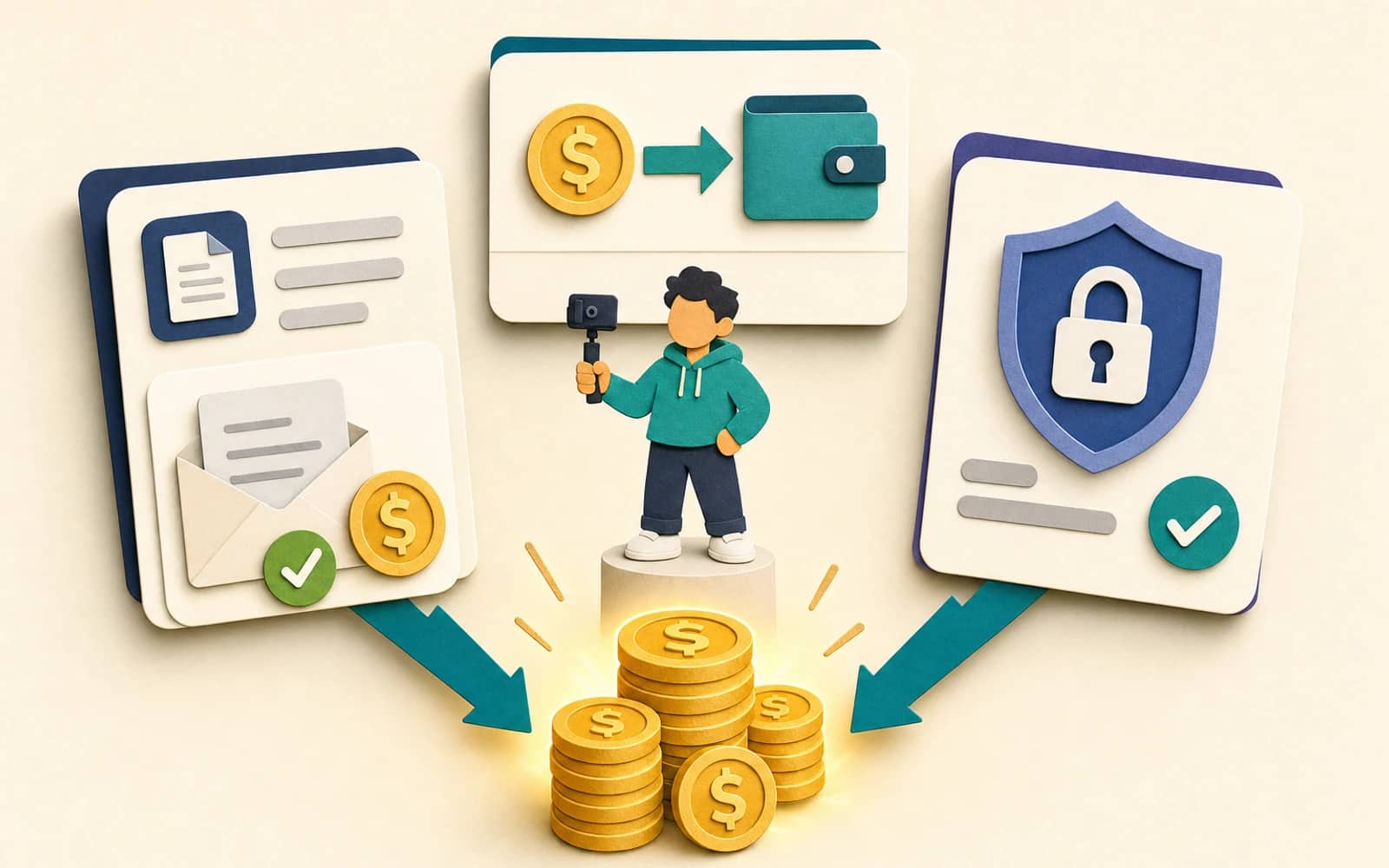
- The highest-value startup ideas serve mid-tier creators (50K to 2M followers) Who generate enough revenue to pay for tools but lack the staff to manage deals, protect content, or attribute income across platforms.
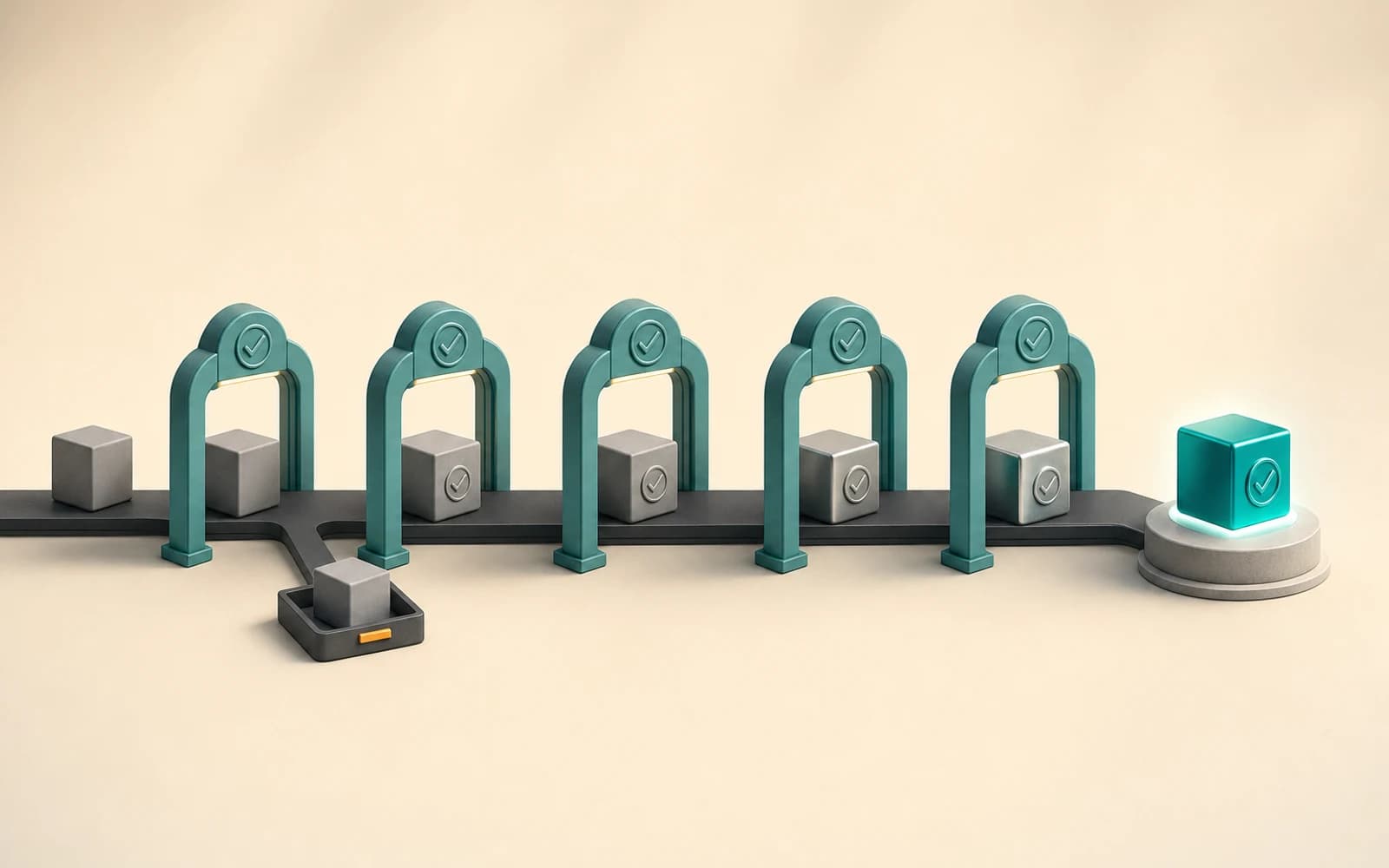
- Infrastructure beats content tools: The open gaps are in deal triage, labor operations, content protection, revenue attribution, and AI compliance, not another editing or publishing app.
- Each idea includes the specific creator pain, monetization model, demand signal, and validate step So a technical founder can test before committing.
Brand deals drive 68 to 70 percent of all creator income. If you are looking for creator economy startup ideas in 2026, start with that number. The $314 billion creator economy has a full shelf of content-making tools and almost no shelf for running the business behind them.
I built Preuve AI to help founders validate ideas before they build. Look closely at the creator space and the pattern is clear: the highest-value gaps are not in content creation. They are in the infrastructure that mid-tier creators, roughly 50,000 to 2 million followers, need to manage deals, protect their work, attribute revenue, and make financial decisions. If you are a technical founder choosing what to build next, the creator economy's unsexy back-office problems are where the money is.
Below are 10 creator economy startup ideas that go beyond another newsletter tool. Each has the specific creator pain, the monetization model, a real demand signal from a company already in the space, and a validate-before-you-build step. I also wrote a broader list of 50 startup ideas for 2026 if you want the full landscape.

Will your idea survive the market?
Preuve AI runs 10 agents against live market data and links every claim to a source. Free analysis in 60 seconds.
How Big Is the Creator Economy in 2026?
The global creator economy reached an estimated $314 billion in 2026, growing at roughly 23 percent annually (Precedence Research). More than 207 million creators are active worldwide. Brand partnership spending alone is projected to reach $44 billion in 2026.
But scale hides fragility. According to a January 2026 CreatorIQ report, platform algorithm changes are the top barrier to creator business growth, cited by 18 percent of respondents. Only 4 percent of creators earn above $100,000 annually. The median full-time creator earns between $50,000 and $75,000 across all income streams. A large market with thin infrastructure and shaky creator income makes for a good place to look for problems worth solving.
What Do Creators Actually Need That Nobody Has Built?
I count seven major storefronts competing for creator commerce. Kajabi raised its price floor to $179 per month in early 2026. Creators have more checkout options than they have products to sell. Meanwhile, 45 percent of creators are actively consolidating their tech stacks (Circle, 2026). They are frustrated with what exists, not searching for more.
The pattern across all 10 ideas below: The selling layer (Kajabi, Patreon, Substack, Stan Store, Gumroad) is saturated. The operational layer, deals, labor, finance, protection, compliance, is not. Build there.
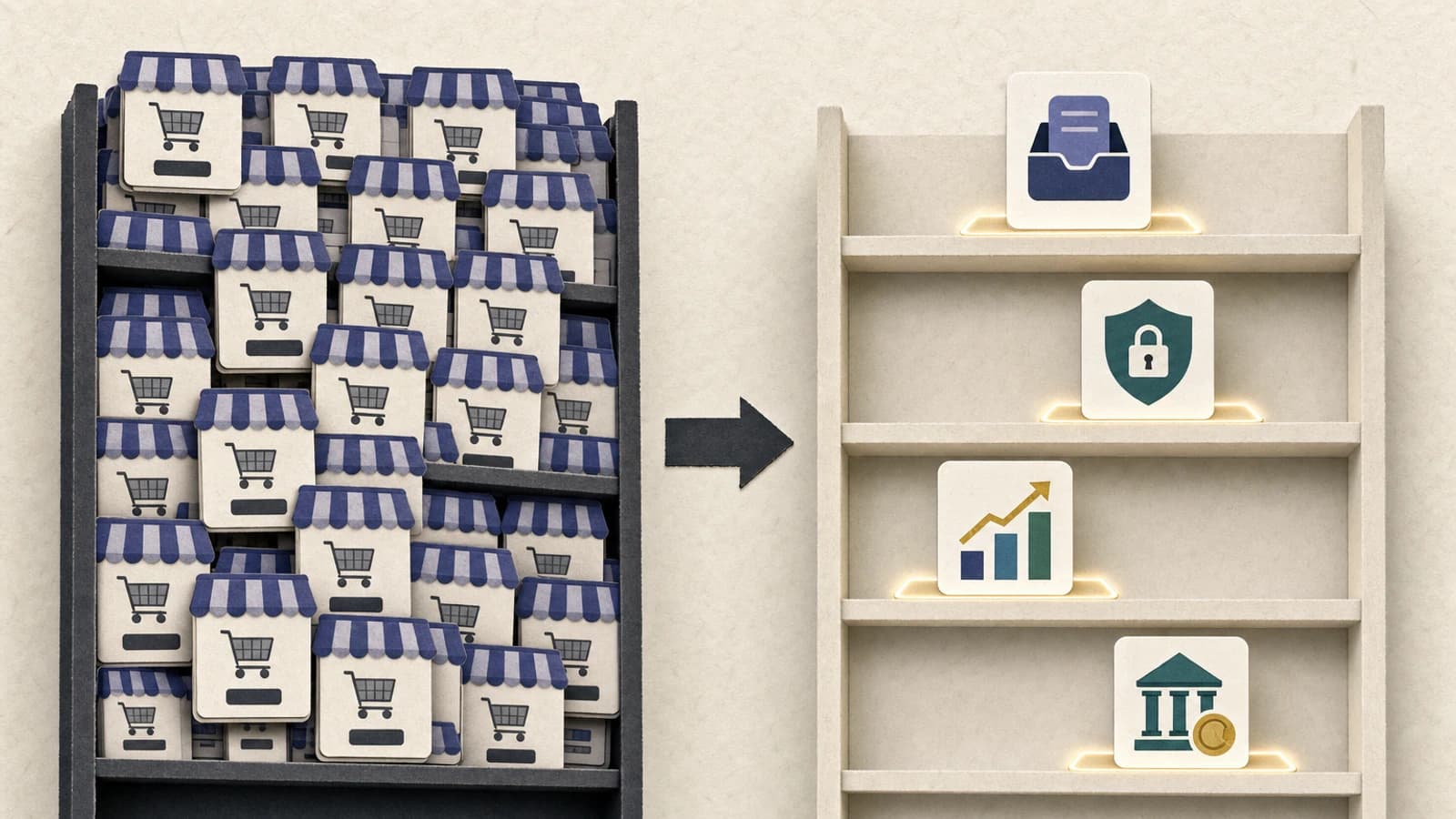
A creator economy startup builds tools, platforms, or infrastructure specifically for digital content creators and independent media operators. The category spans monetization, audience growth, analytics, content distribution, and financial operations. What separates the 2026 wave from the 2020 wave is the shift from helping creators make content to helping them run businesses.
The sweet spot is mid-tier creators with 50,000 to 2 million followers. Large creators have managers and agents. Small creators lack the inbound to justify tooling. The middle has the pain, the budget, and no operator. If you want more ideas in adjacent spaces, I covered 10 micro SaaS ideas for 2026 including several that sell to creator-adjacent niches.
AI Deal Desk for Mid-Tier Creators
Creators with 50,000 to 2 million followers receive dozens of brand emails daily. Survey data from Creatorland shows they spend 3 to 4 hours per day sorting this inbox. Large creators have talent agents handling this. Small creators barely get inbound worth opening. The messy middle is sitting on 40 brand emails a week with no one to triage them.
Monetization model: $49 to $249 per month SaaS subscription. At 1,000 users, a solo founder path to $79,000 MRR is realistic.
Demand signal: Marlo, backed by Andreessen Horowitz through its Speedrun program, has processed over 500,000 inbound brand opportunities. Creatorland's Dealsync tool filtered 500,000 junk messages and surfaced 11,000 legitimate offers for early users.
Validate this: Interview 20 creators in the 50,000 to 500,000 range about their inbox. Ask how many brand emails they received last month and how many they responded to. If the gap is wide, build a Gmail plugin MVP that classifies inbound by commercial intent. You can scan this idea free to check the competitive landscape first.
Creator Labor OS Starting with Video Editors
The creator economy hit $314 billion but still hires editors through DMs and Discord backchannels, with no standardized scopes, no rate benchmarks, and no way to verify quality before you sign a contract. The job title "editor" covers everything from podcast cutting to full retention strategy. Creators have no way to tell which one they are hiring.
Monetization model: Marketplace with 10 to 15 percent take rate on matched work, plus $29 to $99 per month creator subscriptions for rate intelligence and scoping tools.
Demand signal: Rachel Kisela, former lead editor at MrBeast, built EditHers, a community of 200 editors serving creators like Airrack, MKBHD, and Pokimane. MrBeast launched Vyro, a clipping marketplace where fans earn roughly $3 per 1,000 views for repurposing long-form into shorts. When the biggest creator on the platform outsources labor to fans, the gap speaks for itself.
Validate this: Manually match 10 creators with editors concierge-style. Standardize one scope (weekly long-form edit), set a fixed price, manage delivery. If creators reorder, build the software.
Audience Demand Radar
A fitness creator builds a 10-hour course when the audience wanted a $19 grocery template. A career coach spends six weeks building a community platform when the comments were asking for a salary negotiation script. Creators guess what to sell, and they usually guess wrong. The selling layer is saturated. The deciding layer, what should I actually put on the shelf, is still empty.
Monetization model: $29 to $49 per month SaaS. At 1,000 creators, that is $29,000 to $49,000 MRR on micro-SaaS margins.
Demand signal: Substack crossed 8.4 million paid subscriptions in Q1 2026, a 68 percent jump from the 5 million milestone in March 2025. Audiences are willing to pay creators directly. ManyChat proved that comments are commercial surfaces, crossing 1 million businesses across 170+ countries. But ManyChat routes intent the creator already understands. Nobody helps creators decide what to launch.
Validate this: Run a $199 manual demand audit for 5 creators. Pull their comments, cluster by request type, recommend 3 testable offers. If they act on it and sell, build the automation.
Creator Content Protection SaaS
According to the Epidemic Sound 2026 report, 62 percent of creators reported copyright or licensing issues in the past 24 months, and 53 percent said those issues already affected brand deals. Yet only 13 percent cite licensing or IP discipline as a key success driver. The gap between risk and readiness is massive.
Monetization model: $29 to $99 per month subscription tiered by content volume and platforms monitored.
Demand signal: 73 percent of creators say unclear licensing could limit future business opportunities (Epidemic Sound, 2026). Subscription content regularly migrates off-platform to aggregation sites where DMCA enforcement is limited. Platforms prioritized growth infrastructure and put protection on the backlog. That is still the backlog.
Validate this: Offer a manual DMCA monitoring and takedown service for 10 creators. Track how many unauthorized copies you find per month and how much time creators currently spend on takedowns. If they pay $50 to $100 per month for the manual version, automate it.
Niche Creator Intelligence Platform
Generic analytics tools show you what happened, not why. That distinction matters most when a 7,000-follower mortgage broker suddenly hits 180,000 views and the window to copy the pattern closes before anyone figures it out. Scanning for outliers is table stakes at this point. What nobody has built is the niche-specific layer that explains why it worked.
Monetization model: $39 to $149 per month subscription research product. Can start as a paid newsletter with a gated swipe-file archive, then add software later.
Demand signal: Spotter Studio and 1of10 both raised funding and are growing in the horizontal YouTube analytics space. But horizontal tools do not interpret why something worked for real estate agents versus fitness professionals. Generic outlier scanning is getting crowded. Niche-specific pattern intelligence, understanding why something worked for real estate agents versus fitness coaches, barely exists.
Validate this: Pick one vertical: real estate agents, fitness coaches, or financial advisors. Manually curate weekly outlier reports explaining what worked and why. Charge $39 per month. If 20 subscribers retain past month two, build the AI labeling pipeline.

Skip weeks of manual research
Get complete market research, sourced proof, competitor map, and pricing data for your idea instantly.
Creator Financial Stack
Full-time creators have irregular income, cannot get traditional credit, have no retirement planning, and overpay on taxes because no accountant understands their revenue mix. No bank underwrites that profile well. The median full-time creator earns $50,000 to $75,000 annually across multiple streams, with income that can swing 60 percent month to month.
Monetization model: Financial products: credit cards, business banking, and loans underwritten on social metrics and revenue data, plus tax optimization software with creator-specific deductions.
Demand signal: Karat already provides creator-specific credit cards, using social media metrics and brand deal history to underwrite financial products that traditional banks will not. Goldman Sachs projects the creator economy at $480 billion by 2027. Financial infrastructure has not kept pace.
Validate this: Survey 50 full-time creators about their top financial pain. Pre-sell a creator-specific tax preparation service at $299 for the first year. If 15 pre-pay, expand into the software.
Brand-Creator Verification Protocol
Thousands of creators post branded content with no deal behind it, a practice called specfluencing. Brands have no system to verify what is real. When social listening flags 2,000 creators who tagged your brand last quarter, there is no reliable way to sort opportunistic taggers from genuine advocates. FTC per-violation penalties now exceed $53,000.
Monetization model: $1,000 to $2,000 per month B2B SaaS to brand marketing teams and agencies. Fifty seats at $1,500 per month is $75,000 MRR in year one.
Demand signal: Influencer marketing spending is on track for $44 billion in 2026. Enterprise brands spend $5.6 to $8.1 million annually on creator programs (CreatorIQ). At $44 billion in annual influencer spend, compliance exposure keeps scaling, and most enterprise brands have not caught up.
Validate this: Build a manual verification process for 3 to 5 brand marketing teams. Classify their inbound creator content as paid, gifted, spec, or organic. If they pay for the manual audit, build the automated classification engine.
BTS-to-Drop Commerce Engine
Behind-the-scenes content is the top-performing content format for creator commerce on TikTok. But turning that content into a coordinated product drop requires stitching together Notion, Canva, Klaviyo, and Shopify by hand. Nobody owns the workflow from raw making video to checkout page.
Monetization model: $49 to $199 per month Shopify app or standalone SaaS. Additional revenue from checkout fees on waitlist-to-purchase conversions.
Demand signal: TikTok Shop hit $15.8 billion in US sales in 2025 and is on pace for $20 billion in 2026 (EMARKETER). Streetwear, handmade candles, and small-batch skincare brands already think in drops and are over-indexed in BTS content. The pieces exist (Klaviyo for email, Shopify for checkout, CapCut for editing). Nobody has wired them into one drop workflow.
Validate this: Build a Shopify app for one vertical, streetwear or handmade candles, that automates the waitlist-to-drop workflow from a single tagged video. Ship it to 10 sellers already running drops by hand.
Cross-Platform Revenue Attribution
Brand deals drive 68 to 70 percent of creator income, but attribution is still "trust me, my audience clicked." Creators cannot prove which platform, content piece, or format drove a purchase. Neither side has the data to negotiate fairly.
Monetization model: $19 to $79 per month analytics SaaS for individual creators. $199 per month for agencies managing multiple creators.
Demand signal: 45 percent of creators are consolidating their tech stacks (Circle, 2026). No existing tool connects content performance to checkout conversion across YouTube, TikTok, Instagram, newsletter, and podcast. EMARKETER data shows micro and nano influencers now claim 45.5 percent of influencer marketing spending. Without agency support, these creators need self-serve attribution even more.
Validate this: Build attribution for YouTube plus one commerce platform (Shopify or Gumroad). Prove the revenue link for 10 creators. If they renew, add platforms.
AI Disclosure and Compliance Manager
Every major platform now requires AI content disclosure, but the definitions, enforcement mechanisms, and penalties differ on each one. YouTube requires labeling of altered or synthetic content. Meta mandates disclosure of AI-generated imagery. TikTok has its own rules. A piece of content compliant on one platform may violate policies on another.
Monetization model: $19 to $49 per month SaaS subscription. Low price per seat, high volume across 207 million creators.
Demand signal: 93 percent of creators associate AI with significant risks (Epidemic Sound, 2026). Meanwhile, 89 percent feel pressure to use AI to keep up, and 86 percent already use generative AI in their workflows (Adobe, 2025). The gap between AI adoption and compliance readiness is where the product lives.
Validate this: Build a compliance checker for one platform (YouTube) first. Scan a creator's recent uploads, flag which ones need AI disclosure, and generate the correct labels. If 50 creators use the free version, gate the multi-platform checker behind a subscription.
All 10 Ideas Compared
| Idea | Model | Price Range | Solo-Buildable |
|---|---|---|---|
| AI Deal Desk | SaaS | $49-249/mo | Yes |
| Creator Labor OS | Marketplace + SaaS | 10-15% take rate | No (two-sided) |
| Audience Demand Radar | SaaS | $29-49/mo | Yes |
| Content Protection | SaaS | $29-99/mo | Yes |
| Niche Intelligence | Research subscription | $39-149/mo | Yes |
| Financial Stack | Financial products | Varies | No (regulated) |
| Verification Protocol | B2B SaaS | $1,000-2,000/mo | Yes (small team) |
| BTS-to-Drop Engine | Shopify app / SaaS | $49-199/mo | Yes |
| Revenue Attribution | Analytics SaaS | $19-79/mo | Yes |
| AI Compliance Manager | SaaS | $19-49/mo | Yes |
How Do You Validate a Creator Economy Startup Idea?
Every idea above follows the same validation logic. I use this sequence at Preuve, and it works for creator economy ideas specifically because creators are notoriously resistant to paying for tools. Free alternatives exist for almost everything. The only proof that matters is willingness to pay.
Interview 20 creators in your target segment about the specific pain. Do not ask if they would use your tool. Ask what they did last week about the problem and what it cost them.
Run a concierge MVP. Do the job manually for 5 to 10 creators and charge for it. A $199 manual service that 5 people pay for is stronger signal than a landing page with 500 email signups.
Prove retention, not interest. If creators pay for month one but churn by month three, the pain is not acute enough. Retention is the signal, not conversion.
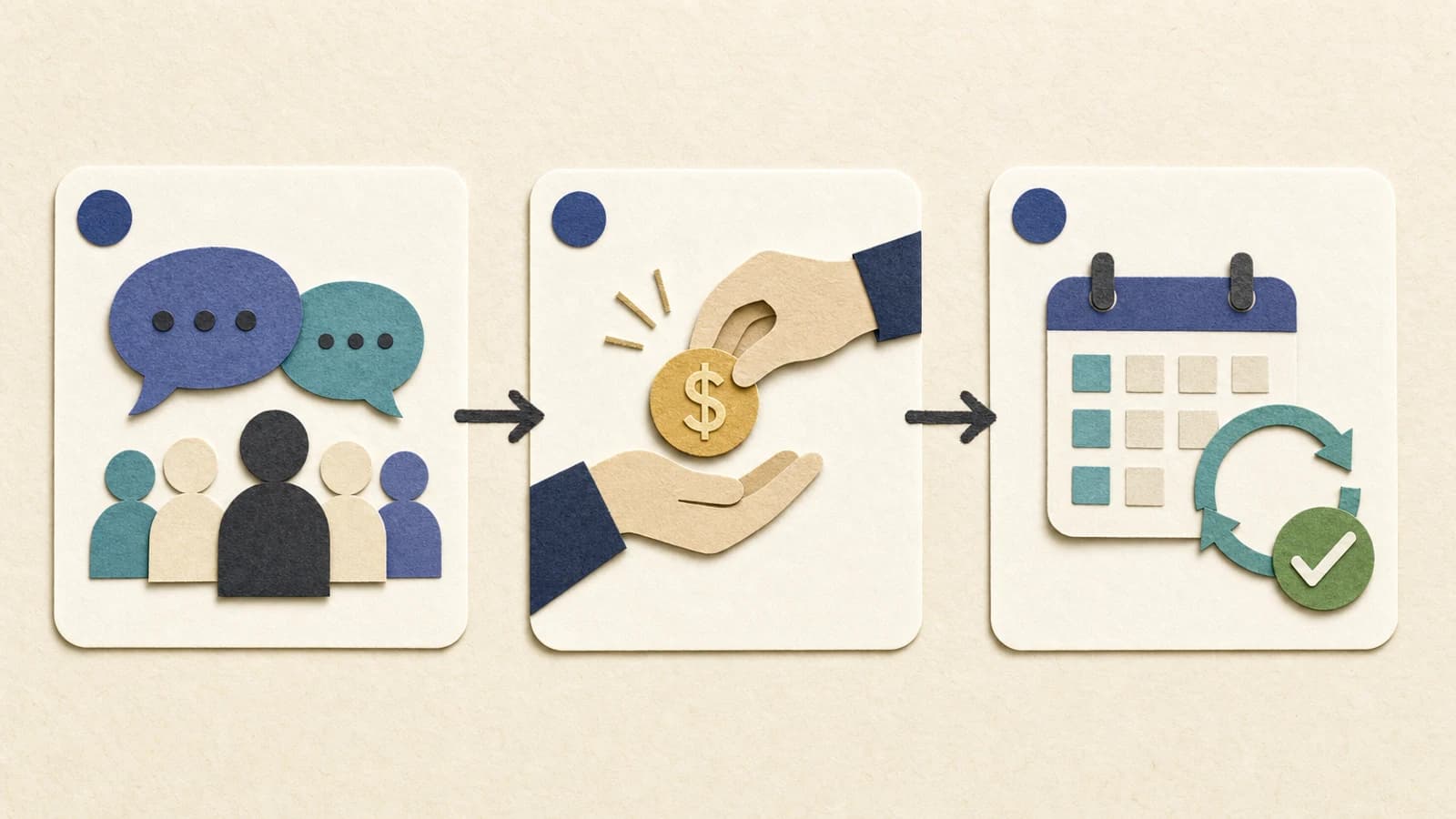
Before you start any of these, run the idea through a structured idea validation process. I built Preuve to do this in 60 seconds. You can scan your creator economy idea free to check competitive density, market demand, and timing catalysts before you commit.
Can You Build a Creator Economy Startup as a Solo Founder?
Several of these ideas are solo-buildable. The niche creator intelligence platform can start as a one-person research newsletter. The AI disclosure compliance manager is a narrow SaaS with clear scope. The audience demand radar and content protection tools both have micro-SaaS margins above 40 percent and can distribute through the creator communities where your buyers already gather.
I would avoid the creator labor OS and creator financial stack as a solo founder. Two-sided marketplaces need critical mass on both sides before they work. Financial products carry licensing and regulatory overhead that is not a weekend problem.
For more solo-friendly ideas outside the creator economy, I wrote separate lists of micro SaaS ideas for solo founders and app startup ideas for 2026 that cover adjacent opportunities.
FAQ
What are the best creator economy startup ideas for 2026?
The strongest creator economy startup ideas for 2026 solve infrastructure problems, not content creation. The clearest opportunities are AI-powered deal desks for mid-tier creators, creator labor platforms starting with video editors, audience demand testing tools, content protection SaaS, niche creator intelligence products, and cross-platform revenue attribution. Each targets a real operational pain that existing tools like Patreon, Kajabi, and Stan Store do not address.
How big is the creator economy in 2026?
The global creator economy reached an estimated $314 billion in 2026, growing at roughly 23 percent annually (Precedence Research). More than 207 million creators are active worldwide. Brand partnership spending alone is projected to hit $44 billion in 2026. The North American market accounts for about $89 billion.
How do you validate a creator economy startup idea?
Validate a creator economy startup idea by proving willingness to pay before you build. Interview 20 creators in your target segment about the specific pain. Run a manual concierge version of the service and charge for it. If 5 to 10 creators pay for the manual version, the automated product has demand. If nobody pays for the promise, the software will not change that.
Can you build a creator economy startup as a solo founder?
Several creator economy startup ideas are solo-buildable in 2026. Niche creator intelligence products, AI disclosure compliance tools, audience demand testing tools, and content protection SaaS all have narrow scope, SaaS margins above 40 percent, and distribution through creator communities. Avoid two-sided marketplaces and financial services as a solo founder, since they require regulatory compliance or critical mass on both sides.
What creator economy problems are still unsolved in 2026?
The biggest unsolved problems in the creator economy are deal management for mid-tier creators who lack agents, content protection and IP enforcement, multi-platform revenue attribution, creator-specific financial services, and AI content disclosure compliance across different platform policies. Most existing tools focus on content creation and distribution. The operational infrastructure of a creator business remains largely manual.

Vincent
5 years in B2B growth, building Preuve AI in public. 82% of ideas it scores aren't ready, the point is finding out in 10 minutes, not 3 months.
Follow on X →
Building is expensive. Validation is free.
Run your idea through 10 AI agents before you write a line of code. Every claim source-linked.