Key takeaways
- Most "new" 2026 ideas are dead ideas with better timing: Companies that failed because a dependency did not exist yet, now revivable with a date you can point to. Online grocery (Webvan, 2001), EV battery swapping (Better Place, 2013), short premium video (Quibi, 2020), at-home diagnostics (Theranos).
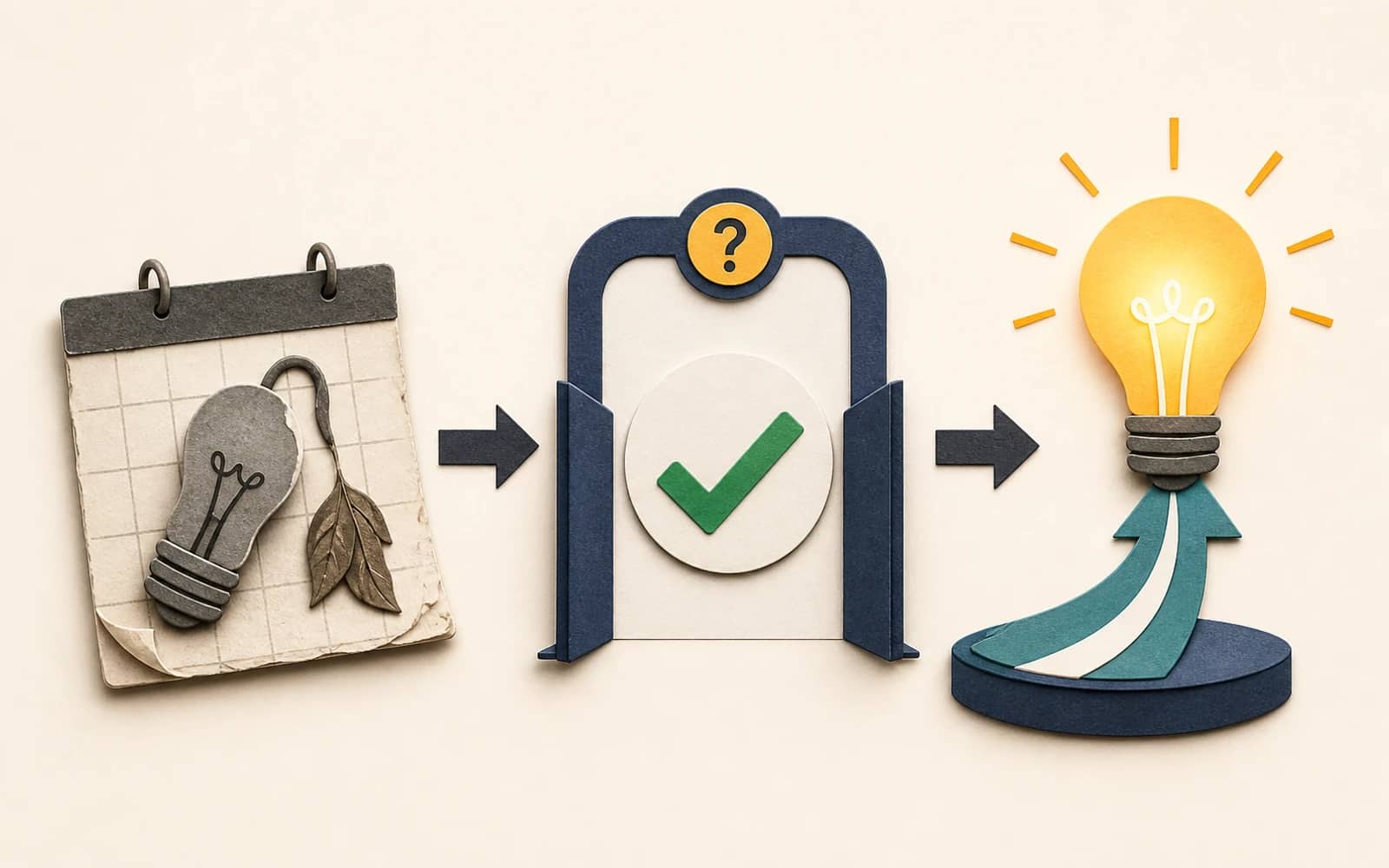
- A revivable idea has a dated catalyst That broke it then and fixed it now.
- A genuinely bad idea has neither a buyer nor a shift, So reviving it just repeats the loss.
- Outright no-go is rare: 6.4% of our 6,000+ pre-build scores come back no-go, 76.0% caution, 17.5% go. Caution means conditions apply, not that the concept is dead. Scored before the build, not counted after.
- Timing killed almost every company on this list, Not the concept.
Most dead startup ideas worth reviving in 2026 were right about the destination and wrong about the year. The first team built the rails and ran out of cash before the market arrived. You inherit those rails for free.
I pulled 15 famous failures from 2000 to 2020 and asked the same question of each: what dependency was missing the first time, and has it flipped by now? For every idea below you get what it was, why it died (year and company), what changed, and how I would validate it before writing a line of code.
Our own scoring says the same. Only 6.4% of the 6,000+ ideas we scored come back an outright no-go. 76.0% come back caution, 17.5% a go. A verdict on the idea, not a prediction. Very few ideas are structurally dead. Most are waiting on one specific thing, and naming it is the job.

Will your idea survive the market?
Preuve AI runs 10 agents against live market data and links every claim to a source. Free analysis in 60 seconds.
How Do I Tell a Revivable Idea From a Genuinely Bad One?
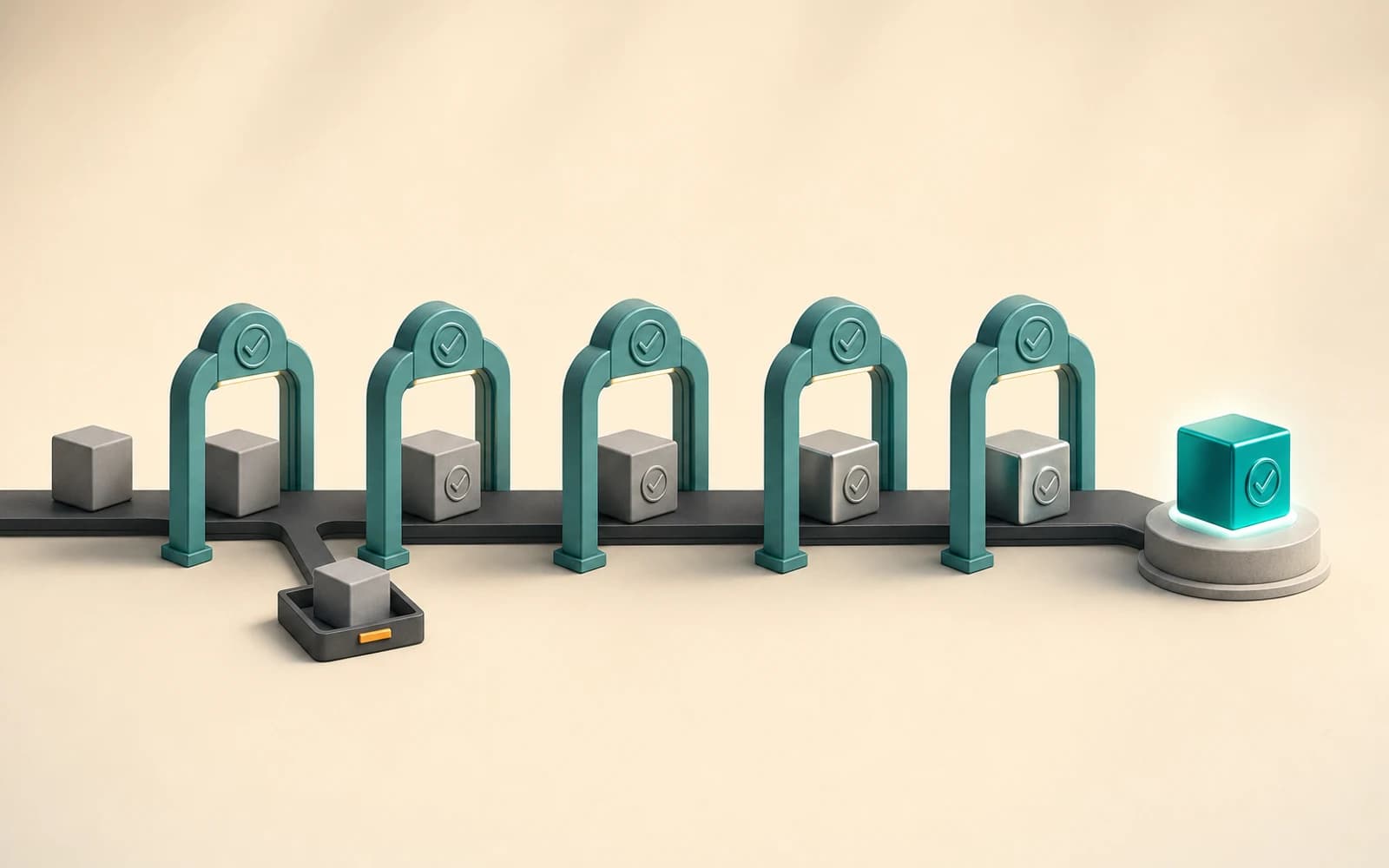
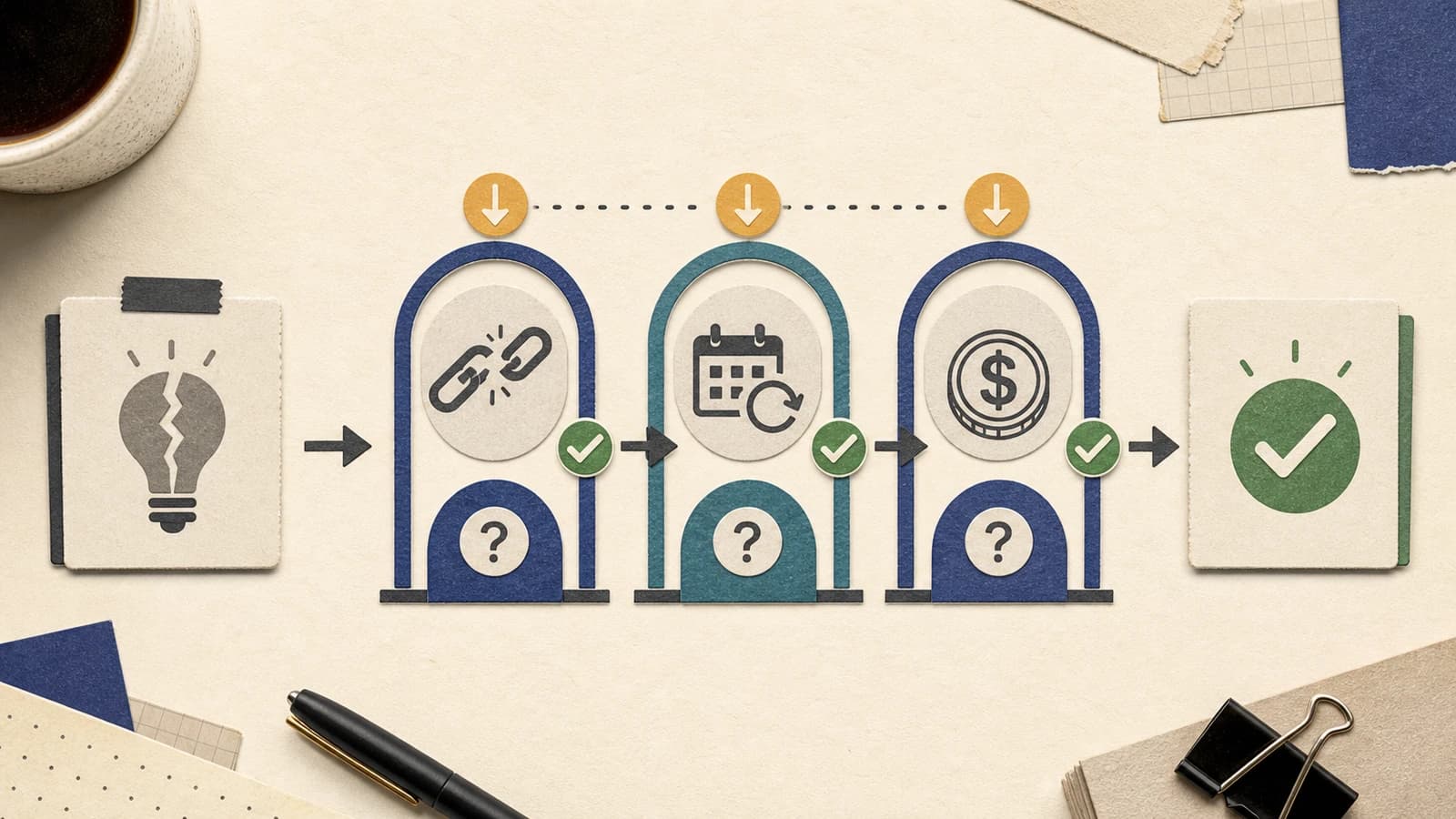
Not every dead idea is early. Some are just bad, and the whole skill is telling the two apart. I run every revival through a three-test filter, and an idea has to pass all three before I take it seriously.
- Name the killer. What single dependency broke the original company? If the answer is "people just did not want it," stop. A demand problem does not fix itself with time.
- Date the flip. Prove that dependency changed, with a year and a number. "AI got better" is not a flip. "On-device inference made a heads-up display useful and Meta sold millions of Ray-Ban units starting in 2023" is.
- Find the buyer. Someone must already pay to solve this today, even badly. A revived idea with a real shift but no paying buyer is a science project. Full process in how to validate a startup idea.
Commerce and Delivery: Ideas That Arrived Before the Rails
The dot-com era is full of e-commerce companies that were right about consumer behavior a decade early. They needed cheap internet, smartphones, payment rails and a gig workforce that did not exist yet, so they built all of it themselves and burned out doing it.
1. Online Grocery Delivery
What it was: Order groceries online, get them delivered same day from automated warehouses.
Why it died: Webvan went bankrupt in July 2001 after raising around $800 million and building custom robotic warehouses in cities with too few online shoppers to fill them. The demand was real but a decade thin, and the fixed costs ate the company alive.
What changed by 2026: Smartphones put a store in every pocket, gig labor turned delivery into a variable cost, and micro-fulfillment robotics from the likes of Ocado made the warehouse math work. Instacart turned the same model into a public company.
How to validate it now: The open lane is a vertical, not general grocery. Test per-order unit economics in one dense category (specialty, ethnic, restaurant-supply) before you touch GMV. Webvan died on fixed cost, so prove a single zip code pays for itself first.
2. Instant Local Delivery
What it was: Anything you want in under an hour, from a DVD to a pint of ice cream, delivered by a courier.
Why it died: Kozmo.com folded in 2001 after raising roughly $280 million. It promised free one-hour delivery with no minimum order, which meant losing money on every candy bar. There was no smartphone, no dynamic routing and no gig fleet to share the cost.
What changed by 2026: GoPuff, DoorDash and Uber built out the dense courier networks and routing software Kozmo never had, and minimum-order thresholds plus delivery fees finally fixed the per-order economics that used to bleed on every candy bar.
How to validate it now: The unbundled wins are in narrow high-margin verticals (pharmacy, pet, auto parts) where speed is worth a real fee. Model the average order value and delivery density that turn each route profitable before you launch.
3. Direct-to-Consumer Pet Supplies
What it was: Sell pet food and supplies online, shipped to the door on a recurring basis.
Why it died: Pets.com IPO'd in February 2000 and liquidated nine months later. Shipping heavy bags of kibble cost more than the bags sold for, and customer acquisition (remember the sock puppet) outran any repeat revenue.
What changed by 2026: Chewy proved the exact model into a multi-billion-dollar business by nailing subscription retention and logistics. Pet humanization turned owners into high-LTV recurring buyers.
How to validate it now: Chewy owns commodity supplies, so the opening is a specialized niche (fresh or prescription diets, exotic pets, breed-specific health) with AI-personalized nutrition. Prove repeat purchase rate and LTV against acquisition cost in a small cohort first. CAC versus LTV is the exact number that killed Pets.com.
4. Online Fashion Retail
What it was: A global online fashion store with rich, interactive product browsing.
Why it died: Boo.com burned roughly $135 million in about 18 months and collapsed in 2000. Its heavy, animated site was unusable on the dial-up connections of the day, and most shoppers could not even load it.
What changed by 2026: Broadband, mobile and modern payments made rich online shopping ordinary. Shein and ASOS scaled the exact category into the tens of billions.
How to validate it now: Fashion e-commerce is crowded, so the wedge is a returns-proof niche: made-to-measure, AI fit prediction, or a community-driven micro-label. Boo died on bandwidth, but the silent killer in fashion is returns. Model the return rate before anything else.
Hardware and Wearables: Ideas That Needed Cheaper Silicon
Being early in hardware is brutal. The vision tends to be right, but the components cost too much and draw too much power, so the company runs out of runway waiting for the bill of materials to come down.
5. Consumer AR Glasses
What it was: Lightweight glasses with a heads-up display and a camera, controlled by voice.
Why it died: Google ended the consumer Glass Explorer program in 2015. It cost $1,500, looked alien, had a tiny battery and, worst of all, had no assistant smart enough to make a display in your eyeline useful. The privacy backlash finished it.
What changed by 2026: Meta sold millions of Ray-Ban smart glasses starting in 2023 and shipped a display version in 2025. On-device AI finally gave the glasses a reason to exist beyond novelty, mostly real-time translation and hands-free capture you actually reach for.
How to validate it now: The hardware is becoming a commodity, so build the AI software layer or a vertical use case (field technicians, surgeons, warehouse picking). Validate one job a user does ten times a day that the glasses make faster, because novelty wears off fast and a daily job usually does not.
6. Health Wearables
What it was: A wristband that tracks your steps and sleep, then nudges you toward better daily habits.
Why it died: Jawbone raised more than $900 million and liquidated in 2017. Its bands tracked steps and not much else, hardware quality was shaky, and the moment a phone and a $99 Fitbit did the same thing, a step-counter had no reason to exist.
What changed by 2026: Oura, Whoop and the Apple Watch moved wearables from step-counting to real physiology: recovery, blood oxygen, atrial fibrillation, cycle tracking. The sensors got cheap enough that the data finally turned clinically credible.
How to validate it now: Generic activity tracking is mostly dead weight now that every phone does it. The opening tends to be a condition-specific or insurance-reimbursed wearable (diabetes, cardiac, menopause, elder care). Validate whether a clinician or payer will pay for the data, not whether a consumer thinks it is cool.
7. Personal Electric Mobility
What it was: A self-balancing personal vehicle meant to replace short car and walking trips in cities.
Why it died: The Segway launched in 2001 to enormous hype and never sold at scale, with production ending in 2020. It cost around $5,000 and had nowhere legal to ride, and underneath all that it was solving a trip nobody was desperate to fix in the first place.
What changed by 2026: Cheap lithium batteries and smartphone-unlocked shared fleets turned the same trip into a real market. Bird and Lime put e-scooters on every corner, and cities rewrote the rules to allow them.
How to validate it now: Micromobility lives or dies on regulation and unit economics per vehicle, not on the gadget. Validate the local legal status and the cost-per-ride-to-payback in a single city before you scale to a second one.
Media: Ideas That Lost to One Missing Behavior
Some media ideas were not too early on technology. They were too early on a habit the audience had not formed yet, or they fought a platform shift instead of riding it.
8. Short-Form Video
What it was: Six-second looping videos, easy to create and endlessly scrollable.
Why it died: Twitter shut Vine down in January 2017. It had the format and the culture but never built creator monetization, so its biggest stars walked to YouTube and Instagram, and Twitter starved it of investment.
What changed by 2026: TikTok proved short-form video is the dominant consumer format on earth, with a recommendation engine and a creator economy Vine never had. The behavior Vine bet on became the default.
How to validate it now: You are not going to out-TikTok TikTok head-on, so do not try. The opening is a vertical or creator-tooling play (short video for a specific industry, AI editing, niche communities). Validate a distribution edge that does not depend on beating the incumbent feed.
9. Short Premium Mobile Video
What it was: Hollywood-quality shows in ten-minute episodes, made for the phone, behind a subscription.
Why it died: Quibi launched in April 2020, raised $1.75 billion, and shut down within eight months. It priced like Netflix with no way to share a clip, launched straight into the pandemic, and bet that people wanted expensive scripted drama in short bursts on a phone.
What changed by 2026: Vertical micro-drama apps like ReelShort and DramaBox proved the appetite for short premium episodes, pulling in hundreds of millions of dollars in 2024 and 2025, with cheap melodrama and pay-per-episode unlocks instead of prestige TV economics.
How to validate it now: Quibi died on content cost and a broken price model. Validate the cost per episode and the unlock economics on a tiny slate before you commission anything. The format itself works fine, as the micro-drama apps keep showing; what sank Quibi was paying Hollywood prices to prove a point it did not need to.

Skip weeks of manual research
Get complete market research, sourced proof, competitor map, and pricing data for your idea instantly.
Marketplaces: Right Category, Wrong Moment
Marketplaces are brutal because they need both sides at once and they leak. A few famous ones had the right category and died on logistics, trust or retention before the tooling caught up.
10. Online Used-Car Marketplace
What it was: Buy and sell used cars entirely online, with inspection and home delivery wrapped around a no-haggle price.
Why it died: Beepi shut down in 2017 after raising around $150 million. The inspection and logistics costs alone were enormous before you even counted the inventory sitting on its books, and the company spent faster than it could build the trust and scale the model needed.
What changed by 2026: Carvana proved buying a car online is normal, surviving its own near-bankruptcy in 2022 and 2023 to come out the other side. The online inspection and financing stack that Beepi had to invent is mature now, delivery included.
How to validate it now: The opening is a niche (classics, EVs, fleet remarketing) or an AI layer on top (instant inspection, pricing, fraud detection). Validate the cost per transaction including logistics, because Beepi never got that line to work.
11. Home-Services Marketplace
What it was: Book a vetted home cleaner or handyman on demand through an app.
Why it died: Homejoy closed in 2015. It leaked badly, customers and cleaners met once and then took the relationship off-platform, and a wave of worker-classification lawsuits made the gig model legally radioactive.
What changed by 2026: Worker-classification rules are clearer now, the payment and scheduling tooling is mature, and buyers are long used to booking services in an app. The leakage problem, though, is still real and still the thing to beat.
How to validate it now: In practice this one comes down to solving disintermediation before anything else. Validate repeat-booking retention and platform leakage in a single market before you expand. A home-services marketplace that cannot keep its own transactions on-platform is Homejoy again.
Energy and Deep Tech: Ideas That Beat the Cost Curve
Capital-intensive ideas can be correct and still bankrupt their founders, because they need a cost curve, a subsidy or a standard that has not arrived. When it does arrive, the same idea becomes investable overnight.
12. EV Battery Swapping
What it was: Swap a depleted EV battery for a charged one in minutes at a station, instead of waiting to charge.
Why it died: Better Place went bankrupt in 2013 after raising about $850 million. It needed automakers to standardize on its battery and a network of stations before any EVs existed to use them, and it ran out of money building both at once.
What changed by 2026: EVs are mainstream, and NIO runs more than 3,800 battery-swap stations in China, with CATL pushing standardized swappable packs. The cars and the standard that Better Place lacked now exist.
How to validate it now: Swapping works where vehicles are uniform and run all day, think delivery scooters or taxi fleets that never really stop. Validate a closed fleet with one battery standard before you dream about consumer cars. Better Place died on standardization, so start where the standard is yours to set.
13. Solar Manufacturing
What it was: Manufacture novel solar panels at scale to undercut conventional silicon.
Why it died: Solyndra went bankrupt in 2011 after a $535 million federal loan guarantee. Its specialized tube design was expensive to make, and the price of conventional silicon panels collapsed faster than Solyndra could scale, erasing its whole reason to exist.
What changed by 2026: Solar module costs have fallen roughly 90% since then, and policy tailwinds like the Inflation Reduction Act reshaped the economics of domestic clean-energy manufacturing.
How to validate it now: Fighting commodity silicon on price is the exact mistake Solyndra made, so do not repeat it. The opening is usually a format incumbents ignore (building-integrated, flexible, agrivoltaics) or the software and financing layer on top. Validate cost-per-watt against the cheapest panel on the market before you build a factory.
The Ideas a Scandal and a Graph Poisoned
Two more, because they fail in ways the others do not. One was buried by a fraud rather than by physics, and the other was just too early for the network it needed to work.
14. At-Home Blood Diagnostics
What it was: Run a broad panel of blood tests from a tiny sample, at home or in a pharmacy, without a traditional lab draw.
Why it died: Theranos collapsed in fraud, and its founder was convicted. The damage was not that the goal was impossible. It was that one company faked the results and poisoned investor and regulator trust in the entire category for years.
What changed by 2026: Legitimate microsampling hardware from companies like Tasso made small-volume collection real, and COVID normalized at-home testing for tens of millions of people while lab-on-chip techniques kept advancing underneath. The category is slowly recovering on honest science.
How to validate it now: Trust and regulation are the whole game here, not marketing. Validate a clear regulatory and clinical-validation path with real published accuracy data before you make a single health claim. The shortcut that Theranos took is the one thing you can never repeat.
15. Interest-Graph Social Networking
What it was: An early social network for connecting with friends and people who shared your interests.
Why it died: Friendster peaked around 2003 and lost the market to MySpace and then Facebook before pivoting to gaming in 2011. Its servers buckled under the growth and the whole experience turned slow, and it had no defensible network effect to fall back on once a faster rival showed up.
What changed by 2026: Infrastructure is no longer the constraint, and the giant general-purpose networks are fragmenting. People are drifting back to smaller interest-based and private communities, which is the niche Friendster was reaching for too early.
How to validate it now: A general social network in 2026 just means fighting Facebook, TikTok and a dozen others at once, which is not really a startup plan. The opening is a tight interest graph or private community for one passionate group. Validate retention and network density inside a single niche before you add a second one, because social products die from churn long after a clean launch.
Why Dead Startup Ideas Are the Best 2026 Ideas
Chasing novelty is overrated anyway. A genuinely original idea has no precedent, so there is no proof anyone wants it and no map of how it breaks, whereas a revived idea comes with a full post-mortem already written for you. Someone spent tens or hundreds of millions of dollars learning exactly where the model snaps, and you get that lesson as a gift.
The dot-com graveyard is the cleanest example. Webvan, Pets.com, Kozmo and Boo.com all looked like dumb ideas in 2001 and obvious businesses ten years later. The concepts never changed, the infrastructure did. Broadband and smartphones arrived, gig labor scaled to fill the gap, and warehouse robotics finally got cheap enough to pencil out. The pattern repeats every cycle: a category dies, the missing dependency arrives a few years late, and a new company collects the market the pioneer paid to prove.
There is some hard data behind this, not just my hunch. Bill Gross, who founded Idealab and incubated more than 100 companies, ran the numbers on 200 startups and found timing mattered more than the idea, the team or the funding.
"Timing accounted for 42 percent of the difference between success and failure."
Gross ran that analysis on real companies, and four of the failures he singled out, Webvan, Kozmo, Pets.com and Friendster, are on this list. Timing, not the concept, is what killed them, which is exactly why the timing is the thing you have to re-prove before you build.
How Do I Validate a Revived Idea Before I Build?
A revived idea is more dangerous than a new one, because the post-mortem makes you overconfident. You know why it failed, so you assume you have solved it. Before I would build any idea on this page, I run it back through the same checklist.
- Name the killer. Write down the single dependency that broke the original company. If you cannot, you do not understand the failure yet.
- Date the flip. Point to the year and the number that prove the dependency changed. No date means no flip.
- Find the paying buyer. Confirm someone spends money on this problem today, even on a worse solution.
- Count the revivalists. If a famous failure had an obvious shift, ten other founders see it too. Check who already raised on this exact thesis.
- Re-derive the unit economics. The number that killed the first company (CAC, cost-per-delivery, cost-per-watt) is the number you have to win on now.

That last pair is where most revival founders fool themselves. The shift is real, but plenty of other founders spotted it too, and the metric that killed the first company has not moved. I dug into the most common one in why most startups fail, and if you want fresh ideas instead of revivals, the 2026 startup ideas list and the AI agent startup ideas cover the net-new categories.
This is the entire reason I built Preuve AI. Run a revived idea through my AI idea validation, and it checks the timing thesis, competitor density, buyer demand and the obvious failure modes against 60+ live sources, then tells you whether the shift actually holds or you are about to repeat someone else's loss. Scan your idea free and see if the timing is real before you build. If you want to compare tools first, I keep an honest list of the best startup validation tools.
FAQ
What startup ideas failed but came back?
Online grocery killed Webvan in 2001 and now runs through Instacart and Ocado. Direct-to-consumer pet supplies sank Pets.com in 2000 and built Chewy into a multi-billion-dollar business. Short-form video shut down Vine in 2017, then TikTok proved the format. EV battery swapping bankrupted Better Place in 2013, and NIO now runs more than 3,800 swap stations in China. The idea was rarely the problem. The timing was.
Why do early startup ideas fail?
Early startup ideas fail because a dependency they need does not exist yet: cheap smartphones, gig-labor networks, broadband, on-device AI, a regulatory ruling or a behavior the market has not adopted. The company burns its capital building the missing rail itself and runs out of money before the rail arrives. A few years later a second-time founder inherits the rail for free.
Are old startup ideas worth pursuing in 2026?
Old startup ideas are worth pursuing when a specific dependency that broke them has since flipped. A revivable idea has a dated catalyst, a cost curve, a new platform or a behavior shift, that explains both the original failure and the current opening. If nothing structural changed, the idea is not early. It is just bad, and reviving it repeats the loss.
How do I tell a revivable startup idea from a genuinely bad one?
Run three tests. First, name the dependency that killed it the first time. Second, prove that dependency flipped with a date and a number. Third, confirm a buyer already pays for the problem today. If you cannot fill in all three, the idea is not too early, it is wrong, and the failure was about the concept, not the calendar.
What is the most revived startup idea?
Online grocery and on-demand delivery are the most revived startup ideas. Webvan and Kozmo.com both died in 2001 after burning more than a billion dollars combined, and the same model now runs through Instacart, DoorDash, GoPuff and Ocado. Smartphones, gig labor and warehouse automation supplied the rails that the original founders had to build by hand.
Cite this page
Last updated September 20, 2026
Forat, V. (2026, September 20). 15 Dead Startup Ideas Worth Reviving in 2026 (and Why They Failed the First Time). Preuve AI. https://preuve.ai/blog/dead-startup-ideas-worth-reviving-2026
Forat, Vincent. “15 Dead Startup Ideas Worth Reviving in 2026 (and Why They Failed the First Time).” Preuve AI, 20 Sept. 2026, preuve.ai/blog/dead-startup-ideas-worth-reviving-2026.
Forat, Vincent. “15 Dead Startup Ideas Worth Reviving in 2026 (and Why They Failed the First Time).” Preuve AI. September 20, 2026. https://preuve.ai/blog/dead-startup-ideas-worth-reviving-2026.
@misc{forat2026-dead-startup-ideas-worth-reviving-2026,
  author = {Forat, Vincent},
  title = {{15 Dead Startup Ideas Worth Reviving in 2026 (and Why They Failed the First Time)}},
  howpublished = {Preuve AI},
  year = {2026},
  month = sep,
  url = {https://preuve.ai/blog/dead-startup-ideas-worth-reviving-2026},
  note = {Last updated September 20, 2026}
}
Vincent
5 years in B2B growth, building Preuve AI in public. 82% of ideas it scores aren't ready, the point is finding out in 10 minutes, not 3 months.
Follow on X →
Building is expensive. Validation is free.
Run your idea through 10 AI agents before you write a line of code. Every claim source-linked.