
Key takeaways
- No single best AI tool: A startup is really nine different jobs, so the right tool is whichever job is in front of you this week.
- One pick per job: Preuve AI to validate the idea before you build, then Cursor to code, ChatGPT to write, Ahrefs for SEO, Canva for design, Notion to run things, HubSpot to sell, Zapier to automate and PostHog for analytics.
- Start with validation: A lean stack runs under $60 a month.
Every "best AI tools for startups" list I read has the same problem: 25 tools dumped in a row, with no hint which ones matter or what to use first. That is a shopping list, not a stack you can run. Running a startup is really nine different jobs, and the tool that matters is whichever job is in front of you this week.
So I built this the way I actually work: one job at a time, my top pick for each, the strong alternatives, and real prices I checked in June 2026. The most important job is the one most lists skip: validate the idea before you build it.

Will your idea survive the market?
Preuve AI runs 10 agents against live market data and links every claim to a source. Free analysis in 60 seconds.
The 9 Startup Jobs and My Pick for Each
Here is the whole stack at a glance before the detail. Row order follows the order you actually hit these jobs, from idea to scale. "My pick" is editorial judgment, not a scored percentage. Prices are checked as of June 2026 and are starting points, since this category changes fast.
| Job | My pick | Best for | Pricing | Strong alternatives |
|---|---|---|---|---|
| 1. Validate the idea | Preuve AI | Source-linked viability verdict before you build | Free / $59 | DimeADozen, ValidatorAI |
| 2. Build the product | Cursor | Writing real code with AI in the editor | Free / $20 mo | Claude Code, GitHub Copilot, Lovable |
| 3. Think and write | ChatGPT | Drafting, reasoning, structuring decisions | Free / $20 mo | Claude, Perplexity |
| 4. Get found | Ahrefs | SEO, keyword research, content strategy | Paid / limited free tools | Writesonic, Jasper |
| 5. Design and brand | Canva | Fast, decent design without a designer | Free / paid | Figma, Ideogram |
| 6. Run the company | Notion | Docs, wiki, lightweight project tracking | Free / paid | Linear, Asana |
| 7. Sell and support | HubSpot | CRM plus support as you grow past founder-led sales | Free CRM / paid | Attio, Intercom |
| 8. Automate busywork | Zapier | Connecting tools without writing glue code | Free / paid | Make, n8n |
| 9. Understand users | PostHog | Product analytics, funnels, session replay | Free tier / usage | Mixpanel |
 Preuve AI
 Cursor
 ChatGPT
 Ahrefs
 Canva
Canva Notion
 HubSpot
 Zapier
 PostHog
Job 1: Validate the Idea Before You Build It
This is the job almost every "best tools" list treats as optional, and it is the one that decides whether the rest of your stack is worth paying for. Building has never been cheaper. AI code editors and no-code builders mean you can ship an MVP over a weekend. When everyone can build, the bottleneck stops being "can you make it?" and becomes "should you?". Around 43% of startups fail from poor product-market fit. The code was usually fine. They built something nobody wanted.
My pick: Preuve AI
What it does: Runs 10 AI agents across 60+ live data sources per scan (Reddit, Hacker News, LinkedIn, Product Hunt, Google Trends, regulatory filings, market research firms, funding databases) and returns a 0-to-100 viability score where every claim links to the source it came from. It maps real competitors with pricing, sizes the market, surfaces demand and pain signals, names your blind spots and gives 3 pivot directions.
Why I would use it first: A validation result you cannot verify is just another opinion. The whole point is that you can click through to the Reddit thread, the competitor's pricing page, the trend chart. That was the first design decision I made and the one I am most stubborn about.
Pricing
- Reality Check: free (viability score, market overview, competitor previews, blockers)
- Founder Report: $59 one-time (full analysis, up to 15 competitors, 3 pivots, bank-ready plan)
- Packs: 2 reports for $89, 5 for $199
Strengths
- Every finding links to a source you can open and verify, not analysis you have to trust on faith.
- Live research at scan time, not training data. In Preuve's 2026 benchmark of 6,000+ analyzed ideas, around 8 out of 10 score below the launch-ready threshold, so it is honest by design.
- Names real competitors with pricing and weak spots, instead of "you will face competition".
- One-time $59 per idea with a free scan first, so it does not become another subscription.
Limitations
- Pay-per-idea rather than a flat monthly plan. Packs soften it, but heavy serial founders may want a subscription model.
- A real scan takes about 60 seconds for the free check and longer for the full report, because live research is not instant.
- The free tier is a filter, not the full playbook. The fix list lives behind the $59 report.
Verdict
Start here with the free scan before you touch any other tool on this list. If you want the full field, I tested the alternatives in my ranking of 9 AI idea validation tools, and you can see the data sources behind every report. Need an idea to validate? Start with my list of startup ideas for 2026.
Job 2: Build the Product
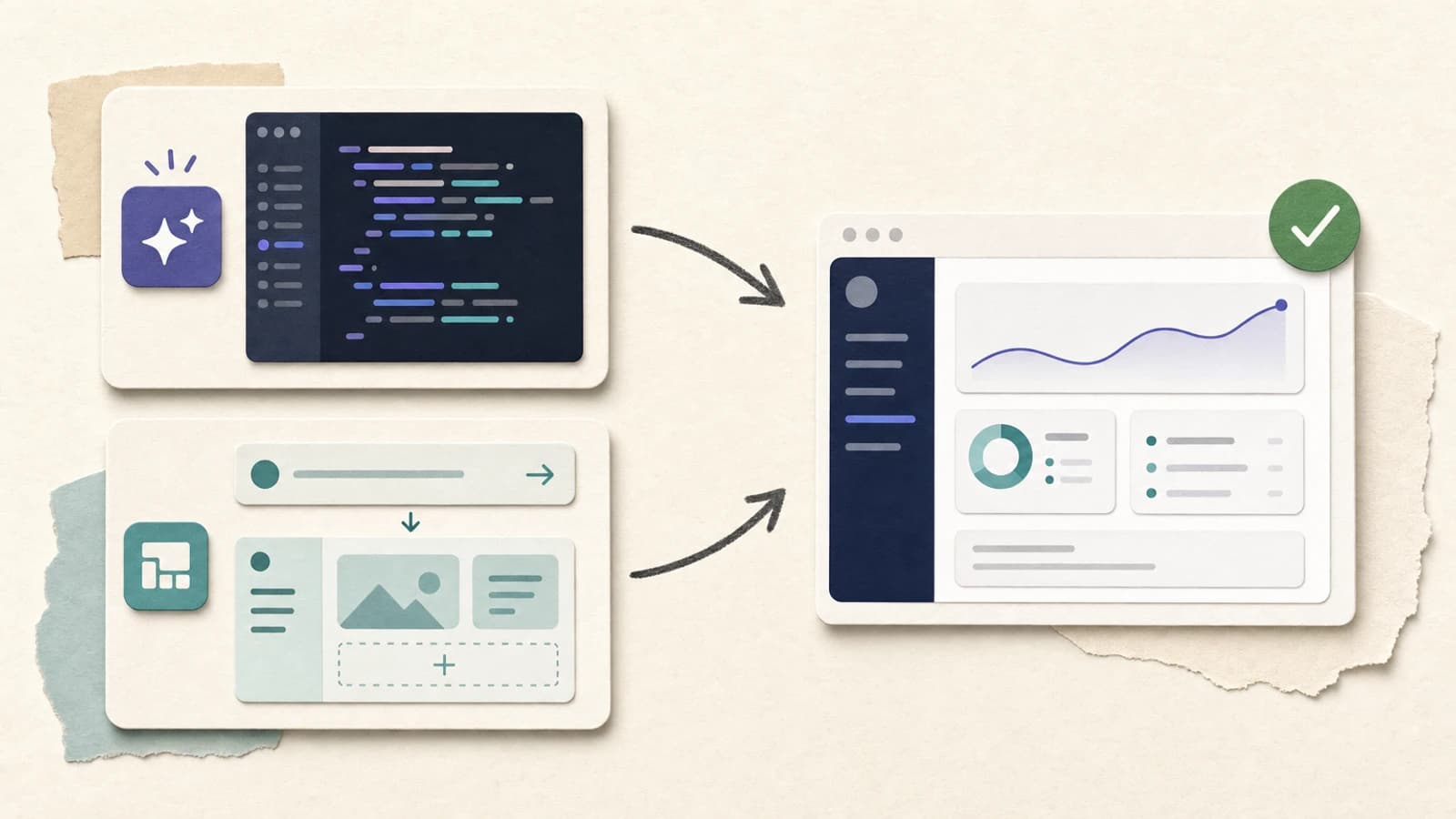
This is the fastest-moving category in the whole stack, and the one where last year's list is already wrong. Two paths split here: AI in a real code editor for people who write code, and no-code app builders for people who do not.
My pick: Cursor
What it does: A code editor built on VS Code with AI woven through it: multi-file edits, inline changes, and full awareness of your codebase. You can route requests to frontier models from Anthropic and OpenAI. It is the tool most cited for serious development across the "best tools for startups" lists I checked.
Why it is my pick in 2026: Cursor now ships its own model, Composer 2.5, and it changed the math. Artificial Analysis ranks it third on their Coding Agent Index, behind only the highest-effort Claude Opus 4.7 and GPT-5.5 runs that cost roughly 10 to 60 times more per task. It is also one of the fastest agents tested, at about $0.07 per task on standard and $0.44 on Fast. For a founder shipping on a budget, near-frontier code at a tenth of the cost is the whole game.
Pricing: Hobby tier is free. Pro is $20 a month. Teams is $40 per user a month. The free tier is enough to feel whether it fits how you work.
Strong alternatives: Claude Code is the agentic command-line tool I reach for on larger, multi-file changes. GitHub Copilot has the widest reach, lives in nearly every editor, and starts at $10 a month, with a free tier capped at 2,000 completions and 50 chat requests a month. For non-coders, Lovable, Vercel v0, Bolt.new and Replit turn a plain-English description into a working web app, which is exactly how a weekend MVP gets built now.
Verdict: If you write code, Cursor is the default. If you do not, start with Lovable or Bolt to get a clickable prototype, then validate the idea behind it before you pour more weekends in. Building fast only helps if you are building the right thing.
Job 3: Think and Write
The general-purpose assistants. I end up in one of these for almost everything, from drafting copy to talking through a decision I am stuck on.
My pick: ChatGPT (with Claude alongside)
What it does: ChatGPT is the better generalist, with the wider ecosystem, image generation and the larger surface of integrations. Claude tends to be stronger at long-document reasoning, careful writing and reading code. Both are $20 a month, both have free tiers, and most founders I know keep both open and switch by task. Add Perplexity when you want answers with live web citations rather than a chat.
One warning, because it matters. Do not use these as your validation tool. Ask ChatGPT or Claude to size a market or list competitors and they will answer with full confidence from training data, inventing numbers and company names that sound right and are not. They are brilliant for shaping the question, and unreliable on the facts behind it. Anything factual, verify against a real source.
Job 4: Get Found
A great product that nobody can find never gets its chance. This job is SEO, content, and the keyword research that shows you what your future customers are actually typing.
My pick: Ahrefs
What it does: The deepest data on what people search, how hard each keyword is to rank for, and what your competitors already rank for. This is the tool I lean on most for the Preuve blog. It is paid, with a limited set of free Webmaster Tools for your own site. Writesonic and Jasper are the AI-writing alternatives for turning that research into drafts, though I would not publish their output without a heavy edit in your own voice.
Verdict: Ahrefs is overkill on day one and essential by month three. Until then, the free version of its keyword tools plus a generalist AI for drafts will do. Whatever you write, write it from real founder experience. Generic AI content ranks for nothing in 2026.

Skip weeks of manual research
Get complete market research, sourced proof, competitor map, and pricing data for your idea instantly.
Job 5: Design and Brand
Most early startups cannot afford a designer and do not need one yet. What they need is good-enough: a logo, a landing page that does not look broken, and the odd social image or pitch deck.
My pick: Canva
What it does: Templates plus AI generation for nearly every visual a startup needs, from a free tier up. It gets a non-designer to "good enough" fast, which is the right bar before you have revenue. Figma is the alternative once you have a real product to design and someone to design it, and its free tier is generous. For logos and original images, Ideogram handles text in images better than most, and Midjourney wins on raw quality.
Verdict: Canva for speed now, Figma when design becomes a real job. Do not spend two weeks on a logo for an idea you have not validated.

Job 6: Run the Company
Docs, notes, a company wiki, somewhere to track what needs doing. It is the least glamorous job here, and the one that quietly falls apart the moment you neglect it.
My pick: Notion
What it does: One flexible workspace for documents, a company wiki, and lightweight project tracking, with built-in AI for drafting and summarizing. The free tier is enough for a solo founder or tiny team, and paid plans start in the region of $10 a user a month. Linear is the alternative the moment engineering becomes the bottleneck, since it is the cleanest issue tracker built, with a free tier and paid plans from roughly $8 a user. Asana suits less technical teams.
Verdict: Notion until your engineers start complaining, then add Linear for the actual development work and keep Notion for everything else.
Job 7: Sell and Support Customers
In the early days you sell by hand and support over email, and you should. There is no point buying a CRM to manage five customers, but the moment you cannot remember who said what to whom, it is time.
My pick: HubSpot
What it does: A genuinely free CRM core for contacts, deals and tasks, with AI features bundled in and paid tiers when you outgrow it. The free tier is the right answer for most early startups. Attio is the modern, flexible alternative a lot of newer teams prefer. For support specifically, Intercom and its Fin AI agent resolve a chunk of tickets automatically, the paid step up once you have real ticket volume, not a day-one buy.

Verdict: Free HubSpot CRM until you have enough deals to justify paying. Do not buy sales software before you have proven anyone wants to buy. That, again, is a validation question.
Job 8: Automate the Busywork
The unglamorous job that buys back hours. Things like moving a form submission into a sheet or posting a Stripe sale to Slack, the kind of plumbing that should never need a developer.
My pick: Zapier
What it does: Connects thousands of apps with no code, now with AI to help build the workflows. The free tier covers around 100 tasks a month, which is plenty to start. Make is cheaper at scale and more visual for complex, branching flows. n8n is the open-source, self-hostable choice if you are technical and want to own your data and your bill.

Verdict: Zapier to start because it is the easiest. Move to Make or n8n when your automations get complex enough that Zapier's pricing starts to sting.
Job 9: Understand Your Users
Once people use your product, you need to see what they actually do, not what you hope they do. In my experience the most useful signal is usually the feature everyone quietly ignores.
My pick: PostHog
What it does: Product analytics, funnels, session replay, feature flags and experiments in one tool, with a free tier that covers up to a million events a month and usage-based pricing after that. It is what I use on Preuve. Mixpanel is the established alternative if you want analytics without the wider product suite.
Verdict: PostHog, and the generous free tier means you can wire it in from day one. The earlier you see real behavior, the faster you learn what to fix.
What Is the Minimum AI Tool Stack for a New Startup?
If you are at zero today, you do not need nine tools. You need four, and three of them are free or nearly free:
- A validation scan to confirm the idea is worth building. Free to start, $59 for the full picture.
- One generalist AI (ChatGPT or Claude) for thinking and writing. $20 a month.
- One way to build (Cursor if you code, Lovable if you do not). Free to $20 a month.
- One free analytics tool (PostHog) wired in from the first user.
That is under $60 a month and it covers idea to early traction. Everything else on this list is something you add when a specific job grows big enough to need its own tool, not before. Honestly, buying the whole stack to build something nobody asked for costs far more than any single wrong pick ever will.
So start at job one. The free Reality Check tells you whether your idea has obvious fatal flaws before you spend a cent on the other eight jobs. If you are still shaping the idea, my guide on how to validate a startup idea walks through the process, and the comparison hub goes deeper on the validation tools specifically.
FAQ
What are the best AI tools for startups in 2026?
There is no single best tool, because a startup is not one job. The honest answer is one tool per job: Preuve AI to validate the idea before you build, Cursor to write code, ChatGPT and Claude to think and write, Ahrefs for SEO and marketing research, Canva for design, Notion to run the company, HubSpot for sales and support, Zapier to automate busywork, and PostHog for product analytics. Start with validation. It is the one step that decides whether the other eight tools are worth paying for at all.
What AI tools do startup founders actually need on a budget?
A working startup stack costs less than most people expect. A free idea validation scan, ChatGPT or Claude at $20 a month, Cursor at $20 a month, plus the free tiers of Notion, Canva, Zapier and PostHog will carry you from idea to early users. You can run the core of a startup for under $60 a month in 2026. Add paid tiers only when a free tier actually runs out.
What free AI tools can startups use in 2026?
Plenty, and the free tiers are generous. Preuve AI has a free Reality Check that scores your idea's viability. ChatGPT, Claude and Perplexity all have free tiers. Notion, Canva, Zapier, PostHog, Linear, HubSpot CRM and Cursor's Hobby plan are all free to start. The smart move is to run on free tiers until one genuinely caps you, then pay only for that one tool.
Is ChatGPT or Claude better for startups?
Both, for different jobs. ChatGPT is the better generalist and has the wider tool ecosystem, image generation and a larger plugin surface. Claude tends to be stronger at long-document reasoning, careful writing and code analysis. They cost the same, $20 a month each. Most founders I know keep both open and switch by task rather than picking one. Neither should be your idea validation tool, because both generate market sizes and competitors from training data with no live sources behind them.
What is the best AI tool to validate a startup idea before building?
Preuve AI. It runs 10 AI agents across 60+ live sources per scan and returns a 0-to-100 viability score where every claim links back to the source it came from, so you can click through and check it. Most other tools score your idea from model training data with no sources. Validation is the one job you should not skip, because around 43% of startups fail from building something nobody wanted. The free scan tells you if the idea has obvious fatal flaws before you spend a cent on the rest of your stack.
How much does an AI startup tool stack cost per month in 2026?
A lean stack runs roughly $40 to $80 a month: ChatGPT or Claude at $20, Cursor at $20, and free tiers for the rest. A more complete stack with paid Notion, a marketing tool like Ahrefs, a CRM and analytics lands closer to $200 to $400 a month once you have revenue to justify it. Idea validation is a one-time $59 per idea rather than a subscription, and there is a free scan first. Start lean, upgrade only the tool that runs out of room.
Cite this page
Last updated June 5, 2026
Forat, V. (2026, June 5). Best AI Tools for Startups 2026: 9 Jobs, My Pick for Each. Preuve AI. https://preuve.ai/blog/best-ai-tools-for-startups-2026
Forat, Vincent. “Best AI Tools for Startups 2026: 9 Jobs, My Pick for Each.” Preuve AI, 5 June 2026, preuve.ai/blog/best-ai-tools-for-startups-2026.
Forat, Vincent. “Best AI Tools for Startups 2026: 9 Jobs, My Pick for Each.” Preuve AI. June 5, 2026. https://preuve.ai/blog/best-ai-tools-for-startups-2026.
@misc{forat2026-best-ai-tools-for-startups-2026,
  author = {Forat, Vincent},
  title = {{Best AI Tools for Startups 2026: 9 Jobs, My Pick for Each}},
  howpublished = {Preuve AI},
  year = {2026},
  month = jun,
  url = {https://preuve.ai/blog/best-ai-tools-for-startups-2026},
  note = {Last updated June 5, 2026}
}
Vincent
5 years in B2B growth, building Preuve AI in public. 82% of ideas it scores aren't ready, the point is finding out in 10 minutes, not 3 months.
Follow on X →
Building is expensive. Validation is free.
Run your idea through 10 AI agents before you write a line of code. Every claim source-linked.