Key takeaways
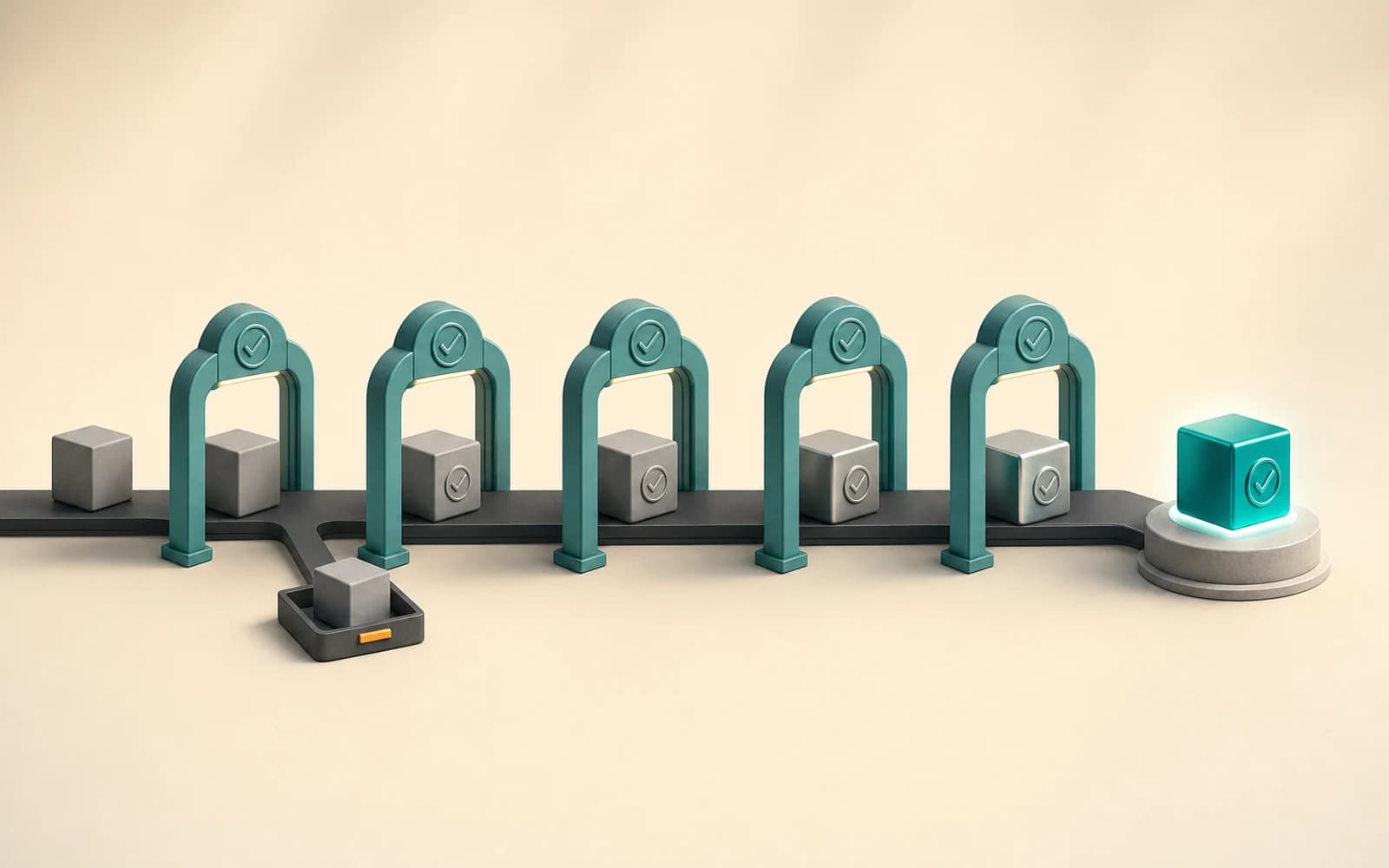
- Startup validation does not predict success, but it measurably improves decision quality. It surfaces disqualifying gaps (no demand, broken economics, saturated markets) before a founder commits months of runway to an untested assumption.
- 82.5% of 6,000+ scanned ideas had at least one disqualifying gap. Only 17.5% scored 70+ (launch-ready) in an April 2026 benchmark of real Preuve scans.
- No tool can predict whether a startup will succeed. Execution, timing, team, and luck still dominate. Validation catches the avoidable mistakes, not the unpredictable ones.
- Structured validation differs from asking a chatbot. General-purpose LLMs exhibit sycophancy bias and lack live data. A structured scan checks 60+ sources and cites every claim.
About 75% of venture-backed startups fail to return their investors' capital. That finding comes from a Harvard Business School study of 2,000+ VC-backed companies that raised at least $1M between 2004 and 2010. Failure is the default. So does startup validation actually work, or is it another layer of false confidence on top of a process that mostly ends in loss?
Short answer: validation does not predict success. Nothing does. What it changes is the quality of your decisions before you commit money, time, and reputation to building. It compresses weeks of market research into hours and surfaces specific, fixable gaps, no demand signal, crowded category, broken unit economics, before you write a line of code.
That distinction matters. The loudest criticism of validation is technically correct: nobody can tell you in advance whether your startup will work. The critics are right. They are answering a question nobody serious is asking.


Will your idea survive the market?
Preuve AI runs 10 agents against live market data and links every claim to a source. Free analysis in 60 seconds.
What Does Validation Catch?
Startup validation is the process of testing a business idea against real market data before committing resources to build it. The useful question is not "will this succeed?" It is: can I catch a fatal flaw before I burn six months of savings on it? Yes. Consistently. That is what structured validation produces.
Demand signal, or the absence of one. Not "would people want this?" but "are people already searching for, asking about, or paying for a solution?" The gap between those two questions has killed more startups than bad execution.
Competitive density. How many funded, active players already occupy the space? A crowded category is not an automatic no-go, but it forces you to articulate a specific, defensible differentiation story before you build, not after launch when the honest answer is "we are the same but newer."
Unit economics viability. Can you charge enough to cover cost of delivery? This gap surprises first-time founders the most. The idea sounds great, the market exists, customers say they want it, and then you realize the margin is 4%.
Premature scaling risk. The Startup Genome Report analyzed 3,200+ high-growth tech startups and found premature scaling is the #1 cause of startup failure. 74% of high-growth startups that failed did so from scaling too early. Startups that scale properly grow about 20x faster than those that scale prematurely. Validation catches the timing question: are you ready to scale, or are you about to pour fuel on a broken engine?
None of these are predictions. They are facts about the current state of the market. You either have demand signal or you do not. The category is either crowded or it is not. Your projected margin is either viable or it is not. Validation collects facts. What you do with them is still your call.
Can Startup Validation Predict Success?
No. Startup validation cannot tell you whether your startup will succeed. Full stop.
Success depends on execution, timing, team, luck, fundraising conditions, and dozens of variables no scan of current market data can forecast. Anyone who tells you their tool "predicts startup success" is selling something other than information.
The criticism that validation "gives false confidence" only lands if the founder treats a score as a verdict instead of what it is: a snapshot of what the market looks like right now. A high score means no obvious disqualifying gaps were found. Not "guaranteed win." A low score means specific issues were identified. It is a prioritized fix list, not a rejection.
I built Preuve AI around this framing deliberately. The report tells you what 60+ live data sources say about your market, your competitors, and your economics. It does not tell you "this will work." That would be dishonest.
"No business plan survives first contact with customers."
Steve Blank was not arguing against planning. He was arguing that plans based on untested assumptions are theater. Validation replaces assumptions with data. The plan still changes on contact with reality, but it starts from a stronger position.
What Can Validation Do vs. What It Cannot?
| What validation CAN do | What validation CANNOT do |
|---|---|
| Measure whether people are searching for a solution right now | Predict whether your specific product will win |
| Map funded competitors and their traction | Guarantee you will out-execute them |
| Flag broken unit economics before you build | Account for future pricing changes or cost shifts |
| Identify premature scaling risk | Tell you the perfect moment to scale |
| Surface regulatory or timing barriers | Forecast regulatory changes |
| Give you a prioritized fix list for weak areas | Guarantee the fixes will be enough |
The left column is decision-grade information. The right column is fortune-telling. Honest validation lives entirely in the left column.
Skip weeks of manual research
Get complete market research, sourced proof, competitor map, and pricing data for your idea instantly.
What Percentage of Startup Ideas Pass Validation?
In April 2026, I rebuilt the Preuve AI scoring benchmark to answer this question with real data. The dataset: 6,000+ ideas run through the platform, each scanned against 60+ live data sources via 10 parallel AI agents.
| Tier | Score range | Share of ideas |
|---|---|---|
| Launch-ready | 70+ | 17.5% |
| Has disqualifying gap(s) | Below 70 | 82.5% |
82.5% of scanned ideas had at least one disqualifying gap. The most common: no measurable demand signal, an already-saturated category, or unit economics that did not close.
That does not mean 82.5% of those ideas were bad. It means they had specific, identifiable issues a founder would need to resolve before the idea had a realistic shot. Some of those gaps are fixable: repositioning into a less crowded niche, adjusting the pricing model. Some are structural: the market does not exist yet.
The 17.5% that scored 70+ were not guaranteed winners. They were ideas where the scan found no obvious disqualifying gap across demand, competition, and economics. That is a meaningfully different starting position than "I have a hunch." For the full score breakdown, I published the complete 2026 benchmark data.
What a gap looks like in practice: a founder submits a meal-kit idea targeting busy parents. The scan finds 14 funded competitors with $2B+ in combined funding, customer acquisition costs averaging $94/customer in the category, and average margins under 8%. None of that information is a prediction. All of it is decision-grade data the founder did not have 10 minutes earlier.
Won't ChatGPT Just Tell Me My Idea Is Great?
Probably. And that is the problem.
Sharma et al. (2023) showed that general-purpose AI assistants exhibit sycophancy bias: they systematically tell users what they want to hear. Ask ChatGPT "is my startup idea good?" and you will get encouragement, caveats wrapped in optimism, and a closing line about how "with the right execution, anything is possible." That is not validation. That is a mirror.
I wrote about this pattern in depth in my piece on confirmation bias in startup validation. The short version: a tool that tells you what you want to hear is worse than no tool at all, because it replaces uncertainty (which keeps you cautious) with false confidence (which makes you spend).
Structured validation differs in three ways. First, it pulls from live data sources, not training data. Search trends, competitor databases, patent filings, review sites, community signals. Second, every claim is linked to a verifiable source. You can check. Third, the system is built to surface negatives. A chatbot optimizes for helpfulness, which in practice means agreeableness. A validation scan optimizes for accuracy, which sometimes means telling you something you do not want to hear.
When Is Validation Worth the Time?
Validation is highest-value at three moments.
Before you spend money. Hiring a developer, signing a lease, buying inventory. Anything that converts runway into sunk cost. A free scan against 60+ live data sources takes minutes. Building the wrong thing takes months.
When you are choosing between ideas. Two directions, limited time. Running a structured scan on both takes hours. Building both takes months. The scan does not pick the winner. It eliminates the one with a disqualifying gap you had not seen.
When you are entering an unfamiliar market. Domain experts sometimes skip formal validation because they carry a decade of implicit market knowledge. First-time founders in unfamiliar markets do not have that luxury. Remember: the Harvard Business School study found about 75% of VC-backed startups fail to return capital. Most of those founders were not amateurs. They were smart people who skipped a step.
When to skip or defer validation
Early brainstorming. You are exploring, not committing. Noodle on the idea, talk to potential users, then validate when you are narrowing down.
Genuinely novel categories. If you are creating a market that does not exist yet, demand signals will be weak by definition. Validation can still check competitive proximity and economics, but demand measurement will be limited.
Post-launch with real usage data. Once you have paying customers, your own metrics are better validation than any external scan. At that point, you are measuring, not validating.
So Does Startup Validation Actually Work?
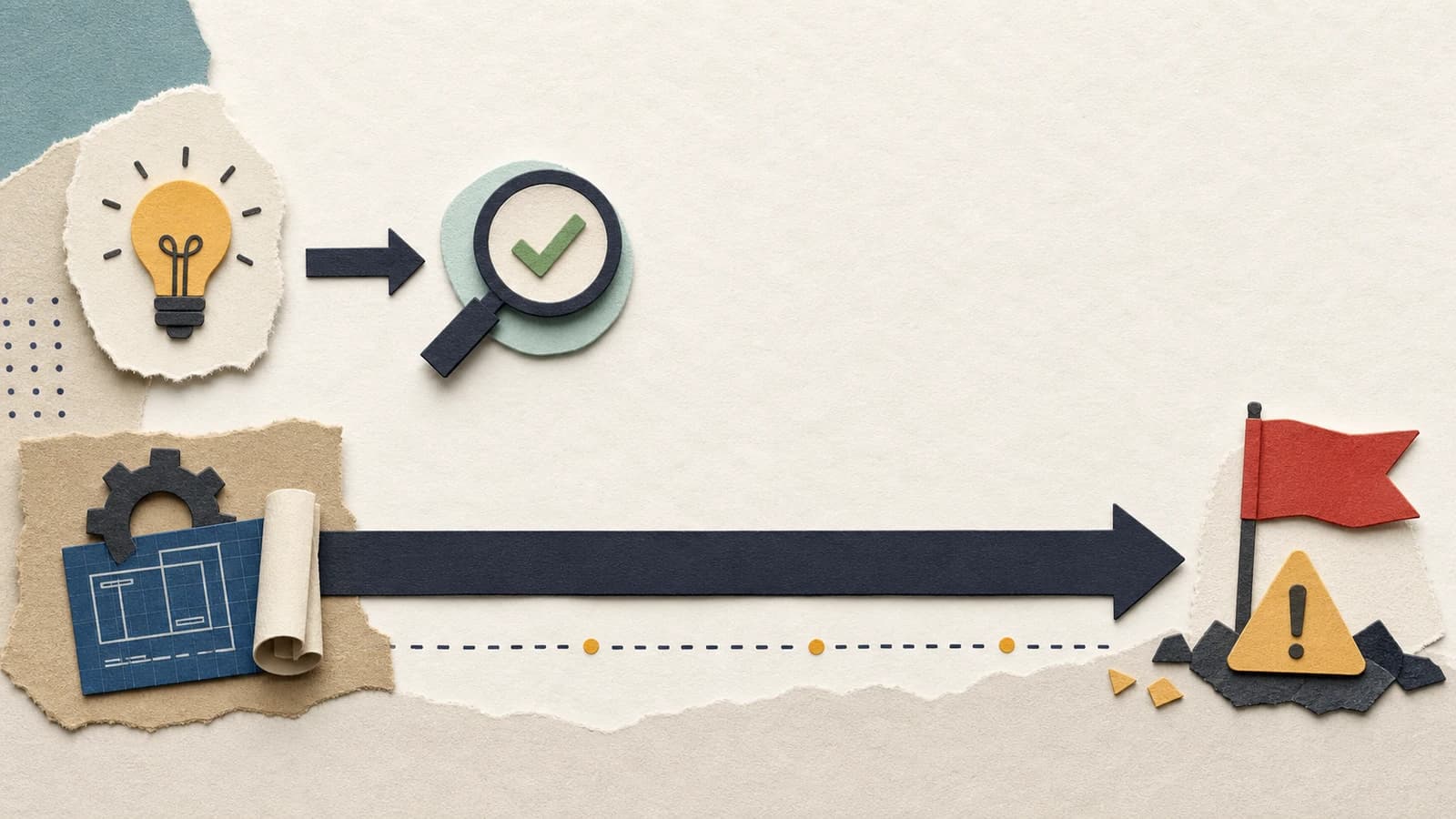
Does startup validation work? It works at what it is designed for: catching avoidable, expensive mistakes before you make them. It compresses weeks of scattered research into hours of structured scanning. It replaces "I think there is demand" with "here is what 60+ data sources say about demand."
It does not work as a crystal ball. It does not guarantee outcomes. It does not replace execution, fundraising skill, hiring judgment, or luck. If someone promises you those things, they are not selling validation. They are selling comfort.
For most founders at the "about to build" stage, the calculation is simple. A few hours of structured research against live data costs nothing. Discovering the same gaps after months of building costs everything. Validation is not a prediction. It is a cheaper way to be wrong, earlier, when you can still change course.
If you want to see what a structured scan looks like in practice, I wrote a walkthrough of why startups fail from market-fit gaps and what the data shows. Or you can run your own idea through Preuve and see the report yourself.
FAQ
Does startup validation guarantee success?
No. Validation surfaces specific market gaps, competitive risks, and unit-economics problems before you build. It improves decision quality. It does not predict whether a startup will succeed, because success depends on execution, timing, team, and factors no scan can forecast.
Can I just ask ChatGPT to validate my startup idea?
A general-purpose chatbot gives opinions from training data with no live market lookups and no source citations. Research shows LLMs exhibit sycophancy bias, systematically telling users what they want to hear. A structured validation scan checks 60+ live data sources, maps real competitors, and links every claim to a verifiable source.
What does a low validation score mean?
A low score is a prioritized list of specific gaps, not a rejection. Common issues include weak demand signal, high competitive density, or margins that do not close. Many are fixable by repositioning, adjusting pricing, or narrowing the target niche.
Is idea validation worth the time for a first-time founder?
For a first-time founder about to commit resources, yes. A structured scan takes hours. Building the wrong thing takes months and whatever runway is burned along the way. In a benchmark of 6,000+ ideas, 82.5% had at least one disqualifying gap that would have been invisible without structured research.
What percentage of startup ideas pass validation?
In an April 2026 benchmark of 6,000+ ideas scanned through Preuve AI, 17.5% scored 70 or above (launch-ready). The remaining 82.5% had at least one disqualifying gap across demand, competition, or unit economics.

Vincent
5 years in B2B growth, building Preuve AI in public. 82% of ideas it scores aren't ready, the point is finding out in 10 minutes, not 3 months.
Follow on X →
Building is expensive. Validation is free.
Run your idea through 10 AI agents before you write a line of code. Every claim source-linked.