Key takeaways
- About $500 covers the full validation stack: Desk research, a landing page test, a small ad spend, and customer interviews can all happen before writing a single line of code.
- The Spend Ladder has four rungs: Problem check ($0-$59), demand signal ($10-$50), cold traffic test ($50-$200), and money commitment ($0-$200), each with a pass/fail gate.
- 43% of failed startups cite poor product-market fit: That risk can be tested for less than the cost of a monthly gym membership, according to CB Insights.
- The first rung is nearly free: Competitor research, Reddit threads, Google Trends, and an AI-powered viability scan cost between $0 and $59.
43% of failed startups cite poor product-market fit, building something the market did not need, according to CB Insights' analysis of 385 startup post-mortems. Running out of money gets the headline, but the deeper cause is pouring money into a product nobody asked for.
The research that catches that mistake costs most founders less than $500, and plenty get it done for under $100. Startup idea validation is the process of testing whether real buyers exist for a product before building it, using desk research, landing page experiments, small ad tests, and customer interviews. The total cost runs between $60 and $509 depending on how many steps your particular idea needs.
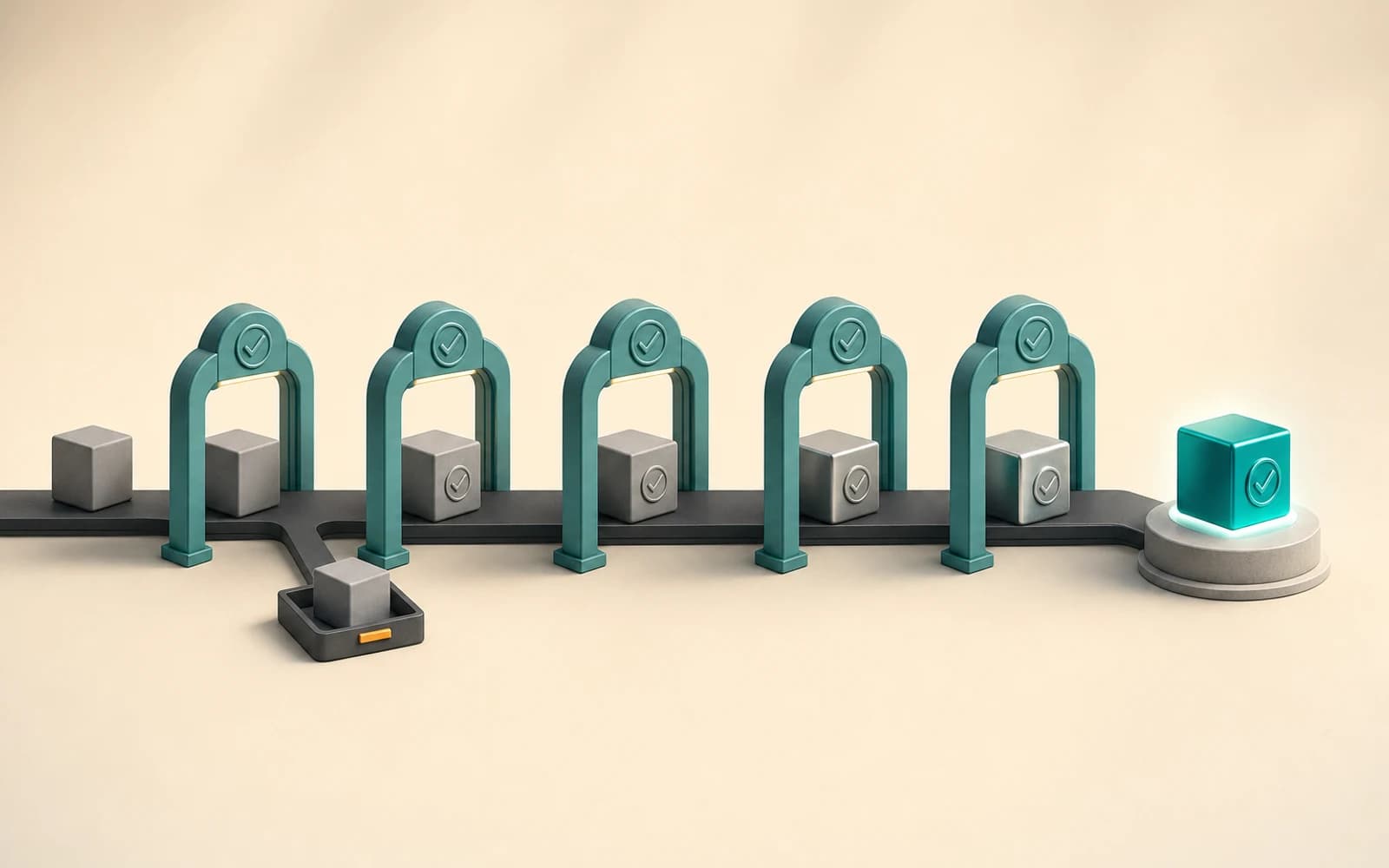
I call the sequence the Spend Ladder. The Spend Ladder is a four-rung validation framework where each rung answers one question about a startup idea, costs a specific dollar range, and includes a pass/fail gate that determines whether you should spend more or stop. You climb only after clearing the rung below, and most bad ideas die on rung one, which costs you nothing but an afternoon.

Will your idea survive the market?
Preuve AI runs 10 agents against live market data and links every claim to a source. Free analysis in 60 seconds.
Can you validate a startup idea for free?
Yes, mostly. The first rung of the Spend Ladder is a problem check, and it costs $0 or close to it. The question at this level: does this problem exist, and are people paying to solve it?
Here is what that looks like in practice:
- Search for competitors. If you cannot find three companies charging real money for a similar solution, you do not have a market. No competitors is almost always a red flag rather than the green light most founders assume. It usually means nobody found the demand worth chasing.
- Read complaints. Search Reddit, Quora, or whatever niche forums serve that industry, looking for people who describe the problem without mentioning your solution. Real pain tends to show up as complaint threads or one-star reviews naming the exact frustration.
- Check Google Trends. Is search interest for the problem growing, flat, or dying? A dying trend is a signal to dig deeper before spending anything.
- Run an AI-powered scan. A free viability scan on Preuve AI pulls data from 60+ live sources, maps real competitors with pricing, and flags the top risks in under a minute. I built it because this step used to take me two full days of manual research.
The gate at this rung: you found three or more competitors charging money, and at least one community where people describe the pain unprompted. If you strike out on both, stop here. You saved yourself everything that comes next.
For deeper analysis with sourced market sizing, competitive pricing analysis, and three pivot suggestions, the Founder report costs $59 one-time. That is the ceiling for rung one. I compared it to other free validation tools if you want the full landscape.

How much does a landing page validation test cost?
Rung two of the Spend Ladder is a demand signal. The question here gets harder: will a real person click something that looks like a buy button, not a waitlist signup, but a button that implies money is about to leave their account?
This is a fake door test, a validation experiment where you advertise a product that does not exist yet and measure how many people try to buy. The cost split is simple:
Domain name
$10 for a .com from Namecheap or Porkbun. Skip premium domains at this stage.
Landing page builder
$0 to $19 per year. Carrd has a free tier. Framer and Webflow offer free plans for single pages. You need one page with one headline, one value proposition, and one buy button.
Analytics
$0. Google Analytics, Plausible free tier, or PostHog free tier all work.
Total for rung two: $10 to $50. The gate is a CTA click rate of 3% or higher from targeted visitors, a threshold consistent with Unbounce's Conversion Benchmark Report medians for SaaS landing pages. If people land on your page and leave without clicking, the offer is not compelling enough. Redesign the copy or reconsider the positioning.
One thing this rung does not tell you: whether strangers will find and click your page without you sending them there personally. That is rung three.
How much should you spend on ads to test a startup idea?
Rung three is a cold traffic test. You put a small budget behind your landing page and see if strangers convert. This is where I see founders go wrong in one of two directions: either blow through $500 in a weekend or skip the step entirely, and both moves end up costing more than they save.
The budget that works for a validation test, not a growth campaign:
Meta ads (Facebook and Instagram). Plan on roughly $0.50 to $2.00 per click for B2C products and $2 to $5 for B2B. WordStream's benchmarks put the all-industry average Facebook CPC at $1.72, with B2B averaging $2.52. A $100 budget gets you 50 to 200 clicks depending on your niche.
Google Ads. Higher intent, higher cost. Expect $1 to $5 per click for most keywords, more for competitive terms like insurance or legal. A $150 budget over three days is enough to see a pattern.
Total test budget. $50 to $200 is the sweet spot for a validation test. You need 50 to 100 clicks to read a real pattern. Anything under 30 clicks is noise.
The gate at rung three: your cost per lead stays below 10% of your planned price point. If you are selling a $50/month SaaS and each interested click costs $20, the math does not work, but a $100 spend that lands five people on a checkout page starts to look like a real signal.

Skip weeks of manual research
Get complete market research, sourced proof, competitor map, and pricing data for your idea instantly.
What do customer discovery interviews cost?
Rung four is the money commitment, and by now the question is about as hard as it gets: will someone put money down before you have built anything, not tell you they probably would if it existed, but transfer actual dollars into your account?
Customer discovery interviews are structured conversations with potential buyers designed to test whether they will pay for a solution before it exists. The cost ranges from $0 to $200 depending on how you recruit:
- Free: cold outreach to people you found in forums, LinkedIn, or communities during rung one. Most will say no. Some will say yes. Ten conversations is the minimum, and I wrote a full guide on what to ask in those calls.
- $25 to $75 per session: if you recruit through platforms like Respondent or UserTesting, expect to pay per interview. Five interviews at $50 each is $250. That pushes the upper end for this rung.
- $0 for the pre-sell: a Stripe payment link, a Gumroad pre-order page, or a "pay now, get access when it launches" offer costs nothing to set up. The signal is whether anyone pays.
The gate: at least one real person commits money, calendar time, or a signed agreement before you write code, whether that looks like a deposit, a pre-order, or a signed pilot. If you talk to fifteen people and nobody reaches for their wallet, you have your answer. I wrote about what validation outcomes mean in practice if you want the longer version.
When should you stop spending on validation?
The whole point of the Spend Ladder is that it has built-in stops. You do not climb to the next rung until you pass the gate below.
The four kill gates
- Rung 1 fail: you cannot find competitors or people describing the problem. Total spent: $0 to $59. Stop.
- Rung 2 fail: your landing page gets traffic but nobody clicks the CTA. Total spent: under $110. Stop or rewrite the offer.
- Rung 3 fail: paid ads drive clicks but the cost per lead exceeds your price point. Total spent: under $310. Stop or reposition.
- Rung 4 fail: fifteen conversations, zero commitments. Total spent: up to $509. Stop or pivot the audience.
The worst-case scenario for the entire ladder is about $509, the price of failing at every rung and climbing anyway. In practice, most founders stop at rung one or two and spend under $110 total.
Compare that to the alternative. According to a Clutch.co survey of app development firms, a basic MVP typically costs $10,000 to $50,000 or more in development, even with no-code tools cutting timelines. Carta's 2024 data shows that 74% of startup shutdowns occurred at the pre-seed or seed stage, before a Series A ever happened. Validation saves you money, but not on the research itself, which is cheap. It saves you on everything that follows: the development, the launch, the months of payroll you would have spent building the wrong product.

What does a realistic validation budget look like?
Here is the full Spend Ladder, with every line item:
| Rung | Question answered | Cost range | Gate to pass |
|---|---|---|---|
| 1. Problem check | Does this problem exist? | $0 - $59 | 3+ competitors charging money |
| 2. Demand signal | Will people click buy? | $10 - $50 | 3%+ CTA click rate |
| 3. Cold traffic test | Will strangers convert? | $50 - $200 | CPL stays under 10% of price |
| 4. Money commitment | Will they pay before you build? | $0 - $200 | 1+ paid commitment |
Best case: your idea clears all four rungs for $60 to $150, basically a domain, a free landing page, a small ad test, and organic outreach for interviews.
Worst case: you spend the full $509 and learn the idea is dead, which stings less once you remember a junior developer costs more than that per month.
The scenario you want to avoid: spending $0 on validation, $30,000 on development, and launching to silence.
If you are sitting on an idea right now and wondering whether to spend money on it, start at rung one. A free viability scan takes under a minute and costs nothing. If the problem is real and competitors exist, you have earned the right to spend $10 on a domain, and not a dollar before that.
I wrote companion guides for the deeper layers: a step-by-step validation process, a deep dive on fake door tests, a comparison of free validation tools, and a look at what market research costs if you want to go deeper on the research layer. The Spend Ladder gives you the budget frame, and those guides fill in the playbook for whichever rung you get stuck on.
FAQ
How much does it cost to validate a startup idea?
Most founders can validate a startup idea for about $500 total. The breakdown: desk research and AI scans cost $0 to $59, a landing page test runs $10 to $50, a paid ad smoke test costs $50 to $200, and customer interviews cost $0 to $200 in time and incentives. Many ideas get killed or confirmed at the first two rungs for under $110.
What is the cheapest way to validate a business idea?
The cheapest approach is free desk research: search for competitors, read Reddit threads and forum complaints, check Google Trends, and run a free AI viability scan. If you find three or more competitors charging real money for a similar solution, the market exists. If you cannot find a single person describing the problem unprompted, the idea likely lacks demand.
Is it worth paying for idea validation tools?
A paid scan costing $59 is worth it if it saves you from spending thousands on an unvalidated MVP. Free tools give surface-level scores. Paid tools like Preuve AI's Founder tier check 60+ live data sources and provide sourced competitive analysis, market sizing, and go-to-market risks, replacing days of manual research.
How much does an MVP cost compared to validation?
A basic MVP typically costs tens of thousands of dollars in development time, even with no-code tools. Full validation, from desk research through a paid smoke test, costs about $500 at most. The ratio matters: 43% of failed startups cite poor product-market fit, building something the market did not need, and that risk can be caught at the validation stage for a fraction of the build cost.
Can you validate a startup idea in one weekend?
You can complete the first two rungs of validation in a weekend: desk research and competitor mapping on day one, a landing page with a fake door test launched by day two. The paid ad test and customer interviews add another one to two weeks. Most founders who try to compress everything into 48 hours skip the customer conversations, which are the strongest signal.
Cite this page
Last updated July 17, 2026
Forat, V. (2026, July 17). The Real Cost of Validating a Startup Idea. Preuve AI. https://preuve.ai/blog/how-much-does-it-cost-to-validate-a-startup-idea
Forat, Vincent. “The Real Cost of Validating a Startup Idea.” Preuve AI, 17 July 2026, preuve.ai/blog/how-much-does-it-cost-to-validate-a-startup-idea.
Forat, Vincent. “The Real Cost of Validating a Startup Idea.” Preuve AI. July 17, 2026. https://preuve.ai/blog/how-much-does-it-cost-to-validate-a-startup-idea.
@misc{forat2026-how-much-does-it-cost-to-validate-a-startup-idea,
  author = {Forat, Vincent},
  title = {{The Real Cost of Validating a Startup Idea}},
  howpublished = {Preuve AI},
  year = {2026},
  month = jul,
  url = {https://preuve.ai/blog/how-much-does-it-cost-to-validate-a-startup-idea},
  note = {Last updated July 17, 2026}
}
Vincent
5 years in B2B growth, building Preuve AI in public. 82% of ideas it scores aren't ready, the point is finding out in 10 minutes, not 3 months.
Follow on X →
Building is expensive. Validation is free.
Run your idea through 10 AI agents before you write a line of code. Every claim source-linked.