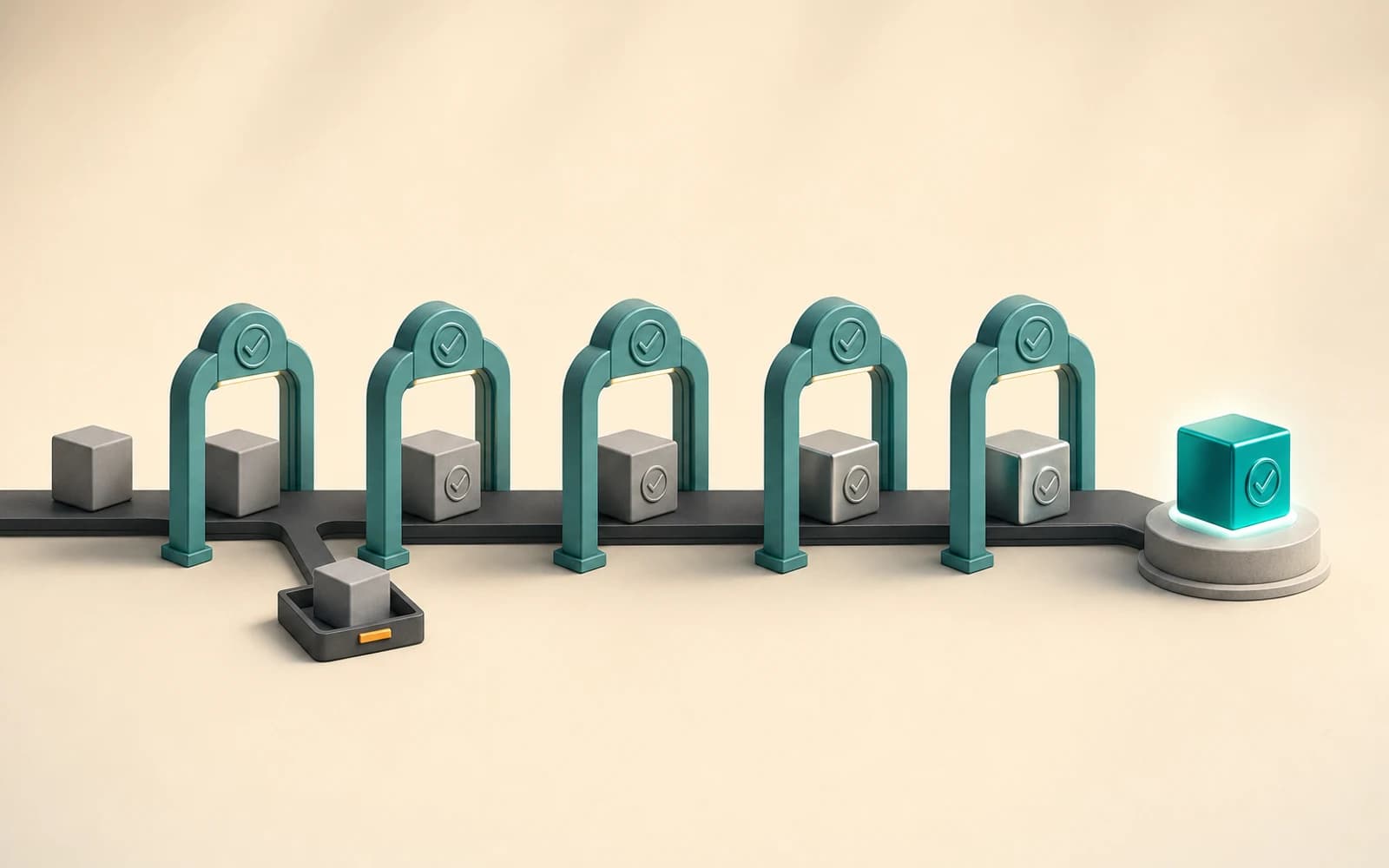
Key takeaways
- G2 lists 151,264 software products across 1,351 categories: Virtually every SaaS category has existing players, so "taken" is the default state, not the exception.
- "Taken" does not mean dead: Roughly 70% of public SaaS companies are newer versions of older ideas (SaaStr, 2023), and competitors validate that buyers pay.
- Four signals separate beatable from saturated: G2 category density, pricing floor compression, search demand relative to competitor count, and review quality distribution.
- The win is the wedge: The specific underserved segment, missing feature, or pricing gap that existing tools ignore, found by mining 2-3 star competitor reviews.
As of 2026, G2 lists 151,264 software products across 1,351 categories. Your SaaS idea has competitors, and so has every successful SaaS product ever built. That is not the problem.
The question is not whether your SaaS idea is already taken. It almost certainly is. The question is whether those existing tools serve your target buyer well enough to lock you out, or whether there is a gap you can own.
I wrote a broader guide on how to know if your startup idea already exists. This page is the SaaS-specific version: a 4-signal saturation checklist that tells you whether a SaaS category is beatable or locked, and how to find the wedge that makes your product worth building. If you are staring at a list of competitors and wondering whether to build or walk away, this gives you a repeatable way to decide.

Will your idea survive the market?
Preuve AI runs 10 agents against live market data and links every claim to a source. Free analysis in 60 seconds.
How Do I Check if My SaaS Idea Already Exists?
Start with G2, not Google. Google shows you the best-marketed products. G2 shows you the actual SaaS landscape: how many tools exist in your category, what real users think of them, and where pricing clusters. Search your problem keyword on G2, not your product name.
Then check Product Hunt for recent launches, Crunchbase for funded competitors, and Google for "[problem] software" and "[problem] tool." I covered the full platform list in my guide on finding startup competitors. Here I want to focus on the four SaaS-specific signals that tell you whether the market is beatable.
The 4-Signal SaaS Saturation Checklist
G2 category density. How many products are listed in your G2 category? 5-15 direct competitors is a healthy, validated market. 50+ with strong traction means you need a sharp niche. 0-2 is a warning, not a blue ocean.
Pricing floor compression. What is the cheapest paid plan in your category? If 3+ competitors offer free tiers and paid plans below $15/mo, pricing power is thin. If the floor is $40+/mo, there is room to compete on value or undercut on price.
Search demand vs. competitor count. Check Google Keyword Planner for monthly searches on the problem keyword. High demand (1,000+ searches) with moderate competition (5-15 tools) is the best scenario. Low demand with high competition is the worst.
Review quality distribution. Sort G2 reviews by 2-3 stars. If more than 30% of reviews are 3 stars or below, customers are frustrated, and that frustration is your opening. If 90%+ are 4-5 stars, the market is well-served and hard to crack without a sharp angle.
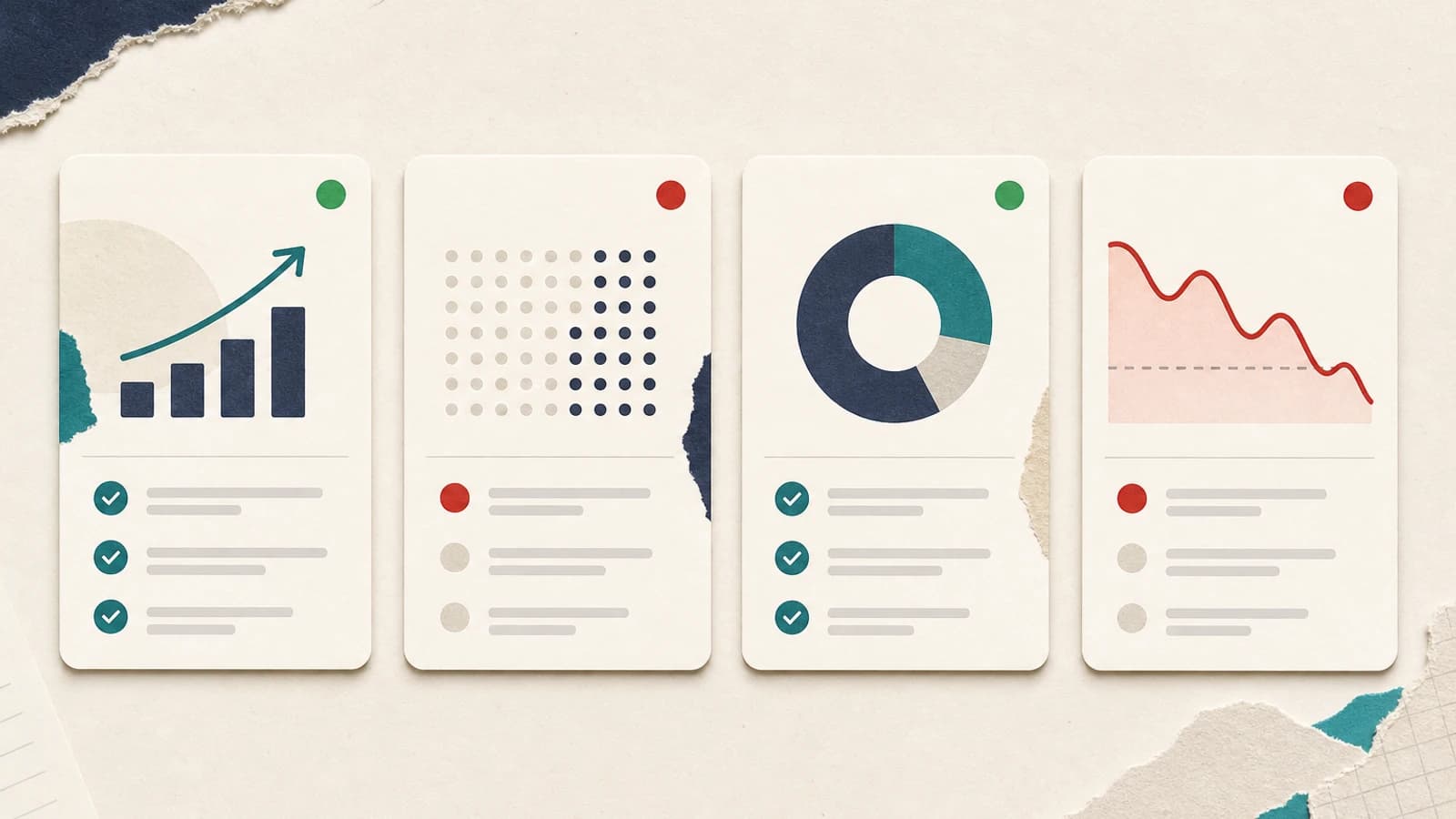
Two or more green signals generally means the market is beatable. Four reds is a sign to niche down hard or rethink the category entirely. Most SaaS categories land somewhere in the middle, which is where the wedge matters most.
About 1,500 new SaaS startups launch every month. Your category will have more competitors next quarter than it does today. This checklist is not a one-time exercise. Run it again in 90 days.
| Signal | Where to check | Beatable | Saturated |
|---|---|---|---|
| Category density | G2, Product Hunt | 5-15 direct competitors | 50+ with strong traction |
| Pricing floor | Competitor pricing pages | Lowest paid plan above $30/mo | Multiple free tiers, paid under $15/mo |
| Search demand | Google Keyword Planner | 1,000+ monthly problem searches | Under 100 monthly searches |
| Review quality | G2, Capterra | 30%+ reviews at 3 stars or below | 90%+ at 4-5 stars |
Is It Bad if Someone Already Built My SaaS Idea?
No. It is almost always good news.
Slack entered a market HipChat and Campfire had owned for years, and Notion launched into a space already crowded with note-taking apps. Linear came even later, shipping project management software in 2019 after Jira had locked down enterprises for over a decade. Over 70% of public SaaS companies are newer versions of older ideas according to a 2023 SaaStr analysis.
Competitors tell you the problem is real and people already pay to solve it. You can study what those tools get wrong before you write a single line of code yourself.
What should worry you is the opposite: zero competitors. I covered why an empty landscape is a warning sign in my broader startup guide. For SaaS specifically, an empty category usually means the market is too small to sustain a subscription business, or the problem is not painful enough for people to pay monthly. Both are worse outcomes than having ten competitors.
Skip weeks of manual research
Get complete market research, sourced proof, competitor map, and pricing data for your idea instantly.
How Do I Know if a SaaS Market Is Too Saturated to Enter?
A saturated SaaS market is one where multiple strong competitors with high review scores, low pricing floors, and no underserved segments leave no room for a new entrant to differentiate. In practice, saturation is about the quality of the competition and the size of the gaps between those tools, not the raw count of players.
Three signals together indicate real saturation in a SaaS category:
- ✗Strong, well-funded competitors with 4.5+ star ratings on G2 and consistent positive recent reviews.
- ✗Pricing floor near zero. Dominant free tiers with paid plans racing below $15/mo. Freemium-to-paid conversion in B2B SaaS averages 2-5%, so a market flooded with free tiers leaves thin margins for newcomers.
- ✗No identifiable underserved segment.Every vertical, company size, and use case already has a dedicated tool built for it.
If all three hold simultaneously, a direct attack is probably the wrong move. But these signals rarely all line up at once, and a single gap is enough to start.
The most common opening I see is strong competitors with mediocre reviews. Fifty products with consistent 3-star ratings mean the category is big and validated but nobody has solved the problem well yet. A focused founder can win there, even against funded incumbents.
The project management space has hundreds of tools. Linear won by targeting engineering teams frustrated with Jira's configuration bloat. It did not try to replace Jira for enterprises. It picked one segment, built a faster experience for that segment, and ignored everyone else.
How Do I Find the Wedge When My SaaS Idea Is Already Taken?
A differentiation wedge is the specific gap between what existing tools deliver and what one underserved segment actually needs. Before walking away from a taken SaaS idea, look for yours.
The Review Mining Method
Go to G2 or Capterra. Find the top 3-5 competitors in your category. Filter reviews to 2-3 stars. Read at least 20 of them. Mark every complaint that appears three or more times.
Those repeated complaints are your product roadmap. The exact phrasing often becomes your marketing copy. Look for patterns like "too expensive for small teams," "no API," "clunky UX," "missing integration with X," or "overkill for my use case." Each pattern points to a different wedge.
Three Wedge Types That Work in SaaS
Segment wedge.
Most tools in the category aim at enterprise. Carrd carved out solo founders and small teams who needed a single-page site without the Webflow learning curve, and that narrow focus turned into real traction.
Feature wedge.
Linear's bet was that engineering teams hated Jira's configuration overhead more than they needed its feature breadth. So it built the fastest issue tracker instead of the most configurable project manager, and that focus paid off.
Pricing wedge.
Plausible charges a fraction of what enterprise analytics platforms cost, covers the 80% of features small teams actually use, and found a real audience among privacy-conscious developers who resented Google's free-but-surveilled model.

The Positioning Sentence
Once you have the wedge, complete this sentence:
"[Your product] is for [specific segment] who are frustrated with [competitor] because [specific pain]. Unlike existing tools, we [specific differentiator]."
If you cannot fill all four blanks with something concrete, talk to ten potential users and read more reviews before writing another line of code. The positioning usually becomes obvious once you have heard the same complaint three times.
I built Preuve in a market where idea validation tools already existed. My wedge was sourced evidence: instead of a generic "is this a good idea?" score, I built a pipeline that scans 60+ live data sources and returns competitor names, pricing, funding, and the specific weaknesses that matter for positioning. When I read the 2-3 star reviews of existing tools, the same complaint kept repeating: "too vague, no sources, felt like ChatGPT with a wrapper." That complaint became my product spec.
If you want to see what a sourced competitor scan looks like for your SaaS idea, try Preuve's idea validation tool or run a free scan directly. The competitor landscape section is where most founders find their wedge.
For validation beyond competitors, the SaaS idea validation check scores demand, pricing, and market gaps, and benchmarks your idea against other scored SaaS ideas.
FAQ
How do I quickly check if my SaaS idea already exists?
Search G2 for your software category, check Product Hunt for recent launches, and Google your problem keyword (not your product name). Count direct competitors and note pricing floors and review scores. Preuve AI automates this across 60+ sources in 60 seconds.
Is it bad if my SaaS idea already has competitors?
No. Competitors prove people pay to solve the problem. Roughly 70% of public SaaS companies are newer versions of older ideas. Zero competitors is the warning sign. What matters is whether those competitors serve your target segment well enough to lock you out.
How many SaaS competitors is too many?
The count alone means nothing. Fifty competitors with 3-star reviews signal a wide-open market. Three competitors with 4.8 stars and aggressive pricing signal true saturation. Check review quality and pricing density, not the count.
How do I know if a SaaS market is too saturated to enter?
Three signals together indicate saturation: multiple well-reviewed competitors (4.5+ stars), a pricing floor near zero with dominant free tiers, and no identifiable underserved segment. If all three hold, niche down or pivot. If even one is false, there is an opening.
What should I do if my SaaS idea is already taken?
Read 2-3 star reviews of existing competitors on G2 and Capterra. Find the segment they ignore, the feature they skip, or the pricing tier they avoid. Build for that gap. A taken market with frustrated users is a better starting position than a novel idea with no buyers.

Vincent
5 years in B2B growth, building Preuve AI in public. 82% of ideas it scores aren't ready, the point is finding out in 10 minutes, not 3 months.
Follow on X →
Building is expensive. Validation is free.
Run your idea through 10 AI agents before you write a line of code. Every claim source-linked.