Key takeaways
- A zombie startup idea fails repeatedly on the same structural flaw, Not on timing. Unlike zombie companies (alive but not growing), zombie ideas are concepts that return every few years, get funded, and die again: daily deals, social audio, anonymous social, and five more categories have each failed 3+ times.
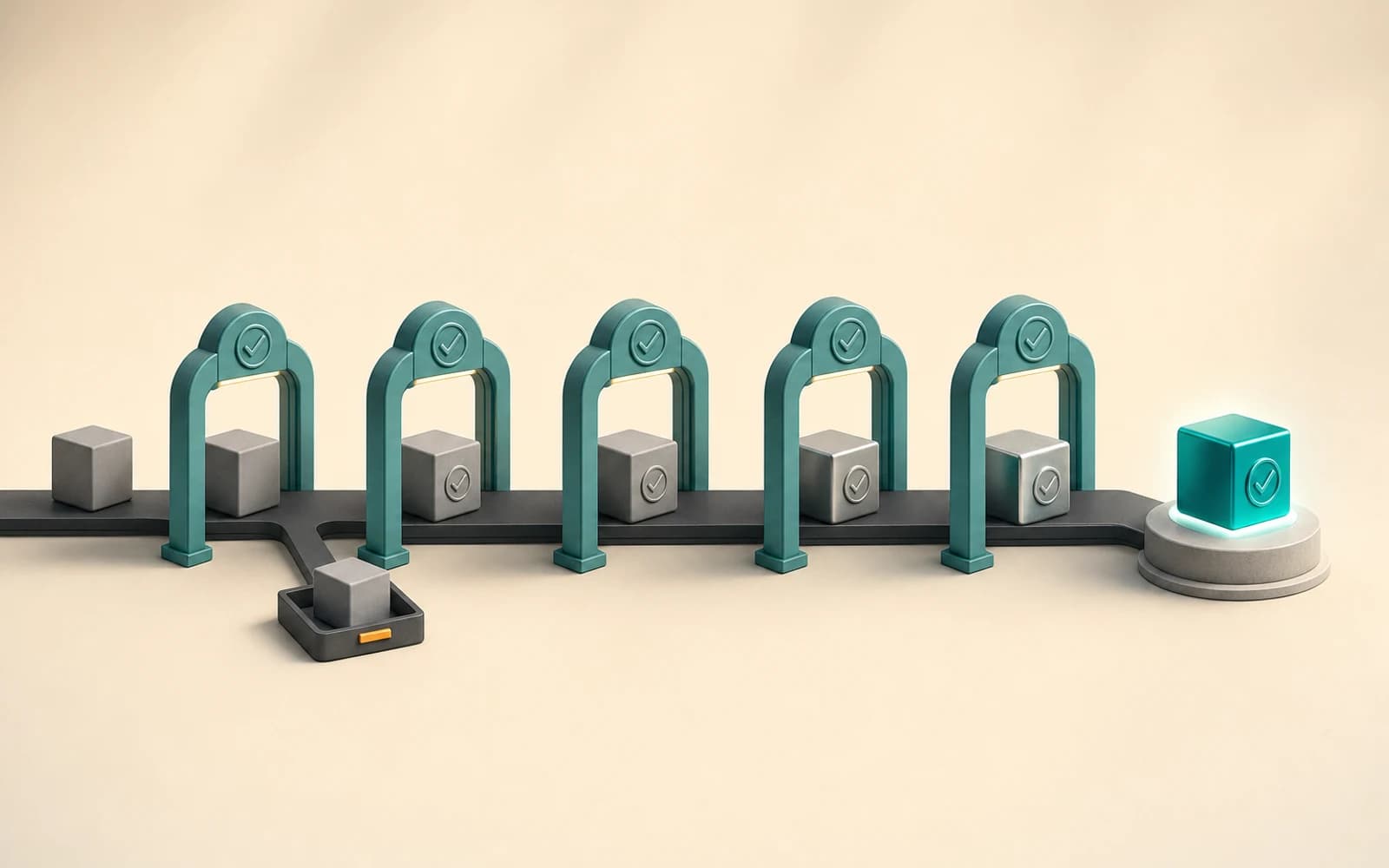
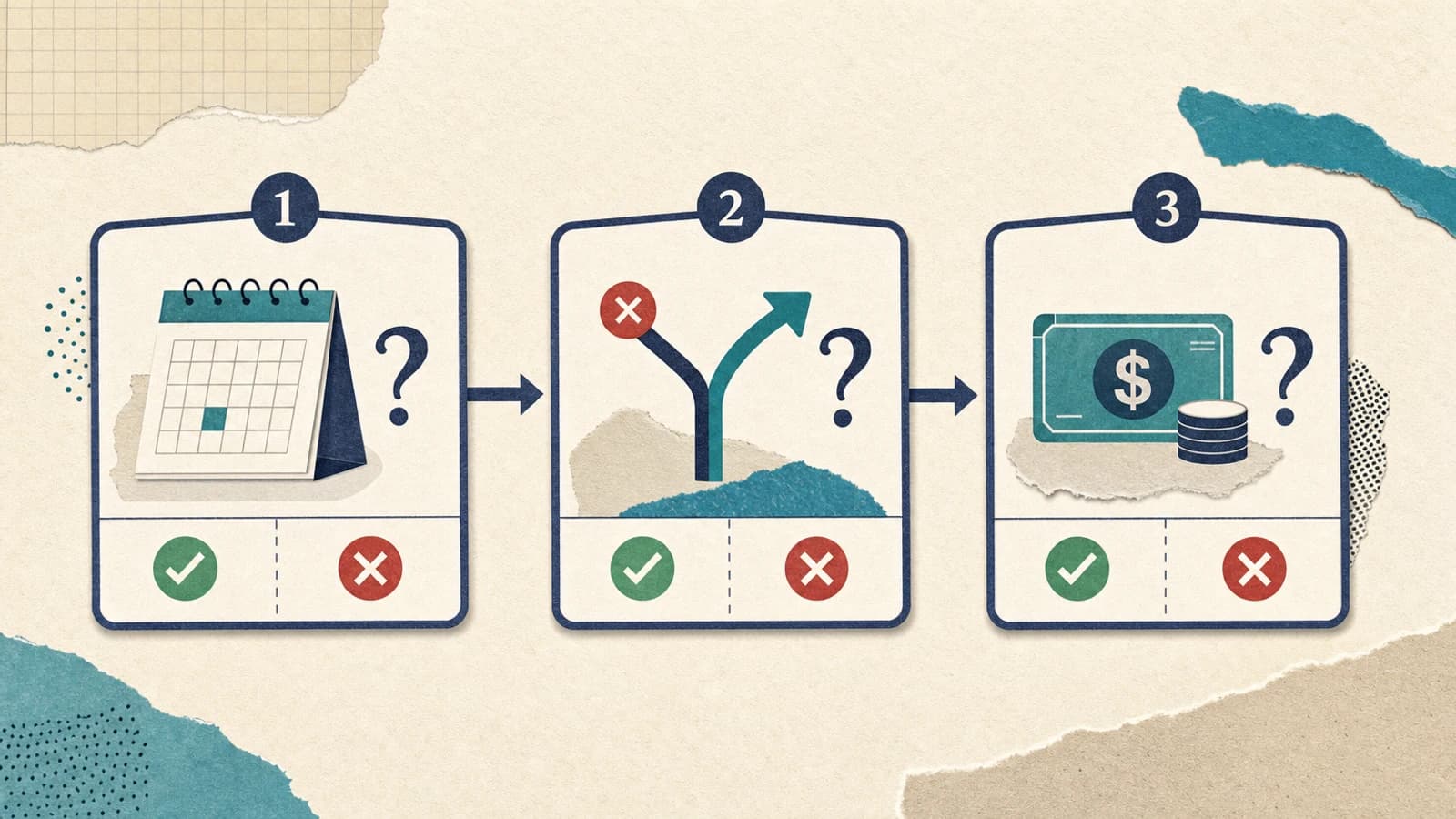
- The zombie test is three questions: Has anything structural changed? Is the flaw in the concept or the execution? Does someone already pay to solve this today? Three "no" answers means the idea is a zombie.
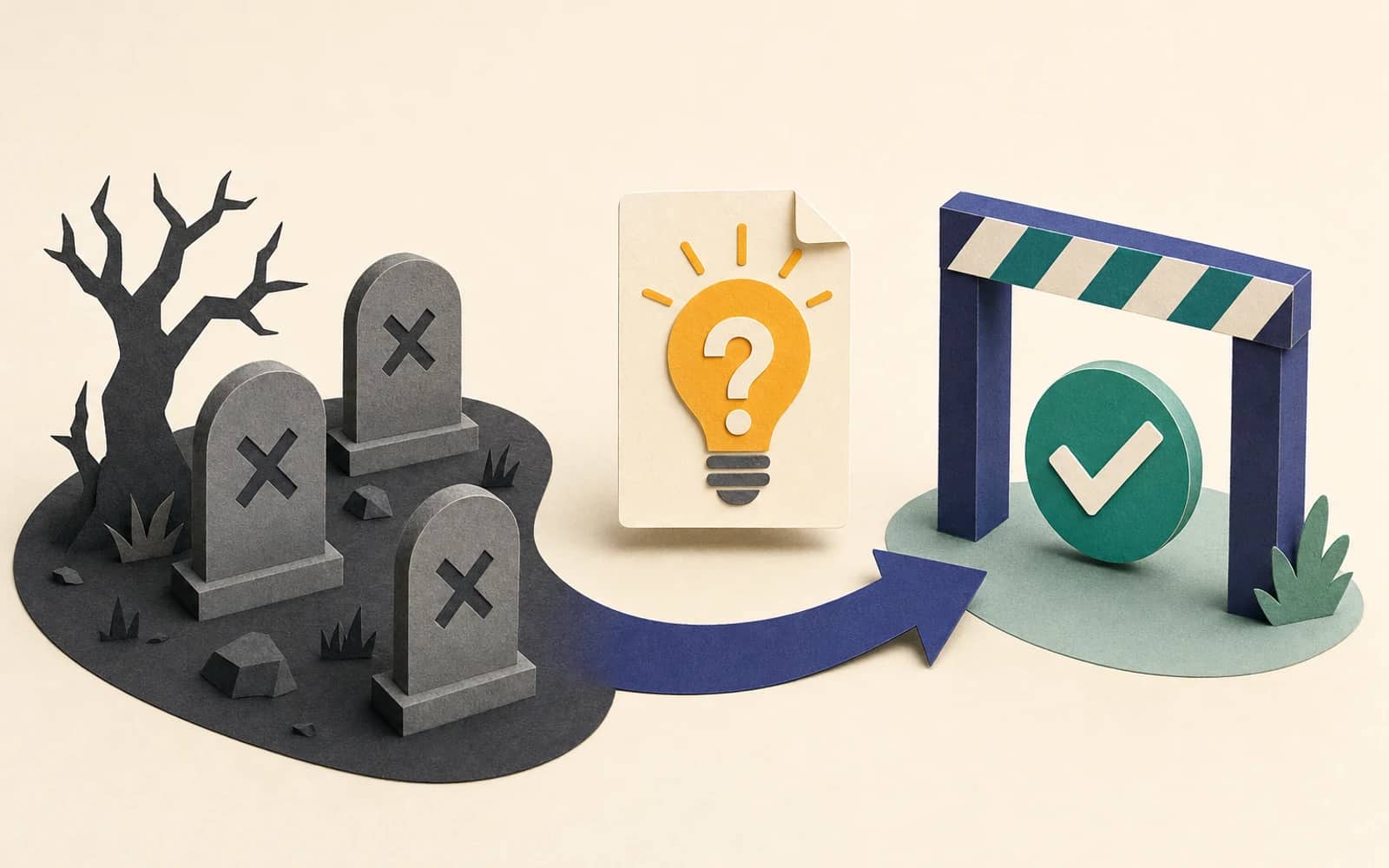
- A revivable idea has a dated catalyst That broke it once and has since flipped. Webvan died on warehouse costs in 2001, and micro-fulfillment fixed that. Groupon died on merchant unit economics, and nothing has fixed that.
- Running the zombie test before building Costs nothing and skips the most expensive mistake in startups: spending a year on an idea that has already killed three companies the same way.
The same startup idea has killed companies three, four, five times in a row. Right now, someone is building it again.
These zombie startup ideas resurface every funding cycle. Founders pitch daily deals, anonymous social apps, subscription meal kits, concepts that have already buried three or four companies each. The founders are sharp. The ideas are undead. And the difference between a zombie idea and a genuinely revivable one is the single most expensive mistake you can skip if you check before you build.
This is not the list of dead ideas worth reviving. I wrote that one separately, covering 15 ideas that died on timing and are viable now. This is the other list: the ideas where the problem is structural, where nothing has changed, and where building one more version repeats the same loss.

Will your idea survive the market?
Preuve AI runs 10 agents against live market data and links every claim to a source. Free analysis in 60 seconds.
What Is a Zombie Startup Idea?
The term "zombie startup" already exists, but VCs use it for something different: a company that is alive but not growing, stuck between success and shutdown. An estimated 30-40% of VC-backed companies end up in that state, according to data from Carta and CB Insights.
A zombie startup idea is the concept itself. It gets pitched, funded, built, and killed in one cycle. A few years pass. A new founder who never read the post-mortem pitches it again. The cycle repeats partly because post-mortems get buried fast. A new technology wave arrives and the old idea suddenly feels like it has fresh legs.
The distinction that matters: a merely early idea fails because a dependency does not exist yet. Cheap smartphones, gig-labor networks, on-device AI. When the dependency arrives, the idea works. I covered 15 of those in my breakdown of dead startup ideas worth reviving in 2026. A zombie idea fails because of a structural flaw in the concept itself. No buyer, broken unit economics, or a retention problem that no technology wave fixes. The concept itself was the problem, and no missing rail was coming to save it.
| Signal | Zombie idea | Revivable idea |
|---|---|---|
| Why it failed | Structural flaw in the concept (no buyer, broken unit economics) | A dependency did not exist yet (cost, tech, behavior) |
| Death count | 3+ companies, same flaw each time | 1-2 companies, different circumstance each time |
| What changed since | Nothing structural. New tech layer on same broken mechanic | A dated shift you can name (year + number) |
| Paying buyer today | No one pays for this, even on a worse solution | Someone already spends money on the problem |
| Example | Groupon (discount buyers never return at full price) | Webvan (warehouse costs dropped, Instacart worked) |
Why Do the Same Startup Ideas Keep Getting Funded and Failing?
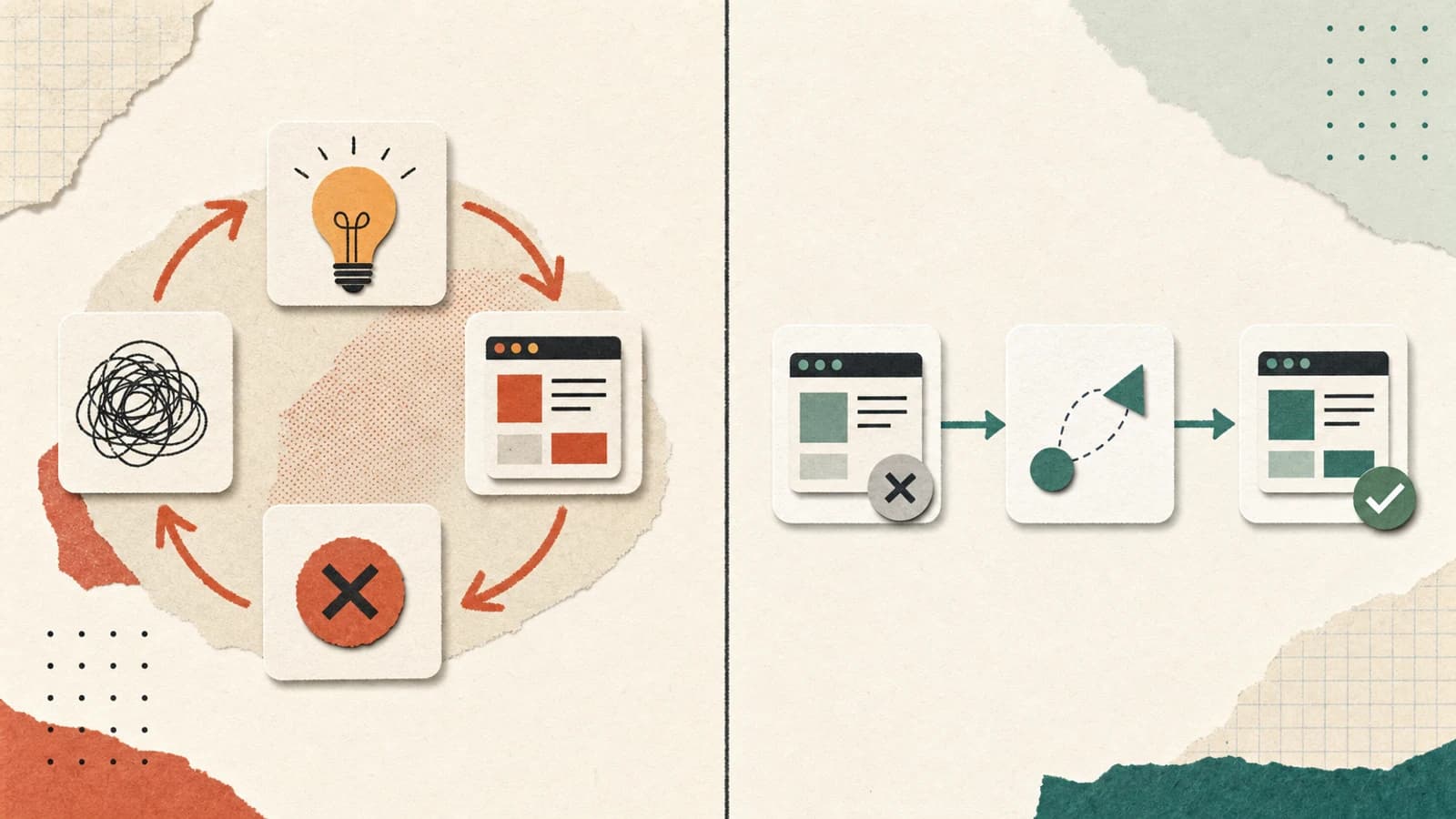
The same problems come up every time I trace why a zombie idea got funded again.
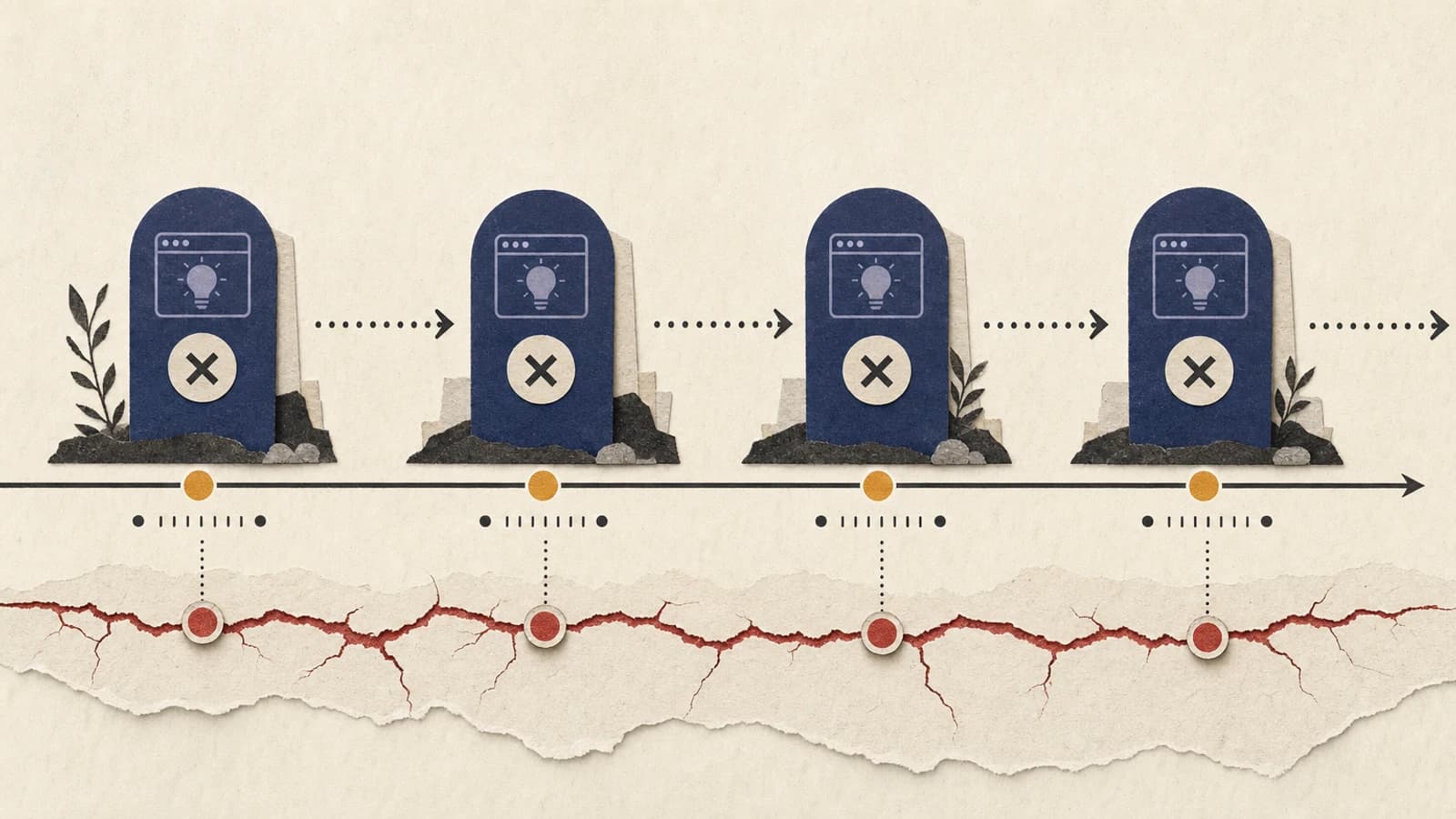
The forgetting cycle is the biggest. The YC Graveyard now lists over 800 inactive startups, and most founders starting today have never searched it. Post-mortems get published, read for a week, and forgotten. The lesson stays in a blog post nobody revisits.
The "this time it's different" pitch is second. Every technology wave creates a new reason to believe the old idea works. Social audio died as Meerkat, returned as Clubhouse on the "audio is the new social" narrative, and stalled again. Daily deals died as Groupon, resurfaced as AI-powered local deals, and failed again. The surface changes. The structural flaw does not.
Survivorship bias in reverse is third. Founders study the famous revivals, Webvan into Instacart, Vine into TikTok, and conclude that every dead idea is a timing story. Most are not. Bill Gross found that timing accounts for 42% of the difference between startup success and failure. But the inverse is also true: more than half the time, the concept, team, or model was the actual problem. A dead idea that died on timing is revivable. One that died on a concept flaw keeps dying.
What Startup Ideas Have Failed the Most Times?
Eight categories of startup ideas have died three or more times each. In every case, the structural flaw that killed the first company killed the next one too.
Daily Deals and Flash Sales
Killed: Groupon (2008, billion-dollar IPO followed by collapse), LivingSocial (2010, sold for nothing), hundreds of local and vertical clones through 2015.
The structural flaw: Discounts attract deal-seekers who never return at full price. The merchant pays to acquire a customer who buys once at a loss. Every new entrant assumes better targeting or a loyalty layer will solve this. None have.
Social Audio Rooms
Killed: Meerkat (2015, dead within a year of launch), Clubhouse (2020, valued in the billions, usage collapsed by 2022), Twitter Spaces (2021, scaled down).
The structural flaw: Audio-only social cannot sustain daily use. Podcasts took long-form; short video took everything else. Live social audio never found a reason to pull users back once the conversation ended.
Anonymous Social Networks
Killed: Secret (2014, raised tens of millions, shut down in 2015), Yik Yak (2013-2017, relaunched 2021, shut again 2023), Whisper (stalled), Sarahah (2017, faded), NGL (2022, regulatory pressure).
The structural flaw: Anonymity breeds toxicity. Toxicity repels the mainstream users you need for network effects. Every version attracts early curiosity, the content degrades, and the interesting users leave. This pattern has repeated five times with no variation.
On-Demand Services for Low-Value Tasks
Killed: Washio/laundry (2013, dead 2016), Luxe/valet parking (2014, dead 2017), Cherry/car wash (2013, dead 2014), dozens more across cleaning and errands.
The structural flaw: Dispatching a human for a sub-$30 task costs more than the task is worth. Raise prices and the customer does it themselves. Unit economics are structurally negative at every price point a customer will accept.
Budget Personal Finance Trackers
Killed: Mint (2007, Intuit shut it down in 2023 after years of decline), Wesabe (2006, dead 2010), dozens of fintech clones that pivoted or folded.
The structural flaw: Banks give spend tracking away free. Your bank app already categorizes your transactions. Users will not pay for what they already get, and ad revenue cannot sustain a free product in a category where the bank owns the data and the relationship.
VR Social Worlds
Killed: Second Life(2003, peaked then faded), AltspaceVR (2015, Microsoft acquired then shut 2023), High Fidelity (2013, Philip Rosedale's second attempt, pivoted away), Meta Horizon Worlds (2021, struggled to retain users despite billions invested).
The structural flaw: People do not want to socialize as avatars for sustained periods. The headset is friction, not a feature. Every generation of hardware makes the experience incrementally better, but the core preference for face-to-face or screen-based communication does not shift.
Crypto Social Tokens
Killed: BitClout/DeSo (2021, abandoned), Rally (2021, shut 2023), Friend.tech (2023, usage collapsed in months), Stars Arena (2023, hacked and abandoned).
The structural flaw: Once you put a price on a friendship, the friendship starts behaving like a trade. Token price drops and engagement follows it off a cliff, which is what happened with BitClout, Rally, and Friend.tech in sequence. Speculative and social do not stay in the same product for long.
Subscription Meal Kits
Killed: Blue Apron(went public in 2017, sold for a fraction of its IPO price in 2023), Plated (2012, Albertsons acquired then shut), Chef'd (2014, shut 2018, briefly restarted, shut again), Sun Basket (struggled), dozens more.
The structural flaw: Meal kit churn is structural. The novelty of cooking from a box wears off in three to six months. Grocery delivery became faster and cheaper, with more flexibility than a fixed weekly box. The 30-45 minutes of prep that kits still require pushes convenience-seeking customers to ready-made meals or delivery apps instead.

Skip weeks of manual research
Get complete market research, sourced proof, competitor map, and pricing data for your idea instantly.
How Do You Tell If Your Startup Idea Is a Zombie?
Run three questions. If all three come back negative, you are looking at a zombie.
- Has anything structural changed? Not "AI is better now." A dated, specific shift: a regulation, a cost curve crossing, a behavior change that directly neutralizes the flaw that killed the last company.
- Is the flaw in the concept or the execution? Groupon's buyers were deal-hunters who never paid full price, and that is a concept problem. Webvan's warehouses cost too much in 2001, and once that cost came down Instacart worked. Only execution flaws get fixed by external shifts.
- Does someone already pay to solve this today? Not "would pay." Not "said they would pay in a survey." Someone who currently spends real money on a worse solution.
"Has anything structural changed?" is the first and most important question. A dated, specific shift means something you can point to with a year and a number. A regulation that opened a market. A cost that dropped 10x. A behavior that normalized after a pandemic. If you cannot name a shift and a date, nothing has changed.
"Is the flaw in the concept or the execution?" is where most founders fool themselves. Groupon did not die from bad management. It died because discount buyers never came back at full price, and no amount of better execution changes that. Webvan had the opposite problem: warehouses were too expensive in 2001, and once micro-fulfillment brought that cost down, Instacart proved the model. The difference matters because one type of flaw stays broken.
"Does someone already pay?" is the ground-truth check. If the answer is no, and the last three companies also found no paying buyer, you have a zombie.
If all three answers came back negative, that is your answer. If you can answer yes to even one, especially the first, you might have a revival on your hands. I wrote the full revival framework in my post on dead startup ideas worth reviving in 2026, and it starts with the same question.
Can a Zombie Startup Idea Ever Become Viable?
Yes, but only when something concrete actually changed, not a new technology layer on top of the same broken mechanic.
Video calling looked dead after dozens of failed attempts, but broadband and the 2020 remote-work shift fixed two things at once: the infrastructure flaw and the behavior one. Zoom became a verb inside of a year.
Electric scooters looked dead after Segway. Cheap lithium batteries eventually fixed the cost problem Segway never solved, and smartphone-unlocked sharing handled the distribution side that the company had to own outright.
The test: name the shift, date it, find a buyer who already pays. All three and the idea is probably worth revisiting. Miss any one of them and you are building the next post-mortem.
Most founders skip this step because they fall in love with the idea before checking the history. The ones that actually work tend to share something specific: the founder could name exactly why the previous version failed and had a dated, concrete reason the same problem no longer applies. I wrote more about this pattern in why most startups fail.
How Do I Validate a Startup Idea Before Building?
The zombie test is a filter, not a full validation. If your idea passes, meaning it is not a zombie, the next step is a real validation run: competitor density, buyer demand, market size, and the failure modes specific to your version.
I built Preuve AI for this step. Run your idea through a free scan and it checks the timing thesis, competitor density, buyer demand, and the obvious failure modes against 60+ live sources. Takes 60 seconds. If the structural flaw is real, you will see it before you spend a dollar building.
If you want the full validation process, I wrote the step-by-step in how to validate a startup idea, and the idea validation hub covers the frameworks I use.
FAQ
What is a zombie startup idea?
A zombie startup idea is a concept that has been pitched, funded, built, and killed multiple times by the same structural flaw. Unlike a zombie startup (a company that is alive but not growing), a zombie idea is the concept itself. It returns every few years wearing a new technology coat, kills another company, and gets buried until the next cycle. Daily deals, social audio, anonymous social apps, and subscription meal kits are examples that have each failed three or more times.
How do I know if my startup idea is a zombie?
Run three checks. First, has anything structural changed that neutralizes the specific flaw that killed the last company? Not "AI is better" but a dated, specific shift. Second, is the flaw in the concept (discount seekers never return at full price) or in the execution (warehouses were too expensive in 2001)? Third, does someone already pay real money to solve this problem today? If you answer no to all three, your idea is a zombie.
What is the difference between a zombie startup and a zombie startup idea?
A zombie startup is a company alive but not growing, typically with $1-10M in annual recurring revenue and sub-20% growth. An estimated 30-40% of VC-backed companies end up in this state according to Carta and CB Insights data. A zombie startup idea is a concept that has been tried and killed multiple times. The company version is about execution stalling. The idea version is about the concept itself repeating the same structural failure every cycle.
Can a zombie startup idea ever become viable?
Yes, but only when the structural flaw actually flips. Video calling looked dead after dozens of failed attempts until bandwidth and remote work made Zoom viable. Electric scooters looked dead after Segway until cheap lithium batteries fixed the cost problem. The test: name the structural shift, date it, and confirm a buyer already pays for the problem today. If you cannot fill all three, the idea is still a zombie.
What are the most common zombie startup ideas?
Eight categories have failed three or more times each: daily deals and flash sales, social audio rooms, anonymous social networks, on-demand services for low-value tasks, budget personal finance trackers, VR social worlds, crypto social tokens, and subscription meal kits. Each has a structural flaw that no technology wave has fixed.

Vincent
5 years in B2B growth, building Preuve AI in public. 82% of ideas it scores aren't ready, the point is finding out in 10 minutes, not 3 months.
Follow on X →
Building is expensive. Validation is free.
Run your idea through 10 AI agents before you write a line of code. Every claim source-linked.