Key takeaways
- The strongest B2B SaaS ideas for 2026 target a named buyer who already pays: A sales manager exporting pipeline data to spreadsheets, a procurement lead retyping supplier quotes, a compliance officer chasing vendor certificates by email. The budget exists before you show up.
- The AI wrapper trap is measurable: 1,213 AI startups tracked by BigIdeasDB have a median MRR of $7. B2B sales tools average $6,091 MRR with only 52 competing startups. Specificity pays, wrappers do not.
- Compliance and finance verticals show the best B2B SaaS economics: Highest willingness to pay, lowest churn, and strongest purchase urgency because the consequences of not buying are fines, audit failures, or lost revenue.
- Each idea below includes a buyer, a workflow, a demand signal, and a validation step So you can test whether the business is real before you write any code.
Most B2B SaaS startup ideas lists hand you categories. "Build a CRM. Build an HR tool." They never name the person who signs the check, the workflow your product replaces, or how to prove demand before you code. That gap is where founders waste months. Run a B2B idea through Preuve AI and the pattern is blunt: B2B ideas survive when you can name the buyer by job title and point to the budget they already spend on a worse solution. Everything below passes that filter.
Here are 10 B2B SaaS ideas for 2026. Each one lists the buyer, the manual workflow it replaces, a demand signal I can source, and a way to validate it before you write a line of code. If you want broader lists, I keep a running set of SaaS startup ideas for 2026 (vertical focus) and startup ideas for 2026 (cross-category). This list is B2B-specific.

Will your idea survive the market?
Preuve AI runs 10 agents against live market data and links every claim to a source. Free analysis in 60 seconds.
What Makes a B2B SaaS Idea Worth Building in 2026?
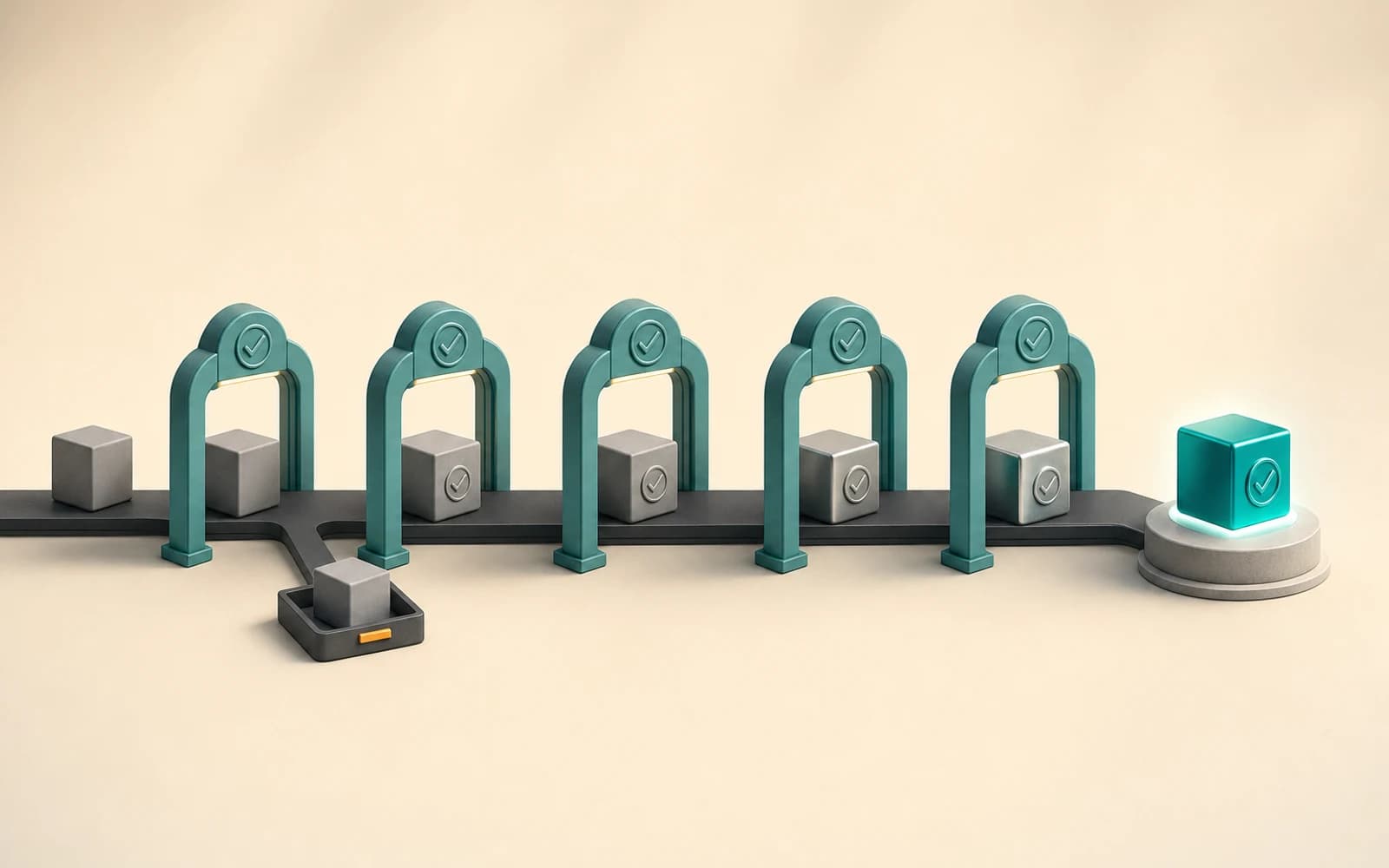
A B2B SaaS startup sells subscription software to other businesses, not consumers, typically priced between $29 and $500 per month per seat or account. The global B2B SaaS market sits near $470 billion in 2026 and is growing 13 to 26 percent annually (Mordor Intelligence). But the size of the market does not make your idea good. A B2B SaaS idea is worth building when it clears three filters. Miss one and you end up with a feature someone else already sells.
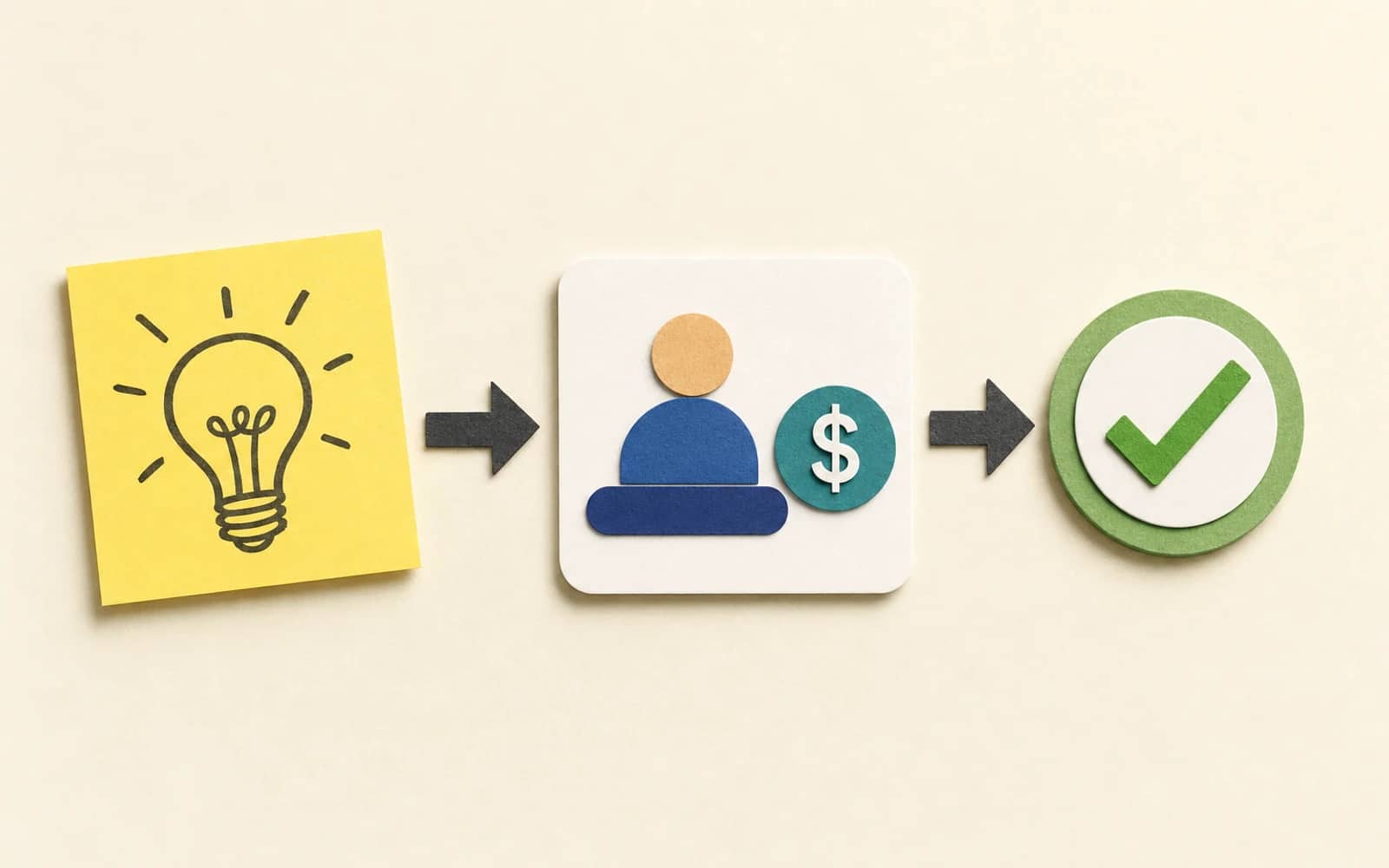
- Name the buyer by job title. "SMBs" is not a buyer. "The sales manager at a 20-person B2B company who exports HubSpot data to Google Sheets every Friday" is a buyer. If you cannot name the title and the pain in one sentence, the idea is too vague to sell.
- Find the existing budget. 42 percent of startups fail because nobody wanted the product. The fix is not a better landing page. It is picking a problem where someone already pays a person, a spreadsheet, or a tool they hate to solve it. No current spend is a red flag, not a green field.
- Prove the moat is not the model. If OpenAI or Google could ship your product as a default in their next release, you are building a wrapper. The AI startup category has 1,213 tracked startups with a median MRR of $7 (BigIdeasDB). B2B sales tools, by contrast, average $6,091 MRR with only 52 competing startups. The more specific the product, the more someone will pay. A generic wrapper earns $7 a month on average.
The macro tailwind is real. Vertical SaaS is growing at 18 to 24 percent a year, roughly double horizontal, and commands 56 percent higher revenue multiples (8.1x versus 5.2x) with net revenue retention above 112 percent (SaaS Rise 2026 Benchmarks). But the opportunity is not in "vertical SaaS" as a category. It is in the specific B2B workflow you pick and the buyer you can reach in 90 days.

Sales and Revenue Operations Ideas
Sales tools average $6,091 MRR across only 52 tracked startups, one of the best revenue-to-competition ratios in SaaS. The buyers here have budget because every dollar of tooling maps to pipeline visibility or closed revenue.
Sales Pipeline Reporting for SMB Sales Teams
Buyer Sales manager or VP Sales at a 10-to-50 person B2B company using HubSpot or Pipedrive.
Workflow it replaces A RevOps analyst (or the founder) manually exporting CRM data to Google Sheets every Friday to build pipeline reports, deal velocity charts, and board slides.
Demand signal Automated reporting dashboards scored the highest swipe rate on BigIdeasDB at 33.3 percent among 147 impressions, making it the single most validated B2B opportunity in their database of 2,463 startups.
Validate before you build Offer to build five sales teams' weekly pipeline reports by hand from their CRM exports. Charge $200 a month per team. If they renew after seeing one accurate forecast, the software is worth building.
Client Onboarding Automation for Professional Services
Buyer Managing partner at a 5-to-50 person law firm, accounting practice, or consultancy.
Workflow it replaces Email chains chasing clients for signed engagement letters, tax documents, ID verification, and intake forms. The partner or a junior associate follows up manually, sometimes for weeks.
Demand signal Training and onboarding systems scored the second-highest validation rate on BigIdeasDB at 32.6 percent. Price point: $199 to $499 per month per firm.
Validate before you build Onboard five firms' new clients manually using digital forms and a Calendly link. Trigger document requests, collect signatures, and track completion in a shared workspace. If firms stop losing clients to slow intake, they will pay to keep the workflow.
Proposal and SOW Builder for B2B Agencies
Buyer Account director or business development lead at a 10-to-100 person marketing, design, or consulting agency.
Workflow it replaces Copy-pasting from old Word docs to build proposals, manually constructing pricing tables, emailing drafts for internal approval, then chasing the client for a signature. A single proposal takes 4 to 8 hours.
Demand signal Content creation tools average $15,921 MRR across 231 tracked startups, the highest-revenue SaaS category in the BigIdeasDB dataset. Agencies already pay for Proposify, PandaDoc, or Qwilr, but most still use Word because the existing tools do not fit their pricing logic.
Validate before you build Build proposals for five agencies from their existing templates. Charge $99 per proposal. If they come back for a second round, the self-serve tool has a market.
Operations and Procurement Ideas
Operations software is where "boring" becomes profitable. The buyers are operations managers with budgets tied to cost savings, not innovation budgets. The workflows are manual and high-frequency, with logic rigid enough that software can own them end to end.
Procurement Quote Normalization for Mid-Market Buyers
Buyer Procurement manager at a 50-to-500 person manufacturer or distributor.
Workflow it replaces Requesting quotes from 3 to 5 suppliers, receiving them in different formats (PDFs, Excel, scanned docs, plain email), then manually retyping line items into a comparison spreadsheet.
Demand signal "Every time you request quotes, you get 3-5 responses in completely different formats, and then spend hours trying to make sense of them," per a recurring complaint on r/SupplyChainLogistics. BigIdeasDB flags freight and vendor quote normalization as a top logistics gap with no dominant incumbent.
Validate before you build Normalize quotes for five procurement teams by hand: extract line items, standardize units, and deliver one comparison view. Charge per RFQ round. If they stop doing it themselves, you have a product.
Vendor Compliance and Document Tracking
Buyer Operations manager at a construction firm, healthcare system, or financial services company that manages 50-plus vendors.
Workflow it replaces An admin emailing vendors to request updated certificates of insurance, W-9s, safety training records, and compliance docs. Tracking expiration dates in a spreadsheet. Following up manually when something lapses.
Demand signal Vendor compliance management is a recurring Capterra complaint cluster with a market-gap score above 8 out of 10. Construction, healthcare, and financial services all require it, and none of the general-purpose tools handle the industry-specific document types well.
Validate before you build Track vendor docs for 10 companies in one industry. Set up a shared portal, auto-request renewals 30 days before expiry, and flag gaps. Charge $5 per vendor per month. If they stop chasing documents, the product is real.
Employee Onboarding for High-Turnover Multi-Location Operators
Buyer HR manager at a restaurant group, retail chain, or warehouse operator with 5-plus locations hiring 20-plus people per month.
Workflow it replaces Printing paper forms at each location, manually assigning training modules, texting managers to confirm certifications, re-entering new hire data into payroll. A single new hire touches 8 to 12 manual steps.
Demand signal The HR and recruiting category shows 101 percent year-over-year growth in BigIdeasDB's dataset. Employee onboarding automation scored 32.6 percent validation, the second-highest of any B2B opportunity tracked. Price point: $199 to $499 per company per month.
Validate before you build Run onboarding for five locations by hand. Digitize the forms, auto-assign training, and track completion in a dashboard. Charge per location. If the HR manager stops printing paper, you have a wedge.


Skip weeks of manual research
Get complete market research, sourced proof, competitor map, and pricing data for your idea instantly.
Why Do Thin AI Wrappers Keep Dying in B2B?
I want to call this out directly because half the B2B SaaS idea lists online are thin AI wrappers dressed up as opportunities. "AI meeting summarizer." "AI email writer." "AI customer support chatbot." These sound like products. They are features. And the data is unambiguous.
BigIdeasDB tracks 1,213 startups in the generic AI category. The median MRR is $7. Not $7,000. Seven dollars. Most make nothing. Meanwhile, B2B sales tools average $6,091 MRR across just 52 startups, and compliance SaaS has the highest willingness to pay and lowest churn of any B2B vertical. The data is one-sided: low-specificity AI categories report median revenue near zero, while narrow vertical tools average thousands a month.
The wrapper trap works like this. You build a clean interface over GPT-4 for a general task. You get early traction from novelty. Then OpenAI ships the same feature natively, and your revenue goes to zero. Around 12 percent of failed AI startups in a dataset of 220 postmortems died exactly this way. Another 15 percent died when the model they depended on became commodity, which is the same failure with a longer fuse.
Every idea on this list avoids the trap the same way: the value sits in the workflow and the data, not in the model call. Take quote normalization: the product works because it understands supplier formats for a specific category of parts, not because a language model drafts a summary. Vendor compliance is similar. The product knows which certificates a construction company needs and when they expire. Strip the AI layer out and see what is left. If the workflow still saves the buyer hours without it, you have a real product. If removing it breaks the value entirely, you are exposed the next time a foundation model ships the same feature natively. I wrote more on this pattern in my guide to validating a startup idea.
Finance and Professional Services Ideas
In finance and professional services, the cost of the problem shows up directly on the P&L. A late invoice is a cash gap the buyer already knows about. That makes the sales conversation shorter than in most B2B verticals, because the pain is denominated in dollars, not productivity.
Accounts Receivable Automation for B2B Service Companies
Buyer Finance lead or office manager at a staffing agency, logistics company, or professional services firm billing $500K to $10M a year.
Workflow it replaces Manually generating invoices in QuickBooks, emailing them to clients, following up on overdue payments with phone calls or emails, and reconciling payments by hand. B2B service companies typically lose 3 to 8 percent of receivables to late or missed payments.
Demand signal Finance operations show strong B2B SaaS economics: high willingness to pay because every dollar recovered goes straight to the bottom line. AP and AR pain is documented across multiple verticals in Capterra and G2 complaint data.
Validate before you build Run AR collections for five service companies as a managed service. Send invoices, chase overdue accounts, report weekly. Charge a percentage of collections recovered. If the recovery rate improves and they keep paying, productize.
Scheduling and Dispatch for Commercial Cleaning Companies
Buyer Operations manager at a 20-to-200 employee commercial cleaning company serving office buildings, medical facilities, or retail locations.
Workflow it replaces Paper schedules, WhatsApp group coordination, manual time tracking, and a client who calls to ask why nobody showed up. Field workers clock in on paper or not at all. Route planning is guesswork.
Demand signal Field service management incumbents are losing goodwill, with declining Capterra sentiment and average ratings near 3.9 stars. Over 40,000 Capterra feature gaps are tagged "Mobile UX," and commercial cleaning is one of the last service verticals without a dominant mobile-first tool.
Validate before you build Dispatch and schedule for three cleaning companies manually. Use a shared calendar, GPS check-ins via a free app, and a simple client status page. Charge $99 per month per company. If they stop using WhatsApp for dispatch, build the full product.
Trade Credit Decisioning for B2B Wholesalers
Buyer Credit manager or CFO at a wholesale distributor selling $5M to $100M a year on net terms to retailers, contractors, or restaurants.
Workflow it replaces Manually reviewing credit applications, calling trade references, setting credit limits based on gut feel, and discovering bad debt only when the invoice is 90 days past due.
Demand signal B2B trade credit is one of the largest financial workflows in the economy, yet most mid-market wholesalers still use spreadsheets and manual checks. Embedded fintech is the valuation multiplier in vertical SaaS: a16z data shows it adds 2 to 5x revenue per customer, and Toast generates 5.4x more in payment services than in software subscriptions.
Validate before you build Underwrite credit decisions for five distributors manually. Pull credit bureau data, call references, set limits, and monitor accounts. Charge per decision or a flat monthly fee. If they stop relying on gut feel, the automated product has a clear path.
Compliance and Risk Ideas
Compliance SaaS is the highest-margin, lowest-churn corner of B2B software. The buyer cannot stop buying. Switching costs are structural, nobody migrates a compliance system mid-audit. And the consequence of not buying is a fine, not a productivity gap. The learning curve is real, but the economics at the end of it are better than most B2B verticals.
Regulatory Change Monitoring for Financial Compliance
Buyer Compliance officer or Chief Risk Officer at a mid-size bank, credit union, insurance company, or fintech.
Workflow it replaces A compliance analyst manually reading regulatory bulletins from CFPB, OCC, state regulators, and the EU, mapping changes to internal policies, and producing gap reports in Word. One regulatory change can take a week to assess manually.
Demand signal BigIdeasDB data shows compliance and regulatory SaaS has the highest willingness to pay, lowest churn, and strongest purchase urgency of any B2B vertical. The EU AI Act enforcement starting June 2026 creates a hard deadline that turns interest into budget.
Validate before you build Monitor regulatory changes for five financial institutions as a service. Deliver a weekly briefing with flagged changes, affected policies, and required actions. Charge $500 to $1,000 per month. If they rely on your briefing instead of their own analyst, productize the monitoring layer.

How Do You Validate a B2B SaaS Idea Before Building?
Every idea above comes with a "validate before you build" step for a reason. The step is always the same shape: do the job by hand for a few paying customers, then build only when they will not go back. Here is the sequence I run, and it takes less than two weeks.
- Name the buyer by job title. "Businesses" is not a buyer. "The procurement manager at a 100-person manufacturer" is. If you cannot find 10 of them on LinkedIn in an hour, the market is too diffuse to sell into.
- Find what they pay today. A spreadsheet, a freelancer on Upwork, a junior hire, a tool they hate. That existing spend is the proof of budget. No current spend usually means no real pain, regardless of what they say in interviews.
- Deliver the outcome manually. Do the work by hand, with software behind the scenes, for five paying customers. A customer who keeps paying for the manual version is telling you the problem is real. Someone who will not pay for that is unlikely to become a paying SaaS customer once you polish the interface.
- Run a demand check. Before the manual sprint, run your idea through a free viability scan in about 60 seconds. It checks the demand signal, competitive landscape, and market size with sourced data so you know whether to spend the two weeks.
I wrote a full walkthrough in my guide to validating a business idea, including the interview scripts and the conversion thresholds that separate a real signal from noise. The short version: 5 percent or higher pre-order conversion from a landing page is a go signal. Below 1 percent means the positioning or the problem is wrong. In between is ambiguous, and you should run the manual-service test before committing.
If you want a broader set to pick from, my SaaS startup ideas for 2026 covers vertical SaaS, and the startup ideas for 2026 roundup goes cross-category. Whichever one pulls at you, run it through the filter above, or run it through my free idea validation tool, before you open a code editor.
FAQ
What are the best B2B SaaS startup ideas for 2026?
The best B2B SaaS startup ideas for 2026 target a named business buyer who already pays for a worse version of the workflow. The strongest opportunities are sales pipeline reporting for SMB sales teams, client onboarding automation for professional services firms, procurement quote normalization for mid-market manufacturers, vendor compliance tracking for regulated businesses, and regulatory change monitoring for financial services. The common thread is a buyer with budget, a manual workflow you can automate, and a vertical where generic tools fall short.
How do I find B2B SaaS ideas with real demand?
Find B2B SaaS ideas with real demand by mining where business buyers already complain. Sort G2 and Capterra reviews by 1-2 stars and read the complaints. Search Reddit communities like r/salesoperations, r/humanresources, and r/SupplyChainLogistics for "I wish there was a tool" and "spreadsheet" posts. Check Upwork for recurring freelance gigs that describe the exact job your product would replace. If a company already pays a junior employee or a freelancer to do the workflow by hand, the budget is yours to win.
Which B2B SaaS vertical has the best economics in 2026?
Compliance and regulatory SaaS has the best economics in 2026: highest willingness to pay, lowest churn, and strongest urgency to purchase because the buyer faces fines or audit failures if they do not act. Finance operations and HR tools also show strong economics. BigIdeasDB data tracking 2,463 startups shows sales tools averaging $6,091 MRR with only 52 competing startups, and content creation tools averaging $15,921 MRR. Vertical SaaS overall commands 56 percent higher revenue multiples than horizontal SaaS (8.1x versus 5.2x) and holds net revenue retention above 112 percent.
How do I validate a B2B SaaS idea before building?
Validate a B2B SaaS idea before building by proving a buyer pays without the software. Name the buyer by job title. Find 10 people in that role and ask what they pay today to solve the problem, even for a spreadsheet or a person they hate. Offer to do the job manually for five of them for a fee. If they pay for the manual version, the SaaS is safe to build. If nobody pays for a worse version now, a polished product will not change that. A free viability scan can check the demand signal and competitive picture in about 60 seconds before you start.
Is B2B SaaS still worth starting in 2026?
B2B SaaS is worth starting in 2026. The market sits near 470 to 490 billion dollars and is growing 13 to 26 percent annually depending on the source. Vertical SaaS is growing at 18 to 24 percent a year, roughly double horizontal SaaS, and commands a 46 percent valuation premium. The opportunity is not in building another horizontal tool. It is in the specific verticals where incumbents score below 4.2 stars on Capterra and the buyer is still on spreadsheets. B2B buyers pay more, stay longer, and buy on ROI rather than impulse.

Vincent
5 years in B2B growth, building Preuve AI in public. 82% of ideas it scores aren't ready, the point is finding out in 10 minutes, not 3 months.
Follow on X →
Building is expensive. Validation is free.
Run your idea through 10 AI agents before you write a line of code. Every claim source-linked.