Key takeaways
- The App Store lists 2.4 million apps, But 61% have zero user ratings (42matters, June 2026), so most "competitors" are ghosts, not real threats.
- Finding competitors is good news: It proves people pay to solve the problem. Roughly 99.5% of consumer apps never break even (Gartner), so validated demand is the scarce resource, not novelty.
- App store review mining is the edge: 2-3 star reviews on existing apps reveal the exact gaps, frustrations, and missing features your app can own.
- Kill the idea only when three signals align: A dominant player with 4.5+ stars, no identifiable underserved segment, and zero distribution advantage on your side.
Apple's App Store lists 2,407,695 apps as of June 2026. Google Play hosts another 1.8 million. So yes, your app idea has probably been built before. That number stops most people mid-sentence. Keep reading.
I wrote a broader guide on how to know if your startup idea already exists. This page is the app-specific version: how to check the App Store and Google Play for existing competitors, how to read what you find, and how to decide whether to differentiate, wedge in, or kill the idea entirely. If you are building a SaaS product instead, I wrote a separate SaaS saturation checklist for that.
Will your idea survive the market?
Preuve AI runs 10 agents against live market data and links every claim to a source. Free analysis in 60 seconds.
How Do I Check if My App Idea Already Exists?
An app idea existence check is a structured search across app stores, web indexes, startup directories, and user communities to find out whether someone already built what you are planning, and whether they built it well enough to block you.
Most advice says "search the App Store." That is step one of five. The problem with stopping there is that app store search is terrible. It ranks by downloads and paid placements, not relevance. A competitor with 200 users and a better product for your niche will not appear on the first page.
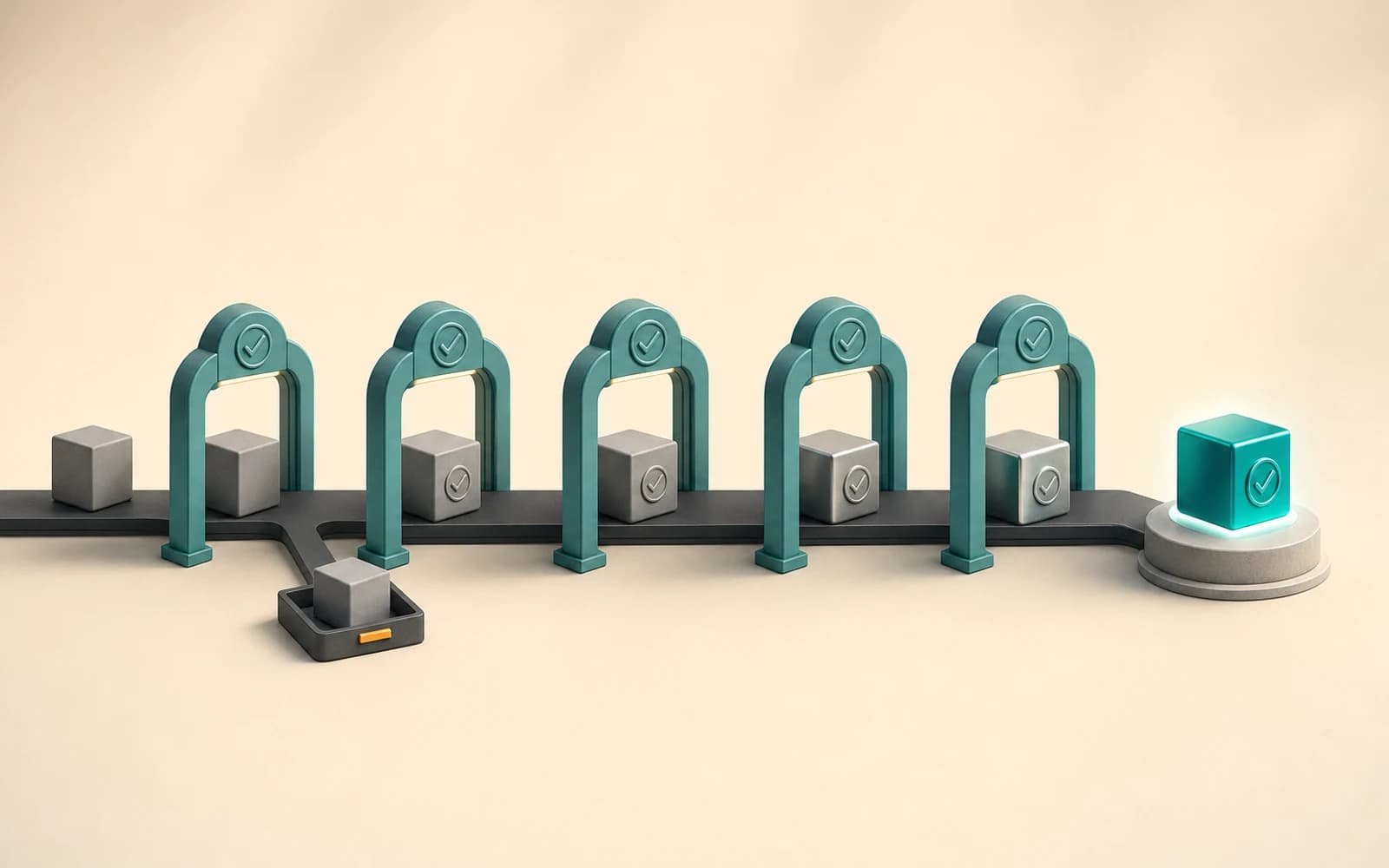
Here is the checklist I use. Each layer catches competitors the others miss.
App Store and Google Play. Search your problem keyword, not your product name. If you are building a habit tracker, search "habit tracker," "daily routine," "goal tracker," "streak app." Tap into the "Related Apps" section on each result. That sidebar catches competitors the main search buries.
Google search. Search "[problem] app" and "[problem] app alternative." Google indexes landing pages, review sites, and blog posts that the app stores do not. A competitor with no App Store presence but a web app and a waitlist still counts.
Product Hunt. Search your category. Sort by newest. Product Hunt catches early-stage apps that have not hit the stores yet or are still in beta. Pay attention to the comment threads, because founders often reveal their roadmap and target audience there.
Y Combinator startup directory. YC's public company list is searchable by category and includes dead startups. Dead competitors are data: they tell you what did not work and why.
Reddit and niche communities. Search r/apps, r/androidapps, r/iphone, and subreddits for your target niche. Real users complain about apps they use daily. Those complaints are validation and product specs rolled into one.
If you search all five layers for 30 minutes and find nothing, do not celebrate. Either the market does not exist, or your search terms are wrong. Try synonyms. Try describing the pain instead of the solution. I built Preuve's competitor scan to run this across 60+ sources in about 60 seconds, because doing it manually takes an afternoon and still misses things.
Is It Bad if Someone Already Has My App Idea?
Almost always, finding competitors is the better outcome.
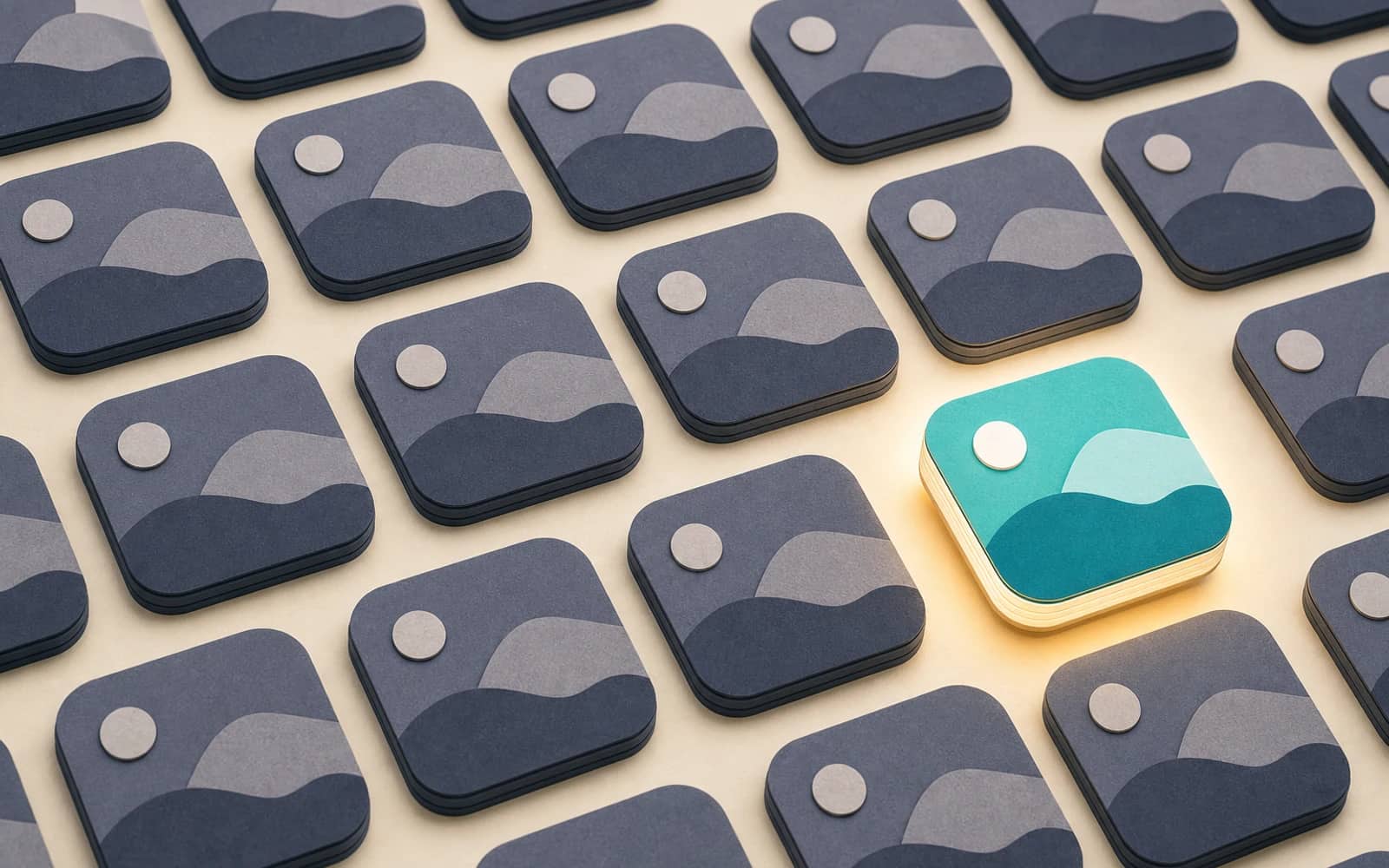
The App Store lists 2.4 million apps, but 61% of them have zero user ratings (42matters, June 2026). That is 1.47 million apps no one has reviewed. They are not competition. They are ghosts: abandoned projects, weekend experiments, apps that never found a single paying user.
Google Play tells a similar story from the other direction. Between early 2024 and April 2025, Google removed 1.6 million low-quality apps (Appfigures via TechCrunch), cutting its catalog from 3.4 million to 1.8 million, a 47% drop. The apps that got purged were text-only shells, single-wallpaper apps, and abandoned developer experiments. The fact that competitors exist in a category after that purge is a sign of real demand, not saturation.
Roughly 99.5% of consumer apps never break even (Gartner baseline, widely cited). The bottleneck is distribution and retention, not novelty. Competitors who cracked distribution prove the market exists. Bad reviews on those competitors are even better news, because they mean the problem is real but the solutions are still weak.
What should worry you is zero competitors and zero search volume. I covered why an empty landscape is a warning sign in my hub guide. For apps specifically, an empty category usually means one of two things: either no one finds the problem painful enough to download a new app for it, or the job belongs inside something they already have open (a browser tab, a spreadsheet, a messaging thread) and will never warrant its own icon on a home screen.
Skip weeks of manual research
Get complete market research, sourced proof, competitor map, and pricing data for your idea instantly.
What Should I Do if My App Idea Is Already Taken?
If your app idea is already taken, read the 2-3 star reviews of existing competitor apps to find the segment they ignore, the feature they skip, or the platform they neglect, then build your product around that gap. The answer depends on what you find in the competitor scan. Not all "taken" markets are the same. Here is how I sort the findings into a decision.
Mine the 2-3 Star Reviews
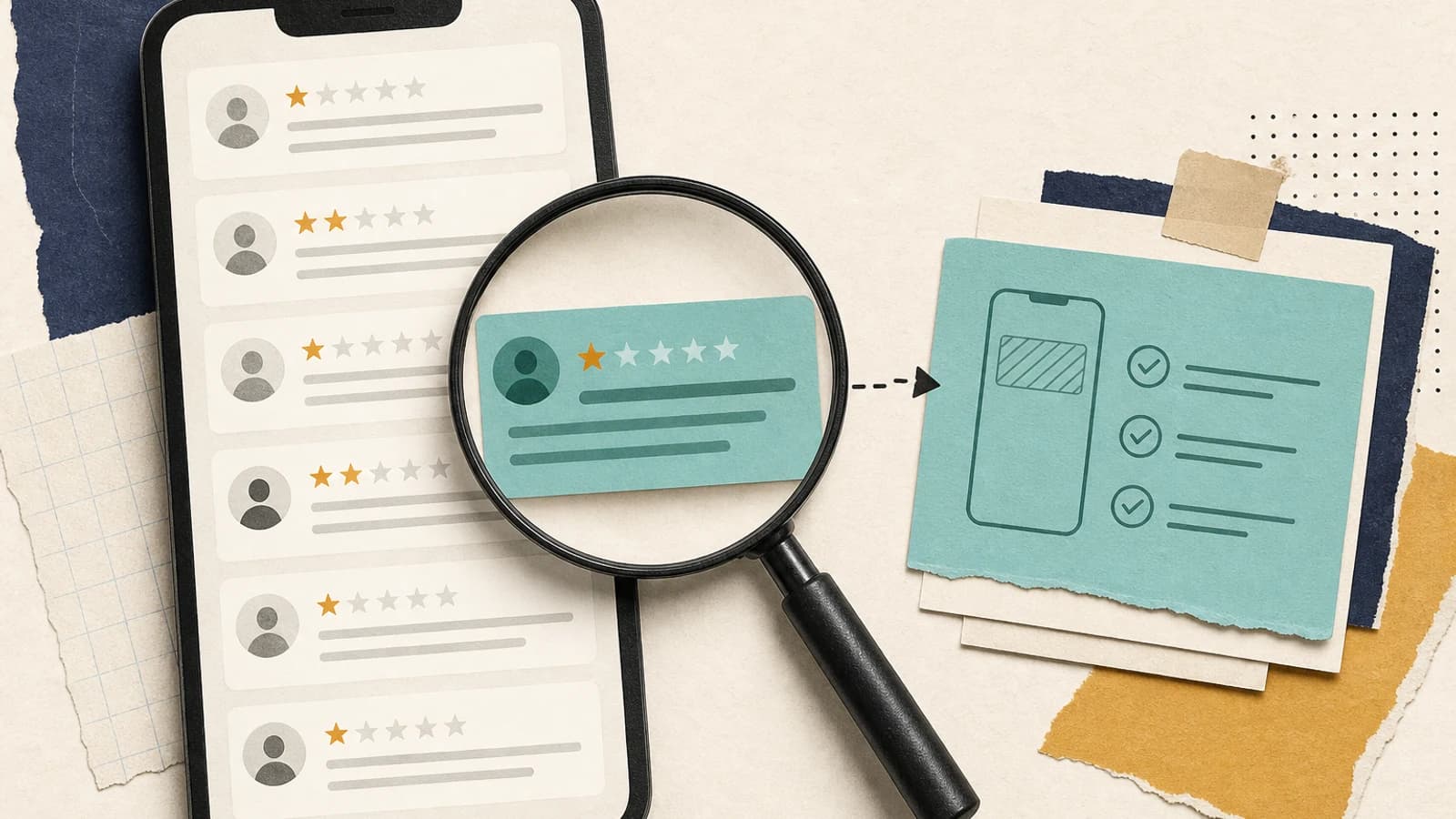
This is the single most underrated step in app validation. Download the top 3-5 competitors. Open their App Store or Google Play listing. Filter reviews to 2-3 stars. Those are the users who cared enough to try the app, decided it was not good enough, and bothered to say why. Their complaints are your product brief.
Group the complaints into categories: onboarding friction, missing features, performance issues, and pricing complaints. Platform gaps ("no Android version," "no offline mode," "no Apple Watch support") usually deserve their own column because they point to a whole user segment being locked out. If you see the same complaint repeated across multiple competitors, that is your wedge.
I recommend building a simple table like this for each competitor:
| Competitor | Rating | Top complaint (2-3 star) | Your wedge |
|---|---|---|---|
| Competitor A | 4.1 stars, 12K reviews | "Crashes on Android 14," "no offline mode" | Offline-first, Android-native |
| Competitor B | 3.6 stars, 800 reviews | "Too expensive for what it does," "cluttered UI" | Simple UX, lower price tier |
| Competitor C | 4.5 stars, 45K reviews | "Great for pros, overkill for beginners" | Beginner-focused onboarding |
The "Your wedge" column is the actual decision. Pick one gap, for one user type, and make that the whole pitch for the first six months. Everything else can come later.
Three Differentiation Paths for Apps
Once you have the review data, your differentiation usually comes from one place, and it is almost never from features:
Niche down on audience.
The existing apps serve "everyone." You build for one profession, one condition, one workflow. A habit tracker for ADHD. A budgeting app for freelancers. A booking app for personal trainers. Narrow beats broad in app stores because a focused app earns better reviews, stronger retention, and more organic word-of-mouth in its niche community.
Win on platform or context.
Competitors are iOS-only, you go Android-first. They require a login, you work offline. They are web-based, you build native with push notifications and widgets. Platform gaps are invisible from a feature list but obvious from the 2-star reviews ("wish this worked on my Samsung" / "need offline mode").
Simplify ruthlessly.
Established apps accumulate features. New users drown in settings and menus. If the top complaint is "too complicated" or "overkill for what I need," strip the product to one core job and do it faster. This is how Linear beat Jira for small teams, and how many successful indie apps compete against bloated incumbents.
If you want app ideas that already have validated demand and a clear 2026 cost shift, I keep a curated list of app startup ideas for 2026 with the wedge spelled out for each one.
How Do I Differentiate My App from Existing Competitors?
In the app world, differentiation almost always comes down to who you are building for and how those people find you. Features are table stakes. A competitor can copy any feature in a sprint, but they cannot copy your distribution channel or your relationship with a niche community.
When I was building Preuve, I looked at existing validation tools and realized none of them pulled live competitor data automatically. That was my wedge. I use a quick replacement test to find yours. Ask yourself: if a user has Competitor A installed, what specific scenario makes them uninstall it and install mine instead? If you cannot answer that in one sentence, the differentiation is not sharp enough.
The replacement trigger is almost never "more features." It is usually one of these:
- A job they do badly: "This app tracks expenses but makes splitting costs with a partner impossible."
- A context they ignore: "Works great on Wi-Fi, useless on the subway."
- A price they cannot stomach: "I need one feature from their $15/month plan."
- A trust they broke: "They started showing ads inside my journal entries."
Find that trigger in the review data, and you have your positioning. Then validate it before you build. I wrote a step-by-step on how to validate a product idea that covers the demand test, customer interviews, and willingness-to-pay signals you want before writing code.
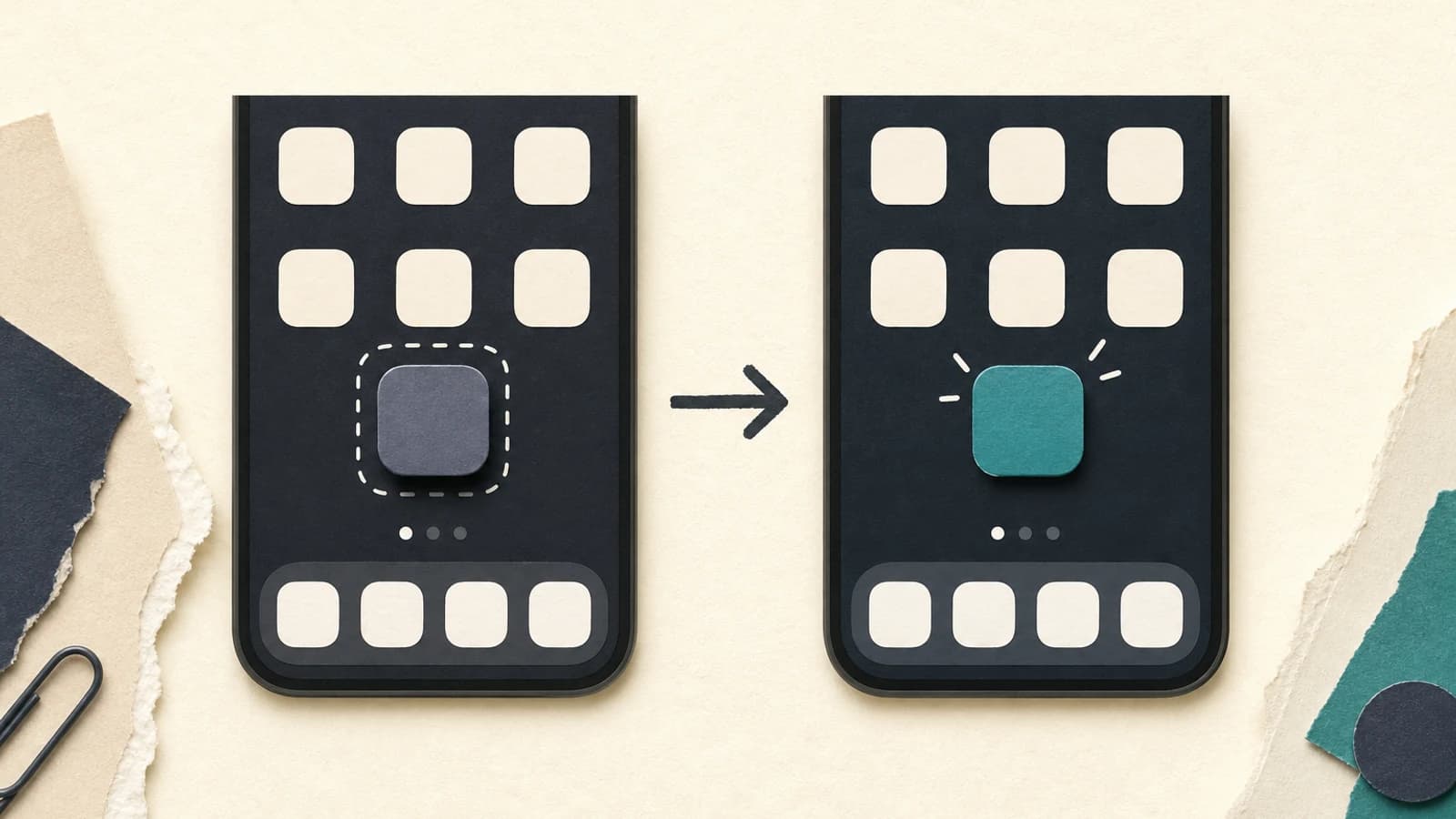
When Should I Kill an App Idea Instead of Competing?
Not every idea is worth fighting for. I have killed ideas myself, and the ones I regret are the ones I held onto too long, not the ones I dropped.
I have a personal checklist for when to walk away. The idea dies when these signals show up together:
- 1A dominant player owns the category. They have 4.5+ star ratings, tens of thousands of reviews, and are still shipping updates regularly. That last part matters most, because a stagnant dominant app is still beatable.
- 2No identifiable underserved segment. You read the 2-3 star reviews and cannot find a pattern. The complaints are scattered, individual, not structural. There is no "this whole group of users is ignored" signal.
- 3You have no distribution advantage. No existing audience, no community presence, no partnership, no content channel, no paid budget. In the app world, building without distribution is building into a void. App Store search alone will not save you.
If all three are true at the same time, move on. Spend those months on an idea where at least one of those signals is in your favor.
If only one or two are true, there is likely an opening. A dominant player is still beatable if their reviews show a segment they are ignoring. And if you already have a distribution channel (a newsletter, a community, a content following), you can reach users the incumbent never bothered targeting, even without a visible product gap.
The fastest way to pressure-test all three signals at once is to run your idea through a structured validation scan that checks competitor strength, market demand, and your positioning gaps in one pass. I built Preuve to do exactly that, because doing it manually kept costing me entire weekends.
FAQ
How do I quickly check if my app idea already exists?
Search the Apple App Store and Google Play with problem keywords, not your product name. Then check Google, Product Hunt, and the Y Combinator startup directory. If you find nothing in 30 minutes, broaden your keywords before assuming the idea is novel. Preuve AI automates this across 60+ sources in about 60 seconds.
Is it bad if someone already built my app idea?
No. Competitors prove the problem is real and people pay to solve it. Most successful apps entered crowded markets. What matters is whether existing apps serve your specific target user well enough to lock you out, or whether they leave gaps you can own.
How many apps are on the App Store and Google Play in 2026?
Apple App Store lists about 2.4 million apps as of June 2026 (42matters). Google Play hosts roughly 1.8 million after removing 1.6 million low-quality apps throughout 2024 (Appfigures via TechCrunch). About 61% of App Store apps have zero user ratings, meaning most are abandoned or invisible.
What should I do if my app idea is already taken?
Read 2-3 star reviews of existing competitor apps. Find the segment they ignore, the feature they skip, or the platform they neglect. Build your wedge around that gap. A taken market with frustrated users is a stronger starting point than a novel idea with no buyers.
When should I abandon an app idea because of competition?
Consider killing the idea when three signals align: a dominant competitor with 4.5+ star ratings and strong retention, no identifiable underserved user segment, and no distribution advantage on your side (no existing audience, no channel, no partnerships). If even one signal is missing, there is likely an opening.
Cite this page
Last updated July 2, 2026
Forat, V. (2026, July 2). Is My App Idea Already Taken? Preuve AI. https://preuve.ai/blog/is-my-app-idea-already-taken
Forat, Vincent. “Is My App Idea Already Taken?” Preuve AI, 2 July 2026, preuve.ai/blog/is-my-app-idea-already-taken.
Forat, Vincent. “Is My App Idea Already Taken?” Preuve AI. July 2, 2026. https://preuve.ai/blog/is-my-app-idea-already-taken.
@misc{forat2026-is-my-app-idea-already-taken,
  author = {Forat, Vincent},
  title = {{Is My App Idea Already Taken?}},
  howpublished = {Preuve AI},
  year = {2026},
  month = jul,
  url = {https://preuve.ai/blog/is-my-app-idea-already-taken},
  note = {Last updated July 2, 2026}
}
Vincent
5 years in B2B growth, building Preuve AI in public. 82% of ideas it scores aren't ready, the point is finding out in 10 minutes, not 3 months.
Follow on X →
Building is expensive. Validation is free.
Run your idea through 10 AI agents before you write a line of code. Every claim source-linked.