Key takeaways
- A saturated market is one where existing supply has met or exceeded buyer demand, Leaving new entrants with no obvious segment of underserved customers to win. CB Insights found that 42% of startup failures trace back to "no market need," and entering a saturated market without a differentiated wedge is the most common version of that mistake.
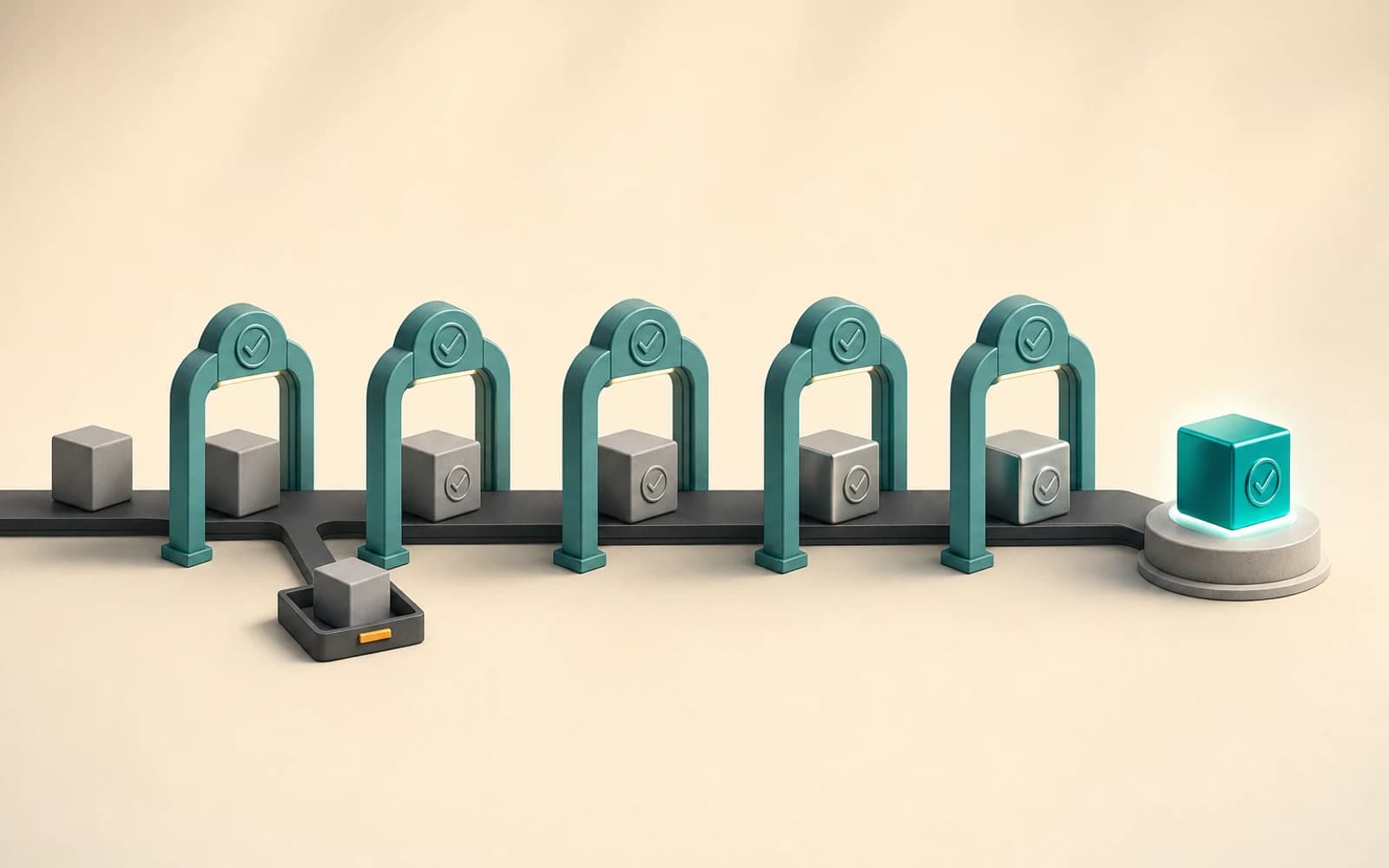
- Five measurable signals separate "competitive" from "saturated": Competitor density (funded players targeting your exact buyer), search-trend direction (Google Trends slope), funding momentum (recent VC deal flow), pricing compression (race-to-free dynamics), and switching-cost depth (how locked in buyers are to incumbents).
- Saturation is not binary and not permanent. A market saturated at the horizontal layer can be wide open in a vertical niche. G2 lists 150,000+ software products across 1,351 categories, yet most categories still contain underserved segments a focused founder can win.
- The checklist works in one afternoon with free tools: Crunchbase for competitor counts, Google Trends for demand direction, G2/Capterra reviews for gap analysis, and a free scan for a sourced viability check. No paid subscriptions required.
G2 now lists 150,000+ software products across 1,351 categories, and the number climbed again after the G2-Capterra merger closed in February 2026. If you are a founder staring at a market and wondering whether it is too crowded to enter, that number alone will not tell you. Most of those categories still contain open segments. Some are graveyards. I will show you how to tell them apart.
I built Preuve AI to scan 60+ live data sources and surface whether a market has room before a founder writes code. The saturation question is the one I see most often, and it is almost always framed wrong. People ask "is this market saturated?" when the real question is "is the specific slice I am targeting still open?" This post gives you the framework to answer that.

Will your idea survive the market?
Preuve AI runs 10 agents against live market data and links every claim to a source. Free analysis in 60 seconds.
What Does a Saturated Market Actually Mean?
A saturated market is a market where the existing supply of products or services has met or exceeded buyer demand, leaving no obvious segment of underserved customers for a new entrant to win. Every potential customer already has access to a solution that works well enough. New entrants can only grow by taking share from someone who already has it.
In economics, the definition is straightforward: market saturation occurs when a product has been distributed to the maximum extent possible given consumer purchasing power and the current competitive and technological landscape. The Wikipedia entry on market saturation puts it as the point where "actual demand equals potential demand."
For founders, the practical meaning is sharper. A saturated market is one where your target buyer already has 10+ options, most of those options are good enough, switching is painful, and no segment of the buyer pool is underserved. Saturation is not the same as competition. Competition means demand is proven and you can find a wedge. Saturation means that demand has already been captured, and the wedge does not exist unless you redefine what you are building.
The classic example is smartphones in developed countries. Pew Research reports that 90%+ of adults in developed economies own a smartphone. The market is not dead, but growth comes from upgrades now, not from converting new buyers. That is replacement-cycle saturation.
In SaaS, the equivalent is a category like CRM. Dozens of funded competitors serve the same buyer profile. Salesforce, HubSpot, and Pipedrive have decade-long switching costs baked in. A new generic CRM targeting "small businesses" is entering a saturated market. A CRM targeting veterinary clinics with integrated patient-record sync is entering a competitive one. Same category, different saturation level.
What Are the Signs of a Saturated Market?
Before you run numbers, you can spot saturation by watching for patterns. I have organized these into a table because the signs overlap and it helps to see them side by side.
| Signal | What It Looks Like | Where to Check |
|---|---|---|
| Sales growth stalls | Revenue flatlines or grows only through pricing, not new customers | Public earnings, competitor pricing pages |
| Pricing race to free | Competitors undercut each other, freemium becomes default, margins compress | Competitor pricing pages, G2/Capterra listings |
| Platform absorption | A major platform ships your product as a built-in feature (Zoom adding AI summaries, Google Docs adding AI writing) | Platform release notes, product blogs |
| VC deal flow dries up | Investors stop funding new entrants in the category, pivot to adjacent spaces | Crunchbase deal search, PitchBook reports |
| Search interest declines | Google Trends for the category keyword shows a flat or downward slope over 24 months | Google Trends (free) |
| Consolidation wave | M&A deals pick up as larger players absorb smaller ones | SaaS companies accounted for 2,600+ M&A deals in 2025 (Zylo 2026 SaaS Management Index) |
| High switching costs | Buyers are locked in via data migration pain, integrations, or annual contracts | G2 reviews (search "switching" or "migration") |
None of these signals alone proves saturation. Two or three together make a pattern. Five or more and you are looking at a market where the value has been captured. The question then becomes whether a specific vertical slice is still open inside the saturated category.
How Do You Know If a Market Is Too Crowded?
This is the checklist I wish I had before I started building. Most "market saturation" content stops at theory and vague advice to "differentiate." That is not useful when you have a specific idea and need a yes-or-no answer by Friday.
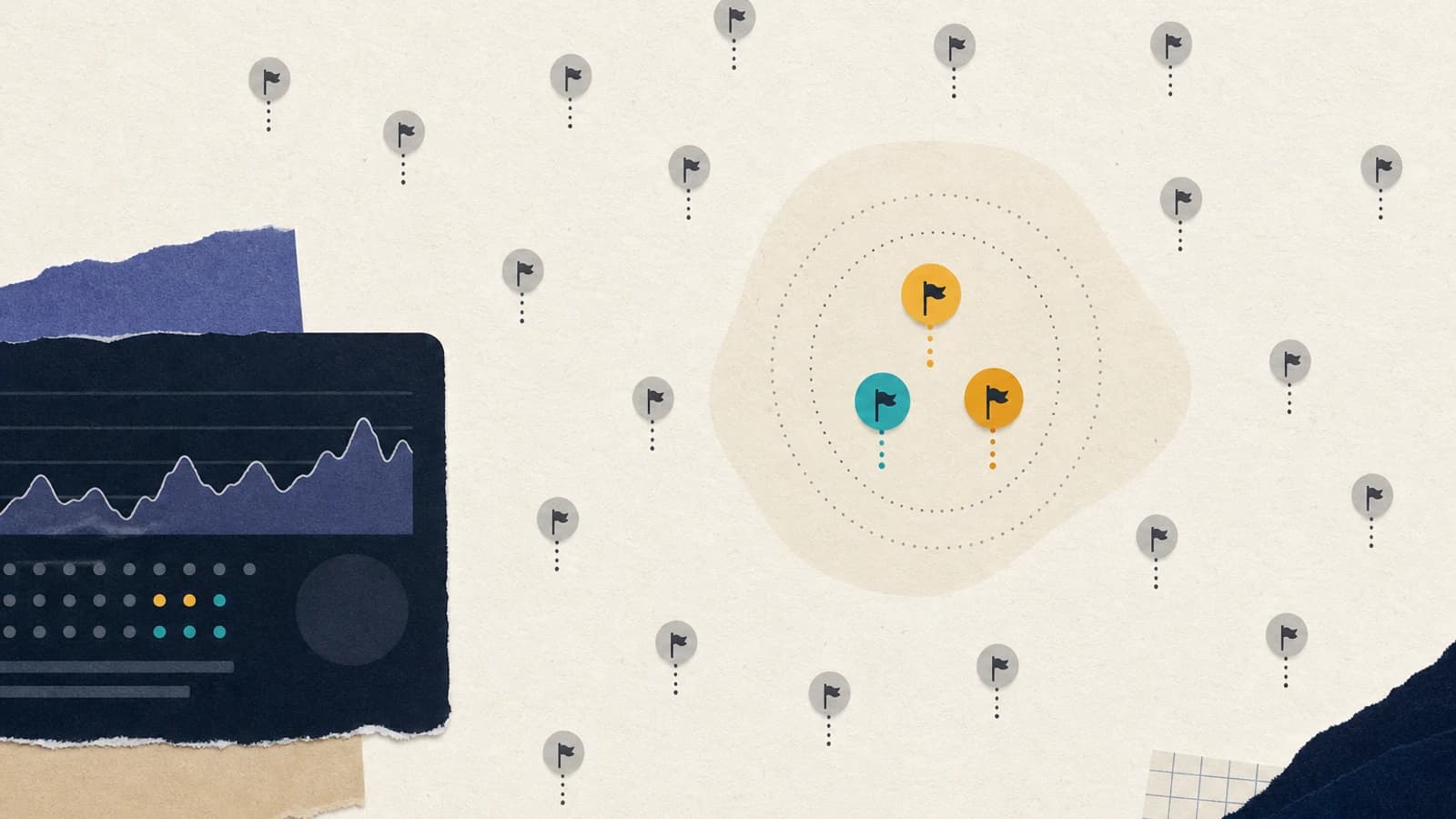
I have distilled the saturation signals into five checks with concrete thresholds you can run in a single afternoon using free tools. No Crunchbase Pro subscription required.
The 5-Signal Saturation Checklist
Competitor density. Search your exact buyer segment (not the broad category) on Crunchbase, G2, and Capterra. Count the funded players who target the same buyer. Under 5 = underserved. 5 to 15 = competitive but open. Above 15 = red flag. The keyword is "exact buyer segment." There are 42,000+ SaaS companies globally according to Backlinko, but most categories are broad umbrellas. "Project management" is saturated. "Project management for general contractors" might have three competitors.
Search-trend direction. Open Google Trends and search the category keyword over the last 24 months. Rising = growing demand. Flat = mature. Declining = contracting. A declining trend means buyer interest is falling, not just that competitors are crowding in. That is worse than saturation, it is a shrinking pie.
Funding momentum. Check Crunchbase for recent deals in the category over the last 12 months. Active deal flow = investors still see room. Collapsed deal count = investors have moved on. Startup shutdowns in 2025 were up 30% from 2024, according to DemandSage. If the shutdown rate in your category is climbing while deal count is dropping, the market has peaked.
Pricing compression. Visit the pricing pages of the top 10 competitors. If more than half offer a free tier and the paid floor is under $10/month, margins are dead. The AI writing assistant category is the canonical example: 1,213 tracked startups compete for a median MRR of $7, according to BigIdeasDB (my review of the tool). Seven dollars a month. That is not a business, that is a rounding error.
Switching-cost depth. Read the 1-star and 2-star reviews on G2 for the top 3 incumbents. Search for "switching," "migration," and "locked in." High switching costs mean buyers will not move to you even if your product is better. Low switching costs mean the door is open, but also mean incumbents can copy your features fast. The sweet spot is medium switching costs with a clear gap in the incumbent product.
How to score it: 0-1 red signals = competitive, proceed with validation. 2-3 red signals = crowded, look for a vertical wedge. 4-5 red signals = saturated, either niche down hard or pick a different market. I wrote a deeper look at the 12 most saturated categories in overdone startup ideas.
What Is the Difference Between a Competitive Market and a Saturated One?
This distinction matters more than most founders realize, and getting it wrong costs months of building in the wrong direction.
| Dimension | Competitive Market | Saturated Market |
|---|---|---|
| Competitor count | 3-15 funded players | 15+ funded players, often 50+ |
| Buyer behavior | Buyers are shopping, comparing, willing to try new tools | Buyers are locked in, satisfied enough, not actively looking |
| Pricing | Healthy margins, willingness to pay is proven | Race to free, freemium default, margins compressed |
| Search interest | Rising or stable Google Trends | Flat or declining Google Trends |
| Underserved segments | Clear gaps in reviews, verticals unowned | Most segments covered, incumbents have strong reviews |
| What it means for you | Green light: demand is validated, find your wedge | Yellow light: niche down or walk away |
Competition is a demand signal, proof that buyers exist and will pay. Saturation means those buyers are already locked in somewhere else and are not actively looking to switch.
The CB Insights failure data makes this concrete. Their 2024 update analyzed 431 failed VC-backed companies and found that 42% failed due to "no market need." But look closer: many of those founders entered markets with plenty of demand. Their problem was that the demand was already being served well enough. That is saturation. The buyer had a real need and a solution they were satisfied with, so they never went looking for yours.

Skip weeks of manual research
Get complete market research, sourced proof, competitor map, and pricing data for your idea instantly.
Can You Still Succeed in a Saturated Market?
Yes, but not head-on. In every case I have seen, the move is the same: narrow the target until the direct competition thins out.
The clearest paths I have seen:
- Vertical niche. CRM is saturated. CRM for veterinary clinics is not. Project management is saturated. Project management for general contractors has three competitors. The category name stays the same, but the buyer segment changes everything.
- Underserved segment. Read the 1-star and 2-star G2 reviews of the top incumbent. Find the buyer group that hates the product. Build for them. This is how Basecamp survived against Asana and Monday.com, by refusing to add complexity for the enterprise segment and owning the "small team that wants simple" niche.
- Category reframe. Stop competing in the existing category and redefine what you are. Fintech is saturated. "Bookkeeping automation for solo CPAs" is a different market with different buyers and different competitors. The reframe is not marketing spin. It changes who you build for, what features matter, and which competitors are relevant.
I wrote a full walkthrough of the AI market saturation landscape in 2026, where the top layer (wrappers, chatbots, writing tools) is a graveyard but vertical AI is wide open. Same principle applied to a specific sector.
How Do You Find an Unsaturated Niche?
An unsaturated niche is a market segment where buyer demand exists but fewer than 5 funded competitors serve it. The best unsaturated niches sit where software penetration is low but buyer spending is proven. That combination means buyers exist and will pay, but nobody has built a good enough tool yet.
Here is how I look for them:
Start with boring industries.
HVAC, pest control, landscaping, construction, property management. These industries spend money on software (field service management alone is a multi-billion dollar market per Grand View Research) but most niches within them have fewer than 5 funded competitors targeting a specific trade. Boring is where the margins are.
Check for manual workarounds.
If your target buyer is currently solving the problem with spreadsheets, email chains, or paper, that is a demand signal with zero software saturation. The workaround proves willingness to solve the problem. The lack of software proves nobody has captured it yet.
Validate the gap with complaint data.
Search Reddit, industry forums, and G2 reviews for your target buyer complaining about the current solution. "I wish [tool] could do X" is the strongest signal that a gap exists. No complaints about a category means buyers are satisfied, and that is saturation.
I compiled a list of 10 undersaturated startup ideas for 2026 with thin-competition signals and proven-demand signals for each. If you want the specific niches, start there.

Why Market Saturation Kills More Startups Than Bad Products
The CB Insights post-mortem data shows 42% of startups fail because of "no market need", making it the #1 killer ahead of running out of cash (29%) and team problems (23%). Their 2024 update with 431 companies barely moved the number: 43%. A saturation check is one half of idea validation; the other half is confirming anyone wants the thing at all.
But "no market need" is a misleading label. It bundles together two very different mistakes: building something nobody wants, and building something everybody already has. The second mistake is entering a saturated market. The buyer need is real, but the buyer has no reason to switch from what they already use.
In SaaS specifically, the scale of the problem is visible in the numbers. Backlinko puts the global SaaS company count at 42,000+. Organizations manage an average of 305 SaaS applications according to Zylo's 2026 SaaS Management Index. That is not a demand problem, it is an oversupply problem. Every need has already been filled, often multiple times over.
The e-commerce vertical tells the same story at a different scale: roughly 80% of e-commerce businesses fail within their first two years, per Global Work Digital. Shopify, Amazon, and TikTok Shop lowered barriers to entry so far that the market absorbed more sellers than buyers could support.
This is why I built the saturation check into Preuve's free scan. The scan pulls competitor density, demand signals, and market-size data from 60+ sources so you can see whether a market has room before you commit. The market validation framework I wrote covers the full 5-step process, but the saturation check is step zero. If the market is already full, the rest of the validation does not matter.
How to Run a Saturation Check Before You Build
Here is the exact sequence I recommend. Total time: 2-4 hours for the manual version, about 60 seconds if you use a free scan to automate the data pull.
Name your exact buyer. Not "small businesses." Not "startups." The specific person: "solo CPAs with fewer than 50 clients who do their own bookkeeping." Saturation is always relative to a buyer segment. A market that is saturated for one buyer might be empty for another.
Run the 5-signal saturation checklist. Competitor density, search-trend direction, funding momentum, pricing compression, switching-cost depth. Score each signal as green, yellow, or red.
Read the incumbent reviews. Pull up the top 3 competitors on G2 and read their 1-star and 2-star reviews. You are looking for a pattern of complaints from your exact buyer segment. If the complaints match what you plan to solve, the market is competitive (open). If buyers are satisfied, it is saturated (closed).
Make the call. 0-1 red signals: build. 2-3 red signals: niche down before building. 4-5 red signals: pick a different market or reframe the category entirely. Use it as a starting point, not a verdict. The signals narrow where to look, but you still make the call.
If you want to skip the manual research and get a sourced answer in under two minutes, run a free scan on your idea. The scan checks competitor density, demand signals, and market sizing across 60+ live data sources and returns a viability score with every number linked to its source.
FAQ
What is a saturated market in simple terms?
A saturated market is one where the supply of products or services has caught up with (or passed) customer demand. Every potential buyer already has access to a solution, so new entrants cannot grow without taking share from an incumbent or creating a new sub-segment. Classic examples include smartphones in developed countries (90%+ adult ownership per Pew Research) and generic SaaS categories like CRM, where dozens of funded competitors serve the same buyer.
How do you tell if a market is too crowded for a startup?
Run five checks: count funded competitors targeting your exact buyer segment on Crunchbase and G2 (above 15 is a red flag), check Google Trends for the category keyword (flat or declining means contracting demand), look at recent VC deal flow (collapsing deal count means investors have moved on), compare pricing across incumbents (race-to-free signals margin death), and assess switching costs (high lock-in means buyers will not move easily). All five red means the market is saturated. Two or fewer red means competitive but viable.
Can you still succeed in a saturated market?
Yes, but only by narrowing your target until the competition thins out. Three approaches work: niche to a specific vertical (CRM for veterinary clinics, not CRM for everyone), target an underserved segment where incumbents have poor reviews, or reframe the category entirely (fintech becomes bookkeeping automation for solo CPAs). A head-on assault in a saturated horizontal market almost never works for a new entrant with limited capital.
What is the difference between a competitive market and a saturated one?
A competitive market has 3 to 15 funded players with proven demand and identifiable weaknesses you can exploit. Competition validates that buyers will pay. A saturated market has more than 15 well-funded competitors, commodity pricing, strong incumbent lock-in, and no obvious underserved segment. The distinction matters because competition is a green light (demand exists), while saturation is a yellow light (demand exists but has already been captured).
How do you find an unsaturated niche in 2026?
Look where software penetration is low but buyer spending is proven. Regulated verticals (healthcare billing, legal compliance), trades and field services (HVAC, pest control, construction), and back-office operations in legacy industries often have fewer than five funded competitors per niche. Validate with three checks: confirm search demand for the problem, verify that at least one incumbent charges money for a manual version, and check that no platform vendor could ship your product as a free default feature.
Cite this page
Last updated July 17, 2026
Forat, V. (2026, July 17). What Is a Saturated Market? Preuve AI. https://preuve.ai/blog/what-is-a-saturated-market
Forat, Vincent. “What Is a Saturated Market?” Preuve AI, 17 July 2026, preuve.ai/blog/what-is-a-saturated-market.
Forat, Vincent. “What Is a Saturated Market?” Preuve AI. July 17, 2026. https://preuve.ai/blog/what-is-a-saturated-market.
@misc{forat2026-what-is-a-saturated-market,
  author = {Forat, Vincent},
  title = {{What Is a Saturated Market?}},
  howpublished = {Preuve AI},
  year = {2026},
  month = jul,
  url = {https://preuve.ai/blog/what-is-a-saturated-market},
  note = {Last updated July 17, 2026}
}
Vincent
5 years in B2B growth, building Preuve AI in public. 82% of ideas it scores aren't ready, the point is finding out in 10 minutes, not 3 months.
Follow on X →
Building is expensive. Validation is free.
Run your idea through 10 AI agents before you write a line of code. Every claim source-linked.