The short answer
Google Antigravity is worth trying in 2026: the free tier runs a real coding agent on Gemini 3.8 Flash and, until November 2, 2026, Claude Opus 4.6. It is a risky daily driver, because Google describes its quotas in words instead of numbers, changed them several times this year, and suspends accounts that reach it through other tools. Pick Antigravity for cheap, fast Gemini work and parallel agents, Cursor for an editor-first loop with a monthly pool, and Claude Code for the newest Claude models in the terminal.
Key takeaways
- Antigravity is a good free agent and a shaky paid one. The free tier runs Gemini 3.8 Flash, Gemini 3.1 Pro and, until November 2, 2026, Claude Opus 4.6. Plans that add quota are $20, $100 and $200 a month, and Google gives no quota in numbers for any of them.
- The quota changed under paying users all year. Users reported cuts in March, Google rewrote the plans on May 19, raised Gemini limits 3x twice that same week, and paid users reported 2- and 4-day lockouts in June.
- Logging in through other tools can cost you access. Google's Terms call third-party access a breach that may suspend your Antigravity account. In February 2026 Google cut off paying users of tools like OpenClaw, often without warning.
- Cursor and Claude Code are steadier, not more transparent. Cursor meters a monthly pool at API prices from $20; Claude Code meters a five-hour session plus a weekly cap from $20. Neither publishes a fixed prompt count either.
- Nothing in Antigravity checks demand. Its 2.0 features let agents run longer without you, and none asks who will pay for the result. Google's Terms make you solely responsible for whether the agent's work fits its use case.
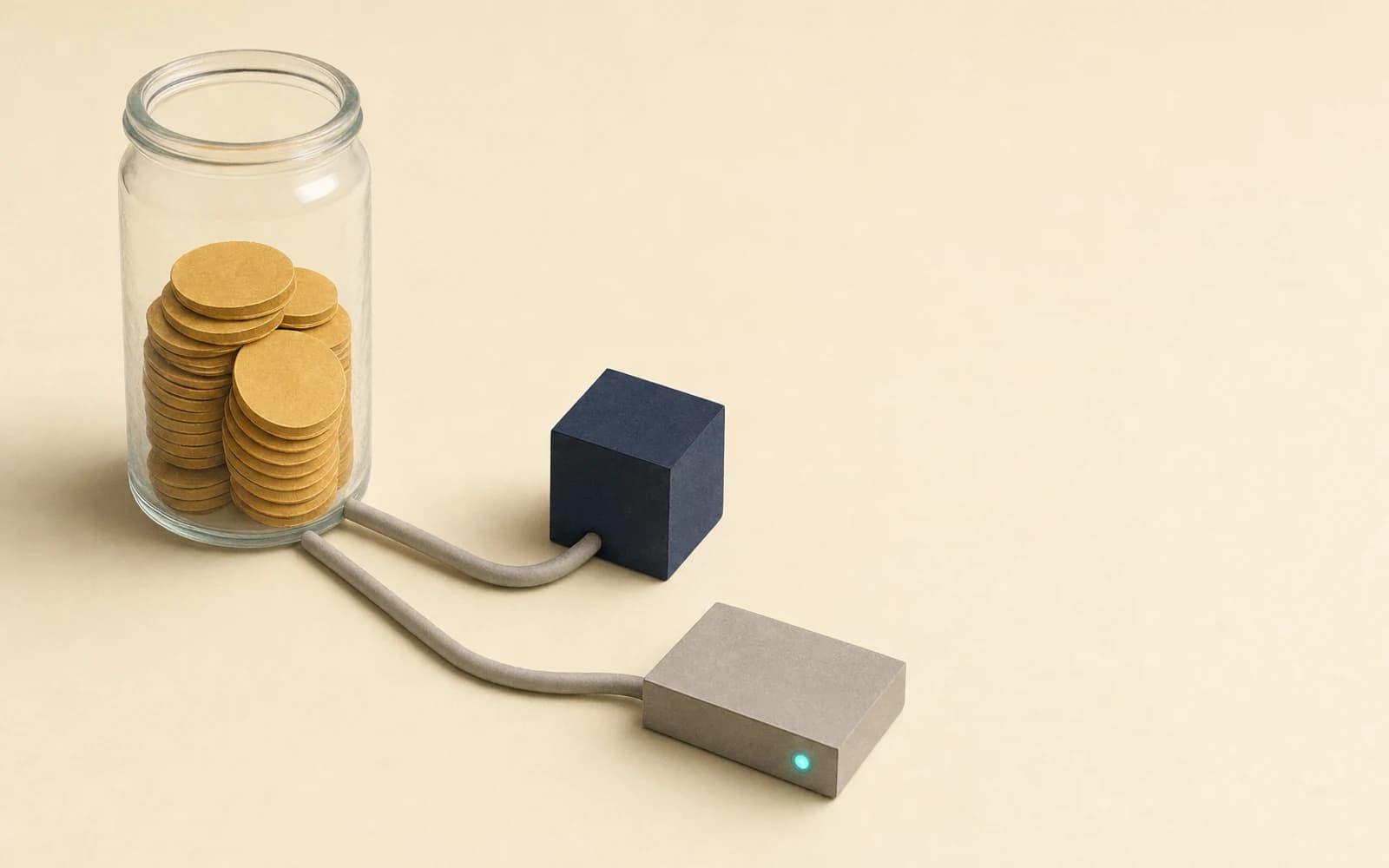
In one week in May 2026, Google rewrote the plans for its AI agent software, Antigravity, users said it ran dry in an hour, and Google tripled its Gemini limits twice. Despite this, it is free, and the first plan that adds quota is $20 a month. The problem is Google changes what that buys all year and does not give you the number. That’s what you sign up for if you are a paying user.
Why should you care if you are a founder who codes? What should you do if you are using Cursor or Claude Code and thinking of moving? This review of Google Antigravity has the latest on Google’s own plans, what it costs and a timeline of what has happened in 2026 so far and when your account might get suspended. And who should stay put.
Disclosure: I build Preuve AI, which sells startup-idea validation. I have no sponsorship or affiliate deal with Google, Cursor or Anthropic, and nothing here earns a commission. Preuve pays Google and Anthropic for its AI models. This review uses Google’s own pages, with links below, the vendors’ pricing pages read on October 4, 2026, the reports and threads linked below, and my own use of the Antigravity CLI for one narrow job.

Will your idea survive the market?
Preuve AI runs 10 agents against live market data and links every claim to a source. Free analysis in 60 seconds.
What is Google Antigravity in 2026?
Google Antigravity is Google’s agent app to write software. Since May 2026, Google wants you to use it for other knowledge work, too. It launched on November 18, 2025 (the launch thread on Hacker News reached 1,088 points) as an IDE, based on VS Code, with a separate Agent Manager. On May 19, 2026, Google launched Antigravity 2.0, which Google says is “a new, standalone desktop application” where “there is no IDE.” It runs on macOS, Linux and Windows.
In 2.0, you can use subagents, which the agent creates on its own, tasks it can do in the background, give it tasks on a timer and use projects that span multiple folders. Google has added slash commands for different tasks: /goal to do a task until it is done, /grill-me to have the agent ask you questions about the plan before it codes, /schedule to set a timer, and /browser to have the agent use the browser. Google also has a command line version, the Antigravity CLI, and since August, you can use the Remote Control page to control sessions from your browser.
2.0 downgrades the IDE, but it has not killed it off yet. Google says in its post on 2.0 that if you have installed Antigravity as an IDE, it will update to 2.0, but you can choose to keep the IDE. However, in an “upcoming release” Google plans to remove the Agent Manager from the IDE. On August 20, 2026, Google also added Antigravity extensions for VS Code, Visual Studio, JetBrains, Zed and Xcode, which you can use if you are on the free tier. If you use one of those editors, you no longer need Google’s fork of VS Code.
Is Google Antigravity free?
Yes. You can use Google Antigravity for free if you have a personal Google account. The free tier has a lot of models. Google’s pricing page says you can use Antigravity for $0, with “basic weekly rate limits”, and unlimited Tab completions and command requests. As of October 10, 2026, Google’s models page says you can use Gemini 3.8, 3.7 and 3.6 Flash, Gemini 3.1 Pro, Claude Sonnet 4.6, Claude Opus 4.6 and GPT-OSS-120b. But there is a * next to Claude 4.6 and GPT-OSS-120b, and the note says “will be removed on November 2, 2026.” From November 2, Antigravity’s free tier will only have Gemini models.
The Claude version depends on your plan. As of October 10, 2026, Google's models page lists Sonnet 5.5 and Opus 5.5 for non-trial Pro, Ultra and Enterprise. Sonnet 4.6 and Opus 4.6 are still listed for Free, Plus and Pro until November 2, alongside GPT-OSS-120b, which also remains on Ultra until that date. This is a scheduled removal, not a free upgrade to 5.5.
Google’s plans do not give you any quota numbers. It says on its plans page that the free tier gets a “meaningful quota, refreshed weekly”, and warns that the “usage limits for this service are subject to modification.” Google says its usage limits are based on “the amount of work done by the agent”, which means a simple task will use less than a difficult task.
On its FAQ, Google says Antigravity is currently available for personal Google accounts in a list of countries. It is not available if you are under 18. If you try to use a Google Workspace account for work, it may not work, so Google suggests you use an account from gmail.com.
How much does Antigravity cost past the free tier?
Plans that add quota cost $20, $100, or $200 a month as part of a broader bundle of services. Google sells access to Antigravity as part of its AI plans, which also include storage and other goodies. Antigravity itself does not have a separate cost. The $20-a-month Google AI Pro plan "provides an entry-level quota for experimentation," Google explained in its May 19, 2026, post on plans. Google also offers a $100-a-month Ultra plan and slashed the cost of its top-end Ultra plan from $250 to $200 a month in the same change. The company explained in a related post on Google AI subscriptions, published on the same day, that the $100-a-month plan came with "a 5X higher usage limit" in Antigravity than Pro.
| Plan | Price | Quota, in Google's words | Agent models |
|---|---|---|---|
| Free | $0 | "Meaningful quota, refreshed weekly" | Gemini 3.8, 3.7, 3.6 Flash, Gemini 3.1 Pro; Claude 4.6 and GPT-OSS-120b until Nov 2 |
| Google AI Plus | $7.99/month in the US, price varies by country | Grouped with Free: Google gives plans below AI Pro "meaningful quota, refreshed weekly" | Same models as the free tier, per Google's models page |
| Google AI Pro | $20/month | "High, generous quota, refreshed every five hours until the weekly limit is reached" | Free models plus Claude Sonnet 5.5 and Opus 5.5 (not on trial subscriptions) |
| Google AI Ultra | $100/month | 5x the Pro rate limit, refreshed every five hours | Gemini, Claude Sonnet 5.5 and Opus 5.5, GPT-OSS-120b |
| Google AI Ultra | $200/month (was $250) | 20x the Pro rate limit, "the highest weekly rate limits" | Same as the $100 Ultra plan |
| Business (Google Cloud) | From $30/seat/month, or $0 seat plus usage | Gemini Enterprise; Claude billed by token consumption | Gemini; Claude Sonnet 5.5 and Opus 5.5 with administrator opt-in |
Source: Google's Antigravity plans post (May 19, 2026), pricing and plans pages, read October 4, 2026; models and Enterprise docs, read October 10, 2026. Prices in USD per month before tax. Quotas are Google's own wording; Google publishes no token or prompt counts.
Business access needs a separate check. Google's Enterprise docs list Claude Sonnet 5.5 and Opus 5.5 with administrator opt-in and token-based billing, as of October 10, 2026. This covers Antigravity 2.0, the CLI and supported IDE extensions. The standalone Antigravity IDE is not supported for Enterprise; legacy Gemini Code Assist extensions remain Gemini-only.
For personal Google AI plans, two things to be aware of. First, Google's plans post explains that Gemini Flash and Gemini Pro now share one pool, "drawn down according to API pricing", a way of saying that because Gemini Flash is cheaper than Gemini Pro, you can stretch the budget further by using the former model. On the other hand, models from other AI companies, such as Anthropic's Claude and the open-source GPT-OSS, use a different rate limit, which is fixed and separate. That's because of "capacity limitations", Google says. If you check how much of your quota you have left, you'll see two meters, one for each type of model. Each meter has a weekly bar and a five-hour bar.
Second, Google now only uses AI credits to pay for overages. If you go over your quota, you can, if you have the right setting enabled, draw on AI credits to pay for the overages at "standard Gemini Enterprise consumption pricing". If you have the AI Credit Overages setting disabled, you'll just have to wait. Google does not let you bring your own key for extra rate limits, but the CLI can run on a Gemini API key.
Why do Antigravity quotas run out? The 2026 timeline
Antigravity quotas run out because Google has set quotas, based on how much capacity it has available, and changed them several times since the service launched. Usually, the changes were in response to demand outstripping Google's available compute. In its post on the plans, Google wrote: "the unprecedented demand for Antigravity and Gemini means we must balance our enthusiasm with real-world compute constraints."
| When | What changed | Source |
|---|---|---|
| February 2026 | Google suspends Antigravity access for users of OpenClaw and OpenCode, $250 Ultra subscribers included, often without warning | The Register, February 23, 2026 |
| March 2026 | AI credits arrive at $25 for 2,500; Pro users report a weekly wait instead of a five-hour refresh. One Pro user said they went from over 300 million input tokens a week on Gemini Pro to hitting the weekly limit at under 9 million. Google had not explained what one credit buys | The Register, March 12, 2026; Techzine |
| May 19, 2026 | Antigravity 2.0; $100 Ultra added, top Ultra cut to $200; Gemini Flash and Pro merged into one pool | |
| Week of May 19, 2026 | Gemini limits raised 3x, then 3x again for the weekly quota, after users said they ran dry within an hour; paid quotas reset twice. Users said the new limits were still lower than before, while Google's plans post says it raised the base Gemini entitlements. Google's Varun Mohan acknowledged users could hit weekly limits "after a couple work sessions" | 9to5Google, May 21, 2026 |
| June 7 and 8, 2026 | Paid users report 2- and 4-day lockouts. One user with two Pro accounts said the five-hour timer "immediately jumped to a 4-day lockout"; the original poster said Google support told them they had hit their weekly limit. No Google reply in the thread | Google AI Developers Forum |
| September 2026 | Terms thread hits 338 points on Hacker News; Google says only the Antigravity account is at stake | Hacker News, September 3, 2026 |
| November 2, 2026 | Claude Sonnet 4.6, Claude Opus 4.6 and GPT-OSS-120b scheduled for removal | Google models page |
Source: The Register (February 23 and March 12, 2026), Techzine, Google's plans post (May 19, 2026), 9to5Google (May 21, 2026), the Google AI Developers Forum thread (June 7 and 8, 2026), Hacker News and Google's models page, read October 4, 2026. The source column says which are news reports, user reports and Google's own pages.
It's hard to tell whether it's a bug or a cap, because Google has not published its meter.
How much Claude time do users actually get?
Getting the newer Claude models does not mean getting much time with them. In early October 2026, an AI Ultra subscriber on r/AntigravityGoogle reported roughly four hours of Opus 5.5 use across a week, on Medium thinking. They praised the results, but did not specify which Ultra tier they had. Another user on r/google_antigravity said a Sonnet 5.5 Medium code check exhausted the five-hour allowance in about two minutes. Their plan was not stated.
These are individual reports, not fixed limits or controlled benchmarks. Google's plans page says usage depends on the work the agent does. For a founder who wants Claude all day, the small third-party allowance users describe is worth checking on your own tasks before paying for an upgrade. These reports do not measure usage on the separately billed Enterprise route.


Skip weeks of manual research
Get complete market research, sourced proof, competitor map, and pricing data for your idea instantly.
Can Google suspend your account for using Antigravity?
Yes, if you use someone else's software to access it. Google's Antigravity Terms, read October 4, 2026, say using third-party tools to access the service "(e.g. using OpenClaw with Antigravity OAuth) is a breach" that "may be grounds for suspension or termination of your Antigravity and/or Gemini CLI accounts." The Antigravity FAQ states that users can't sign in to Claude Code, OpenClaw, or OpenCode using their Antigravity login.
Google has done this in the past. In February 2026, The Register reported that Google had suspended Antigravity access for customers, including those paying $250 a month for the Ultra plan, often without warning. Varun Mohan called it "malicious usage" that "tremendously degraded the quality of service," and said Google was only suspending Antigravity, not other Google services. He also said Google would reinstate the service for people who were unaware of the rules. Users responded that they had paid for the quota and had not exceeded it.
In September the fear moved to people’s Gmail. A Hacker News thread on the Terms got 338 points. Varun Mohan, quoted there, said “the account in question is the Antigravity account” and that Google would make the wording clearer. The Terms I read on October 4 name “your Antigravity and/or Gemini CLI accounts.” One commenter said they had been locked out for what appeared to be a violation even though they didn’t use OpenClaw, but they got their account back a couple days later after filing an appeal form. I think that is fair: the rule is written down, and Google offers a paid API key for other tools.
Use the official interfaces (app, CLI, editor extensions) if you want to log in with your Google account, and buy an API key for everything else. And if you’re worried about losing access to your Google account, run your agent on a different Google account from the one with your email. Also, if you’re scripting the Antigravity CLI, Google has docs for running it in headless mode, which is how I use it.

Is Antigravity better than Cursor or Claude Code?
Google Antigravity isn’t better than Cursor or Anthropic Claude Code across the board, but it is a good option if you want a cheap way to run lots of Gemini agents. Cursor and Anthropic meter their agent use more predictably, but none of them tell you how many prompts you get. Cursor’s models and pricing page says model choice “affects how quickly your included usage is consumed” and Anthropic’s Pro plan help page says the number of messages “will vary”. (Also, according to Anthropic’s pricing page, Claude Code is not available on their free plan.)
| Google Antigravity | Cursor | Claude Code | |
|---|---|---|---|
| Free option | Yes, weekly quota, full agent | Hobby: Agent, Chat and Tab on Auto, limited usage | No: Claude Code starts on Pro |
| Individual plans | $20, $100, $200 a month (Plus at $7.99 adds no quota) | $20, $60, $200 a month | $20 a month ($17 yearly), Max from $100 (5x or 20x Pro) |
| How the meter works | Five-hour and weekly limits; one Gemini pool at API prices, a fixed limit for Claude and GPT-OSS | Two monthly pools (Cursor's own models, other models at API price) | Five-hour session plus a weekly limit, shared with Claude chat |
| When you run out | AI credits as overage, or wait | On-demand usage at the same API rates, or upgrade | Usage credits, or wait for the reset |
| Models | Gemini; Claude Sonnet and Opus 5.5 on Pro and Ultra; GPT-OSS-120b | Grok and Composer in Cursor's pool, plus third-party models | Claude models only |
Source: Google's Antigravity pricing, plans, models pages and Terms; Cursor's pricing and models pages; Anthropic's Claude pricing page and Pro plan help article, all read October 4, 2026. Prices in USD per month before tax.
Cursor at least estimates your real spend. If you run their agent every day, they say you’ll “typically” spend $60-$100 a month total, and power users running several agents “often $200+.” Google instead sizes Ultra as 5x or 20x Pro, but it never says how much Pro is.
What does Antigravity do well?
From what users say, Antigravity is fast and it’s cheap if you want to run hard on Gemini. On the r/AntigravityGoogle subreddit, a long-time user who runs Flash models almost exclusively wrote “I need speed and fast iterations.” Another uses 2.0 “as a daily driver harness at work” on a company Ultra account and “can use it all day without issue.” On the r/google_antigravity subreddit, multiple commenters said they use Flash for coding and Claude for review/planning.
"The cli is their best offering. Their GUI is slop, and their IDE is dead in a ditch with no way to update itself." (r/AntigravityGoogle, read October 4, 2026)
I use the Antigravity CLI for a narrow purpose at Preuve: a quick first pass on Preuve’s product videos before they go out. I render a video and feed it to Gemini 3.8 Flash through the CLI, and it tells me what’s wrong. I tested both routes on 7 test renders, two runs each, through the CLI (Sep 26, 2026) and through the Gemini API. The API caught all 12 planted defects; the CLI caught 10 of them. The API costs me about 9 cents and takes about 40 seconds a run on a 42-second video; the CLI is free but takes about 100 seconds. Part of the reason it’s less accurate is that the CLI only sees the video at low resolution, and my script sends it a slowed-down copy. I’ll keep using the CLI version for early drafts, but for final renders, I’ll pay for the API.
Antigravity’s weaknesses are pretty consistent. The “bait and switch” thread (771 points, May 21, 2026) starts with an Ultra user’s post, which says 2.0 auto-updated and replaced the IDE with “a single conversational prompt box” and that getting the IDE back took a full purge and lost the chat history.
On the r/google_antigravity thread mentioned above, one commenter says their team can “blow the lid off our usage limits in mere minutes some days” and that the team “has built habits around Claude code” because of it.
When should you stay on Cursor or Claude Code?
Stay on Cursor if...
Use Cursor instead if you prefer reviewing all changes in your editor, prefer a monthly pool of credits you can use on-demand at list price (as opposed to a weekly limit), or want to use multiple models (Grok, Claude, GPT, etc). In Antigravity’s favor: its extensions work in VS Code and JetBrains too.
Stay on Claude Code if...
Use Claude Code instead if you prefer working in terminal and want immediate access to latest Anthropic models as they come out (Antigravity Pro users also get access to Claude Opus 5.5, but through a separate fixed limit due to “capacity limitations”, according to Google).
Try Antigravity if...
Finally, try Antigravity if you want to use a free or cheap agent (Gemini) to quickly prototype ideas, run multiple agents at the same time, run agents at a later time, or if you are already paying for Google AI Pro plan. Just make sure to have a second tool installed in case you run out of quota one week.
If you are wondering which builder to use, check out my comparison of the best AI app builders in 2026 (no-code). For the costs of each coding model per task, see my AI coding models statistics.
Why check demand before Antigravity writes the code?
Most new features in Antigravity 2.0 are focused on improving autonomous capabilities (running /goal to let the agent work until a task is completed, scheduling tasks, etc). However, even when using /grill-me to ask for “specific details of the plan”, Antigravity won’t ask you about the most important detail: who is going to pay for this, and how much? And as noted in Google’s Terms of Service, you are “solely responsible” for “determining whether the use an AI Agent is fit for its use case.”
As one user mentioned on r/google_antigravity, if you ask Antigravity to “make me an app that makes money”, you will get garbage. You need to tell the agent exactly what to do. The problem is that if you don’t validate your idea first, you risk coding the wrong thing. A cheap, fast agent fed an idea nobody asked for ships the wrong product faster. Read more on why startups fail.
Worked example: three months of agents before the first customer
If you still want to code your app, here is what a few of the plans cost at list price over 3 months of building a subscription app:
| Tool and plan | Per month | Three months |
|---|---|---|
| Antigravity, free tier | $0 | $0, plus the weeks you wait |
| Antigravity on Google AI Pro | $20 | $60 |
| Antigravity on Google AI Ultra | $100 | $300 |
| Cursor Pro+ | $60 | $180 |
| Claude Max (5x) | $100 | $300 |
Source: Google's plans post (May 19, 2026), Cursor's pricing page and Anthropic's Claude pricing page, read October 4, 2026. Three months is the monthly list price times 3, in USD before tax, with no overage or credits.
Depending on the plan you choose, that is between $0 and $300 on the plans in this table, but you will also invest months of your life into building it. And according to the Preuve benchmark study (3rd edition, July 2026, 6,000+ analyses), only 17.5% of ideas score 70 or more. The top risk is an idea still too early stage to judge (36.9%), followed by issues with the go-to-market strategy (25.7%).
“An app for freelancers” is a typical example of an idea that is too early stage, as it doesn’t specify who exactly is going to buy the app and for how much. While Antigravity (or Cursor or Claude Code) will be happy to build it for you, none of them will tell you that nobody is waiting for it.
To avoid building something nobody wants, validate your idea first using Preuve’s free Reality Check. In less than a minute, it scans 60+ live data sources to analyze the demand, the market and the competitors, and a full report takes about ten minutes. You will still need to talk to your potential buyers yourself (see my guides on what to do before you vibecode and how to validate a business idea), but once you are done, you can pick the AI agent you prefer and start building.

Methodology and sources
| Source | What we used | Size or date | Limitation |
|---|---|---|---|
| Google, "Introducing Google Antigravity 2.0" | What 2.0 is, its features, the slash commands, what happens to the IDE | Post of May 19, 2026, read October 4, 2026 | Vendor copy, written to sell the product |
| Google, "Changes to Antigravity plans" | Plan prices before and after, the 5x and 20x multipliers, the shared Gemini pool, AI credits as overage | Post of May 19, 2026, read October 4, 2026 | Gives multipliers, not the size of the Pro quota they multiply |
| Google Antigravity pricing, plans, models and FAQ pages | Free tier, quota wording, overage setting, model list by plan, the November 2 removal, geography, data opt-out, the third-party rule | Pages read October 4, 2026 | Google can change these pages at any time and says usage limits "are subject to modification" |
| Google Antigravity models and Enterprise docs | Plan-specific Claude versions, the November 2 removal, Enterprise opt-in and token billing | Pages read October 10, 2026 | Current availability, not a dated announcement of when Claude 5.5 was added |
| Google, "Google AI Plus expands to 35 new countries and territories including the US" | The US price of Google AI Plus | $7.99 a month in the US | An announcement, not a price page; price varies by country and Google runs offers |
| Google Antigravity Additional Terms of Service | The third-party access clause, data use by Google staff, responsibility for agent actions | Terms read October 4, 2026 | Undated on the page; Google can change the wording at any time |
| Google, "Introducing IDE extensions" | Extensions for VS Code, Visual Studio, JetBrains, Zed and Xcode, free-tier sign-in, Enterprise data line | Post of August 20, 2026 | Vendor copy; JetBrains and Zed Enterprise support in preview |
| Google, "Everything new in our Google AI subscriptions, fresh from I/O 2026" | The $100 Ultra plan and its 5x limit in Antigravity, the $250 to $200 cut | Post of May 19, 2026, read October 4, 2026 | Consumer bundle post; most benefits listed are not about coding |
| The Register, "Google Antigravity falls to Earth under OpenClaw-fueled compute load" | The February suspensions, the Varun Mohan statement, the "no warning" complaint | Article of February 23, 2026 | Google did not answer The Register on what counted as malicious use |
| The Register, "Users protest as Google Antigravity price floats upward" | AI credits at $25 for 2,500, weekly instead of five-hourly refresh reports, the Reddit token figures | Article of March 12, 2026 | User-reported token counts, not Google figures; predates the May plan rewrite |
| Techzine, "Developers complain about Google Antigravity pricing structure" | Second report of the March refresh complaints and unclear credit value | Article of March 13, 2026 | Based on The Register and forum posts, no own testing |
| 9to5Google, "Google has tripled Gemini usage limits for Antigravity, twice" | The two 3x raises and quota resets after the May change | Article of May 21, 2026 | Reports the raises, not the new limits in numbers |
| Google AI Developers Forum, "[BUG] Antigravity weekly quota system completely broken" | Paid users reporting 2- and 4-day lockouts | Thread of June 7 and 8, 2026, 8 posts, read October 4, 2026 | Self-reported, unverified; no Google reply in the thread |
| Hacker News threads on Antigravity | The September 2026 Terms thread (338 points) and the May 2026 "bait and switch" thread (771 points) | Threads of May 21 and September 3, 2026, read October 4, 2026 | Commenters are self-selected and mostly critical |
| Sid's Blog, "Google's Antigravity Bait and Switch" | One Ultra user's account of the 2.0 update replacing the IDE | Post of May 21, 2026 | One user, during launch week |
| Reddit, r/AntigravityGoogle and r/google_antigravity | What regular users like and dislike, quoted short and credited to the subreddit | Two threads read October 4, 2026 | Anonymous, self-selected users; fan subreddits lean positive |
| Reddit, r/AntigravityGoogle, Opus 5.5 usage report | One Ultra subscriber reporting roughly four hours of Opus 5.5 use per week | Early October 2026 thread, read October 10, 2026 | Self-reported, no controlled test; exact Ultra tier unspecified |
| Reddit, r/google_antigravity, "Gone in a Flash" | One user reporting a Sonnet 5.5 Medium code check exhausting the five-hour allowance in about two minutes | Early October 2026 thread, read October 10, 2026 | Self-reported, no controlled test; subscription plan unspecified |
| Cursor pricing and models docs | Plan prices, the two usage pools, on-demand usage, Cursor's own monthly spend estimates | Pages read October 4, 2026 | Vendor pages; included usage is described, not counted |
| Anthropic, Claude pricing page and Pro plan help article | Pro and Max prices, which plans include Claude Code, the five-hour and weekly limits, training opt-out | Pages read October 4, 2026 | Vendor pages; message counts "vary", no fixed number |
| Preuve internal render-QA test, September 26, 2026 (own data) | Catch rate, time and cost per route, Antigravity CLI against the paid Gemini API | 7 renders, 2 runs each, September 26, 2026 | 7 renders of one 42-second video, defects injected by us; one narrow job (video checks), not coding; the CLI route sees low resolution and a slowed copy |
| Preuve benchmark study (3rd edition) | Go rate and the two top risks in the worked example | 6,000+ analyses, July 2026 | Founders who chose to scan, not a random sample of ideas |
FAQ
Is Google Antigravity free?
Yes. Google's pricing page lists a $0 plan with "basic weekly rate limits", unlimited Tab completions and unlimited command requests. Google's plans page describes the free quota as a "meaningful quota, refreshed weekly" and gives no number. As of October 10, 2026, free users can pick Gemini 3.8, 3.7 and 3.6 Flash, Gemini 3.1 Pro, Claude Sonnet 4.6, Claude Opus 4.6 and GPT-OSS-120b, but Google says the Claude 4.6 models and GPT-OSS-120b will be removed on November 2, 2026. You need a personal Google account, you must be 18 or older, and you must live in one of the countries Google lists.
How much does Google Antigravity cost?
Past the free tier, Antigravity comes with Google AI plans. Google's May 19, 2026 post puts Google AI Pro at $20 a month, a new Google AI Ultra plan at $100 a month with 5x Pro's rate limit, and the top Ultra plan at $200 a month, down from $250, with 20x Pro's rate limit. Google AI Plus, a cheaper Google plan, is grouped with the free tier on Google's plans and models pages, so it adds no Antigravity quota. Above your quota, Pro and Ultra users can spend AI credits at Gemini Enterprise consumption prices, or wait for the quota to refresh. Teams buy it through Google Cloud's Gemini Enterprise, from $30 per seat per month or a $0 seat plan billed by usage.
Can Google suspend my account for using Antigravity with other tools?
Yes, your Antigravity access. Google's Antigravity Terms, read October 4, 2026, say using third-party software to access the service "(e.g. using OpenClaw with Antigravity OAuth) is a breach" that "may be grounds for suspension or termination of your Antigravity and/or Gemini CLI accounts." In February 2026 Google suspended paying users who connected tools like OpenClaw and OpenCode, and said it blocked Antigravity, not other Google services. Google recommends a Gemini Enterprise or Google AI Studio API key for third-party coding agents.
Is Antigravity better than Cursor?
Not across the board. Google Antigravity is cheaper to start and better for running several Gemini agents in parallel, and Google now ships Antigravity extensions for VS Code, Visual Studio, JetBrains, Zed and Xcode. Cursor is the steadier pick for an editor-first plan, review and implement loop: its plans (free Hobby, Pro $20, Pro+ $60, Ultra $200 a month) meter a monthly usage pool at each model's API price, with on-demand usage at the same rates when you run out.
Does Google use my Antigravity code to train its models?
It can, unless you opt out. Google's Antigravity Terms say Google uses your "Interactions" to improve its products and machine learning, and that "Google employees and contractors may access, view, review and use" them. The FAQ says you can opt out of data collection at any time in the Settings panel. Google says Enterprise sign-ins through Google Cloud are never used to train its foundation models.
Is Google Antigravity related to antigravity in physics or the Antigravity drone?
No. Google Antigravity is Google's AI coding and agent app, launched on November 18, 2025, with version 2.0 released on May 19, 2026. Antigravity in physics is the idea of cancelling or reversing gravity, and Antigravity is also a drone brand incubated by Insta360, maker of the Antigravity A1 360-degree drone. They share a name and nothing else.
Cite this page
Last updated October 10, 2026
Forat, V. (2026, October 10). Google Antigravity Review (2026): Free Until the Quota. Preuve AI. https://preuve.ai/blog/antigravity-review
Forat, Vincent. “Google Antigravity Review (2026): Free Until the Quota.” Preuve AI, 10 Oct. 2026, preuve.ai/blog/antigravity-review.
Forat, Vincent. “Google Antigravity Review (2026): Free Until the Quota.” Preuve AI. October 10, 2026. https://preuve.ai/blog/antigravity-review.
@misc{forat2026-antigravity-review,
  author = {Forat, Vincent},
  title = {{Google Antigravity Review (2026): Free Until the Quota}},
  howpublished = {Preuve AI},
  year = {2026},
  month = oct,
  url = {https://preuve.ai/blog/antigravity-review},
  note = {Last updated October 10, 2026}
}
Vincent
5 years in B2B growth, building Preuve AI in public. 82% of ideas it scores aren't ready, the point is finding out in 10 minutes, not 3 months.
Follow on X →
Building is expensive. Validation is free.
Run your idea through 10 AI agents before you write a line of code. Every claim source-linked.