Key takeaways
- What each does: ChatGPT predicts plausible text from training data and is strong for brainstorming, refining a pitch, and general business questions. Preuve AI scans 60+ live sources (Reddit, Indie Hackers, Hacker News, Product Hunt, Google Trends, YouTube, Quora) and returns a 0-100 viability score with a fix playbook.
- The key difference: ChatGPT has no access to live data and fabricates 20% of academic citations, with errors in 45% of real references. Preuve AI links every claim back to a source you can click and verify.
- When to use which: Use ChatGPT early, for exploring and wordsmithing ideas. Use Preuve AI when a go/no-go decision, investor conversation, or competitor analysis needs verifiable data rather than guesses.
- You can reproduce the comparison in 10 minutes: Run the same idea through a fixed ChatGPT prompt and a free Preuve AI Reality Check scan, then score both outputs with the four-check Receipt Test (clickable sources, competitors that exist, traceable numbers, no drift between runs).
Preuve AI vs ChatGPT for startup idea validation comes down to one thing: I asked ChatGPT to validate an idea and it fabricated the data. Here is what each tool actually does, and when to use which.
I also built a full side-by-side comparison page with a feature-by-feature breakdown.
Will your idea survive the market?
Preuve AI runs 10 agents against live market data and links every claim to a source. Free analysis in 60 seconds.
I Asked ChatGPT to Validate My Startup Idea. It Fabricated the Data.
I asked ChatGPT to validate a startup idea: "AI-powered code review agent for indie developers."
It gave me a confident analysis. Market size estimates. Competitor names. Growth projections.
One problem: I couldn't verify a single number.
ChatGPT told me the code review market was worth $2.1 billion. No source. I asked for the source. It gave me a URL that returned a 404 error. The page didn't exist. The study it cited? Also fabricated.
This isn't a bug. It's how large language models work. A 2025 study found ChatGPT fabricates 20% of academic citations and introduces errors in 45% of real references. The New York Times reported that newer AI "reasoning" models hallucinate more, not less. The fix is not a better prompt. It is grounded AI business context validation, where the model is forced to cite live sources instead of generating plausible text.
Falling in love with your idea is dangerous. You need to fall in love with your customer's problem instead.
When you're deciding whether to spend 6 months building something, "probably accurate" isn't good enough for ChatGPT startup validation.
How to Reproduce This Comparison Yourself (10 Minutes, $0)
Do not take my word for any of this. I sell one side of the comparison. The whole test is reproducible with free tools, so run it on your own idea.
Step 1. Write your idea as one sentence. Mine was "AI-powered code review agent for indie developers." Paste this prompt into ChatGPT:
Validate this startup idea: [your idea]. Give me the market size, the top 5 competitors with their current pricing, evidence that people want this, and a go/no-go verdict. For every number and every competitor, include the exact source URL you got it from.
Step 2. Run the exact same sentence through a free Preuve AI Reality Check scan. Same input, no extra context on either side.
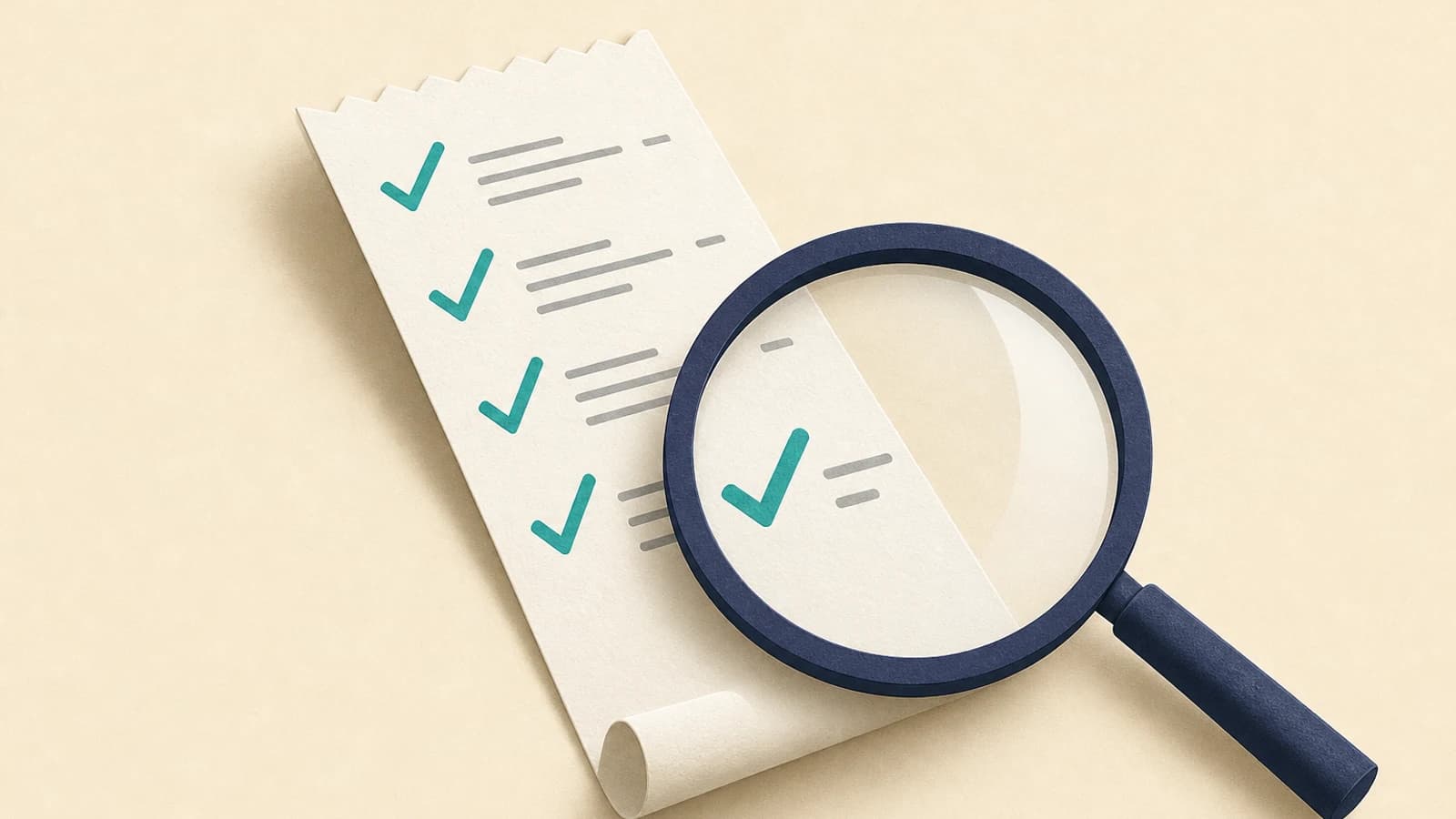
Step 3. Score both outputs with what I call the Receipt Test, four checks, one point each:
Click every source link. A link that 404s, or no link at all, means the number came from nowhere you can check. This is where my ChatGPT run failed first: the $2.1 billion market-size URL did not exist.
Google one named competitor. If you cannot find the company in 30 seconds, or it shut down two years ago, the competitive analysis is built on stale training data.
Trace one demand claim. "Strong demand" means nothing. A Reddit thread, a Google Trends chart, or a forum post you can open means something.
Re-run and compare. Paste the same prompt into a fresh chat. If the market size or the verdict moves between runs, you are reading a text generator, not research.
What Preuve AI checks on the same input (methodology)
So the comparison is fair, here is exactly what happens on my side of the test. A scan runs 10 AI agents across 60+ live data sources, grouped by what they prove: competitors from Crunchbase and Product Hunt, demand from community threads on Reddit and niche forums plus the Google Trends curve, pricing from the competitors' own live pages. Every claim in the report links back to the page it came from. Paid reports run on Claude Opus 5.5 and are cross-checked in parallel runs; when two runs disagree on a verdict, the analysis reruns until two models converge on the same answer. The full source list is public on the Sources page and the pipeline is documented step by step on How it works.
Reproducibility notes: both sides of this test are free (ChatGPT's free tier and Preuve AI's Reality Check scan). Model versions change, so your ChatGPT output will differ from my February run in wording. The failure pattern is what repeats: the checks that break are the source links and the re-run stability, not the fluency. If your run passes all four checks on both tools, use whichever you prefer. Mine never has.
Quick Comparison: Preuve AI vs ChatGPT for Startup Validation
| Feature | ChatGPT | Preuve AI |
|---|---|---|
| Real-time market data | No | Yes (60+ live sources) |
| Clickable source URLs | No | Every claim linked |
| Live competitor intel | General knowledge only | Names, pricing, weaknesses |
| Search trend data | No | Google Trends integration |
| Community signals | No | Reddit, Indie Hackers, HN, Quora |
| Verifiable market size | Often fabricated | With sources |
| Viability score | No | 0-100 with breakdown |
| Fix playbook | Generic advice | Specific to your blockers |
| Price | Free | Free tier / $59 full report |
Why ChatGPT Startup Validation Falls Short
Here's the problem with using ChatGPT for idea validation:
ChatGPT is a language model trained on internet text. It predicts what sounds like a reasonable answer. It doesn't know if that answer is true. It has no access to live data. It can't check if competitors still exist, if pricing has changed, or if a market trend reversed last month.

Preuve AI scans 60+ live sources in real time: Reddit, Indie Hackers, Hacker News, Product Hunt, Google Trends, YouTube, Quora. Every problem it finds links to a source. A Reddit thread where someone complained about your competitor. A Google Trends chart showing search interest. A pricing page you can click and verify.
When an investor asks "Where did you get that market size number?", you need more than "ChatGPT said so."
Skip weeks of manual research
Get complete market research, sourced proof, competitor map, and pricing data for your idea instantly.
Where Preuve AI Wins Over ChatGPT
✓ Real Competitor Intelligence
ChatGPT lists competitor names it remembers from its training data. That data could be 2 years old. The competitor may have pivoted, died, or tripled their prices.
Preuve AI shows you who you're up against right now. Names. Current pricing. Documented weaknesses. And specific gaps you can exploit.
✓ Verifiable Market Signals
Preuve AI pulls real search trends. When it says "solo founder" searches grew 127%, you can click through to Google Trends and see it yourself.
ChatGPT may tell you the same thing. But when you ask for a source, you'll get nothing or a link that doesn't work.
✓ Community Pain Points with Proof
Real people complaining about real problems. That's the best validation. Preuve AI scans Reddit, Indie Hackers, and Hacker News for these conversations.
Sample signal from a real report: "I got frustrated manually checking multiple sites for competitor prices, so I built something to automate it..." Linked to the original Indie Hackers post.
That's a verifiable pain point. Not a guess.
✓ Honest Viability Scores
Preuve AI gives you a score from 0-100 with a clear breakdown. More importantly, it tells you your biggest risk and shows you how to fix it.
ChatGPT tends to agree with you. Ask it if your idea is good, and it usually says yes with caveats. That's not helpful. You need something that will tell you "this specific thing will kill you" and prove it with evidence.
✓ Actionable Fix Playbook
Finding problems is only half the battle. Preuve AI gives you specific fixes for every blocker it finds:
- •Fix your positioning
- •Exploit specific competitor gaps
- •Test the fix with 10 real prospects
- •Iterate on feedback
- •Re-scan your score
These fixes tie directly to the weaknesses the tool found in your idea.
✓ Investment-Ready Research
Investors ask for sources. They want to know your TAM, SAM, and SOM. They want to see that you understand the competitive landscape.
Preuve AI shows you market size with sources. TAM (everyone who could buy), SAM (people you can reach), SOM (realistic customers). All verifiable.
Where ChatGPT Wins for Startup Ideation
ChatGPT excels at some things:
✓ Brainstorming and Ideation
Need 20 variations of your startup idea? ChatGPT excels here. It's a tireless brainstorming partner that helps you explore angles you hadn't considered.
✓ Refining Your Pitch
Once you know your idea is worth pursuing, ChatGPT can help you articulate it better. It's great at wordsmithing value propositions and finding clearer ways to explain complex concepts.
✓ It's Free
For casual exploration and early-stage thinking, you can't beat free. ChatGPT is perfect for the "I wonder if..." phase before you're ready to commit.
✓ General Business Advice
ChatGPT has absorbed a lot of business wisdom. For general questions about startup strategy, fundraising approaches, or marketing tactics, it's a solid resource.
✓ Speed for General Questions
Need a quick overview of an industry? A list of potential customer segments? ChatGPT delivers in seconds. Just don't cite those answers in a pitch deck.
Preuve AI vs ChatGPT: Who Should Use What
| Your Situation | Use This | Why |
|---|---|---|
| Early brainstorming, exploring ideas | ChatGPT | Free, fast, great for divergent thinking |
| Need to refine how you explain your idea | ChatGPT | Excellent at wordsmithing and clarity |
| Ready to validate before building | Preuve AI | Need real data, not opinions |
| Preparing for investor conversations | Preuve AI | Every claim needs a source |
| Want to understand competitor landscape | Preuve AI | Live pricing and weakness data |
| Looking for community pain points | Preuve AI | Scans Reddit, IH, HN with links |
| General business questions | ChatGPT | Fast general knowledge |
| Making a go/no-go decision | Preuve AI | Can't afford hallucinated data |
The Verdict: Preuve AI vs ChatGPT
| ChatGPT | Preuve AI | |
|---|---|---|
| Best for | Brainstorming, refining ideas, general advice | Validating ideas with real data |
| Data source | Training data (potentially outdated) | 60+ live sources, updated in real-time |
| Sources provided | None (or fabricated) | Every claim linked |
| Hallucination risk | High (20%+ fabricated citations) | None (all data verifiable) |
| Competitor intel | Generic, potentially outdated | Current names, pricing, weaknesses |
| Good for investors | Not citable | Sourced and verifiable |
| Price | Free | Free tier / $59 full report |
Use ChatGPT for thinking. Use Preuve AI for deciding.
Get Your Viability Score in Under a Minute
Stop guessing. Get real data on your competitors, market, and biggest risks.
FAQ
Can ChatGPT validate my startup idea?
ChatGPT can help you brainstorm and think through ideas, but it can't validate them with real data. It has no access to real-time market data, creates fake citations 20% of the time, and tends to give agreeable answers rather than honest assessments. For startup validation with verifiable sources, you need a tool that pulls live data from actual markets.
What data sources does Preuve AI use?
Preuve AI scans 60+ live sources including Reddit, Indie Hackers, Hacker News, Product Hunt, Google Trends, YouTube, and Quora. Every finding links back to the original source so you can verify it yourself.
Why does ChatGPT make up sources?
ChatGPT doesn't 'know' things the way humans do. It predicts what text should come next based on patterns. When asked for a source, it generates what looks like a plausible URL or citation, but it has no way to verify if it exists. Studies show 20% of its citations are fabricated.
Is Preuve AI just using AI too?
Preuve AI uses AI to analyze and synthesize data, but the key difference is the data itself comes from verified live sources. You can click through to every source and see it yourself. It's AI analysis of real data, not AI making things up.
How can I reproduce the Preuve AI vs ChatGPT comparison myself?
Take one startup idea, written as a single sentence. Paste it into ChatGPT with a prompt asking for market size, competitors with pricing, demand evidence, and a source URL for every number. Then run the exact same sentence through a free Preuve AI Reality Check scan. Score both outputs on four checks: do the source links open, do the named competitors exist, can each number be traced to a page, and do the answers stay stable when you re-run. Both sides of the test are free, so the comparison costs nothing but 10 minutes.
When should I use ChatGPT vs Preuve AI?
Use ChatGPT early, when you're exploring and brainstorming. Use Preuve AI when you're ready to make a real decision about whether to build. If money or months of your life are on the line, you need verifiable data, not guesses.
What if Preuve AI gives me a low score?
That's valuable information. A low score with clear explanations of what's wrong beats false confidence. Preuve AI shows you exactly what's dragging your score down and gives you a fix playbook. Paid reports include 3 pivot iterations, so you can refine your idea and re-scan until you nail your positioning.
Cite this page
Last updated July 8, 2026
Forat, V. (2026, July 8). Preuve AI vs ChatGPT: Can AI Validate Your Startup Idea? Preuve AI. https://preuve.ai/blog/preuve-ai-vs-chatgpt
Forat, Vincent. “Preuve AI vs ChatGPT: Can AI Validate Your Startup Idea?” Preuve AI, 8 July 2026, preuve.ai/blog/preuve-ai-vs-chatgpt.
Forat, Vincent. “Preuve AI vs ChatGPT: Can AI Validate Your Startup Idea?” Preuve AI. July 8, 2026. https://preuve.ai/blog/preuve-ai-vs-chatgpt.
@misc{forat2026-preuve-ai-vs-chatgpt,
  author = {Forat, Vincent},
  title = {{Preuve AI vs ChatGPT: Can AI Validate Your Startup Idea?}},
  howpublished = {Preuve AI},
  year = {2026},
  month = jul,
  url = {https://preuve.ai/blog/preuve-ai-vs-chatgpt},
  note = {Last updated July 8, 2026}
}
Vincent
5 years in B2B growth, building Preuve AI in public. 82% of ideas it scores aren't ready, the point is finding out in 10 minutes, not 3 months.
Follow on X →
Building is expensive. Validation is free.
Run your idea through 10 AI agents before you write a line of code. Every claim source-linked.